Tag: bioequivalence
Placebo Effect and Generics: Managing Psychological Factors in Medication Switches
Explore how the placebo and nocebo effects impact generic medication efficacy. Learn why brand names feel stronger, the science behind labeling bias, and practical strategies to manage psychological factors during medication switches.
View More
Bioequivalence Explained: How the FDA Proves Generic Drugs Are Equivalent
Learn how the FDA uses bioequivalence standards to ensure generic drugs are as effective and safe as brand-name medications, covering Cmax, AUC, and the 80-125% rule.
View More
Drug Interactions: Are Generics as Safe as Brand-Name Meds?
Discover if generic medications carry different drug interaction risks compared to brand-name drugs. Learn about bioequivalence and medication safety.
View More
Therapeutic Equivalence Codes: How the FDA Rates Generic Drug Substitutability
The FDA's therapeutic equivalence codes tell pharmacists which generic drugs can be safely swapped for brand-name versions. Learn how the system works, why some drugs get "B" ratings, and how it saves billions in healthcare costs.
View More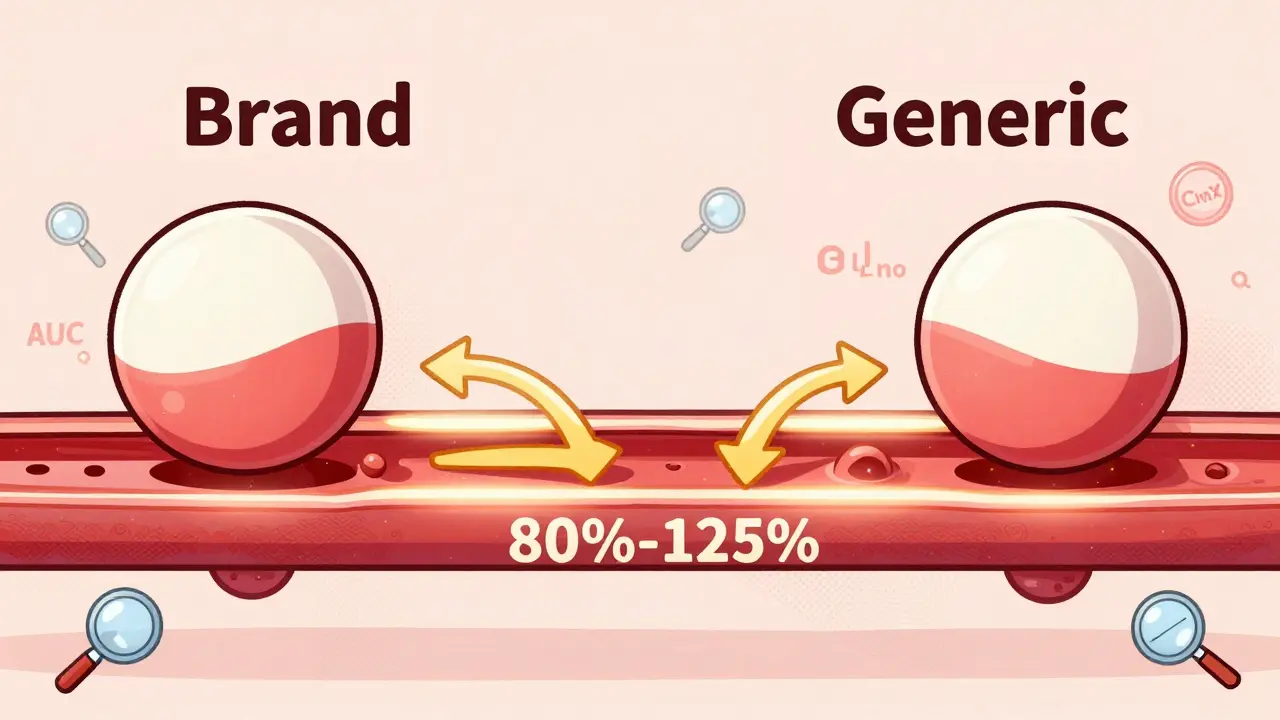
Bioequivalence and Patient Safety: Why Testing Ensures Safe Generic Medications
Bioequivalence testing ensures generic drugs work the same as brand-name versions, protecting patient safety while cutting costs. Learn how science, regulation, and real-world data confirm their reliability.
View More
How to Compare Dissolution Profiles and What They Mean for Generic and Brand Drugs
Learn how dissolution profile comparison ensures generic drugs work like brand-name versions, using f2 similarity factors, regulatory standards, and real-world testing methods to prove bioequivalence without human trials.
View MoreLatest Posts