The Mind-Body Connection in Generic Medication
You take a pill. It’s supposed to help your headache, lower your blood pressure, or lift your mood. But what if the label on the bottle changes everything? You might have heard that generic medications are chemically identical to their brand-name counterparts. And legally, they must be. The U.S. Food and Drug Administration (FDA) requires generics to meet strict standards of bioequivalence, meaning they deliver the same amount of active ingredient into your bloodstream within a similar timeframe as the original drug.
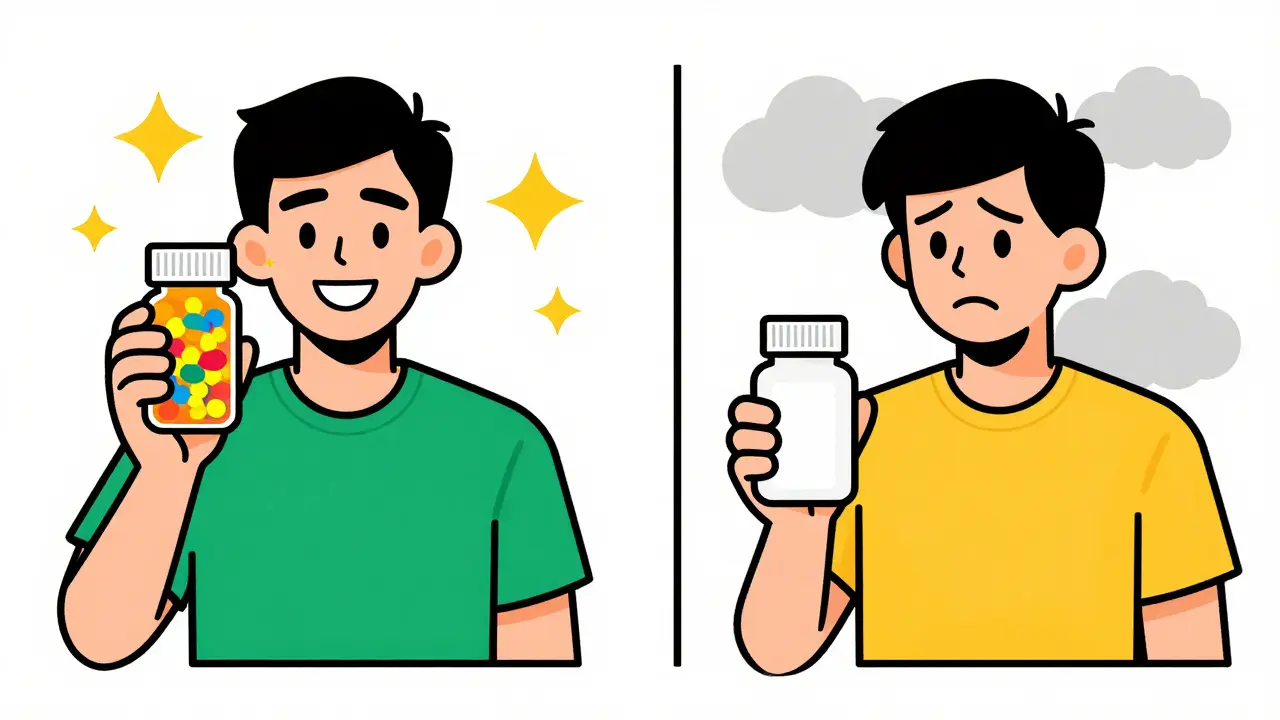
Yet, millions of patients report feeling like the generic "doesn’t work as well." Is this a chemical failure? No. It’s a psychological one. This phenomenon is known as the placebo effect, specifically how expectations influence perceived efficacy. When you believe a treatment is inferior because it’s cheaper or looks different, your brain can actually dampen its effectiveness-or even create side effects that aren’t there. This is called the nocebo effect.
Why Brand Names Feel Stronger: The Science Behind the Label
It’s not just in your head; it’s literally in your brain. Research shows that the power of suggestion has measurable biological impacts. A landmark study published in Health Psychology by Kate Faasse and colleagues at the University of Auckland demonstrated this clearly. They gave participants painkillers for headaches. Some pills were real ibuprofen, others were inert placebos. Crucially, some placebos were labeled with famous brand names, while others had generic labels.
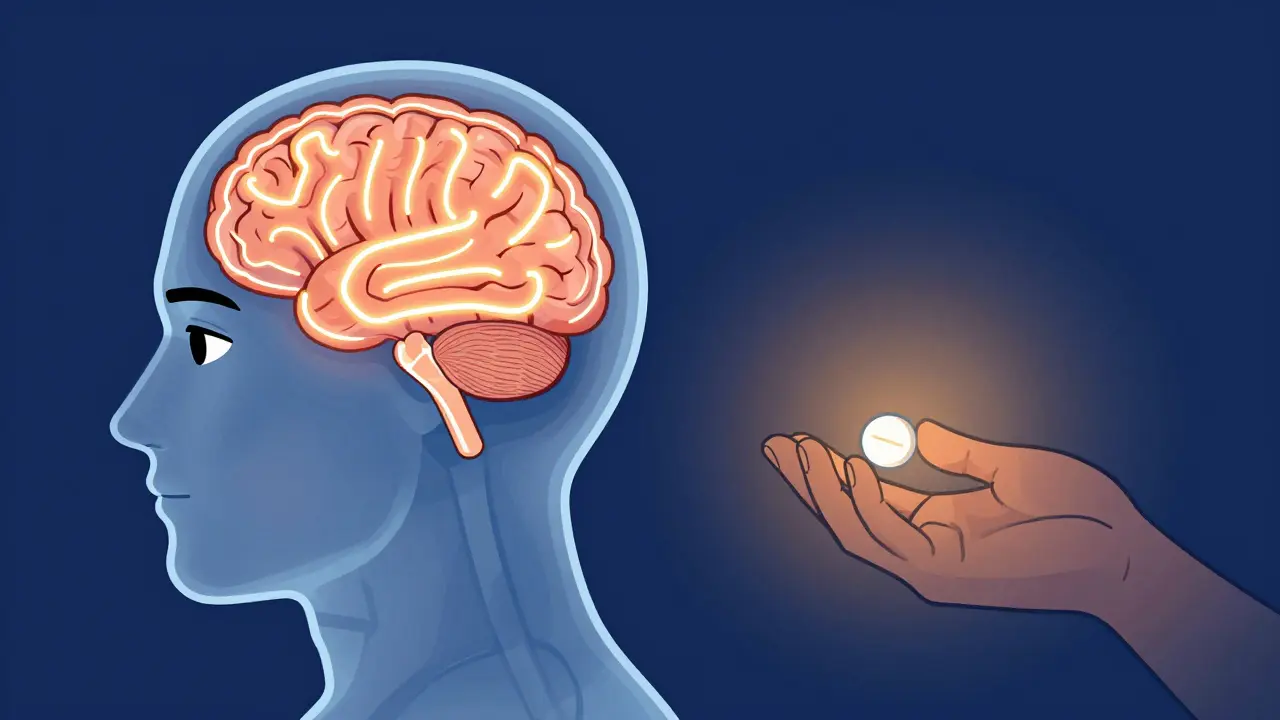
The results were striking. Placebos labeled with brand names provided headache relief equivalent to actual ibuprofen. However, identically formulated placebos with generic labels showed significantly reduced effectiveness. Why? Functional MRI scans revealed that brand-name labeled placebos activated the dorsolateral prefrontal cortex-a brain region involved in expectation and reward-27% more intensely than generic-labeled ones. Your brain expects better results from a name it trusts, so it releases endorphins and other neurotransmitters to help achieve them.
- Analgesics: Show the largest differential. Brand-name placebos outperform generic ones by a significant margin (Cohen's d = 0.82).
- Cardiovascular meds: Show a smaller but still present gap (d = 0.31).
- Antidepressants: Patients receiving generic-labeled sertraline reported 22% higher dropout rates due to perceived inefficacy compared to those who thought they were taking the brand, despite identical chemistry.
The Cost of Perception: Economic and Clinical Impacts
This isn't just an academic curiosity. It costs money and affects health outcomes. The global generic drug market accounts for 90% of U.S. prescriptions but only 23% of pharmaceutical spending. That’s billions saved. However, psychological factors are estimated to cost $1.4 billion annually in unnecessary brand-name prescriptions and treatment switches. When patients reject generics because they "feel" weaker, they often pay out-of-pocket for brands or switch providers, disrupting care continuity.
| Factor | Brand-Name Medication | Generic Medication |
|---|---|---|
| Average Cost (e.g., Atorvastatin) | $4.83 per pill | $0.08 per pill |
| Patient Adherence (12-month) | Higher (18.3% increase over generic) | Lower due to nocebo concerns |
| Perceived Efficacy (Pain Relief) | High expectation boost | Reduced expectation boost |
| Nocebo Side Effects | Lower reported rates | Higher reported rates (e.g., muscle pain in statins) |
Consider the case of statins. In clinical trials, patients receiving a placebo reported muscle pain at rates of 1.9-3.4% when the medication was presented neutrally. But when patients were told they were receiving a generic, those rates jumped to 8.7-11.2%. Compare that to the general population’s chronic fatigue rate of 17.5-19%, and you see how powerful negative expectations are. The drug didn’t change; the mind did.

Managing the Switch: Strategies for Patients and Providers
If you’re switching to a generic, you can manage these psychological factors. It starts with education and communication. Dr. Ted Kaptchuk, Director of the Program in Placebo Studies at Harvard Medical School, explains that the brand-name effect isn’t about deception. It’s about the brain’s predictive processing. When you believe in a treatment, your neural pathways produce measurable physiological changes. So, the goal isn’t to trick yourself-it’s to align your expectations with scientific reality.
- Understand Bioequivalence Standards: Know that the FDA requires generics to fall within a 90% confidence interval of 80-125% for absorption metrics (AUC and Cmax). This tiny variance is clinically insignificant for most people.
- Acknowledge the Feeling: If you feel different, don’t dismiss it as "fake," but recognize it as psychological. Your body may react to stress or anxiety about the switch.
- Use a Transition Period: Work with your doctor to monitor symptoms closely for the first two weeks after switching. This reduces anxiety and provides data rather than guesswork.
- Maintain Consistency: Try to stick with one manufacturer’s generic version if possible. While all generics are approved, slight differences in inactive ingredients (fillers, dyes) can cause minor sensitivities in rare cases. Consistency helps isolate whether issues are psychological or physical.
A 2021 study in JAMA Internal Medicine found that a simple 3-minute educational intervention explaining these standards reduced nocebo responses by 47%. Healthcare providers play a crucial role here. When doctors say, "This generic works the same, but if you feel different, let’s track it," patients adhere better. Conversely, if a doctor says, "It’s basically the same thing," without addressing potential perceptual differences, patients may feel unheard if they experience the nocebo effect.
Future Directions: Reducing the Nocebo Gap
The industry is starting to address this. The FDA’s 2023 pilot program encourages manufacturers to maintain consistent pill appearance for generics. Why? Because changing a pill’s color or shape increased nocebo responses by 29% in studies. Familiarity breeds comfort, and comfort boosts efficacy. Additionally, new digital therapeutics like the "Expectation Modulation Protocol" show promise. This 12-minute module reduced nocebo responses by 53% in trials by reframing patient expectations before treatment begins.
As we move toward 2026, the focus is shifting from just chemical equivalence to holistic therapeutic equivalence. This includes managing the psychological environment in which drugs are taken. For patients, this means being aware of your own biases. For healthcare systems, it means investing in communication strategies that preserve trust while maximizing cost savings.
Are generic drugs really the same as brand-name drugs?
Yes, chemically and pharmacologically. The FDA requires generics to contain the same active ingredient, strength, dosage form, and route of administration as the brand-name drug. They must also demonstrate bioequivalence, meaning they perform similarly in the body. However, inactive ingredients (like fillers or colors) may differ, which rarely causes sensitivity issues but never affects core efficacy.
What is the nocebo effect in relation to generics?
The nocebo effect is the opposite of the placebo effect. It occurs when negative expectations lead to negative outcomes. With generics, if a patient believes the drug is "inferior" because it’s cheaper or looks different, they may report more side effects or less efficacy, even though the drug itself hasn’t changed. Studies show this can increase reported side effects like muscle pain in statin users by up to 3x.
Can I ask my doctor to keep me on the brand-name drug?
You can always discuss your preferences with your doctor. However, many insurance plans require prior authorization for brand-name drugs if a generic is available, which can mean high out-of-pocket costs. If you have a documented sensitivity to a specific generic manufacturer’s inactive ingredients, your doctor may write "Dispense As Written" (DAW), but this is rare and usually reserved for narrow therapeutic index drugs like levothyroxine or warfarin.
Why do some people feel worse on generics?
Mostly due to psychological factors like the nocebo effect. Anxiety about the switch, belief in brand superiority, or noticing minor differences in pill size/color can trigger stress responses that mimic side effects. In rare cases, true sensitivities to inactive ingredients occur, but thorough medical evaluation usually distinguishes between psychological and physiological reactions.
How can I minimize the placebo/nocebo effect when switching?
Educate yourself on bioequivalence standards to build confidence. Communicate openly with your provider about any concerns. Keep a symptom diary for the first two weeks to objectively track changes rather than relying on memory or feeling. Finally, try to view the generic as a proven, cost-effective tool rather than a "budget alternative." Shifting your mindset from loss (saving money) to gain (accessing effective care) can improve outcomes.