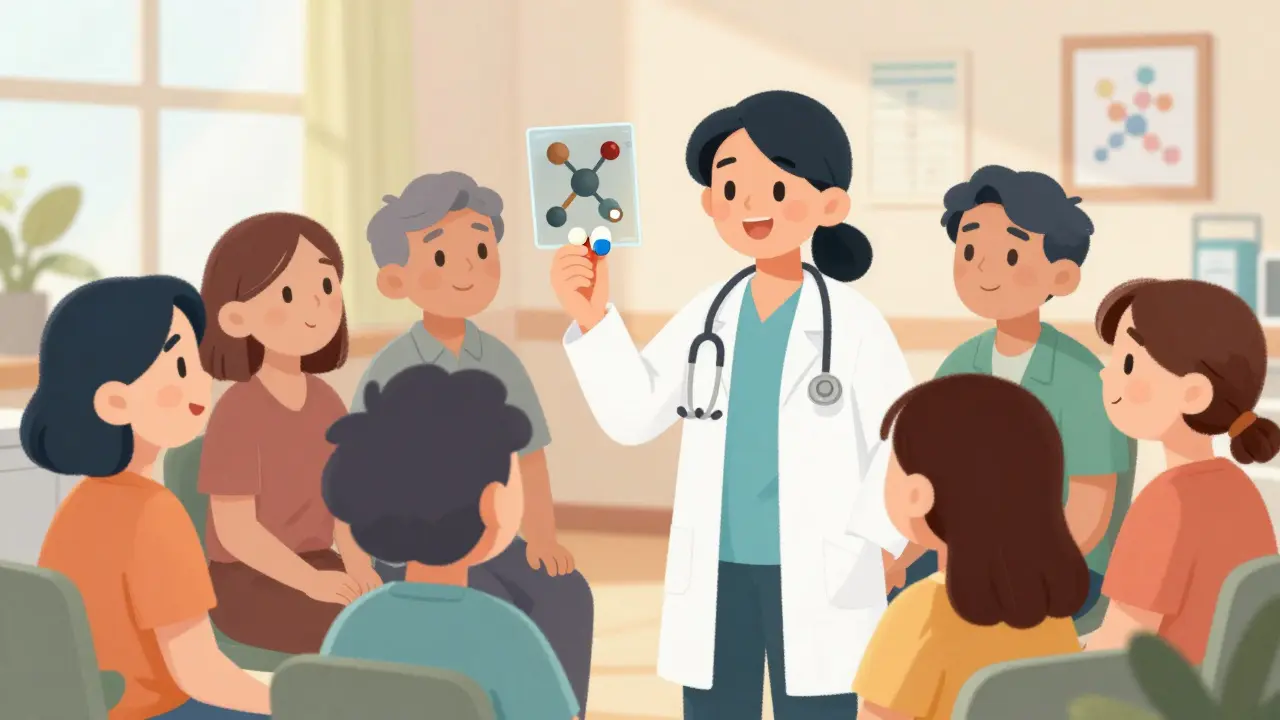
Why So Many People Still Don’t Trust Generic Drugs
It’s 2025, and nearly 91% of prescriptions filled in the U.S. are for generic drugs. Yet, if you ask a room full of patients whether they’d take a generic instead of a brand-name pill, about half will hesitate. Why? Because they’ve been told - by ads, by word of mouth, by the way the pill looks - that generics are somehow less powerful, less safe, or just not as good.
The truth? Generics are identical in active ingredients, strength, and how they work in your body. The FDA requires them to deliver the same amount of medicine into your bloodstream as the brand-name version - within 80% to 125% of the original. That’s not a guess. It’s a strict, science-backed rule tested in clinical trials. Yet, 40% of Americans still think generics are weaker. That’s not ignorance. It’s misinformation.
What Exactly Makes a Drug “Generic”?
A generic drug isn’t a copy. It’s not a knockoff. It’s a legally approved, scientifically verified version of a brand-name drug that’s no longer under patent. The FDA demands that every generic has the same active ingredient, dosage form (tablet, capsule, injection), strength, and route of administration (oral, topical, etc.) as the original.
Here’s what’s different: the color, shape, size, flavor, and inactive ingredients - things like fillers or dyes. These don’t affect how the medicine works. They’re changed so manufacturers can tell their product apart from others. But patients often mistake these visual differences for lower quality. A 2022 University of Michigan survey found that 23% of patients questioned whether a generic was real just because it looked different.
The FDA reviews about 1,000 generic applications every year. Each one must prove bioequivalence - meaning the body absorbs the medicine at the same rate and to the same extent as the brand. That’s not easy. It takes years of testing, and the FDA doesn’t approve a single one unless it meets exact standards.
The Real Cost Difference - And Why It Matters
Generic drugs cost, on average, 80% to 85% less than their brand-name equivalents. That’s not a marketing slogan. It’s a fact backed by data from the Association for Accessible Medicines. In 2022, generics saved the U.S. healthcare system $377 billion. That’s enough to cover the annual cost of care for over 10 million people.
For patients on fixed incomes, this isn’t just savings. It’s access. A 2021 Health Affairs study tracking 3.2 million low-income patients found that switching to generics improved medication adherence by 22%. People didn’t skip doses. They didn’t split pills. They took their medicine as prescribed - because they could afford it.
And it’s not just about money. When a patient can’t afford their drug, they don’t just suffer physically. They end up in the ER, in the hospital, or worse. Generics keep people out of the system - and out of debt.
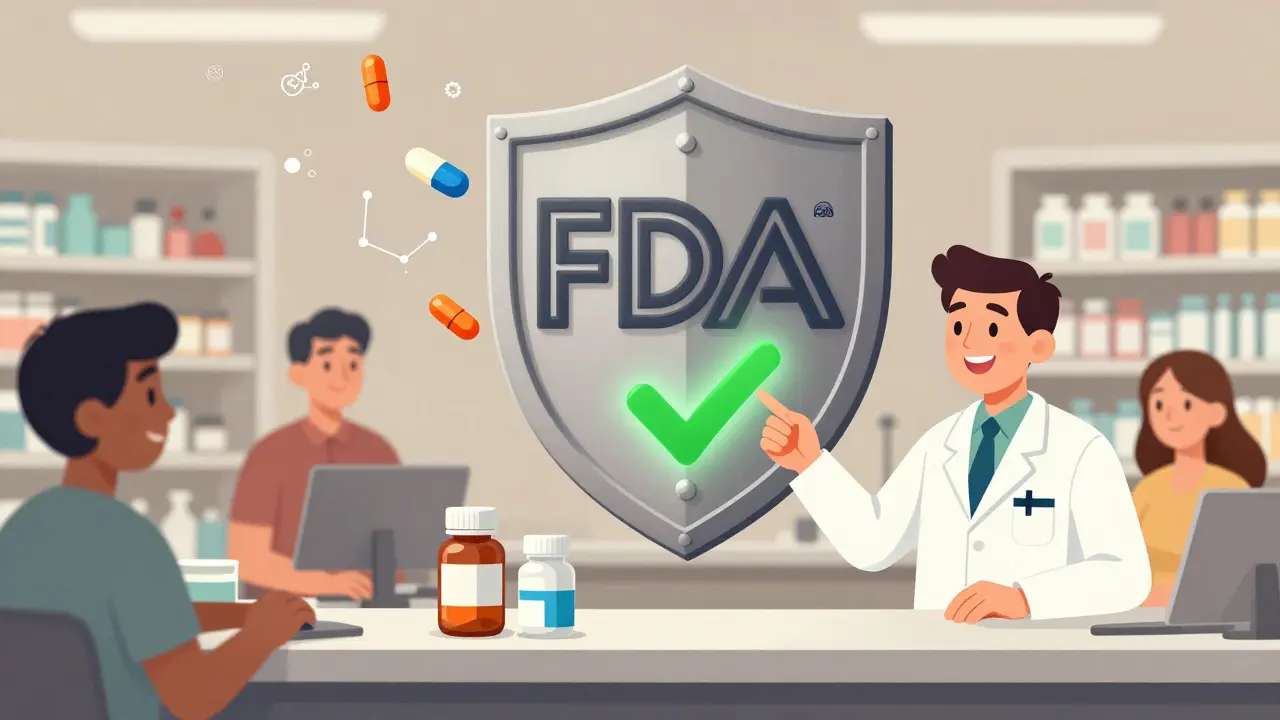
How Community Health Workers Are Changing Minds
It’s not enough to hand someone a pill and say, “This is cheaper.” People need to understand why. That’s where community health presentations come in.
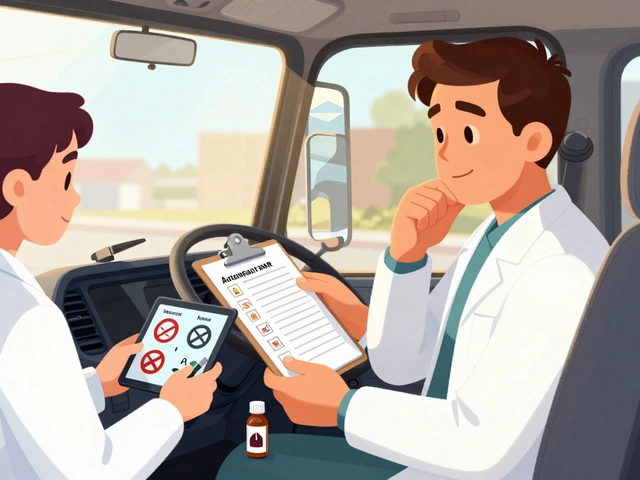
The FDA’s Generic Drugs Stakeholder Toolkit gives health workers 14 proven ways to explain generics to patients. One of the most effective? The “Teach-Back” method. Instead of saying, “Generics are the same,” providers ask: “Can you tell me in your own words why your new pill is safe?”
At the Community Health Center of Burlington, staff started using this method in 2021. Within six months, patient acceptance of generics jumped 37%. Why? Because people weren’t just told - they were listened to. They got to ask questions. They got clear, simple answers.
And it works across cultures and languages. The FDA’s resources are available in English and Spanish, with infographics, short videos, and printable fact sheets designed for low-literacy audiences. No jargon. No fine print. Just plain talk: “The FDA checks every generic to make sure it works the same way.”
Why Some Doctors Still Hesitate - And How That Affects You
Even though 97% of pharmacists trust generics, not all doctors do. And when a doctor says, “I only prescribe the brand,” patients listen. A 2022 JAMA Internal Medicine study showed that when physicians actively recommended generics, patient acceptance jumped from 52% to 89%.
Some doctors worry about complex drugs - like epilepsy medications or thyroid pills - where tiny differences in absorption might matter. And yes, a 2023 study in Epilepsy & Behavior found a slightly higher seizure rate after switching from brand to generic in a small group of patients. But the American Academy of Neurology was clear: this is an extreme outlier. For 99% of people, switching is safe.
The bigger issue? Prescriber bias. If your doctor doesn’t bring up generics, you won’t either. That’s why the American Medical Association passed a resolution in 2022 urging doctors to educate patients about generic safety. It’s not about pushing cheaper drugs. It’s about giving patients real choices.
The Nocebo Effect: When Belief Makes You Sick
There’s a hidden problem no one talks about: the nocebo effect. That’s when you expect to feel worse - so you do.
A 2021 study in Annals of Internal Medicine found that patients who were told they were taking a generic reported side effects 18.7% more often than those who took the exact same pill but were told it was brand-name. The pill didn’t change. The belief did.
That’s why how you talk about generics matters. Saying, “This is a generic version of your old pill,” can trigger anxiety. Saying, “This is the same medicine, just less expensive,” changes the story.
Community health workers are learning to reframe the language. Instead of “You’re switching to a generic,” they say, “You’re getting the same medication your doctor prescribed - at a much lower cost.” Small shift. Big difference.

What’s Changing in 2025 - And What It Means for You
By January 1, 2025, every Medicare Part D plan will be required to hand out standardized educational materials about generics to all enrollees. That’s new. That’s big.
The FDA launched “Generics 101” in 2023 - a series of short videos made specifically for seniors. Early results? Viewers aged 65+ improved their knowledge by 31%. That’s not just education. That’s empowerment.
Meanwhile, the Association for Accessible Medicines has distributed over 2.7 million brochures through community health centers nationwide. These aren’t flyers. They’re designed with input from patients, pharmacists, and doctors. They show side-by-side comparisons, explain bioequivalence in simple terms, and even answer common myths: “No, generics don’t take longer to work.” “No, they’re not made in unsafe factories.”
And it’s working. Rural areas still lag - only 78% of prescriptions filled there are generic, compared to 93% in cities. But programs are now targeting those gaps. The National Association of Community Health Centers made generic education mandatory in all patient counseling sessions starting in January 2024. No more skipping it. No more assumptions.
What You Can Do Today
- Ask your pharmacist: “Is there a generic version of this?” If they say no, ask why. Sometimes, it’s just because they didn’t think to check.
- Don’t judge a pill by its color. If your generic looks different, that’s normal. Ask for the FDA fact sheet - it explains exactly what changed and why.
- Bring up generics at your next doctor’s visit. Say: “I’d like to know if a generic is an option. I’m trying to keep costs down.”
- Share the facts. If you’ve had a good experience with generics, tell someone. Stories beat statistics.
Final Thought: It’s Not About Cheap - It’s About Equal
Generics aren’t “good enough.” They’re equal. They’re tested, approved, and monitored just like brand-name drugs. The science hasn’t changed in 40 years. The only thing that has is our understanding of it.
Community health presentations aren’t about convincing people to save money. They’re about giving people the truth - so they can make confident, informed choices about their health. Because when you know a drug works the same, you don’t fear it. You trust it. And that’s the real power of education.

Kuldipsinh Rathod
27 December, 2025 . 07:13 AM
I used to think generics were fake meds till my dad started taking them for his blood pressure. Same pill, same results, saved him $200 a month. No joke, he’s been stable for 3 years now. Why pay more if it’s the same?
Alex Ragen
27 December, 2025 . 07:47 AM
Let’s be clear: the nocebo effect is not merely a psychological quirk-it is a profound, systemic failure of medical communication, wherein the symbolic capital of pharmaceutical branding is weaponized against patient autonomy. The FDA’s bioequivalence thresholds? Arbitrary. The placebo-controlled trials? Flawed. And yet, we cling to the myth of the ‘brand’ as if it were a sacrament…
Meanwhile, the real crisis is not patient ignorance-it is the commodification of trust.
Lori Anne Franklin
28 December, 2025 . 19:22 PM
i had a friend who refused generics because she said they made her dizzy… turns out she was just stressed and the new pill looked different. once she saw the FDA sheet, she was like ‘ohhhhhhh’ and now she’s saving like 80 bucks a month. lol
Ellie Stretshberry
29 December, 2025 . 20:33 PM
my grandma used to throw away her generic pills because she thought they were fake. she’d say ‘this one’s not the real one’ and cry. we sat down with the FDA video together-just 5 minutes-and she started crying again, but this time happy. now she tells everyone at the senior center ‘it’s the same medicine, just cheaper.’
you don’t need a degree to fix this. you just need to listen.
Zina Constantin
30 December, 2025 . 03:47 AM
As a community health worker in a Spanish-speaking neighborhood, I’ve seen firsthand how language shapes perception. Saying ‘medicina genérica’ doesn’t cut it-people hear ‘copy’ or ‘cheap knockoff.’ We changed our script: ‘Es el mismo medicamento, pero sin el precio de marca.’ That’s when eyes light up. Education isn’t about facts-it’s about framing.
And yes, the brochures with pictures of pills side-by-side? Game-changer.
Jay Ara
1 January, 2026 . 00:50 AM
my cousin in delhi was told his generic heart med was ‘not good’ by a local shopkeeper. he stopped taking it. ended up in the hospital. now he’s back on it after a nurse showed him the FDA proof in hindi. same pill. same results. just no fancy packaging.
its not about america. its about everywhere.
SHAKTI BHARDWAJ
1 January, 2026 . 05:57 AM
oh please the FDA is just a puppet of big pharma they let generics in so they can sell more brand name pills later when the patent expires and everyone forgets about the generics so they can jack up prices again and you think you’re saving money but you’re just being manipulated by the system and also the pills look different so how do you know they’re not laced with something
Jody Kennedy
2 January, 2026 . 07:52 AM
my pharmacist just handed me a generic and said ‘this is the same as your old one’ and I thought ‘okay cool’-then I looked at the pill and it was purple instead of blue and I almost walked out. turned out it was the same exact thing. i feel dumb. but also… why do they even change the color??
christian ebongue
3 January, 2026 . 20:46 PM
97% of pharmacists trust generics. 52% of docs don’t recommend them. guess who’s holding patients back? yep. the guy in the white coat who didn’t read the 2022 JAMA study.
jesse chen
5 January, 2026 . 17:52 PM
It’s fascinating, isn’t it?-how a pill’s color, or the name on the label, can override decades of clinical evidence. The mind is a powerful thing. And when fear is framed as ‘caution,’ it becomes a barrier to care. We need to stop treating patients like children who can’t handle the truth.
Prasanthi Kontemukkala
6 January, 2026 . 07:59 AM
i’ve worked in rural clinics for 12 years. people don’t trust generics because no one ever sat down with them and explained it. not a pamphlet. not a poster. just a person. saying ‘this is safe’ while looking them in the eye. that’s all it took. no fancy tech. just presence.
Bryan Woods
6 January, 2026 . 13:13 PM
While the data supporting generic drug efficacy is robust, the psychological and sociological barriers to adoption remain underexplored in public health literature. Further qualitative research is warranted to assess the impact of visual cues and branding on patient compliance across socioeconomic strata.
Ryan Cheng
7 January, 2026 . 14:24 PM
My sister was on brand-name epilepsy meds for years. Switched to generic after her insurance dropped coverage. No seizures. No side effects. Same bloodwork. Now she tells every new patient: ‘Don’t let the color fool you. The science doesn’t care what it looks like.’