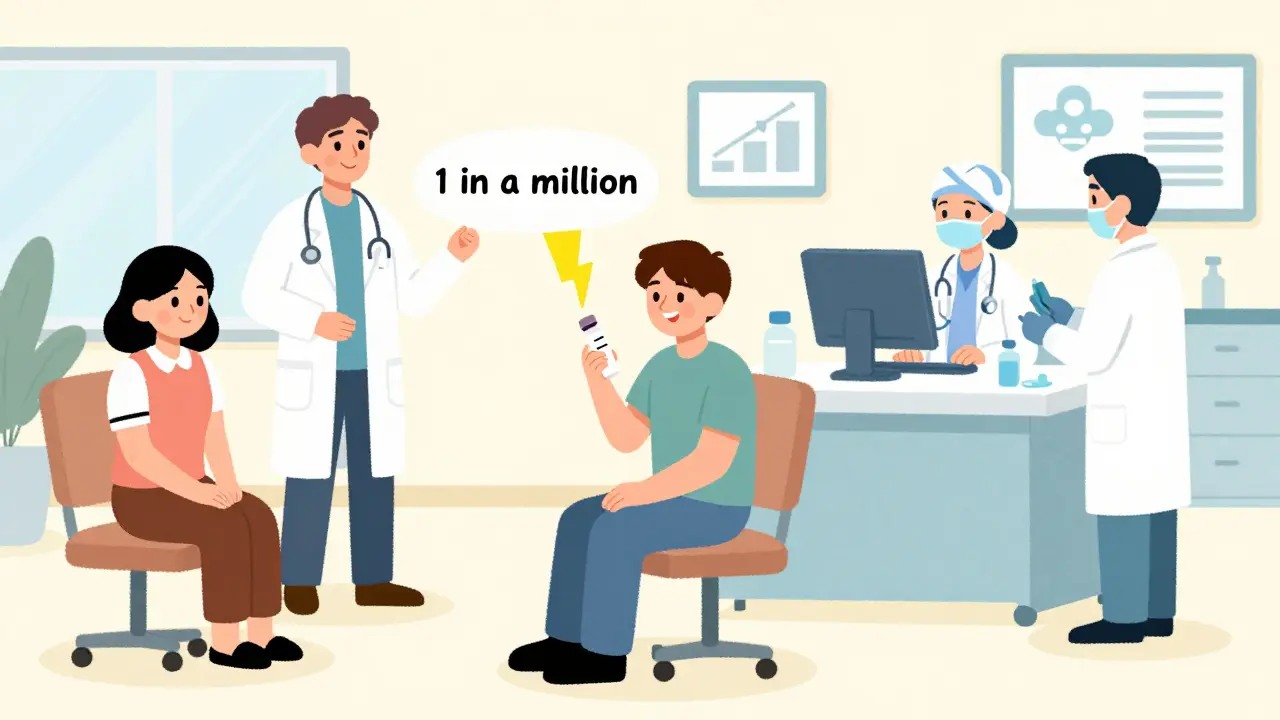
Most people get vaccinated without any issues. But when someone has a serious allergic reaction after a shot, it makes headlines. And that’s understandable - it’s scary. But here’s the truth: vaccine allergic reactions are incredibly rare. So rare, in fact, that you’re more likely to be struck by lightning than to have a life-threatening reaction to a vaccine.
How Rare Are Allergic Reactions to Vaccines?
Let’s put it in numbers you can actually use. Across all vaccines, anaphylaxis - the most serious type of allergic reaction - happens about 1.3 times for every million doses given. That’s less than one in a million. For the mRNA COVID-19 vaccines, the rate was slightly higher at around 5 to 11 cases per million doses. Still, that’s not high. It’s like flipping a coin 10 times and getting heads every time - unlikely, but not impossible.
And here’s something important: most of these reactions happen fast. About 86% of anaphylaxis cases show up within 30 minutes of the shot. Over 70% happen in the first 15 minutes. That’s why clinics ask you to wait after getting vaccinated. It’s not to keep you there longer - it’s so they can act immediately if something goes wrong.
What Causes These Reactions?
People often assume it’s the virus part of the vaccine. But that’s not usually the case. The real culprits are the tiny ingredients used to make the vaccine work - things like stabilizers, preservatives, or the materials used to deliver the active component.
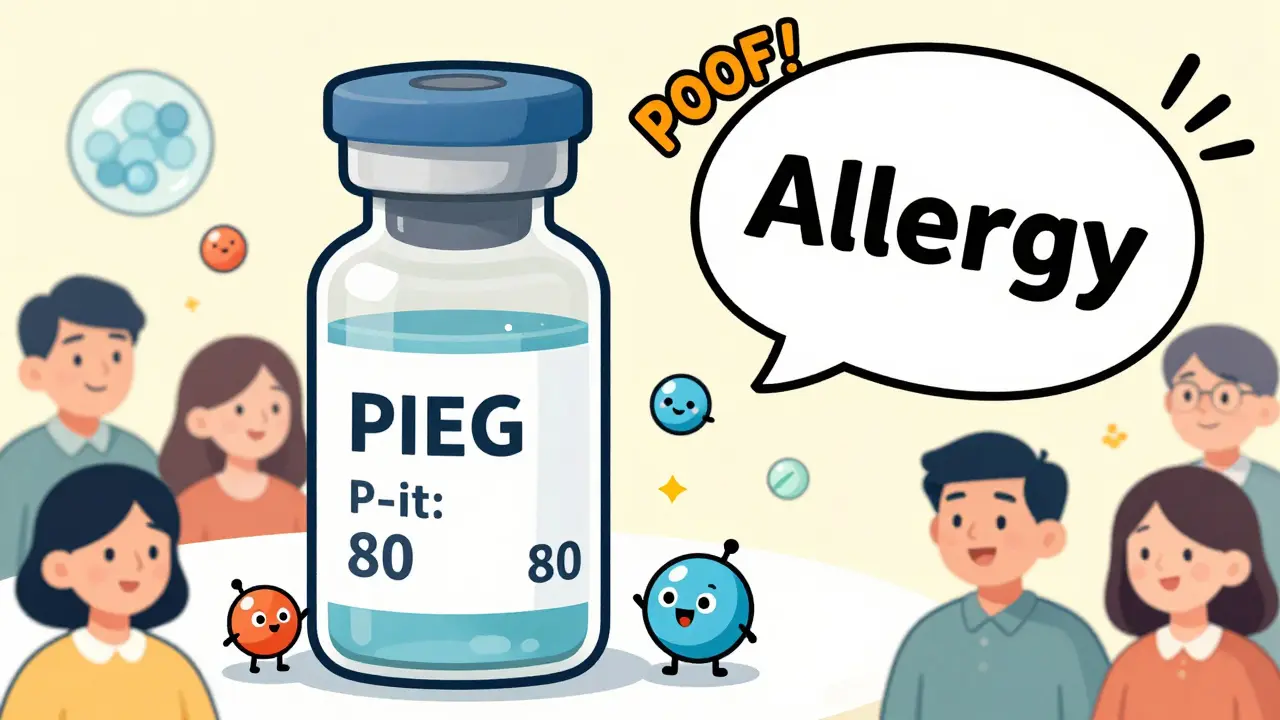
For example, polyethylene glycol (PEG) showed up as a possible trigger in some mRNA vaccine reactions. PEG is found in many everyday products - from laxatives to toothpaste. But only a tiny fraction of people are allergic to it. Another ingredient, polysorbate 80, is chemically similar to PEG and has also been linked to rare reactions.
Then there’s the egg myth. Years ago, people with egg allergies were told to avoid flu shots because the vaccine was made using eggs. But that’s outdated. Studies involving more than 4,300 people with egg allergies - including those who’d had severe reactions to eating eggs - showed no serious reactions after getting the flu vaccine. Today, no special precautions are needed for egg-allergic individuals.
Even yeast allergies, which people worry about with hepatitis B or HPV vaccines, are extremely rare. Only about 15 possible cases were ever reported out of 180,000 allergy reports in the U.S. system. And even then, it wasn’t always clear the yeast was the actual cause.
Who’s at Higher Risk?
Women make up about 81% of reported allergic reactions to vaccines. The average age is around 40, but reactions can happen to anyone - from babies to older adults. Most people who’ve had a reaction before have a history of allergies - to foods, medications, or insect stings. That doesn’t mean you can’t get vaccinated. It just means you should talk to your doctor first.
One key point: if you’ve had a reaction to a vaccine before, you’re more likely to react again. But even then, it’s not guaranteed. Many people who had a mild reaction - like hives or swelling - can safely get the same vaccine again under medical supervision.
What Happens During a Reaction?
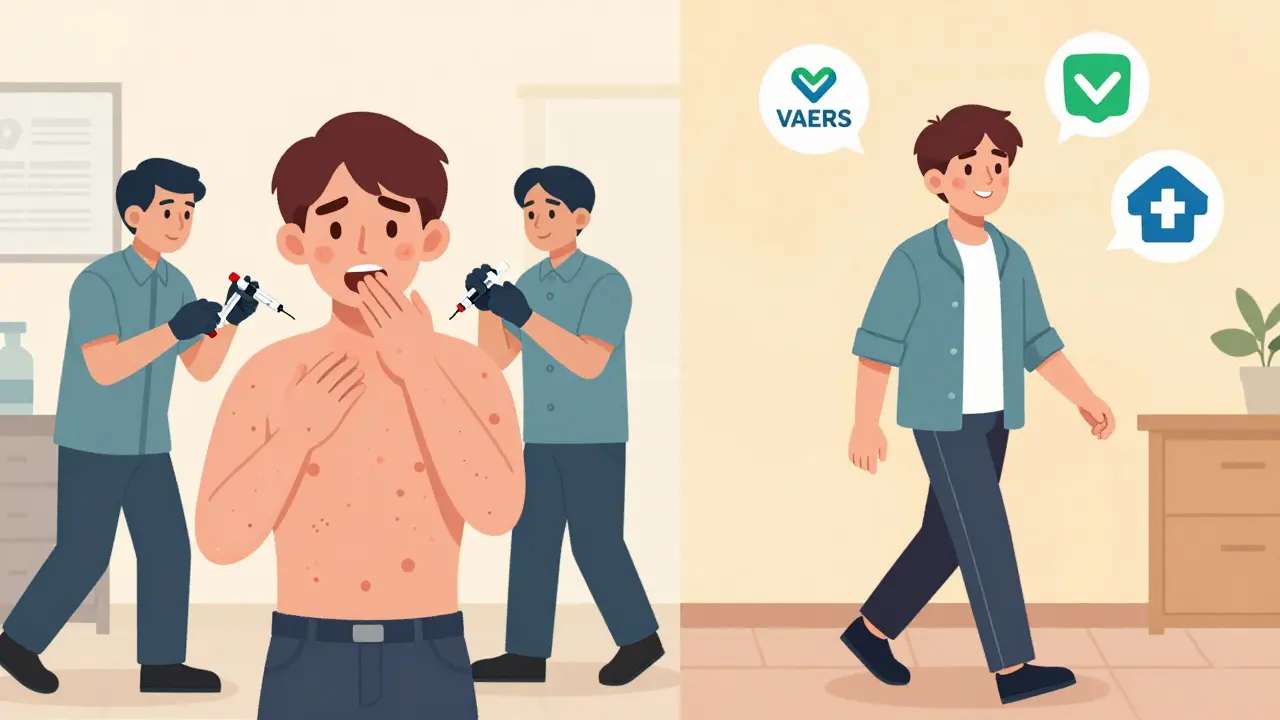
Anaphylaxis isn’t just a rash. It’s a full-body response. Symptoms can include:
- Hives or widespread itching
- Swelling of the lips, tongue, or throat
- Difficulty breathing or wheezing
- Dizziness or fainting
- Rapid heartbeat or low blood pressure
Other reactions, like redness, swelling, or pain at the injection site, are common - but they’re not allergic. They’re just your body’s normal response to the shot. Up to 13% of people get a rash a few days after vaccination. These are usually harmless and go away on their own.
How Are These Reactions Monitored?
The U.S. has one of the most advanced vaccine safety systems in the world: VAERS - the Vaccine Adverse Event Reporting System. It’s run by the CDC and FDA. Anyone - doctors, patients, parents - can report a reaction. It’s not perfect. Some reports are inaccurate. Others are just coincidences. But VAERS acts like an early warning system. When something unusual pops up, researchers dig deeper.
There’s also v-safe, a smartphone tool launched during the pandemic. It sent daily check-ins to people who got the COVID-19 vaccine. Over 3.6 million people used it. It helped spot patterns fast - like the higher rate of anaphylaxis with mRNA vaccines - and confirmed that most reactions were mild and treatable.
Other countries have similar systems. The European Medicines Agency tracks reports through EudraVigilance. The World Health Organization works with 137 countries to make sure no country is flying blind.
What Do Clinics Do to Keep You Safe?
Every clinic that gives vaccines is required to have epinephrine on hand - the only medicine that can stop anaphylaxis. Staff are trained to recognize the signs and act fast. You’ll be asked to wait 15 minutes after your shot. If you’ve had a prior allergic reaction to any vaccine or injection, you’ll be asked to wait 30 minutes.
If you have a known allergy to PEG, polysorbate, or have had a severe reaction to a vaccine before, your doctor might refer you to an allergist. They can do skin tests or blood tests to check for specific triggers. But here’s the thing: most people don’t need this. Only a tiny number of cases ever require it.
And if you’re worried about aluminum in vaccines? It’s not a cause of anaphylaxis. It can sometimes cause a small, hard lump at the injection site that lasts for weeks - but that’s not dangerous. It’s just a side effect.
Why This Matters for Public Health
When people hear about a rare allergic reaction, they start to doubt vaccines. That’s natural. But the data shows something else: the benefits of vaccines far outweigh the risks. Measles kills. Polio paralyzes. COVID-19 still sends people to the hospital. Vaccines prevent all of that.
The fact that we can detect one reaction in a million doses - and respond to it - is a triumph of science and public health. It’s not perfect. But it’s working. The systems in place today are better than ever. And they’re designed to protect you, not scare you.
If you’ve had a reaction before, don’t skip your next shot. Talk to your doctor. Get evaluated. Most people can still be safely vaccinated. And if you’ve never had a reaction? There’s no reason to avoid vaccines because of fear of something that’s statistically almost impossible.
What’s Next?
Scientists are working on better ways to predict who might react. A study funded by the National Institutes of Health is testing whether certain blood markers can signal a risk before vaccination. That could mean a simple blood test before your next shot - but it’s still years away.
For now, the message is clear: vaccines are safe. Allergic reactions are rare. And the systems monitoring them are strong. You’re not taking a gamble when you get vaccinated. You’re choosing protection - and the odds are overwhelmingly in your favor.



Susie Deer
15 January, 2026 . 15:29 PM
Vaccines are safe stop worrying
if you dont get one youre a liability to society
Alvin Bregman
16 January, 2026 . 11:56 AM
i get what ur saying but like i had a cousin who broke out in hives after the flu shot and now shes terrified of anything with needles
its not just about stats its about real people having real fears
Robert Way
17 January, 2026 . 04:51 AM
so p e g is in toothpaste and thats why people react? lol so every time i brush my teeth im risking anaphylaxis? bruh
Sarah Triphahn
18 January, 2026 . 17:16 PM
youre just repeating the same propaganda the CDC feeds you
if it was really so safe why do they need to make you wait 15 minutes?
why do they hide the ingredient lists like its a secret?
its not about fear its about control
and dont even get me started on how they cherry pick data
you think 1 in a million is low? try 1 in a million of your own family
TooAfraid ToSay
19 January, 2026 . 17:08 PM
i got the shot and then my cat started speaking in tongues
its clearly connected
they dont want you to know the truth
Dylan Livingston
21 January, 2026 . 09:10 AM
how touching that you think statistical probability is a substitute for personal autonomy
you reduce human experience to a spreadsheet while people are out here having their lives upended by side effects you call 'rare'
and yet you still have the audacity to call those who hesitate 'anti-science'
how convenient that your moral superiority comes with zero accountability
says haze
22 January, 2026 . 05:51 AM
the real tragedy isnt the rare anaphylaxis
its the erosion of critical thinking in the face of institutional authority
we are conditioned to trust systems without questioning their incentives
the fact that we accept 1 in a million as acceptable reveals more about our societal values than it does about vaccine safety
we have normalized risk because convenience is the new god
Jason Yan
23 January, 2026 . 22:29 PM
i think its really important to remember that the people who have reactions arent just numbers
theyre someone's child, parent, friend
and the systems we have now - like v-safe and VAERS - are actually pretty incredible
they let us catch things early and improve things
most people never have an issue, and that’s amazing
but when someone does, we listen, we learn, we adapt
thats not perfect, but its how science works - not with fear, but with care
if you’ve had a reaction before, talk to your doctor
most of the time you can still get vaccinated safely
and if you haven’t? you’re probably fine
but your fear is real, and that’s okay too