
Adverse Event Detection Accuracy Calculator
Compare how machine learning models outperform traditional methods in detecting adverse drug reactions. According to the article, machine learning achieves 64.1% detection accuracy versus traditional methods' 13%.
For decades, drug safety monitoring relied on doctors and patients reporting side effects through paper forms or simple online portals. These reports piled up in databases, and analysts used basic math to spot patterns-like whether more people got liver damage after taking Drug X than expected. But the system was slow, noisy, and missed things. Today, machine learning is changing that. It’s not just faster-it’s smarter. It’s finding hidden dangers in millions of health records before regulators even know to look.
Why Traditional Methods Are Falling Behind
The old way, called disproportionality analysis, looked at two-by-two tables: how many people had a side effect and took the drug versus how many had the side effect and didn’t. Simple. But it ignored everything else. Age? Other medications? Pre-existing conditions? Duration of use? It treated every report like a coin flip, not a complex medical story. That’s why false alarms ran wild. A patient with diabetes gets a rash after starting a new blood pressure pill? The system flagged it as a possible reaction-even though the rash was from a new soap. Meanwhile, a rare but deadly heart rhythm issue in young cancer patients? Missed. Because only 12 people reported it, and the math said it was too rare to matter. These gaps aren’t theoretical. In one 2023 analysis, traditional methods caught only 13% of adverse events that actually required doctors to change treatment. The rest? Hidden in plain sight.How Machine Learning Sees What Humans Miss
Machine learning doesn’t just count. It connects. It looks at hundreds of variables at once: lab results, diagnosis codes, prescription history, even notes from nurse visits. It learns from past cases-what truly caused harm versus what was just a coincidence. The most effective models right now use gradient boosting machines and random forests. These aren’t magic. They’re statistical engines that build hundreds of tiny decision trees, then combine their answers. Think of it like asking 500 doctors for their opinion on a case, then taking the most consistent one. In a study using Korea’s national adverse event database, a machine learning model spotted four serious side effects of the drug infliximab within the first year they appeared in the data. The drug label didn’t get updated until two years later. That’s two years of patients being exposed to risk unnecessarily. These models don’t just detect signals-they rank them. A signal that shows up in patients over 70 with kidney disease and on three other drugs? That’s high priority. A signal that only shows up in one 22-year-old who also took a new supplement? Probably noise. The system filters out the background hum to find the real alarm.Real-World Performance: Numbers That Matter
Accuracy isn’t a buzzword here-it’s life or death. A 2024 study in JMIR found that gradient boosting machines detected 64.1% of adverse events that led to medical intervention-like stopping a drug or lowering the dose. Traditional methods? Only 13%. That’s a five-fold improvement. Even more telling: the model trained on cancer drugs identified hand-foot syndrome-a painful skin reaction-with 64.1% accuracy in predicting when patients would need treatment changes. Another model, AE-L, caught 46.4% of cases. Both outperformed every statistical method tested. The FDA’s Sentinel System, which now processes over 250 safety analyses annually using machine learning, found that these tools cut down investigation time by 70%. What used to take six months now takes weeks. That’s not efficiency-it’s prevention.
What Data Are These Systems Actually Using?
This isn’t just about spontaneous reports anymore. Modern systems pull from multiple sources:- Electronic health records (EHRs) with full patient histories
- Insurance claims data showing prescriptions and hospital visits
- Patient registries for chronic conditions like rheumatoid arthritis or diabetes
- Social media posts where people describe side effects in their own words
The Catch: Black Boxes and Bad Data
Machine learning isn’t perfect. And it’s not magic. One big problem? Interpretability. If a model flags a drug as dangerous, can you explain why? Sometimes, no. The algorithm might have used 200 variables-some obscure, like the time of day a prescription was filled or the zip code of the pharmacy. That’s fine for prediction, but regulators need to understand the reasoning. Pharmacovigilance specialists report frustration. One told a 2023 LinkedIn group: “I can’t explain to the FDA why the model flagged this. It just says ‘high risk.’ How do I justify a label change on that?” Then there’s data quality. Garbage in, garbage out. If a hospital’s EHR system mislabels a side effect-or if patient reports are incomplete-the model learns the wrong patterns. And if training data lacks diversity-say, mostly white, middle-aged men-the model might miss reactions in women, older adults, or ethnic minorities. These aren’t small issues. They’re systemic. And they’re why human oversight still matters.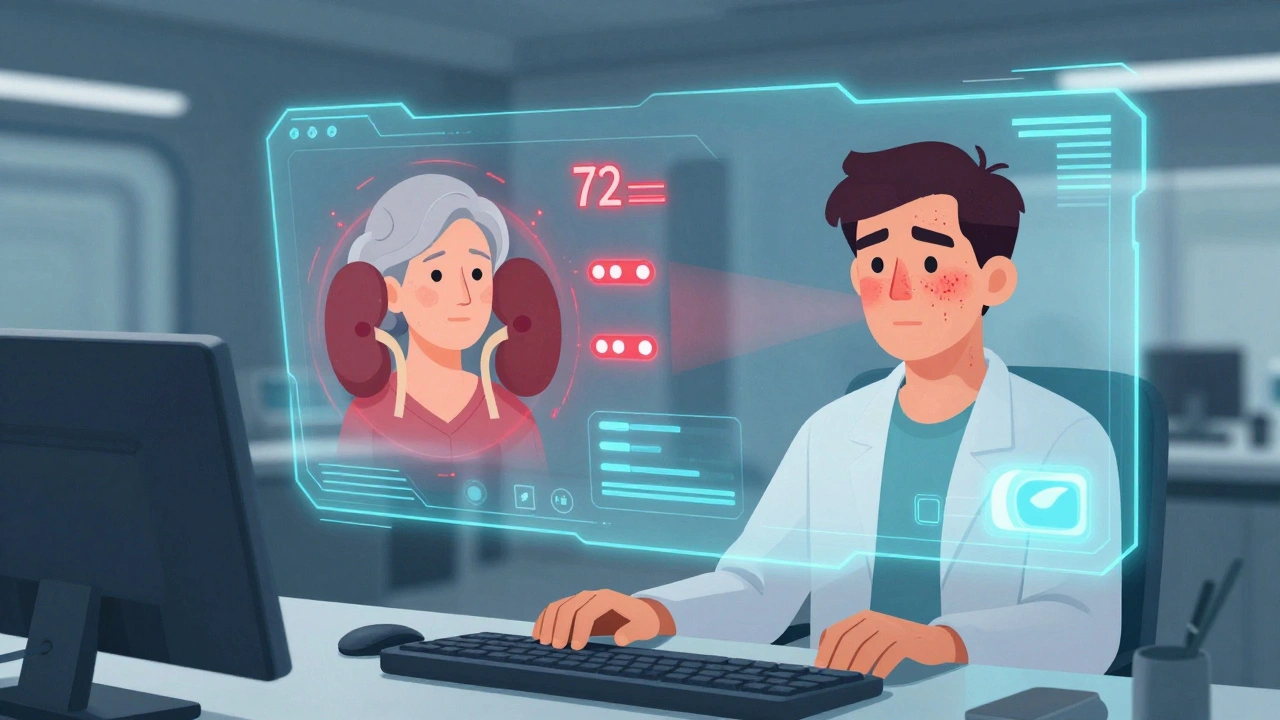
Who’s Using This-and How Fast?
The adoption curve is steep. As of mid-2024, 78% of the top 20 pharmaceutical companies use machine learning in their safety monitoring. That’s up from 32% just three years ago. The global pharmacovigilance market, worth $5.2 billion in 2023, is projected to hit $12.7 billion by 2028. The fastest-growing part? AI-driven signal detection. Regulators are catching up. The FDA released its AI/ML Software as a Medical Device Action Plan in 2021. The European Medicines Agency is finalizing new guidelines for AI validation in pharmacovigilance-due by the end of 2025. They’re not banning it. They’re demanding transparency, reproducibility, and proof it works better than the old way.Where This Is Headed
The next wave? Multi-modal deep learning. Models that don’t just analyze numbers but read doctor’s notes, interpret lab images, and even understand patient sentiment from voice recordings. The FDA’s Sentinel System just rolled out Version 3.0, which uses natural language processing to automatically extract key details from adverse event forms-no human needed. It checks for red flags like “chest pain after 3 days” or “swelling in legs after starting new med” and flags them for review. Soon, systems will predict risk before a drug even hits the market. By analyzing early clinical trial data, real-world usage patterns, and genetic markers, they’ll estimate which patient groups are most at risk-and recommend targeted warnings. This isn’t science fiction. It’s happening now.What This Means for Patients and Doctors
For patients, it means fewer surprises. Fewer drugs pulled from shelves after dozens die. Fewer side effects that go unnoticed until it’s too late. For doctors, it means better tools. Instead of guessing if a rash is drug-related, they’ll get alerts backed by data: “This reaction occurred in 11% of patients with your profile. Consider switching.” And for the system? It means moving from reactive to proactive. No more waiting for reports. No more hoping someone speaks up. Machine learning is listening-always. The goal isn’t to replace pharmacovigilance professionals. It’s to give them superpowers. The best outcomes come when algorithms find the needle-and humans decide what to do with it.How accurate are machine learning models in detecting adverse drug reactions?
Current models using gradient boosting machines achieve accuracy rates around 0.8 in identifying true adverse drug reactions, compared to traditional methods that often fall below 0.5. In real-world validation, these systems detected 64.1% of adverse events requiring medical intervention, while traditional methods caught only 13%. This means machine learning is over five times more effective at finding signals that actually matter.
What data sources do machine learning systems use for signal detection?
Modern systems combine multiple data streams: electronic health records, insurance claims, patient registries, spontaneous adverse event reports, and even social media posts. The most effective models use at least three sources to cross-validate signals. For example, if a patient stops a medication, reports fatigue in a forum, and shows abnormal lab results in their EHR, the system links these as a single safety signal-something traditional methods would miss.
Why are regulatory agencies like the FDA and EMA supporting machine learning in pharmacovigilance?
Regulators support these tools because they detect safety signals faster and with greater precision than manual methods. The FDA’s Sentinel System has conducted over 250 safety analyses using machine learning, reducing investigation time by 70%. The EMA is developing formal guidelines for AI validation because these systems can identify risks before they become widespread-potentially saving lives and reducing costly drug withdrawals.
Are machine learning models replacing human pharmacovigilance experts?
No. They’re augmenting them. Machines find patterns; humans interpret context. A model might flag a drug as risky, but only a trained professional can determine if the signal is due to a real side effect, data error, or coincidental timing. Human judgment is still essential for regulatory decisions, label updates, and communicating risks to clinicians and patients.
What are the biggest challenges in implementing machine learning for adverse event detection?
The biggest challenges are data quality, model interpretability, and integration. Poorly coded EHRs or incomplete reports lead to false signals. Many deep learning models are “black boxes”-hard to explain to regulators. And integrating these tools into legacy safety databases often takes 18-24 months. Successful implementations start small, testing on one drug class before scaling up.
How long does it take for a pharmacovigilance professional to learn these tools?
Most professionals need 6 to 12 months to become proficient. This includes learning data preprocessing, understanding model outputs, and interpreting statistical confidence levels. The learning curve is steep because it requires blending pharmacovigilance knowledge with basic data science skills-something not traditionally part of the training for safety specialists.
Will machine learning eventually make traditional signal detection methods obsolete?
Not entirely. Simple statistical methods still have value for initial screening, especially in small datasets or when regulatory guidelines require them. But for complex, real-world data, machine learning is becoming the gold standard. The future lies in hybrid systems: using traditional methods for broad screening and ML for deep analysis.




Audrey Crothers
11 December, 2025 . 13:23 PM
This is so cool!! 🤯 I never realized how much ML could help catch bad drug reactions before people get hurt. My aunt took a med that messed up her liver and no one caught it for months. This could’ve saved her.
Stacy Foster
12 December, 2025 . 00:17 AM
They’re not saving lives-they’re spying on you. Your EHR, your pharmacy logs, your Reddit posts… they’re all being fed into some corporate AI black box. Next thing you know, your insurance denies you meds because ‘the algorithm says you’re high risk’. This isn’t safety-it’s control.
Robert Webb
13 December, 2025 . 19:32 PM
I’ve been working in pharmacovigilance for 18 years, and I’ve seen this shift from paper forms to spreadsheets to AI. The real win here isn’t just the 64% detection rate-it’s the cultural change. We’re moving from waiting for someone to report a problem to actively listening for patterns. But we can’t forget the human layer. The model might say ‘high risk,’ but only a clinician knows if that patient was also going through a divorce, sleeping on the couch, and taking OTC painkillers on top of it. Context matters.
Laura Weemering
14 December, 2025 . 10:34 AM
Black boxes... data bias... interpretability... *sigh*... it’s always the same story, isn’t it? We build systems that ‘predict’... but we don’t understand... and then we blame the patient... or the doctor... or the algorithm... but never the system... never the structure... never the capitalist imperative to deploy before it’s ready...
Nathan Fatal
15 December, 2025 . 05:28 AM
The 5x improvement in detection isn’t just a number-it’s a moral imperative. If you’re a doctor and you’ve got a patient with a rare reaction, you don’t want to wait two years for a label update. You want to know now. These models don’t replace judgment-they give you the data to make better judgment calls. The real danger isn’t AI. It’s clinging to methods that missed 87% of critical events.
Rob Purvis
16 December, 2025 . 16:49 PM
I love that they’re using social media now. I’ve seen so many people post ‘this new pill made me feel like a zombie’ and no one ever connects it. I work in a clinic-we get 3-4 of those a week. If the system picks up on that, even if it’s just flagged for review, it’s huge. Also, the multi-source validation? Genius. One source lies. Two are questionable. Three? That’s when you start trusting it.
Levi Cooper
16 December, 2025 . 17:08 PM
This is why America’s healthcare is falling apart. We let machines make life-or-death calls now? In China, they still have doctors. In Germany, they have teams. Here? We outsource judgment to code written by kids in Silicon Valley who’ve never seen a hospital. This isn’t progress. It’s surrender.
Ashley Skipp
17 December, 2025 . 01:33 AM
I dont think this is working right i saw a post about a drug causing heart issues and the system said nope all good then 3 people died
Reshma Sinha
18 December, 2025 . 13:16 PM
In India, we’re just starting to digitize EHRs, but the potential here is massive. Imagine a rural patient who can’t reach a doctor but posts about dizziness after taking a new med. If AI picks that up and alerts a community health worker? That’s life-saving at scale. We need low-cost, localized models-not just Western ones trained on white, middle-class data.
Lawrence Armstrong
19 December, 2025 . 01:04 AM
The emoji thing is real. I use them in internal Slack threads to flag urgency. 🔴 for critical, 🟡 for watch, 🟢 for noise. Helps the team triage faster. Also, ML flagged a drug interaction I’d never heard of-turned out it was in a 2019 paper from Brazil. Without the model, I’d have missed it.
Donna Anderson
20 December, 2025 . 09:06 AM
omg yes!! i was on that infliximab thing and my doc never warned me about the joint pain till i told him i couldnt walk. if this system had caught it i could’ve avoided 3 months of agony. pls make this standard everywhere
sandeep sanigarapu
21 December, 2025 . 11:44 AM
The integration of machine learning into pharmacovigilance represents a paradigm shift in patient safety. However, the implementation must be methodical, transparent, and inclusive. Data diversity, regulatory alignment, and human oversight remain non-negotiable components of ethical deployment.
nikki yamashita
22 December, 2025 . 19:21 PM
This is the future and I’m here for it!! 🙌 Finally, something that actually protects people instead of just paperwork. Doctors need this tool-no excuses.
Adam Everitt
23 December, 2025 . 22:39 PM
i think the real issue is that we trust machines more than we trust each other. if a nurse says ‘this patient seems off’ we ignore it. but if an algorithm says it, we panic. maybe we just need to listen to people more... and train the ai better