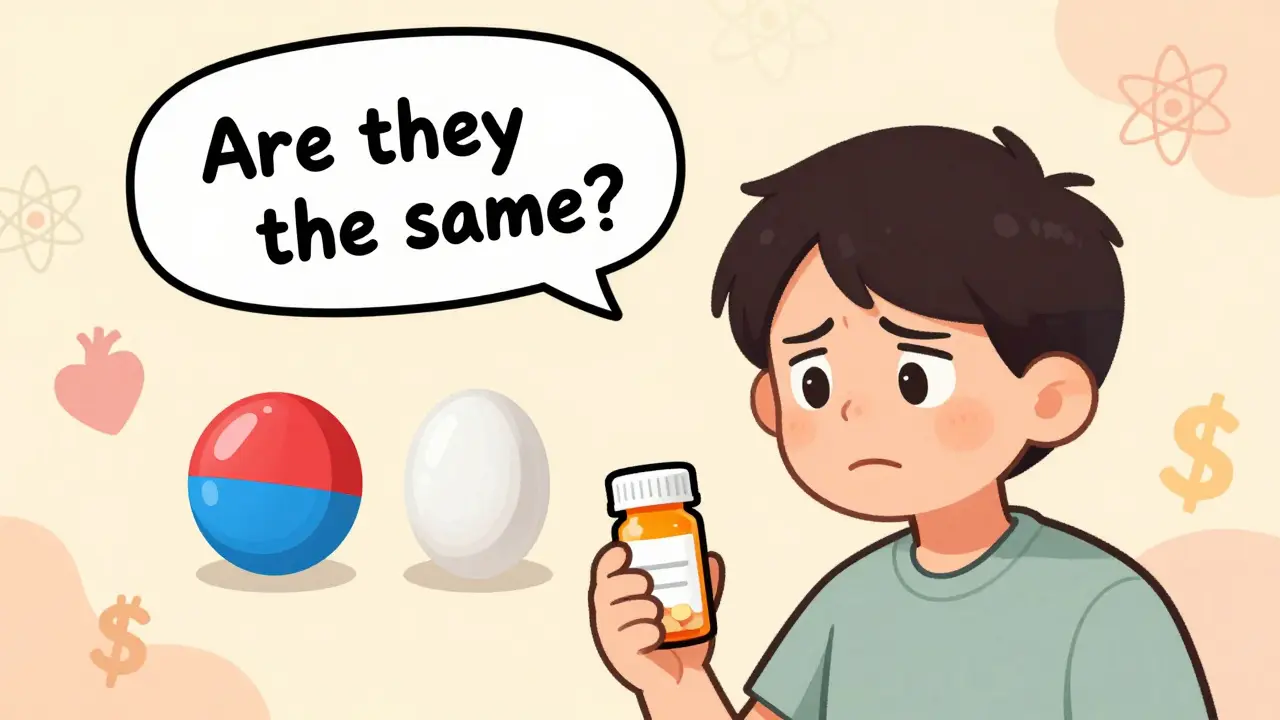
When you pick up your prescription, you might be handed a pill that looks totally different from what you’ve taken before. The name on the bottle is unfamiliar. The color’s wrong. The shape’s odd. And suddenly, you’re wondering: Is this going to work the same?
The short answer? Yes. In nearly every case, a generic medication works just like its brand-name version. But that doesn’t mean you shouldn’t ask questions. Many people don’t realize they have a right to talk about this with their doctor - and that doing so can save hundreds, even thousands, of dollars a year.
What’s the Real Difference Between Generic and Brand-Name Drugs?
Generic drugs aren’t cheap knockoffs. They’re exact chemical copies. The U.S. Food and Drug Administration (FDA) requires that generics contain the same active ingredient, in the same strength, and work the same way in your body as the brand-name version. That means if you’re taking a generic version of metformin for diabetes, it’s doing exactly what the brand-name Glucophage does - lowering blood sugar, with the same risks and benefits.
The only differences? Appearance and cost. Generics can’t look identical to brand-name drugs because of trademark laws. So they might be a different color, shape, or size. They might have different fillers or coatings - things that don’t affect how the medicine works, but can change how it feels in your mouth or how quickly it dissolves slightly. These inactive ingredients are safe, but they’re why some people notice a change when they switch.
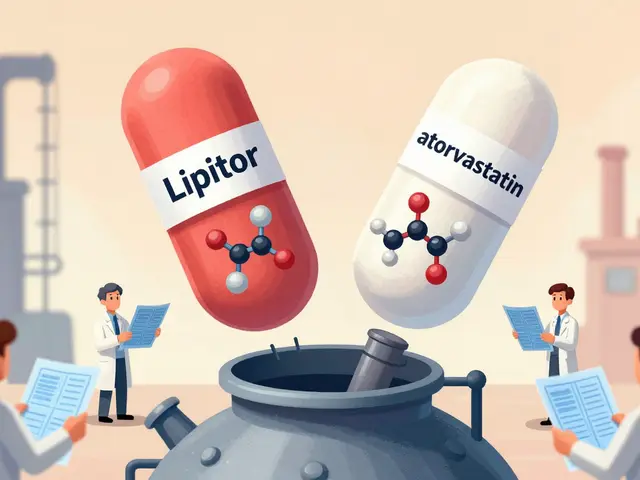
And then there’s the price. Generics cost 80-85% less. A 30-day supply of brand-name Lipitor might run you $300. The generic atorvastatin? $12. That’s not a marketing trick. It’s because generic manufacturers don’t have to pay for expensive clinical trials. They just prove their version works the same - which the FDA checks closely.
Why Do Doctors Sometimes Prescribe Brand-Name Drugs?
Most of the time, it’s not because the brand is better. It’s often because:
- The doctor didn’t think to check if a generic exists
- You didn’t mention cost as a concern
- The prescription was written before a generic became available
- There’s a rare case where switching might cause issues
There are a few medications where tiny changes in how the drug is absorbed matter - like warfarin (a blood thinner), levothyroxine (for thyroid), or certain anti-seizure drugs. These are called narrow therapeutic index drugs. Even small differences in absorption can lead to side effects or reduced effectiveness.
But here’s the catch: the FDA says approved generics are safe for these too. Studies show the average difference in absorption between generic and brand is just 3.5% - well within the 20% safety range. Some patients report feeling different after switching, but research suggests that’s often the nocebo effect - where expecting a problem causes you to feel one. In one Kaiser Permanente survey, 92% of patients were satisfied with generics after their pharmacist explained the switch.
Still, if you’ve had a bad reaction to a specific generic brand before - say, you got dizzy when you switched from one manufacturer’s levothyroxine to another - tell your doctor. They can write “dispense as written” on the prescription to prevent that particular switch.
What You Should Say to Your Doctor
You don’t need to be pushy. You don’t need to sound like a pharmacist. Just be honest. Here’s what to say:
- “I noticed my pill looks different. Is this the generic version?”
- “I’m worried about the cost. Is there a generic I could take instead?”
- “I’ve had trouble with generics before. Can we talk about whether this one’s right for me?”
- “I’m on a tight budget. Are there any cheaper options that work just as well?”
These aren’t awkward questions. They’re smart ones. Your doctor wants you to take your medicine. If cost is stopping you, they’d rather know now than find out you skipped doses because you couldn’t afford it.
According to Harvard Medical School, high prices cause people to skip pills, cut doses, or stop treatment entirely. That’s when real health problems start. A $45 savings per prescription might mean you can afford your asthma inhaler next month. Or your blood pressure pill. Or your insulin.

What Pharmacists Can Tell You
Your pharmacist is your secret weapon. They see every prescription, every switch, every patient concern. They know which generics are reliable, which ones have had supply issues, and which ones patients report problems with.
If you’re unsure about a switch, ask your pharmacist: “Is this the same as what I was taking before?” or “Has this generic worked well for other people with my condition?”
A 2022 study by the American Pharmacists Association found that 78% of patient worries about generics were cleared up with a simple conversation. Pharmacists can also tell you if your state requires automatic substitution - which most do - unless your doctor says “dispense as written.”
When You Should Stick With Brand-Name
There are three real reasons to stay on brand-name:
- You’ve had a confirmed bad reaction to a generic version. If switching caused nausea, dizziness, or your condition worsened - document it. Bring it up with your doctor.
- You’re on a complex biologic medication. These are drugs made from living cells - like Humira or Enbrel. They don’t have generics. They have biosimilars, which are similar but not identical. These are more expensive and require special approval.
- Your insurance forces you to try the generic first. Some plans have step therapy rules. You might need to try the generic before they’ll pay for the brand. That’s not your doctor’s choice - it’s the insurer’s.
For 90% of medications - antibiotics, statins, blood pressure pills, antidepressants - generics are not just cheaper. They’re just as effective. The FDA approves over 700 generic drugs every year. More than 9 out of 10 prescriptions filled in the U.S. are for generics. That’s not luck. That’s science.
How to Spot a Generic on Your Prescription
When your doctor writes a prescription, they usually list the brand name. But that doesn’t mean you’ll get it. Pharmacies are legally required to substitute a generic unless the doctor says otherwise. So check your receipt. Look at the label. The generic name will be there - like “metformin” instead of “Glucophage.”
If you’re unsure, ask: “Is this the brand or the generic?” Most pharmacies will print it clearly. If not, call them. You have a right to know what you’re taking.

What to Do If You Feel Different on a Generic
Feeling off after a switch doesn’t automatically mean the drug isn’t working. But it doesn’t mean you should ignore it either.
Here’s what to do:
- Track your symptoms. Write down when you feel different - headaches, fatigue, mood changes, worsening symptoms.
- Check the timing. Did it start right after the switch? Or was it something else?
- Don’t stop the medication. Call your doctor or pharmacist first.
- Ask: “Could this be the new generic? Should I go back to the brand?”
Many people feel better after a week or two. Your body adjusts. But if symptoms persist, your doctor can switch you back - or try a different generic manufacturer.
One patient in Perth told me she felt foggy after switching from brand-name sertraline to the generic. She kept a journal, brought it to her doctor, and they tried a different generic brand. Within days, she felt like herself again. It wasn’t the drug - it was the filler.
Why This Matters for Your Health - and Your Wallet
Between 2007 and 2016, generic drugs saved the U.S. healthcare system $1.67 trillion. That’s not just a number. That’s millions of people who could afford their meds because generics existed.
Here in Australia, the Pharmaceutical Benefits Scheme (PBS) does something similar. It negotiates lower prices for generics, so patients pay less. But even with subsidies, some people still struggle. A $10 difference per script adds up to $120 a year. For someone on three medications? That’s $360. That’s a week’s groceries. Or a dental check-up. Or a bus pass to get to your appointments.
Choosing a generic isn’t about cutting corners. It’s about using smart, proven science to stay healthy without going broke.
Final Thoughts: Speak Up, Stay Informed
You don’t need to be an expert to have this conversation. You just need to care about your health - and your budget.
Next time you get a prescription, ask: “Is there a generic version?” If you’re already on one and it’s working, great. If you’re unsure, ask your pharmacist. If you feel different, tell your doctor. You’re not being difficult. You’re being responsible.
Medications aren’t just pills. They’re your ability to work, to sleep, to play with your kids, to live without pain. If a cheaper version does the same job - why not use it? And if you’re not sure? That’s what your doctor is there for.


Jay Clarke
16 January, 2026 . 17:08 PM
So let me get this straight - we’re supposed to trust a pill that looks like it was manufactured in a basement by a guy named ‘Bob’ because the FDA says so? I’ve seen what happens when Big Pharma cuts corners. My cousin took a generic for his blood pressure and ended up in the ER. Don’t give me that ‘nocebo effect’ nonsense. If your body reacts, it’s reacting for a reason.
Stacey Marsengill
16 January, 2026 . 22:07 PM
I switched to generic sertraline last year and felt like a ghost. Like my soul got dipped in concrete. I cried for three days straight. Not because I’m ‘emotional’ - because the damn filler had talc in it. Talc. Like baby powder. Who thinks that’s okay to mix with antidepressants? My therapist said it was ‘psychological.’ I said, ‘Then why did I feel better the second I switched back?’
Aysha Siera
18 January, 2026 . 10:59 AM
Generics are a government scam to control the population. The FDA is owned by Pfizer. The ‘active ingredients’ are the same - but the binders? They’re laced with microchips. You think your body ‘adjusts’? Nah. You’re just being conditioned. Watch the news - every time they push generics, mental health cases spike. Coincidence? I think not.
rachel bellet
18 January, 2026 . 16:33 PM
There’s a critical distinction here between bioequivalence and therapeutic equivalence. While the FDA mandates ±20% variability in AUC and Cmax for generic approval, clinical outcomes are not uniformly distributed across populations. Suboptimal dissolution profiles in certain generics - particularly for drugs with low solubility or high first-pass metabolism - can induce subtherapeutic concentrations, especially in patients with altered GI motility or hepatic enzyme polymorphisms. The nocebo effect is statistically significant, but not causally exhaustive. You’re conflating anecdotal experience with population-level pharmacokinetic data.
Pat Dean
19 January, 2026 . 14:25 PM
Why are we even talking about this? In America, we pay more for medicine than any other country on earth - and now you want to whine about a pill looking different? If you can’t afford your meds, get a job. Or move to Canada. We don’t have time for this softness. Generics are cheaper because they’re better. Stop being dramatic. Your body doesn’t need pampering - it needs to work.
Selina Warren
19 January, 2026 . 17:14 PM
Listen. I used to be the person who refused generics. Thought they were ‘inferior.’ Then I got laid off. Insurance dropped. I had to switch my statin. I was terrified. But guess what? I didn’t have a heart attack. I didn’t get dizzy. I didn’t turn into a zombie. I saved $280 a month. That’s three months of rent. That’s my kid’s braces. That’s my dog’s cancer meds. You think your ‘feelings’ matter more than your survival? Wake up. Science isn’t optional. And neither is your health.
Robert Davis
20 January, 2026 . 22:43 PM
Actually, there’s a study from the University of Michigan in 2019 that found a 12% increase in non-adherence among patients who were switched to generics without counseling. The issue isn’t the drug - it’s the lack of patient education. Pharmacists are overloaded. Doctors are rushed. And patients are left confused. So yeah, the pill looks different. But nobody told you why. That’s the real problem.
christian Espinola
21 January, 2026 . 12:42 PM
There’s a grammatical error in the post. It says ‘dispense as written’ on the prescription - but the correct phrase is ‘dispense as written’ without quotes, and it’s not capitalized unless it’s part of a direct quote. Also, ‘nocebo effect’ should be italicized in formal writing. Minor, but it undermines credibility. And while I agree generics are fine for most, the FDA’s approval process for complex molecules like levothyroxine is underfunded. That’s not conspiracy - it’s budgeting.
Andrew Qu
22 January, 2026 . 03:12 AM
Hey - I’m a pharmacist. I’ve been filling scripts for 18 years. I’ve seen people panic over generics. I’ve seen them switch back and forth. I’ve seen them get better. Here’s what I tell everyone: if you feel off, write it down. Note the date. Note the pill color. Bring it in. We can check the manufacturer. We can swap to a different generic. We can even order the brand if your doctor signs off. No shame. No judgment. Just facts. And if you’re worried about cost? We’ve got coupons. We’ve got patient assistance programs. You’re not alone. Ask. Just ask.