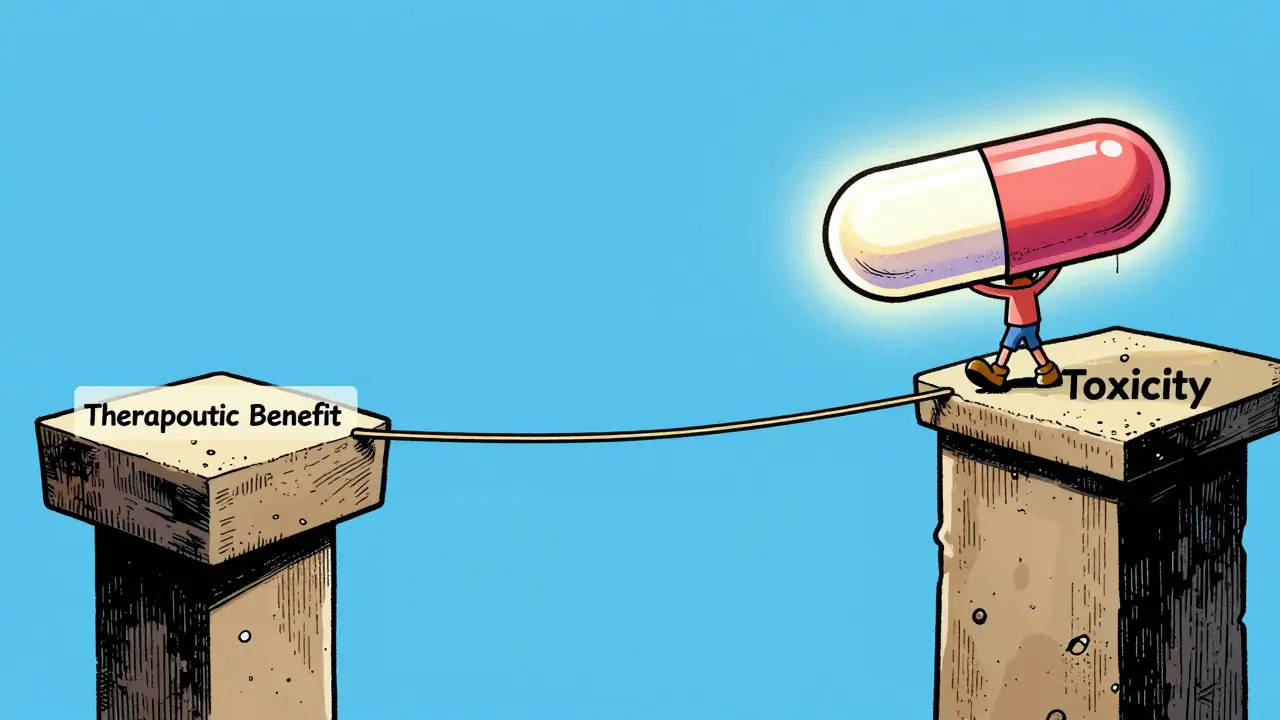
Imagine taking a common over-the-counter painkiller for a headache, only to end up in the hospital with severe tremors and confusion. While it sounds like a freak accident, this is a real risk for people taking Lithium is a mood stabilizer primarily used to treat bipolar disorder. First approved by the FDA in 1970, it remains a gold standard for stabilizing mood swings, but it comes with a catch: it has a very narrow therapeutic index. This means the difference between a dose that helps you and a dose that poisons you is tiny-usually measured between 0.6 and 1.2 mmol/L.
Because Lithium is cleared from the body almost entirely by the kidneys (about 95%), anything that changes how your kidneys work can send your blood levels skyrocketing. This is where common medications like NSAIDs and diuretics, and even a simple case of the flu, become dangerous. If you or a loved one are on this medication, understanding these triggers isn't just helpful-it's a safety requirement.
The Danger of NSAIDs and Pain Relief
Most people reach for an anti-inflammatory when they have joint pain or a fever. However, NSAIDs (Non-Steroidal Anti-Inflammatory Drugs) can seriously interfere with how the body handles lithium. These drugs work by inhibiting prostaglandins, which are substances that help maintain blood flow to the kidneys. When you block those prostaglandins, your glomerular filtration rate drops, meaning your kidneys can't flush out lithium as efficiently as they should.
Not all painkillers are created equal. Some cause a much sharper rise in lithium levels than others. For example, indomethacin is known to be quite aggressive, potentially increasing lithium concentrations by 30-60%. Ibuprofen is slightly less potent but can still cause a 25-40% increase, while celecoxib typically ranges from 15-30%. The risk is highest during the first week of starting an NSAID, especially for people over 65 or those who are already slightly dehydrated.
The danger is compounded when NSAIDs are mixed with other blood pressure medications. There are documented cases, including a fatal incident involving a 72-year-old woman, where the combination of lithium, an ACE inhibitor (like cilazapril), and an NSAID led to lethal toxicity. This "triple whammy" can essentially shut down renal clearance, making the drug build up to toxic levels rapidly.
Diuretics: Water Pills and Lithium Levels
Diuretics, often called water pills, are used to treat high blood pressure and edema. Because they change how your body handles salt and water, they have a direct impact on lithium. Thiazide Diuretics (such as hydrochlorothiazide) are the most problematic. They can cause a rapid rise in serum lithium concentrations, often within just 7 to 10 days of starting the medication. These can push lithium levels up by 25-50%, significantly increasing the risk of toxicity.
Loop diuretics, like furosemide (frusemide), also pose a risk, though they generally cause a more modest increase (around 10-25%) and happen less frequently than with thiazides. Interestingly, not all diuretics act the same way. Carbonic anhydrase inhibitors (like acetazolamide) and osmotic diuretics (like mannitol) actually decrease lithium levels by 15-30%, which can lead to the medication becoming ineffective and mood symptoms returning.
| Diuretic Type | Example Drug | Effect on Lithium | Typical % Increase/Decrease |
|---|---|---|---|
| Thiazide | Hydrochlorothiazide | Increase | 25-50% |
| Loop | Furosemide | Increase | 10-25% |
| Carbonic Anhydrase Inhibitor | Acetazolamide | Decrease | 15-30% |
| Osmotic | Mannitol | Decrease | 15-30% |
The Hidden Risk: Dehydration and Salt
You don't always need a second prescription drug to trigger toxicity. Your lifestyle and environment play a massive role. Dehydration is a critical risk multiplier because lithium levels rise proportionally as the volume of water in your blood decreases. Even a mild loss of 2-3% of your body weight in water can spike lithium concentrations by 15-25%.
Consider a few common scenarios: a bout of gastroenteritis (stomach flu) with vomiting and diarrhea, a long-haul flight, or an intense workout in the heat. These all lead to fluid loss. If you're traveling to a tropical climate or fighting a fever, you are at a much higher risk. This is why staying hydrated is the most important daily habit for someone on lithium.
Salt intake is equally vital. Lithium is chemically similar to sodium. If you suddenly switch to a very low-salt diet, your body tries to hold onto sodium by absorbing it back through the kidneys. In the process, it accidentally absorbs lithium too, which raises the levels in your blood. Conversely, a massive increase in salt can flush lithium out too quickly, potentially making your treatment fail. The goal is a consistent, moderate salt intake.
Spotting the Signs of Lithium Toxicity
Since toxicity can happen quickly, you need to know the red flags. It usually starts subtly. Diarrhea is one of the earliest signs, appearing in about 68% of early cases, often followed by lightheadedness and a general feeling of drowsiness. As levels climb, you might notice a coarse tremor in your hands (different from the mild tremor some people have while on a stable dose) or a feeling of mental "fog."
When toxicity becomes severe, the symptoms turn neurological. Blurred vision and tinnitus (ringing in the ears) are common. In the most extreme cases, lithium toxicity can lead to seizures, coma, or permanent kidney damage. Because these symptoms can overlap with other illnesses, any new or worsening physical symptom should be reported to a doctor immediately.
Safe Management and Monitoring Protocols
If you must take an NSAID or a diuretic while on lithium, it doesn't have to be a disaster, but it does require a strict plan. Doctors usually recommend lower doses of the interacting drug and a shorter treatment window. The most important tool is the blood test.
- Immediate Monitoring: If you start an NSAID, your lithium levels should be checked weekly for the first month.
- Diuretic Checks: When starting a diuretic, concentrations should be monitored for at least the first two weeks.
- High-Risk Support: Patients over 65, those with existing kidney disease, or those with heart failure should be managed through shared care between a psychiatrist and a renal specialist.
- Hydration Habits: Drink plenty of water, especially during exercise, illness, or travel.
While electronic health records now flag these interactions, the human element is still the weakest link. Many cases of toxicity happen because of "sporadic monitoring"-where a patient is prescribed a new drug, but the follow-up blood test is forgotten. Always remind your doctor and pharmacist that you are on lithium every time you receive a new prescription, even for something that seems minor.
Can I take aspirin for pain while on lithium?
Generally, aspirin is considered safer than NSAIDs like ibuprofen or naproxen because it doesn't affect renal prostaglandins to the same extent. However, you should always confirm with your healthcare provider first, as high doses of any medication can still impact your kidneys.
Why does salt affect my lithium levels?
Lithium and sodium are both salts. Your kidneys process them similarly. When sodium levels in your diet drop, your kidneys try to conserve salt, and they accidentally reabsorb lithium at the same time, causing the concentration in your blood to rise.
What should I do if I have a stomach bug or fever?
Dehydration from vomiting, diarrhea, or sweating during a fever can quickly lead to lithium toxicity. Focus on sipping water or electrolyte drinks. If you cannot keep fluids down, contact your doctor immediately to discuss whether you need to temporarily adjust your lithium dose or get a blood test.
Do "natural" herbal diuretics affect lithium?
Yes. Many weight-loss supplements and herbal teas act as diuretics. Even though they are marketed as natural, they can cause dehydration and interfere with kidney function, which can dangerously increase lithium levels in your blood.
How often should I have my lithium levels checked?
While stable patients have a set schedule, any change in medication (especially starting NSAIDs or diuretics) or significant change in health (like severe dehydration) requires immediate testing. For new NSAID use, weekly tests for the first month are often recommended.





Valorie Darling
19 April, 2026 . 06:05 AM
literally terrifying that a simple advil can wreck your kidneys like that
Shalika Jain
20 April, 2026 . 22:49 PM
Oh please, acting like this is some top-secret medical revelation. Anyone with a shred of pharmacological knowledge knows the narrow therapeutic index of lithium. It is honestly a bit precious that we need a whole guide to tell us that diuretics affect kidneys. I've seen way more sophisticated breakdowns in undergraduate textbooks, but sure, let's treat this like a groundbreaking discovery for the masses. It's just basic science wrapped in a scary story. The way people panic over the "triple whammy" is just so melodramatic. Just read the pamphlet your doctor gave you and stop acting like this is some hidden danger. I find the tone of this whole thing slightly condescending to the intelligence of the patient. Honestly, it's just basic chemistry. Truly exhausted by the need to oversimplify everything these days.
Brigid Prosser
22 April, 2026 . 19:30 PM
This is a total wake-up call for anyone just coasting on their meds. It's wild how a simple stomach bug can turn your treatment into a toxic nightmare. Stay safe and keep those water bottles filled, folks!
Tokunbo Elegbe
23 April, 2026 . 16:44 PM
I strongly agree with the emphasis on hydration!!! It is often the most overlooked aspect of maintenance... especially for those of us who forget to drink water during a busy workday!!!
Aman Tomar
23 April, 2026 . 17:21 PM
I am truly shaken by how a simple fevar can lead to such laethal consequences. The way the body mimics sodium with lithium is honestly mind-blowing and slightly scary. I feel for anyone who has struggled with these side effects.
dallia alaba
24 April, 2026 . 06:53 AM
It's also worth mentioning that some people find Tylenol (acetaminophen) to be a much safer bet for mild pain because it doesn't have the same renal impact as NSAIDs. Always double-check with your pharmacist though!
Wendy Ajurín
24 April, 2026 . 13:41 PM
The inclusion of the diuretic table is particularly helpful for clarifying the divergent effects of different classes of medications on serum levels.
Truman Media
26 April, 2026 . 01:31 AM
It is truly a miracle of science that we have these medicines to help the mind. We must be careful and kind to our bodies :) Everyone can find balance with patience! :)
Charlotte Boychuk
27 April, 2026 . 04:23 AM
Wow, a total rollercoaster of a read. Just the thought of a "mental fog" turning into a full-blown coma is absolutely bonkers. Definitely keeping my salt levels steady!
Bob Collins
28 April, 2026 . 04:18 AM
Been on lithium for years and the salt thing is a real game changer. I used to go through low-sodium phases and felt absolutely miserable without knowing why until I read about this.
aman motamedi
29 April, 2026 . 10:24 AM
The information regarding the glomerular filtration rate is most precise and helpful.
William Young
29 April, 2026 . 14:58 PM
I appreciate the reminder to speak up with pharmacists. They are often the last line of defense before a bad interaction happens.
Lesley Wimbush
29 April, 2026 . 15:06 PM
I just love how we're all pretending this is shocking when it's just basic medical literacy, sweetie. But I suppose for some, this is a revelation! So helpful for the confused ones!