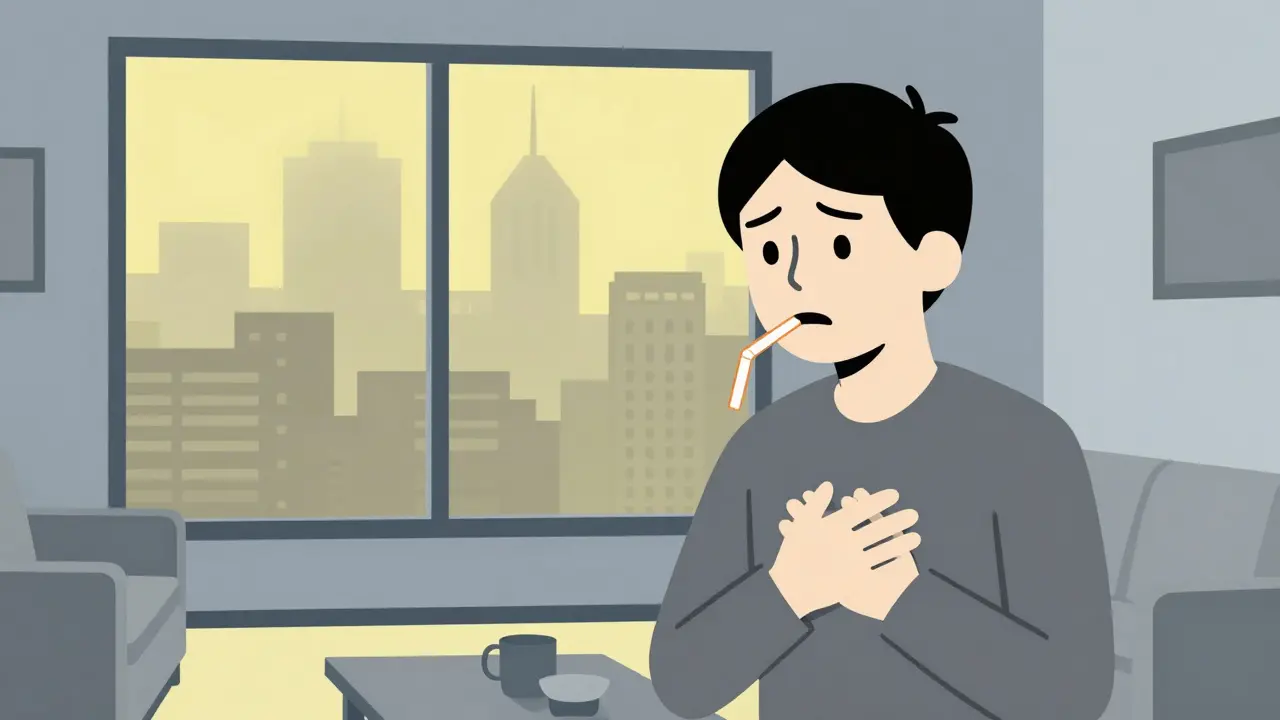
Imagine waking up and feeling like you're breathing through a straw, even though you're inside your own home. For millions of people, this isn't just a bad dream-it's a daily reality triggered by the invisible pollutants in the air. Air pollution doesn't just make the air "dirty"; it actively irritates the lungs, causing the airways to swell and tighten. If you live with asthma, these particles can turn a normal day into an emergency room visit.
The good news is that you aren't powerless. While we can't control the city's smog or a sudden wildfire, we can drastically change how much of those pollutants actually reach your lungs. By combining real-time data, specific home hardware, and a few behavioral shifts, you can reclaim control over your breathing. Here is how to build a practical defense against air pollution.
Quick Summary of Exposure Strategies
- Monitor: Use the Air Quality Index (AQI) to plan outdoor activities.
- Filter: Use HEPA purifiers and MERV 13-16 HVAC filters to scrub indoor air.
- Behavior: Reduce exertion when AQI exceeds 100.
- Protect: Use N95 respirators during extreme events like wildfires.
- Advocate: Support anti-idling policies and electric transit in schools.
Understanding the Invisible Triggers
To fight the enemy, you have to know what it is. When we talk about air pollution and asthma, we aren't just talking about "smoke." We are dealing with specific entities that behave differently in your body.
Particulate Matter is a mixture of solid particles and liquid droplets found in the air, categorized as PM2.5 (fine) and PM10 (coarse). Because PM2.5 particles are so small, they bypass your nose and throat and go straight into the deepest parts of your lungs, triggering immediate inflammation.
Other common culprits include Nitrogen Dioxide (NO2), a gas primarily produced by burning fuel in cars and power plants, and Ozone (O3), a ground-level pollutant formed when sunlight reacts with vehicle emissions. These gases act like sandpaper on your airways, making you more sensitive to other triggers like pollen or dust.
Using the Air Quality Index (AQI) as Your Compass
You wouldn't walk outside into a blizzard without a coat; you shouldn't walk into high pollution without a plan. The Air Quality Index (or AQI) is a standardized system used to report daily air quality and notify the public of health risks. It transforms complex concentrations of pollutants into a simple number from 0 to 500.
For someone with asthma, the numbers mean different things. If the AQI is between 51 and 100, it's "Moderate." You're likely fine, but if you're feeling sensitive, you might want to dial back a heavy workout. However, once the index hits 101-150, it's "Unhealthy for Sensitive Groups." This is your signal to reduce prolonged outdoor exertion. When it climbs above 200, you should avoid all outdoor activities. Checking tools like AirNow.gov before you leave the house can literally save you from a rescue inhaler episode.
Cleaning the Air Inside Your Home
Many of us assume the indoors is a safe haven, but pollutants seep through cracks and open windows. In fact, during wildfire events, indoor particles can reach 60-80% of outdoor levels within an hour if you aren't proactive. To stop this, you need specific hardware.
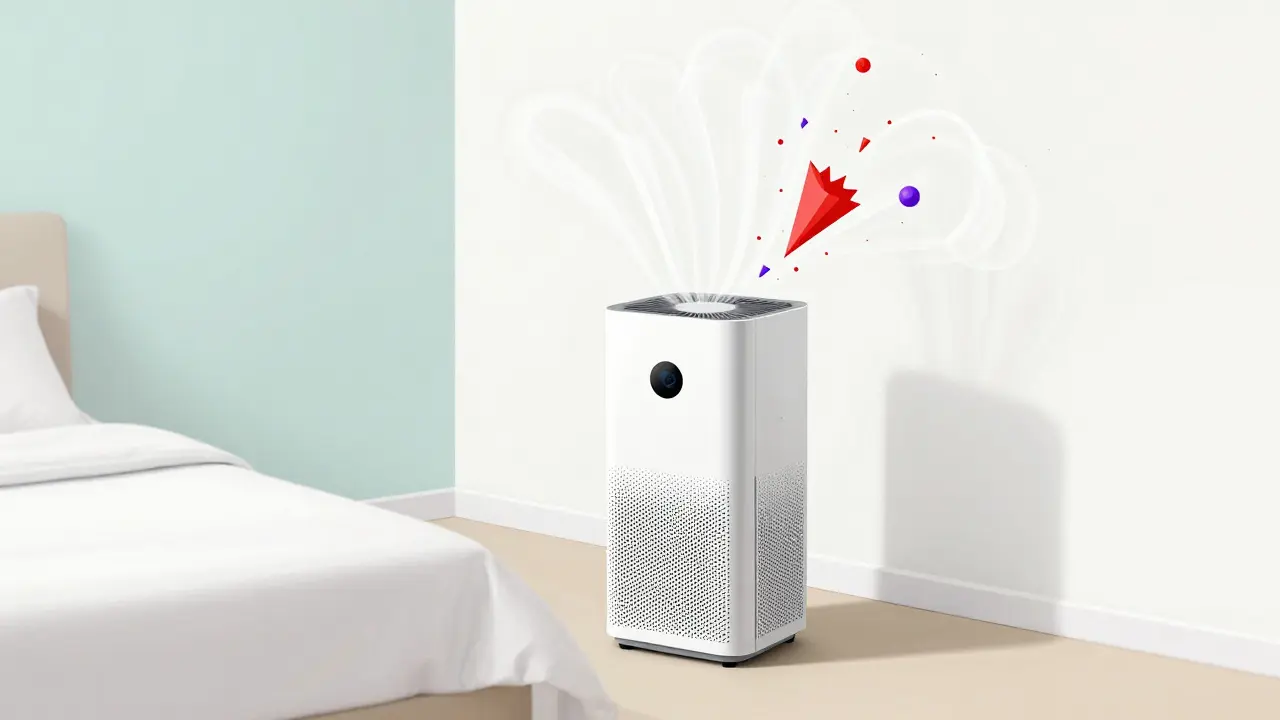
HEPA Filters are High-Efficiency Particulate Air filters capable of trapping 99.97% of particles that are 0.3 microns in size. Not all filters are created equal. If you have a central HVAC system, look for filters with a Minimum Efficiency Reporting Value (MERV) rating of 13 to 16. These are dense enough to catch the fine particles that trigger asthma attacks.
If you're using a portable air purifier, don't just buy the cheapest one. Look for the Clean Air Delivery Rate (CADR). A general rule of thumb is that the CADR should be at least two-thirds of the room's square footage. For example, if your bedroom is 300 square feet, you need a machine with a CADR of at least 200. Also, avoid the common mistake of pushing the purifier against a wall; this can cut its effectiveness by up to 50% because it blocks the airflow.
| Filter Type | Target Pollutant | Efficiency/Rating | Best Use Case |
|---|---|---|---|
| Portable HEPA | PM2.5, Dust, Pollen | 99.97% at 0.3μm | Bedrooms, Home Offices |
| MERV 13-16 HVAC | Fine smoke, Bacteria | High capture rate | Whole-house air circulation |
| N95 Respirator | Wildfire smoke, Smog | 95% filtration | Extreme outdoor exposure |
The Reality of Personal Protective Equipment
When the air looks like a thick gray soup, a standard cloth mask won't cut it. The CDC recommends N95 Respirators for wildfire smoke. These are designed to create a tight seal around your face. However, there is a catch: they only work if they fit perfectly. If there's a gap around your nose, the pollution just takes the path of least resistance and goes straight into your lungs.
Be careful not to let a mask give you a false sense of security. While they help, they can't replace the need to stay indoors during "Very Unhealthy" AQI days. For children, N95s are even trickier because they rarely fit small faces correctly, making the protection far less effective than the packaging suggests.
Beyond the Individual: School and Work Strategies
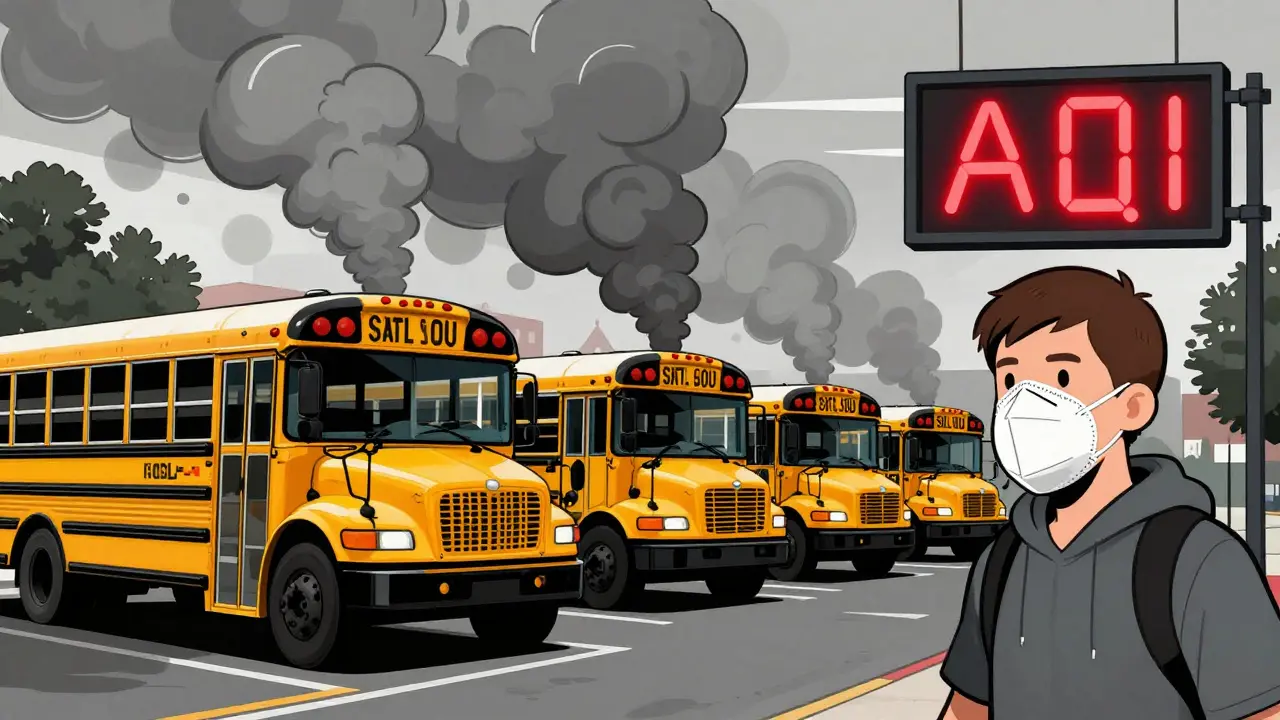
You can't spend 24 hours a day in a filtered bedroom. Most asthma triggers happen at school or work. This is where policy-level changes make a massive difference. For parents, advocate for "anti-idling" zones. When buses and cars sit with their engines running in the pickup line, they create a concentrated cloud of NO2 and PM2.5 right where children breathe.
Evidence from Massachusetts shows that moving bus parking and playgrounds away from major roads can reduce indoor PM2.5 levels by up to 35%. If you're in a workplace, check the humidity. The CDC suggests keeping indoor humidity between 30% and 50%. This prevents dust mites and mold from proliferating, which otherwise act as "co-triggers" that make air pollution symptoms even worse.
Common Pitfalls and How to Avoid Them
Most people start a strategy but fail in the execution. The most common error? Forgetting to change the filters. A clogged HEPA filter doesn't just stop cleaning the air; it can actually restrict airflow and make your purifier noisy and useless. Only about 43% of users replace their filters on schedule. Set a calendar alert every 3 to 6 months to avoid this.
Another challenge is the "work obligation" barrier. It's easy to tell someone to stay inside, but impossible if you're a construction worker or a delivery driver. In these cases, the focus should shift to "recovery periods." Spend your breaks in a filtered environment and use high-quality respirators during the peak pollution hours of the day (usually mid-day when ozone is highest).
Can I rely on a regular face mask during a wildfire?
No. Cloth masks and basic surgical masks are designed to stop large droplets, but they cannot filter out the microscopic PM2.5 particles found in wildfire smoke. You need a NIOSH-approved N95 or P100 respirator that fits snugly against your skin to effectively reduce exposure.
What is the best air purifier for a large living room?
Look for a unit with a high CADR (Clean Air Delivery Rate) that is at least two-thirds of the room's square footage. Ensure it uses a true HEPA filter. For larger rooms, you may need a unit with a higher CFM (cubic feet per minute) capacity to ensure at least one full air exchange per hour.
How often should I check the AQI if I have asthma?
It is best to check the AQI every morning and again in the mid-afternoon. Pollutant levels, especially ozone, often peak in the afternoon when the sun is strongest. If the AQI is forecasted to be over 100, plan your high-energy activities for the early morning or late evening.
Will an air purifier help if I live near a busy highway?
Yes, it can significantly reduce the amount of traffic-related particulate matter that enters your home. However, you should also keep windows closed during rush hour and consider using MERV 13-16 filters in your HVAC system to create a more comprehensive barrier.
What are the signs that air pollution is triggering my asthma?
Common signs include an increase in the use of your rescue inhaler, a persistent dry cough, chest tightness, or shortness of breath that worsens when you are outdoors or near traffic. If you notice these patterns during high AQI days, it's a clear signal to tighten your exposure strategies.
Next Steps for Long-Term Protection
If you're just starting, don't try to do everything at once. Start by downloading an air quality app and tracking your symptoms for two weeks. You'll likely see a direct correlation between high pollution days and your asthma flares.
For those with severe asthma, the next step is a formal exposure reduction plan with a healthcare provider. This involves identifying your specific thresholds-the exact AQI number where you start feeling symptoms-and deciding exactly which medication or behavioral change happens at that number. Whether it's moving a playground or buying a new purifier, the goal is to put as many barriers as possible between your lungs and the pollutants outside.


Carol Yang
25 April, 2026 . 16:33 PM
Actually super helpful tips. I just got a HEPA filter for my bedroom and honestly it's a game changer for my sleep.
Sharyl Foster
26 April, 2026 . 04:15 AM
Everyone acts like MERV 13 is the magic number but you guys forget that high MERV filters can literally kill your HVAC motor if your system isn't rated for the pressure drop. Just because it filters more doesn't mean your furnace can actually push air through it without burning out.
Nila Sawyer
28 April, 2026 . 01:54 AM
This is such a wonderful and empowering guide for everyone struggling to breathe in our beautiful but sometimes dusty cities!! 🌟 I truly believe that if we all just take these small steps together and encourage our schools to be more mindful of the air our little ones breathe, we can create such a healthy wave of change across the globe! 🌈✨ It's all about that positive energy and taking care of our bodies so we can keep doing what we love with a big smile on our faces! 💖🌻 keep spreading the light!
Andre Ojakäär
29 April, 2026 . 19:15 PM
NO ONE TALKS ABOUT THE COST... the absolute madness of replacing these filters every few months is a financial disaster!!! its literally a scam by the filter companies to keep us paying for fancy paper boxes that just get grey in two weeks
Jaclyn Vo
30 April, 2026 . 17:11 PM
Omg seriously though the N95 struggle is so real 🙄 like trying to get a seal on a face that isn't perfectly shaped is basically impossible and just makes you sweat and panic more :P total nightmare!
Edwin Perez
2 May, 2026 . 04:04 AM
Typical advice. They tell you to buy a plastic machine to scrub the air while the governments just keep pumping chemicals into the sky. You think a HEPA filter stops the real stuff they're spraying? Please. Just more ways to make you depend on hardware instead of questioning why the air is poison in the first place.
Eric Mwiti
2 May, 2026 . 10:11 AM
Right, because an app is definitely the solution to systemic industrial pollution. Truly a visionary approach to health.
Beena Garud
3 May, 2026 . 17:44 PM
It is a profound irony that the very industrialization intended to elevate the human condition has rendered the basic act of respiration a hazardous endeavor. We must contemplate the ethical implications of designing urban environments that necessitate the use of synthetic respirators for the survival of the vulnerable. The intersection of public health and urban planning is not merely a technical challenge but a moral imperative that requires a fundamental reassessment of our societal priorities regarding environmental stewardship and the preservation of human vitality.