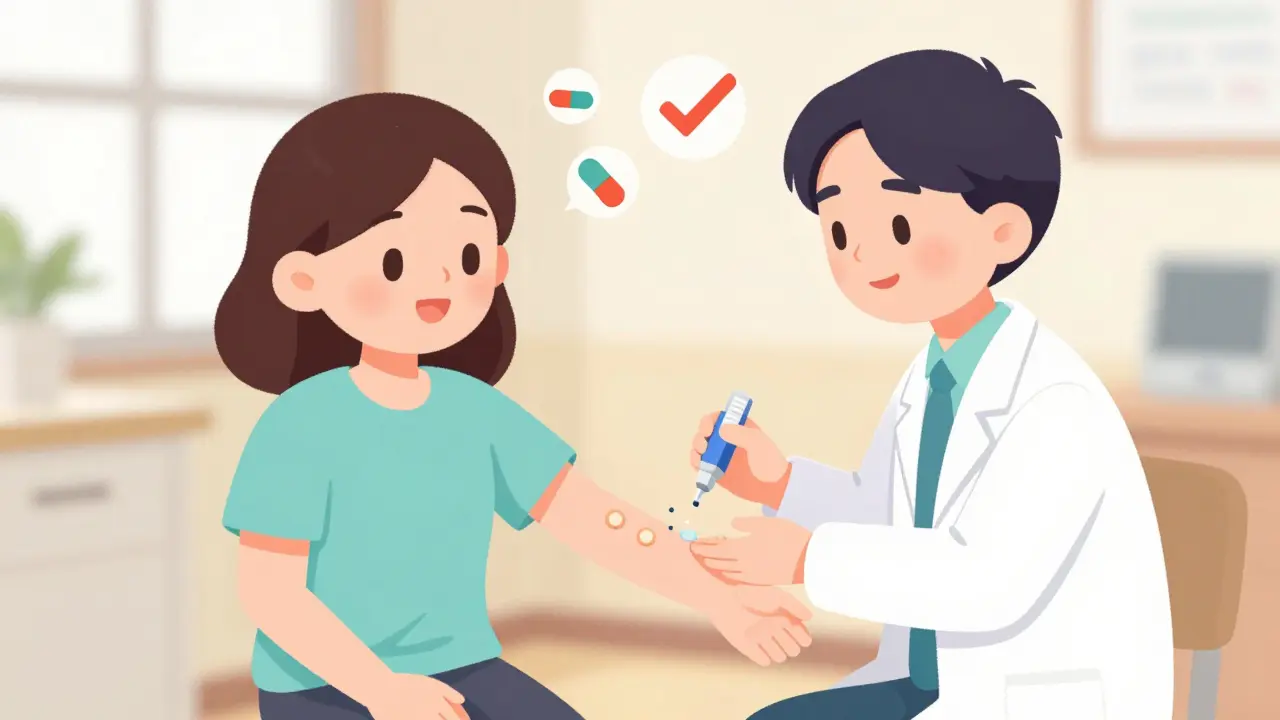
Many people believe they’re allergic to drugs like penicillin because they had a rash or stomach upset as a child. But here’s the truth: 9 out of 10 people who think they’re allergic to penicillin aren’t. That’s not just a guess-it’s backed by years of clinical data. The problem? Most never get tested. Instead, they avoid the drug for life, end up on stronger, costlier antibiotics, and face higher risks of infections like C. diff. Drug allergy skin testing isn’t just a medical procedure-it’s a way to reclaim safe, effective treatment options.
What Exactly Is a Drug Allergy Skin Test?
A drug allergy skin test checks if your immune system overreacts to a specific medication. It’s not a guess. It’s a controlled, safe way to see if your body reacts to tiny amounts of the drug on your skin. There are three main types:
- Skin prick test (SPT): A drop of the drug solution is placed on your skin, then the surface is lightly pricked with a tiny needle. No blood is drawn. It’s quick, simple, and feels like a light mosquito bite.
- Intradermal test (IDT): A small amount of the drug is injected just under the skin with a fine needle, creating a tiny bubble. This is more sensitive than the prick test and used when the prick test is negative but suspicion remains.
- Patch test: A pad soaked in the drug is taped to your skin for 48-72 hours. This is used for delayed reactions-like rashes that show up days after taking the drug.
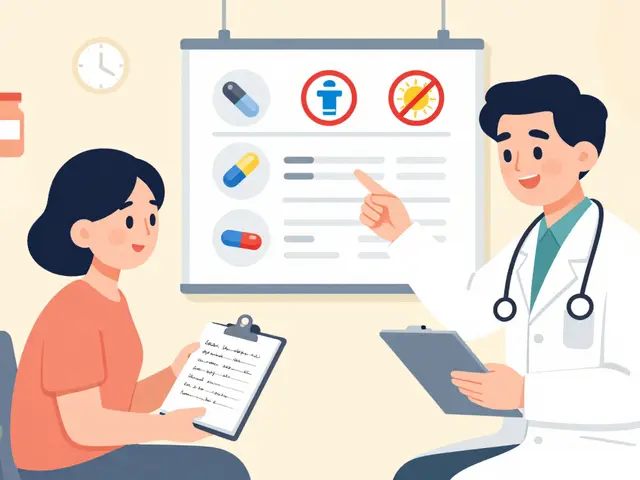
These tests are never done during an active reaction. You need to be stable, with no fever, severe asthma, or recent anaphylaxis. The test is performed on your forearm or upper back, with each site marked clearly and spaced at least 2.5 cm apart. Histamine (a positive control) and saline (a negative control) are always tested alongside the drug to make sure your skin is reacting properly.
How Accurate Is It?
Accuracy depends on the drug. For penicillin and related antibiotics (beta-lactams), skin testing is highly reliable. If both the skin prick and intradermal tests are negative, your chance of having a true allergy is less than 5%. That’s why experts call it the gold standard for these drugs.
But it’s not perfect for everything. For drugs like cephalosporins, NSAIDs (like ibuprofen), or sulfa drugs, the test is much less sensitive. A negative result doesn’t always mean you’re safe. That’s why doctors sometimes follow up with a drug challenge-giving you a small, controlled dose under supervision. It’s riskier, but sometimes necessary.
Studies show skin testing detects penicillin allergies with 70-90% sensitivity. That means it catches most true allergies. But for other drugs, sensitivity drops to 30-50%. That’s why testing isn’t done for every drug-it’s reserved for those where it’s proven useful, like penicillin, vancomycin, and certain muscle relaxants.
What Happens During the Test?
You’ll sit in a clinic or hospital allergy unit. A trained nurse or allergist will clean your skin and mark where each test will go. For the skin prick test, they’ll place a drop of the drug solution (diluted in saline) and gently prick through it with a plastic device. No pain-just a light scratch.
For intradermal testing, they’ll use a tiny insulin syringe to inject 0.02-0.05 ml of the solution just under the skin. You might feel a small sting, like a bee sting. Then you wait. No running around. No eating. Just sit still for 15-20 minutes.
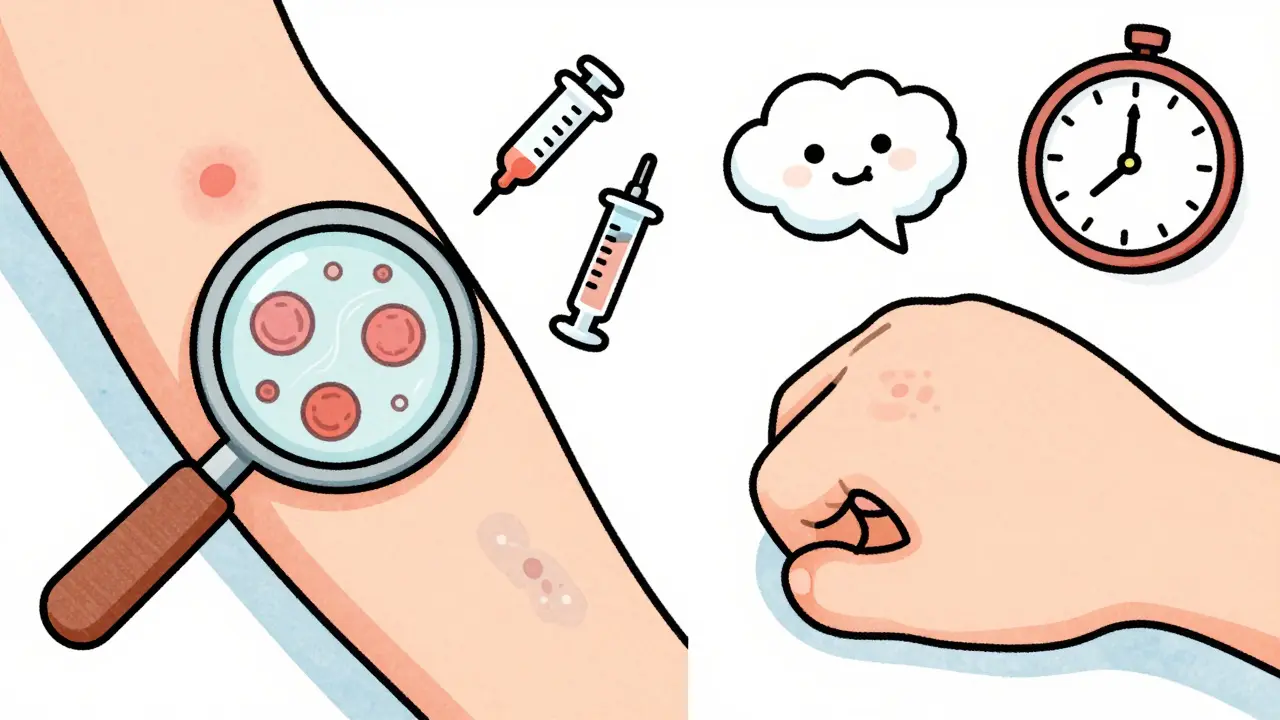
After that time, they’ll look at each spot. A positive reaction looks like a raised, red, itchy bump-like a mosquito bite but bigger. The size matters. If the bump grows more than 3 mm compared to the saline spot, it’s considered positive. They’ll take photos to document results, because skin reactions fade fast.
Most people feel nothing unusual. Some get mild itching at the test site, especially from the histamine control. That’s normal. It doesn’t mean you’re having a full-body reaction. The drug stays in the top layer of skin. It doesn’t enter your bloodstream in any meaningful amount.
How to Prepare
Preparation is critical. If you’ve taken antihistamines-like cetirizine, loratadine, or diphenhydramine-in the past 5 to 7 days, your skin won’t react properly. That means false negatives. You’ll need to reschedule.
Also avoid:
- Any over-the-counter allergy meds
- Prescription antihistamines
- Some antidepressants (like tricyclics) that can interfere
Your doctor will give you a list. Don’t guess. If you’re unsure, call ahead. One patient I spoke to had to reschedule because she took her daily allergy pill the day before-she didn’t realize it would ruin the test. It’s frustrating, but avoidable.
Wear short sleeves. No lotions or creams on your arms or back. You’ll need clean, dry skin.
What If the Test Is Positive?
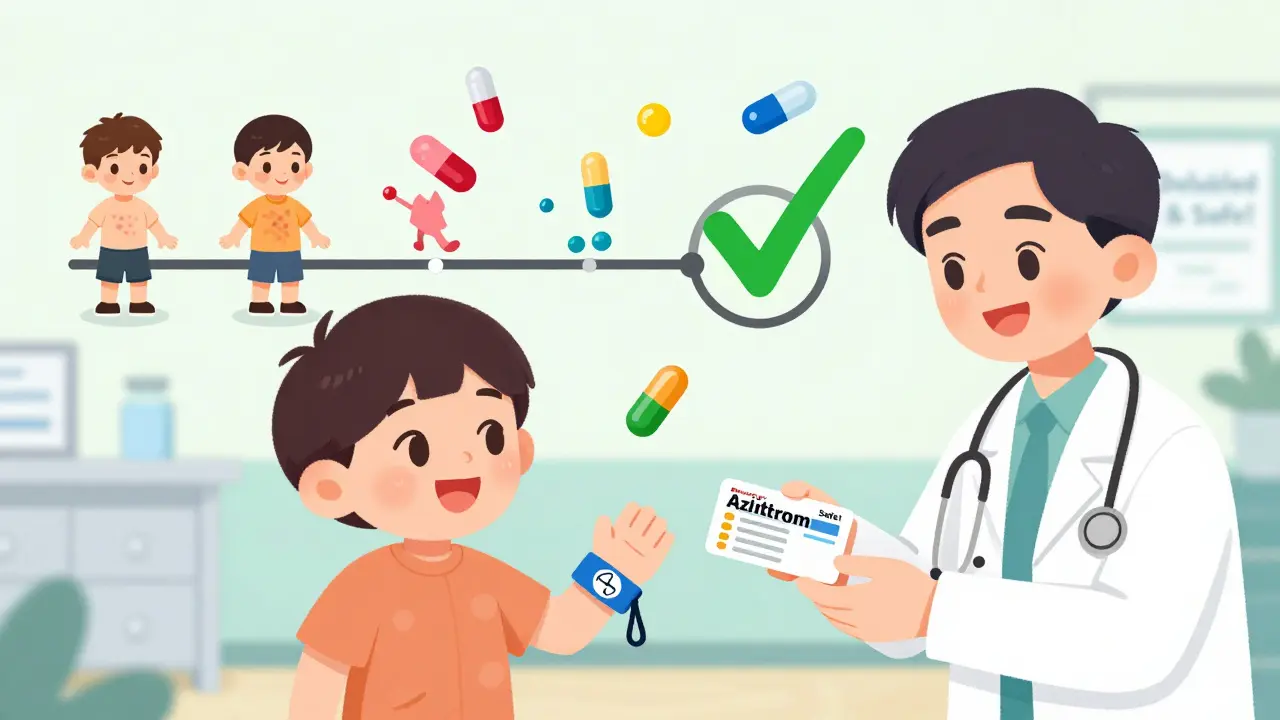
If you have a positive result, you’re likely allergic to that drug. You’ll be given a medical alert card or bracelet. Your doctor will help you avoid that drug and all similar ones. For penicillin, that means avoiding amoxicillin, ampicillin, and other beta-lactams.
But here’s the good news: a positive result doesn’t mean you’re allergic to everything. Many people can safely take other antibiotics. For example, if you’re allergic to penicillin, you might still tolerate azithromycin or doxycycline. Your doctor will map out safe alternatives.
Some patients worry a positive test means they’ll never get antibiotics again. That’s not true. It just means you need to be careful. And now, you know exactly what to avoid.
What If the Test Is Negative?
A negative result is powerful. For penicillin, it means you can likely take it safely. Many patients are then given a supervised dose of amoxicillin to confirm tolerance. If there’s no reaction, you’re officially delabeled-no longer labeled as allergic.
That’s a big deal. Hospitals in the U.S. that run these programs have seen a 30% drop in broad-spectrum antibiotic use. That means fewer side effects, lower costs, and less antibiotic resistance. You’re not just helping yourself-you’re helping public health.
But remember: a negative test doesn’t guarantee safety for every drug. For some, like NSAIDs or sulfa drugs, the test isn’t reliable. Your doctor will explain if a drug challenge is needed.
Why Isn’t Everyone Tested?
Because it’s not always available. In Europe, 65-75% of suspected drug allergy cases get tested. In the U.S., it’s only 30-40%. Many doctors don’t have access to trained allergists or standardized reagents. That’s changing. In 2022, the European Medicines Agency approved standardized penicillin test kits. That’s a major step forward.
Also, many patients never get referred. If you think you’re allergic to a drug, ask your doctor: “Can I be tested?” Don’t assume it’s too risky or too complicated. Most clinics can do it safely if they’re trained.
And don’t wait. If you’ve avoided a drug for years because of a childhood reaction, you might be missing out on safer, cheaper, more effective treatments. Testing takes less than an hour. The payoff can last a lifetime.
Real Stories, Real Results
A 45-year-old woman in Perth came in with a history of a rash after penicillin as a child. She’d been avoiding all penicillin-like drugs for 25 years. After skin testing, both the prick and intradermal tests were negative. She took a supervised dose of amoxicillin with no reaction. Now, she can take it for future infections-no more resorting to expensive IV antibiotics.
Another patient, a 32-year-old man, had a severe rash after taking ibuprofen. He assumed he was allergic. Skin testing for NSAIDs showed no reaction. He was told he likely had a side effect, not an allergy. He now takes ibuprofen without fear.
On the flip side, one patient had negative skin tests for cephalosporins but developed anaphylaxis during treatment. That’s why doctors don’t rely on skin tests alone for every drug. It’s a tool-not a crystal ball.
What Comes Next?
Research is moving fast. New test reagents are being developed for drugs like ciprofloxacin and vancomycin. In early 2023, the National Institute of Allergy and Infectious Diseases updated guidelines to include opioid allergy testing, which was once considered too dangerous. Component-resolved diagnostics-testing for specific parts of the drug molecule-are also improving accuracy.
What’s clear: drug allergy skin testing is not outdated. It’s evolving. And for patients, it’s one of the most underused tools in modern medicine.
If you’ve been told you’re allergic to a drug, don’t accept it without proof. Ask for a referral. Ask for testing. You might be surprised what you find.
Can I take antihistamines before a drug allergy skin test?
No. You must stop all antihistamines-prescription and over-the-counter-for at least 5 to 7 days before testing. These medications block your skin’s ability to react, which can lead to false-negative results. Even one dose can interfere. If you’re unsure what to stop, ask your doctor for a full list. Don’t guess.
Does a skin test hurt?
The skin prick test feels like a light scratch or tiny mosquito bite. The intradermal test involves a small injection and may sting briefly, like a bee sting. The discomfort lasts only a few seconds. Most people tolerate it well. The itching that follows a positive reaction is mild and temporary, usually gone within 30 minutes. You won’t feel anything during the waiting period.
Can I have a severe reaction during the test?
Severe reactions are extremely rare. The amount of drug used is tiny and stays in the top layer of skin. It doesn’t enter your bloodstream in significant amounts. Clinics always have emergency equipment and trained staff on hand. You’ll be monitored closely for at least 30 minutes after testing. If you have a history of severe reactions, your doctor will take extra precautions-but testing is still considered safe under proper supervision.
How long does the whole test take?
The entire process takes about 45 to 60 minutes. The skin prick test is done first, followed by a 15-20 minute wait. Then the intradermal test is performed, followed by another 15-20 minutes of waiting. You’ll need to stay in the clinic until the results are read. You can drive yourself home afterward.
Will the test tell me if I’m allergic to all drugs?
No. Skin testing is only reliable for certain drugs, mainly penicillin, some cephalosporins, vancomycin, and muscle relaxants. For drugs like NSAIDs, sulfa antibiotics, or opioids, the test is less accurate. A negative result doesn’t guarantee safety for every drug. Your doctor will explain which drugs can be tested and which require other methods, like a supervised dose challenge.
What if I’m told I’m allergic but the test is negative?
That’s actually a good outcome. It means you likely weren’t truly allergic-maybe you had a side effect, like nausea or a mild rash, that’s not immune-related. Your doctor may recommend a drug challenge: giving you a small, controlled dose of the medication under supervision. If you tolerate it, you’re officially delabeled. This opens up safer, cheaper, and more effective treatment options for future illnesses.

Patrick Roth
21 January, 2026 . 17:53 PM
Let me break this down for you folks who think skin tests are some kind of magic spell - they’re not. Penicillin testing works because we’ve got decades of data, but for NSAIDs? Total crapshoot. I’ve seen patients get negative results and then go into anaphylaxis on the third dose of ibuprofen. The article acts like this is foolproof, but allergists know better. It’s a starting point, not a verdict. Stop treating it like gospel.
Tatiana Bandurina
23 January, 2026 . 07:43 AM
Interesting how they gloss over the fact that most primary care docs don’t have access to standardized reagents or trained personnel. The whole system is broken. You need an allergist, which means a referral, which means weeks of waiting, which means most people just keep avoiding the drug because the system makes testing feel like a luxury. This isn’t about patient ignorance - it’s about systemic neglect masked as medical advice.
Neil Ellis
24 January, 2026 . 23:44 PM
Man, this is the kind of info that could literally save lives - and money. I’ve got a cousin who’s been avoiding penicillin since she was six because of a rash that turned out to be heat rash. She’s been on IV antibiotics three times in five years because they couldn’t use the cheap stuff. She finally got tested last year - negative as hell. Now she takes amoxicillin like it’s candy. It’s wild how many people are living with invisible chains because nobody told them they could get free. This isn’t just medicine - it’s liberation.
Lana Kabulova
25 January, 2026 . 17:31 PM
Wait - so you’re saying if I took Benadryl last week, my skin test is useless? That’s insane. No one tells you this. My doctor never mentioned it. I had the test last month and they said ‘all clear’ - but I took Zyrtec two days before. So was it a false negative? Do I need to redo it? How many people are getting false reassurance because no one bothered to explain the prep? This is terrifying.
Rob Sims
26 January, 2026 . 09:11 AM
Wow. So we’re supposed to believe that 90% of people who think they’re allergic to penicillin aren’t? That’s like saying 90% of people who think they’re allergic to peanuts aren’t. Except we don’t let people self-diagnose peanut allergies - we test them. Why is penicillin any different? Because it’s cheap? Because pharma doesn’t profit from testing? Don’t act like this is science - it’s cost-cutting dressed up as patient care.
Kenji Gaerlan
27 January, 2026 . 09:13 AM
so u say u dont need antihistamines 5-7 days before? like… what if u just took one once? like a lil tylenol pm? is that bad? i mean i dont even know what im doing anymore
Oren Prettyman
28 January, 2026 . 23:04 PM
It is of paramount importance to underscore the fact that the clinical utility of drug allergy skin testing is not universally applicable, nor is it intended to serve as a panacea for all putative drug hypersensitivity reactions. The current literature, while robust in the context of beta-lactam antibiotics, demonstrates significant limitations in sensitivity and specificity for non-beta-lactam agents, particularly nonsteroidal anti-inflammatory drugs and sulfonamide derivatives. Consequently, the overgeneralization of these findings to all drug classes constitutes a critical misinterpretation of evidence-based guidelines and may lead to inappropriate clinical decision-making in the absence of confirmatory oral challenge protocols.
Liberty C
30 January, 2026 . 20:38 PM
Let’s be honest - this whole ‘delabeling’ trend is just a marketing ploy for hospitals trying to cut antibiotic costs. You think patients care about C. diff rates? No. They care about whether they can take a pill without dying. And if your skin itches for five minutes? That’s a small price to pay for safety. Don’t you dare tell someone who had a real reaction as a child to just ‘get tested’ like it’s a spa day. Some of us don’t want to be guinea pigs for your cost-saving algorithms.