Turmeric & Medication Risk Checker
Disclaimer: This tool is for educational purposes only and is NOT a substitute for professional medical advice. Always consult your doctor before starting or changing supplements.
Risk Level: -
Please select your options to see the analysis.
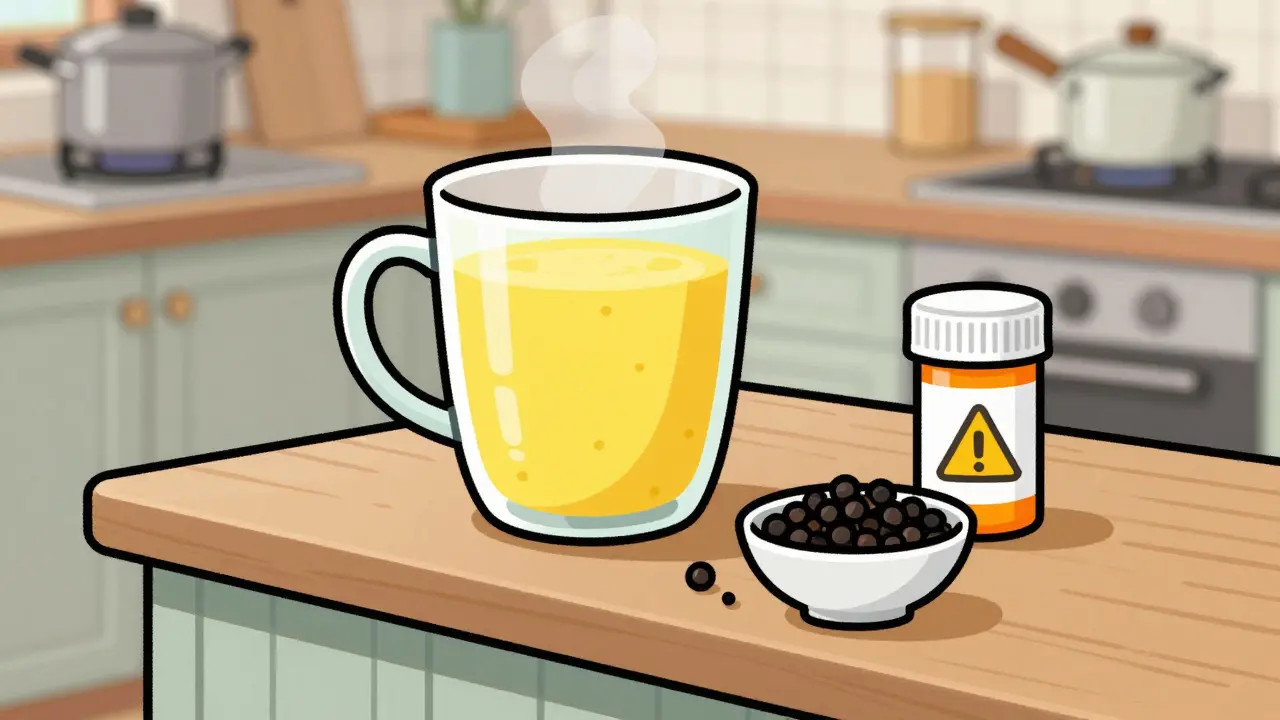
You might have heard that adding a pinch of black pepper to your turmeric latte makes the healthy stuff work better. While that's true for absorption, it's a dangerous game if you're taking medication to thin your blood. Combining high-dose supplements with these drugs can turn a helpful habit into a medical emergency. If you're managing a heart condition or recovering from a stroke, the line between a "natural boost" and a risky interaction is thinner than you think.
| Usage Type | Risk Level | General Advice |
|---|---|---|
| Culinary (Cooking) | Low | Generally safe in moderation (1-2 tsp daily). |
| Turmeric Supplements | High | Avoid if taking anticoagulants. |
| Turmeric + Black Pepper | Very High | Severe risk of absorption spikes and bleeding. |
The Danger of the "Perfect Storm"
To understand why this is risky, we have to look at Curcumin is the active compound in turmeric that provides anti-inflammatory benefits but also acts as a natural anticoagulant . On its own, your body isn't great at absorbing curcumin. That's why many supplement brands add Piperine, the pungent alkaloid found in black pepper that inhibits liver enzymes .
Here is where it gets scary: piperine can increase curcumin absorption by up to 2,000 percent. This creates a massive spike in the concentration of curcumin in your bloodstream, potentially overwhelming your liver. When you're already taking a prescription blood thinner, you're essentially doubling down on the effect. Instead of just preventing clots, your blood may become too thin to clot at all, leading to internal bleeding or bruises that won't heal.
How It Affects Your Medication
Different blood thinners work in different ways, but Turmeric interferes with several of them. It slows down platelet aggregation, which is just a fancy way of saying it stops your blood cells from sticking together to plug a leak in a blood vessel.
For people taking Warfarin, the risk is particularly steep. Warfarin has a "narrow therapeutic index," meaning there is a tiny window where the dose is effective without being toxic. Curcumin can lower the clearance of Warfarin from your system, causing your International Normalized Ratio (INR) levels to skyrocket. In real-world cases, patients with stable INR levels have seen dangerous spikes immediately after starting turmeric supplements, leading to hospital visits for gastrointestinal bleeding.
It's not just Warfarin. This interaction extends to other common medications. You should be extremely cautious if you are using:
- Antiplatelets: Aspirin and Clopidogrel (Plavix).
- Anticoagulants: Heparin, Enoxaparin (Lovenox), and Apixaban.
- NSAIDs: Ibuprofen (Advil) and Naproxen (Aleve), which can further irritate the stomach lining and increase bleed risk.
Spotting the Red Flags
If you've been taking turmeric and blood thinners together, you need to know what to look for. The signs of a dangerous interaction aren't always obvious at first. You might notice easy bruising-small purple spots on your skin that appear without any clear cause. More serious signs include bleeding gums when you brush your teeth or nosebleeds that take forever to stop.
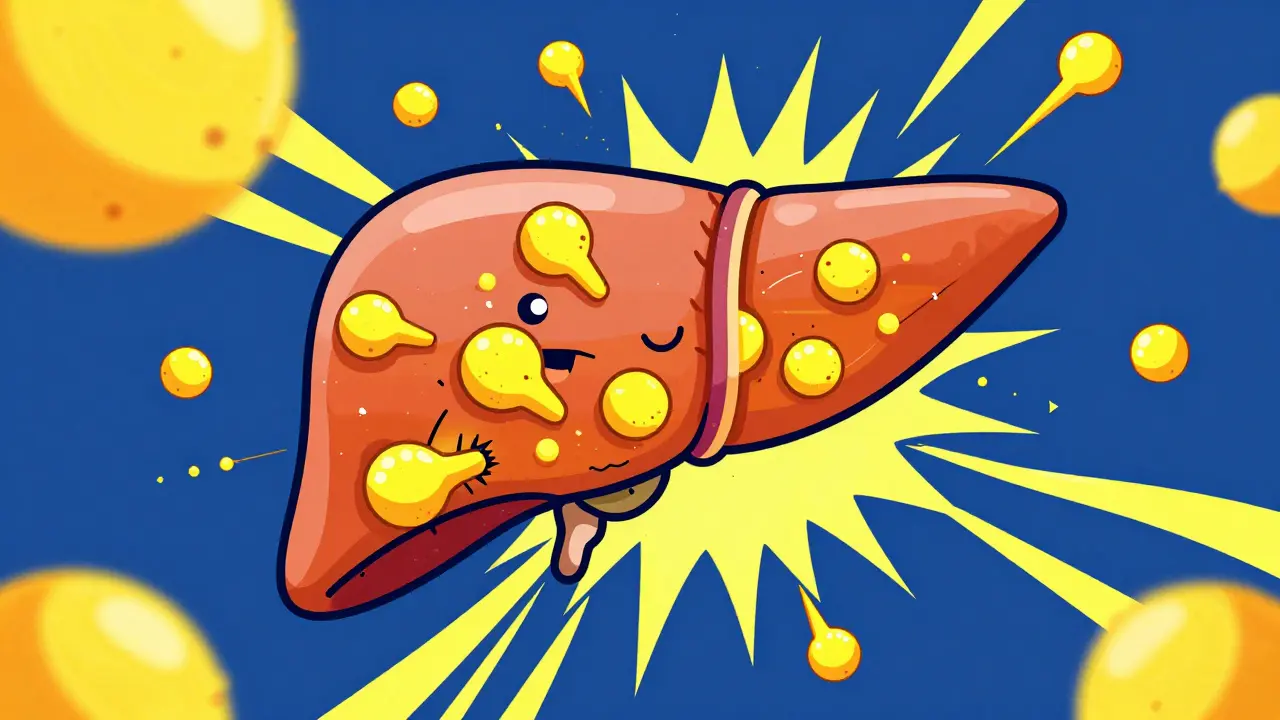
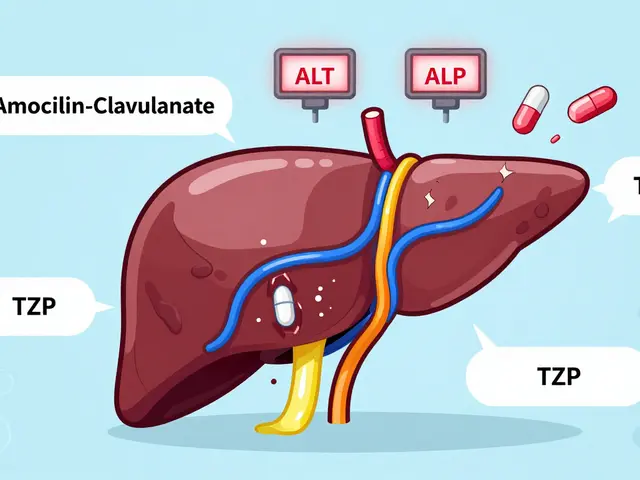
Beyond bleeding, the combination of turmeric and black pepper can stress the liver. Some users have reported liver injury symptoms appearing within 2 to 12 weeks of starting these supplements. Keep an eye out for:
- Dark-colored urine or yellowing of the eyes and skin (jaundice).
- Unusual fatigue or a sudden loss of appetite.
- Nausea, vomiting, or persistent abdominal pain.
Cooking vs. Supplementing: What's the Difference?
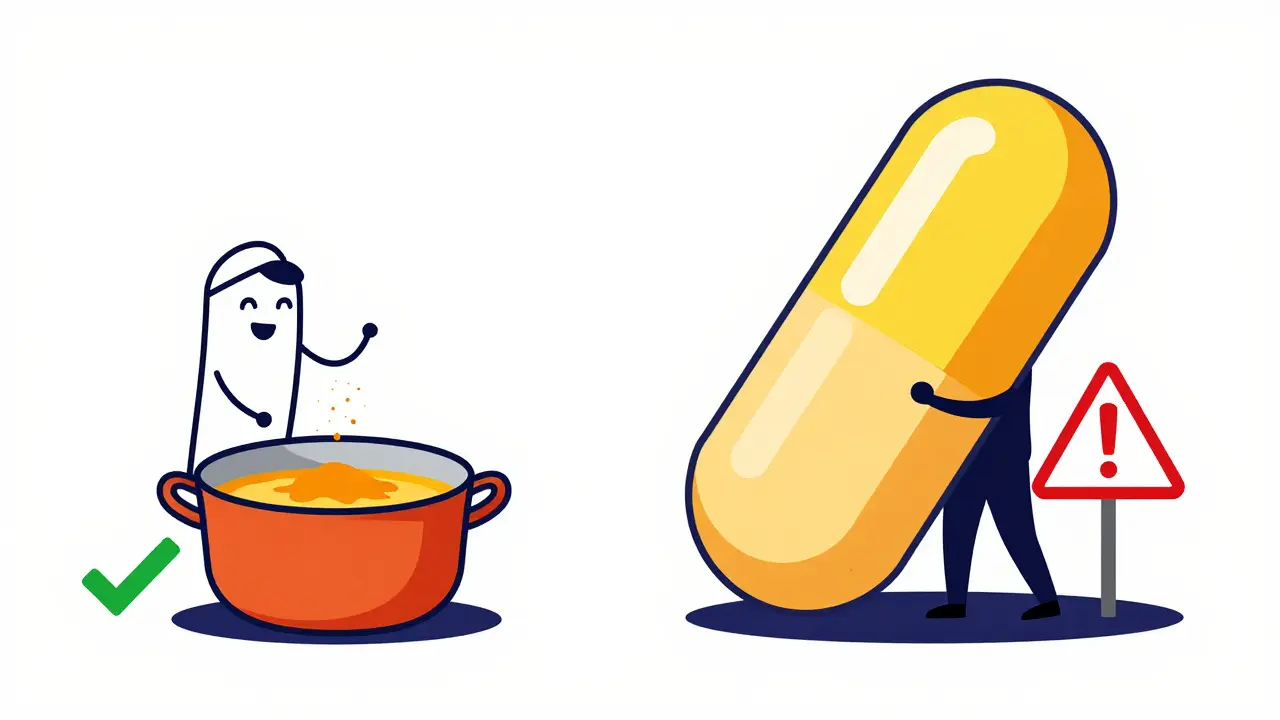
You don't have to throw out your curry powder. There is a massive difference between using turmeric as a spice and taking a concentrated pill. Culinary turmeric contains a relatively small amount of curcumin, and without the concentrated dose of piperine found in supplements, it generally doesn't interfere with medication processing.
Medical experts generally agree that using 1 to 2 teaspoons of turmeric in your food daily is safe for most people on blood thinners. The problem arises with "extracts" or "standardized" supplements, which pack the punch of thousands of servings into one capsule. These concentrated doses are what trigger the liver enzyme inhibition and the dangerous spike in blood-thinning activity.
Practical Steps for Staying Safe
The biggest hurdle in treating these interactions is that many people don't tell their doctors about their supplements. Statistics show nearly 42% of patients keep their supplement use a secret during check-ups. If you're on a blood thinner, honesty with your GP is your best defense.
If you are currently taking an anticoagulant and want to use turmeric, follow these rules of thumb:
- Ditch the capsules: Stick to using turmeric in your cooking rather than taking a high-dose supplement.
- Avoid "Enhanced" formulas: Steer clear of any product that explicitly lists "Black Pepper Extract" or "Piperine" as an ingredient to increase absorption.
- Monitor your INR: If you are on Warfarin, your doctor may need to check your levels more frequently-sometimes weekly-if you introduce any new herbal supplement.
- Maintain Vitamin K consistency: Keep your intake of leafy greens (like spinach and kale) steady, as sudden changes in Vitamin K can fluctuate your blood's clotting ability, making the addition of turmeric even more unpredictable.
Can I use turmeric powder in my food if I take blood thinners?
Yes, generally. Using turmeric as a culinary spice in moderation (typically 1-2 teaspoons a day) does not usually provide enough curcumin to interfere with prescription medications. The danger lies primarily in concentrated supplements.
Why is black pepper specifically dangerous with turmeric?
Black pepper contains piperine, which blocks the liver enzymes responsible for breaking down curcumin. This can increase the absorption of curcumin by up to 2,000%, causing the blood-thinning effect to spike to dangerous levels.
What are the symptoms of a turmeric-medication interaction?
Common signs include excessive bruising, frequent nosebleeds, bleeding gums, and blood in the stool or urine. You should also watch for liver distress, such as jaundice (yellowing of eyes/skin) and dark urine.
Does turmeric affect all types of blood thinners?
Yes, it can interact with a wide range of medications, including Vitamin K antagonists like Warfarin, antiplatelets like Aspirin and Clopidogrel, and newer direct oral anticoagulants (DOACs) like Apixaban.
How long does it take for turmeric supplements to cause an issue?
Interactions can happen quickly, but symptoms of liver damage often appear between 2 and 12 weeks after you start taking a turmeric-and-black-pepper combination supplement.



Brady Davis
9 April, 2026 . 15:43 PM
Oh great, just when I thought my morning latte was a sanctuary, it turns out it's actually a biological weapon. Absolutely thrilling stuff.
Toby Sirois
10 April, 2026 . 01:59 AM
People are just reckless with supplements. You can't just swallow a pill because a blogger said it's healthy. It's basic common sense to check for interactions before you wreck your liver.
Sarabjeet Singh
11 April, 2026 . 16:08 PM
It is always better to keep the doctor in the loop about what we take at home. Stay safe everyone.
Grace Lottering
12 April, 2026 . 03:03 AM
Big Pharma loves this. They scare you away from natural cures. It's all about the profit margins.
Daniel Trezub
12 April, 2026 . 09:30 AM
I mean, sure, the 2,000 percent thing sounds scary, but the actual clinical significance varies wildly between individuals. Not everyone is going to just spontaneously bleed out because of some black pepper.
Rauf Ronald
12 April, 2026 . 19:14 PM
Spot on! Just a quick tip for those who love the flavor but are worried: try using a small amount of fresh turmeric root in your cooking instead of the powdered extract. It's a great way to get the benefits without the massive concentration of curcumin found in supplements. Keep pushing for that healthy lifestyle, but do it smartly!
Vivek Hattangadi
13 April, 2026 . 12:25 PM
I totally agree with the advice on culinary use. Many of us in India use turmeric in almost every meal and it's generally fine. Maybe we can all share some safe recipes that don't rely on high-dose extracts!
Rupert McKelvie
13 April, 2026 . 15:17 PM
It's really heartening to see clear guidelines here. Many people genuinely want to improve their health and just need this kind of straightforward information to avoid accidents.
GOPESH KUMAR
14 April, 2026 . 16:51 PM
The obsession with 'natural' is a modern delusion. Nature produces the most potent toxins on earth. To think that something is safe just because it comes from a root is a failure of logic. We treat the body like a chemistry set without reading the manual. Most people don't even understand the mechanism of the drugs they take, yet they feel qualified to supplement. This isn't just a medical risk, it's a symptom of a society that values anecdotal trends over rigorous biochemistry. The irony of adding black pepper to 'increase' absorption is a perfect example of human hubris. We want the benefit of the cure without the discipline of the dose. It's almost poetic in its stupidity. Why bother with a doctor when you have a wellness blog? The results, as this post points out, are often catastrophic. We are essentially gambling with our internal organs for the sake of a trend.
Victoria Gregory
15 April, 2026 . 22:33 PM
Wow... this is so important!! 🌿✨ I just love how we can find a balance between nature and medicine!!! Thank you for sharing this info!!! ❤️🙏
Michael Flückiger
16 April, 2026 . 03:07 AM
Absolutely critical information!!! Everyone needs to read this!!! Please, please be careful with your health!!!
Laurie Iten
16 April, 2026 . 07:22 AM
the balance between healing and harm is always a thin line isn't it just curious how a simple spice can shift the whole chemistry of the body
Alexander Idle
16 April, 2026 . 17:58 PM
Truly a fascinating discourse on the perils of the lattes. I find the juxtaposition of wellness trends and actual medical emergencies to be quite the spectacle. Absolutely riveting.
charles mcbride
18 April, 2026 . 12:55 PM
I am sure many of us will find a way to enjoy these spices safely. It is wonderful to have such a detailed guide to keep us all on the right track.