Fluoroquinolone Tendon Risk Assessment Tool
This tool estimates your risk of tendon damage while taking fluoroquinolone antibiotics based on medical factors discussed in the article. For most people, the risk is low, but certain conditions significantly increase it.
When you take an antibiotic like ciprofloxacin or levofloxacin, you expect to fight off an infection. But for some people, these drugs can quietly start damaging tendons-sometimes before they even feel sick. The risk isn’t rare. It’s serious. And it’s been known for years.
Why Fluoroquinolones Are Different
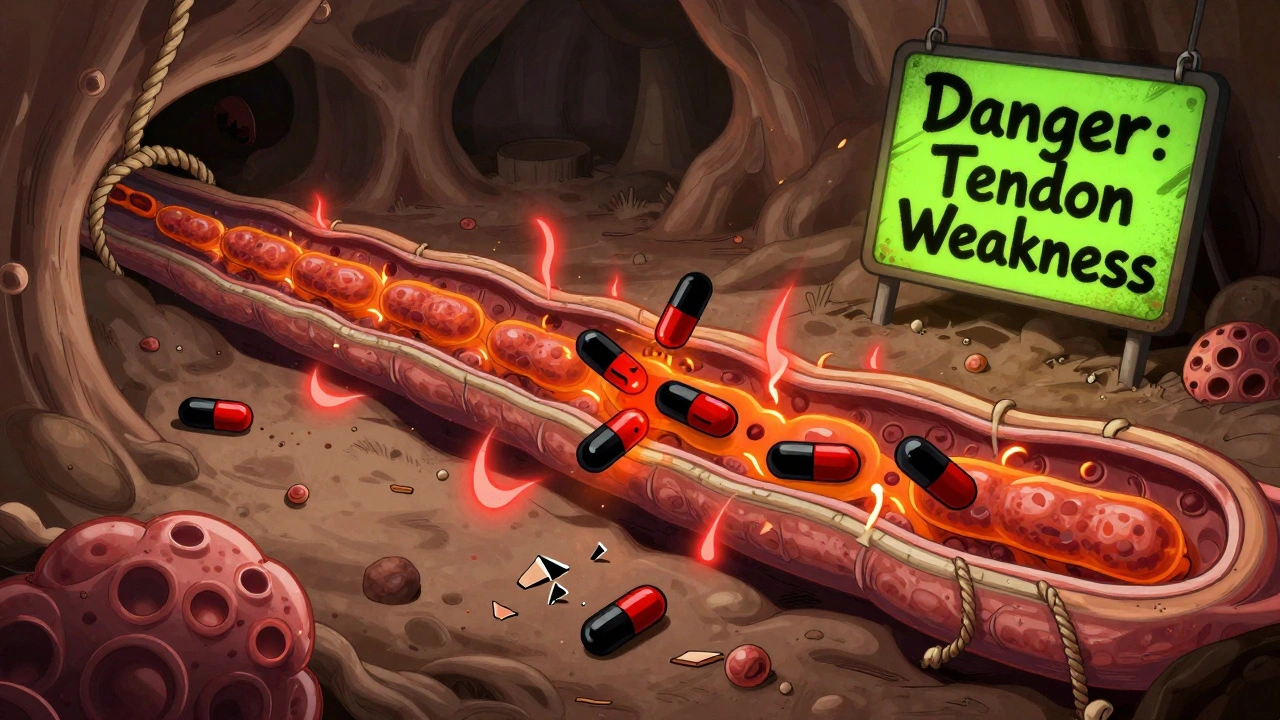
Fluoroquinolones are powerful antibiotics. They’ve been used since the 1980s to treat everything from urinary tract infections to pneumonia. But unlike most antibiotics, they don’t just kill bacteria. They interfere with how your own cells work. That’s where the danger starts.These drugs block an enzyme called topoisomerase II, which helps your cells copy DNA. That’s fine for bacteria-it kills them. But in humans, it also messes with mitochondria, the energy factories inside your cells. This leads to oxidative stress, inflammation, and cell death in tendons. The result? Tendons weaken. They become brittle. And they can tear-sometimes with just a simple step.
The Achilles tendon is the most vulnerable. It’s the thick cord connecting your calf to your heel. It takes the most stress every day. Studies show it’s involved in nearly 90% of fluoroquinolone-related tendon injuries. About half of those cases affect both tendons at once.
Who’s Most at Risk?
Not everyone who takes these antibiotics gets tendon damage. But certain people are far more likely to.Age is the biggest factor. People over 60 have more than six times the risk. For those over 80, the risk jumps to more than 20 times higher. That’s not a small increase. It’s a red flag.
People on corticosteroids-like prednisone-are at extreme risk. Taking both a fluoroquinolone and a steroid at the same time increases the chance of tendon rupture by 46 times. That’s not a coincidence. It’s a dangerous combo. Steroids break down collagen. Fluoroquinolones stop new collagen from forming. Together, they turn tendons into frayed rope.
Other high-risk groups include those with kidney disease, diabetes, or a history of tendon problems. Organ transplant patients are also at higher risk, likely because they’re often on steroids and have weakened healing systems.
Women appear to have a slightly higher rate of reported tendon issues than men, though why isn’t clear. Some researchers think it might be related to hormonal differences in collagen structure, but that’s still being studied.
When Does It Happen?
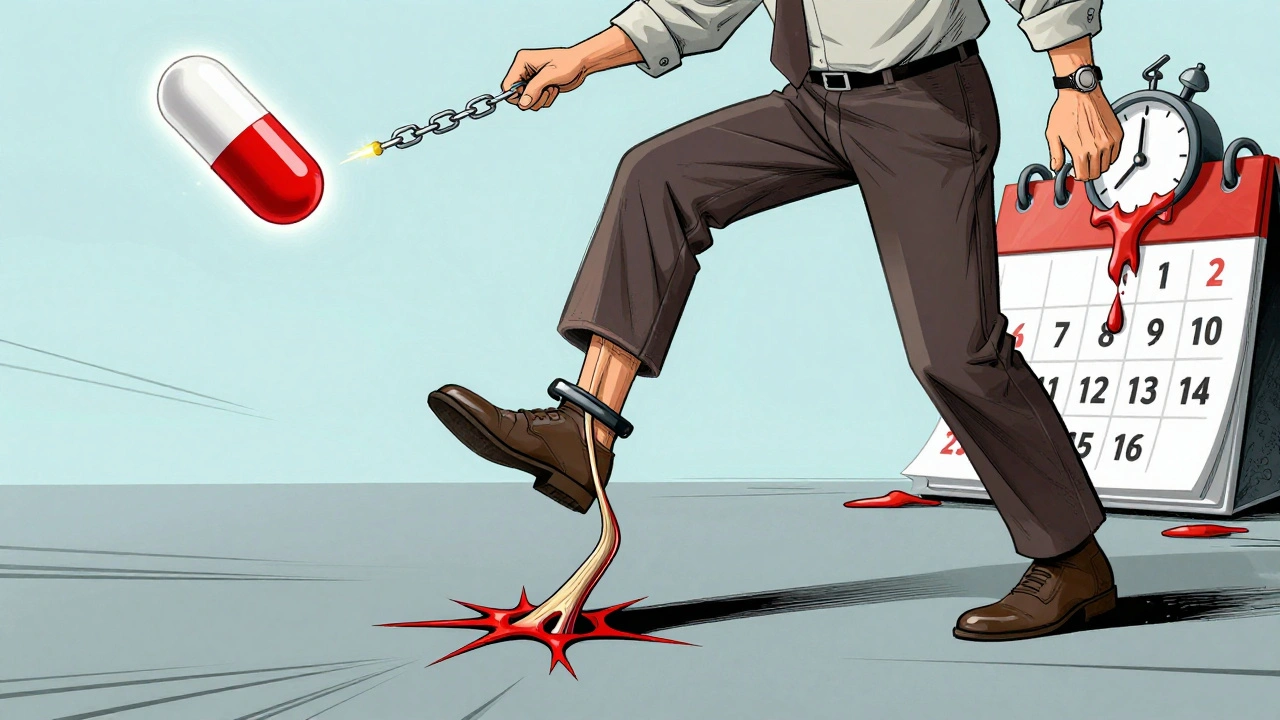
You might think tendon damage shows up after weeks of taking the drug. But that’s not always true.Half of all cases start within just one week of starting the antibiotic. Some people feel pain within two hours. The median time to first symptoms is six days. But here’s the tricky part: symptoms can also show up months after you’ve stopped taking the drug. That makes it hard to connect the dots.
Up to 50% of tendon injuries occur after the course is finished. That means if you feel a sudden ache in your heel or shoulder two weeks after finishing your pills, it could still be related. Doctors often miss this link because they assume the antibiotic is out of your system.
What Does It Feel Like?
The first sign is usually pain. Not sharp, not sudden. More like a dull, deep ache that gets worse with movement. Swelling. Warmth. Stiffness. It often starts near the heel, shoulder, or wrist.One study found that in 85% of cases, symptoms appeared within the first month. But many people ignore it. They think it’s just a pulled muscle or overuse. That’s dangerous. Tendonitis-the inflammation-is often the warning sign before rupture.
Dr. Grace K. Kim, a dermatology researcher, pointed out that symptoms of tendonitis can appear up to two weeks before the tendon actually tears. That’s your window to act. If you’re on a fluoroquinolone and feel unusual tendon pain, stop the drug immediately and call your doctor. Don’t wait. Don’t tough it out.
What Do the Experts Say?
Regulatory agencies have been sounding alarms for years.The U.S. FDA added a black-box warning in 2008-the strongest possible alert-for fluoroquinolones and tendon rupture. They updated it again in 2013 and 2018 to include warnings about disabling, long-lasting side effects. The European Medicines Agency did the same in 2018. The UK’s MHRA tightened rules in 2019, saying these drugs should only be used when no other antibiotic will work.
These aren’t just bureaucratic warnings. They’re based on data from millions of patients. One UK study of 6.4 million people found fluoroquinolones were linked to more than four times the risk of tendinitis and twice the risk of rupture. Another study in Taiwan, tracking over 350,000 people, showed a 42% higher rate of tendon disorders in those taking these drugs.
But not every study agrees. A 2022 Japanese study found no significant link between third-generation fluoroquinolones and tendon rupture. Why the difference? It could be genetics, diet, activity levels, or how cases were defined. But even if the risk is lower in some populations, the pattern across global data is clear enough to change prescribing habits.

What Should You Do?
If you’re prescribed a fluoroquinolone, ask these questions:- Is this the only option? Could I use amoxicillin, doxycycline, or trimethoprim instead?
- Am I over 60? Do I take steroids? Do I have kidney disease or diabetes?
- What are the signs of tendon damage, and what should I do if I feel them?
If you’re already taking one and feel pain, swelling, or stiffness in a tendon-stop the medication. Don’t wait for it to get worse. Call your doctor. Get an ultrasound or MRI if needed. Early intervention can prevent a full rupture.
Don’t assume it’s just soreness. Tendon rupture isn’t like a sprained ankle. It’s sudden. Often, you’ll hear a pop. Then you can’t stand on your foot or lift your arm. Recovery takes months. Surgery is often needed. And you might never regain full strength.
Alternatives Exist
Fluoroquinolones are not the only antibiotics. For most common infections, safer options work just as well.For urinary tract infections: nitrofurantoin, fosfomycin, or trimethoprim-sulfamethoxazole are first-line. For sinus infections: amoxicillin or doxycycline. For pneumonia: azithromycin or doxycycline. For skin infections: clindamycin or cephalexin.
The Infectious Diseases Society of America now recommends fluoroquinolones only as a last resort. That’s because the risks often outweigh the benefits for routine infections. They’re powerful tools-but only for life-threatening cases like anthrax, complicated abdominal infections, or drug-resistant pneumonia.
The Bigger Picture
About 25 million fluoroquinolone prescriptions are written in the U.S. every year. That’s a lot. And many are unnecessary. Antibiotic overuse is a global problem. But fluoroquinolones aren’t just overused-they’re misused. They’re given for viral infections, mild sinusitis, or uncomplicated UTIs when safer drugs exist.Doctors aren’t ignoring the risks. Many are now trained to avoid these drugs unless absolutely necessary. But patients often ask for the strongest antibiotic, thinking it’s better. That’s a myth. Stronger doesn’t mean safer or faster.
The future may hold better alternatives-drugs that kill bacteria without damaging tendons. Researchers are already looking at modified fluoroquinolone structures and biomarkers to predict who’s most at risk. But for now, the best protection is awareness and caution.
If you’re prescribed a fluoroquinolone, know your risk. Ask questions. Watch your body. And never ignore tendon pain. It’s not just soreness. It could be the first sign of something that changes your life forever.



Charlotte Collins
1 December, 2025 . 15:23 PM
They call it a 'black-box warning' like it's some secret government code. No-it's a siren. A 10-decibel scream from the FDA that says, 'This isn't just a side effect, it's a life-altering gamble.' I watched my neighbor go from hiking every weekend to needing a cane after a simple walk to the mailbox. He was on cipro for a 'mild' UTI. No steroids. No diabetes. Just old. And now he can't lift his coffee mug without wincing. The drug companies know. The doctors know. But the prescription pad still moves like a conveyor belt.
And don't get me started on the 'it's just soreness' crowd. Tendons don't whine. They snap. And then you're left wondering if you'll ever tie your shoes without pain.
It's not fearmongering. It's forensic medicine.
elizabeth muzichuk
1 December, 2025 . 16:55 PM
They should ban these drugs entirely. Not 'last resort.' Not 'use with caution.' BAN THEM. Who lets a pharmaceutical company turn human tendons into brittle twigs? It's not science-it's corporate negligence wrapped in a white coat. And the FDA? They're just the janitors cleaning up the mess after the explosion. We're not guinea pigs. We're patients. And we deserve better than 'some people' get hurt. What about the 'some people' who are your mother? Your father? Your grandpa? Why do we tolerate this? Why?
Karandeep Singh
2 December, 2025 . 01:14 AM
cipro for a sinus infection? lol. just take tylenol and sleep it off. antibiotics r overrated anyway.
Mary Ngo
4 December, 2025 . 00:20 AM
Let us not ignore the systemic context: the medical-industrial complex thrives on interventionism, not prevention. Fluoroquinolones are not anomalies-they are symptomatic of a culture that equates potency with virtue, and speed with efficacy. The tendon rupture is merely the visible manifestation of a deeper pathology: the erosion of physiological humility in clinical practice. We have replaced wisdom with algorithms, and patience with prescriptions. The body is not a machine to be fixed. It is a symphony. And when we bludgeon it with topoisomerase inhibitors, we do not restore harmony-we shatter it.
And yet, the echo chamber of evidence-based medicine continues to applaud the volume of the hammer.
James Allen
4 December, 2025 . 10:23 AM
Look, I get it. The FDA is all over this. But let’s be real-America’s got the best healthcare system in the world, right? If you’re gonna get tendon damage, at least you’re gonna get an MRI, physical therapy, and maybe even a surgeon who’s seen this before. In other countries? You’re just screwed. So yeah, these drugs are risky. But we’re still the ones who catch it early. We fix it. We adapt. We don’t just accept it. That’s American resilience.
Also, if you’re over 60 and on prednisone? Maybe don’t play basketball. Just saying.
ariel nicholas
6 December, 2025 . 00:38 AM
Wait-so the Japanese study found NO link? Then why are we treating this like a plague? Are we cherry-picking data to scare people into avoiding antibiotics? Because if the risk is statistically insignificant in one of the largest, most disciplined populations on Earth, maybe-just maybe-the real issue is overdiagnosis, not overdosing. We’ve turned a rare, predictable side effect into a moral panic. And now people are refusing life-saving antibiotics because they’re terrified of a tendon that might, possibly, maybe, rupture if they’re 82 and on steroids. That’s not caution. That’s fear-based pseudoscience.
And don’t get me started on the 'natural remedies' crowd. They’re the ones who’ll take turmeric for pneumonia and then blame the system when they end up in the ICU.
Lauryn Smith
7 December, 2025 . 23:56 PM
Thank you for writing this. I’m a physical therapist and I see this way more than people realize. One woman came in after finishing her cipro for a UTI. She said, 'It just started hurting a week later.' We did an ultrasound-complete Achilles tear. She was 71. No sports. Just walking her dog.
Don’t ignore that dull ache. Don’t 'wait and see.' Call your doctor the same day. Get an ultrasound. It’s quick. It’s painless. And it could save you from surgery.
You’re not being dramatic. You’re being smart.
Bonnie Youn
9 December, 2025 . 17:20 PM
STOP TAKING FLUOROQUINOLONES IF YOU CAN HELP IT. I WAS ON LEVOFLOXACIN FOR A SINUS INFECTION AND MY ACHILLES STARTED HURTING ON DAY 3 I THOUGHT IT WAS JUST FROM WALKING TOO MUCH THEN ONE MORNING I COULDN’T PUSH OFF MY FOOT AND I FELL. I HAD SURGERY. I STILL HAVE TINGLING. I’M 54. DON’T BE LIKE ME. ASK FOR AMOXICILLIN. YOU’LL BE FINE. YOUR TENDONS WON’T BE.
Edward Hyde
11 December, 2025 . 07:10 AM
Let’s be honest-this is just Big Pharma’s way of selling more surgeries. Tendon ruptures? Great. Now you need physical therapy. Maybe a brace. Maybe a second opinion. Maybe a specialist. Maybe a second surgery. Meanwhile, the original infection? Gone. The drug worked. The side effect? A profitable footnote.
And the FDA? They’re just playing catch-up. They knew this in 2008. But they didn’t pull the plug. Why? Because someone’s making money off the aftermath.
I’m not saying don’t use them. I’m saying: if you’re paying for this, you’re paying for someone else’s profit margin.
Kenny Leow
12 December, 2025 . 10:38 AM
As someone who grew up in Singapore where antibiotics are tightly controlled, I’ve seen the difference. Here, fluoroquinolones are handed out like candy. Over there, a doctor won’t prescribe them unless you’ve failed three other options-and even then, they’ll sit you down and explain the risks in detail. No rush. No pressure. Just care.
It’s not about being anti-antibiotic. It’s about being pro-wisdom.
And yes-I’ve seen the tendon injuries. They’re devastating. And they’re preventable.
Thank you for this post. It’s exactly the kind of clarity we need.