Why Steroid Tapering Isn’t Just About Cutting Doses
Stopping steroids like prednisone suddenly isn’t just risky-it can be dangerous. If you’ve been on them for more than three weeks, your body has stopped making its own cortisol. Your adrenal glands are basically on vacation. Walk away too fast, and your body doesn’t know how to wake up. That’s when you get crushing fatigue, dizziness, joint pain, or worse-an adrenal crisis that lands you in the hospital.
Steroid tapering isn’t about being careful. It’s about giving your body time to restart its own hormone production while keeping your autoimmune condition under control. Whether you’re managing rheumatoid arthritis, lupus, or inflammatory bowel disease, the goal is simple: get off steroids without triggering a flare or a medical emergency.
The Three Phases of a Safe Steroid Taper
There’s no one-size-fits-all plan, but most doctors follow a proven three-phase approach based on your starting dose and how long you’ve been on steroids.
Phase 1: Rapid Taper (High Doses)
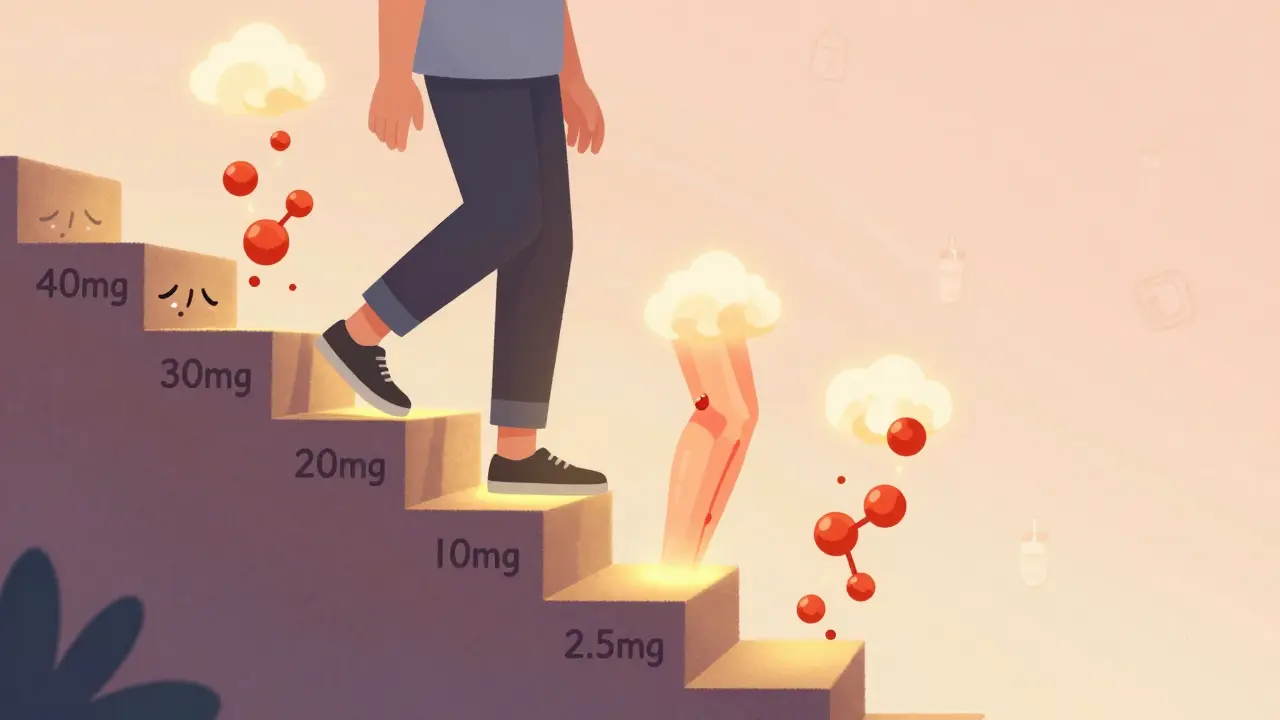
If you’re on more than 20-40 mg of prednisone daily, the first drop is quick. Cut by 5-10 mg every week until you hit 20 mg. This phase lasts a few weeks. Your body can still handle the drop because it’s far above what your adrenal glands normally make.
Phase 2: Gradual Taper (Mid Doses)
Once you’re at 20 mg or below, slow down. Drop by 5 mg every two weeks, then switch to 2.5 mg weekly. This is where symptoms start creeping in-fatigue, muscle aches, mood swings. Don’t panic. These are signs your body is waking up, not that the disease is coming back. But if pain or exhaustion hits hard, pause the taper for a week. Pushing through can backfire.
Phase 3: Slow Taper (Low Doses)
At 10 mg and below, things get delicate. Drop by 2.5 mg every two weeks until you hit 5 mg. Then, go even slower: 2.5 mg every 2-4 weeks. Some people need to hold at 2.5 mg for weeks before stopping. At this stage, your body is trying to rebuild cortisol production. Rushing it risks withdrawal or flare.
The whole process can take months. If you were on high doses for over six months, plan for 3-6 months of tapering. Shorter use? Maybe 4-8 weeks. But never guess. Always follow a written schedule.
What Withdrawal Really Feels Like
People call it ‘taper tantrums.’ It’s not in the textbooks, but it’s real. Around 68% of patients report symptoms when reducing below 10 mg. Here’s what they describe:
- Fatigue so deep you can’t get out of bed (42%)
- Joint and muscle pain that feels like arthritis flaring (37%)
- Insomnia or restless sleep (29%)
- Anxiety, irritability, or brain fog
- Nausea, low appetite, or dizziness when standing
One Reddit user dropped from 7.5 mg to 5 mg and woke up with severe joint pain. They had to go back to 7.5 mg for two weeks before trying again. That’s not failure-it’s smart pacing.
Here’s the key: withdrawal symptoms aren’t the disease coming back. They’re your body crying out for cortisol. If you mistake them for a flare, you might think you need to go back up on steroids. But often, slowing the taper-or adding gentle movement-helps more than increasing the dose.
When to Switch to Hydrocortisone (And When Not To)
Some doctors suggest switching from prednisone to hydrocortisone before the final steps. Hydrocortisone mimics natural cortisol more closely and has a shorter half-life. The theory? It might help your adrenal glands wake up faster.
But here’s the catch: most studies show it doesn’t make a big difference. The Australian Prescriber says there’s little proof it works better than sticking with prednisone. And switching adds complexity-dosage conversions aren’t simple. One mg of prednisone equals about 4 mg of hydrocortisone. Mess that up, and you’re either under- or overdosing.
Unless you’re in a specialized clinic with monitoring, most people do fine staying on prednisone all the way through. Don’t switch just because you heard it’s better. Ask your doctor: is this right for me, or just a theory?
What Your Doctor Should Be Monitoring
Good tapering isn’t just about the schedule. It’s about watching for signals.
Some doctors check morning cortisol levels once you’re on low doses (5 mg or less). But here’s the truth: routine blood tests aren’t always useful. The Australian Prescriber says they’re only helpful if you’re having symptoms. A normal cortisol level doesn’t guarantee your adrenals are fully back. And a low level doesn’t always mean you need to slow down.
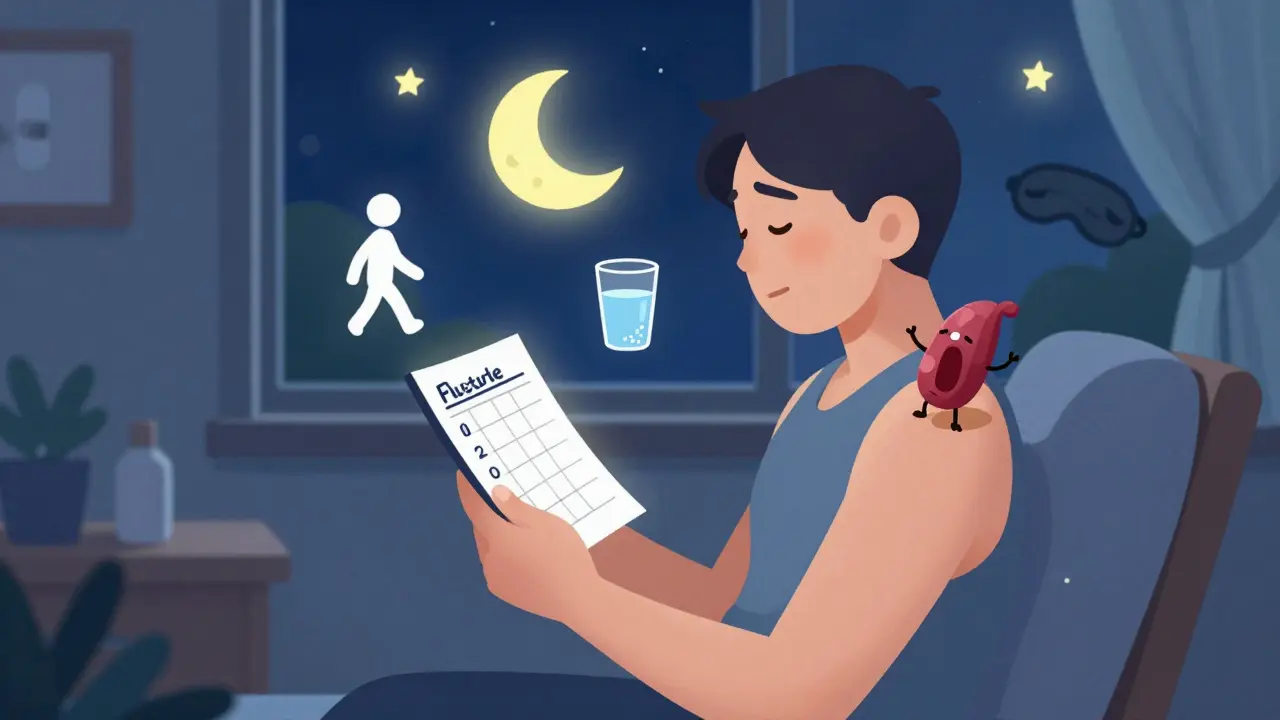
What matters more is how you feel. Keep a simple log: daily energy level (1-10), joint pain (yes/no), sleep quality, and mood. Bring it to your appointments. That’s more valuable than a lab number.
For autoimmune patients, disease activity is the real guide. If your RA DAS28 score is stable, or your IBD symptoms are quiet, you’re likely safe to keep tapering. If your joints swell or your stool changes, pause. Let your condition lead the pace, not a fixed calendar.
How to Handle Withdrawal Symptoms Without Going Back Up
You don’t need to double your steroid dose to beat withdrawal. Small, smart habits make a huge difference.
- Movement: Ten-minute walks twice a day reduce stiffness by 57% compared to staying in bed. Gentle yoga or swimming in warm water helps too.
- Meditation: Just 10 minutes a day cuts anxiety and fatigue by 43%. Apps like Insight Timer or Calm have free guided sessions.
- Sleep hygiene: No screens an hour before bed. Keep your room cool. Stick to the same sleep and wake time-even on weekends.
- Hydration and salt: Low cortisol can make you lose sodium. Add a pinch of sea salt to water if you feel lightheaded. Don’t overdo it, but don’t avoid it either.
These aren’t magic fixes. But they’re proven tools that help your body adjust without drugs.
Sick Days and Emergency Rules
Even after you stop steroids, you’re not out of the woods. Your adrenal glands might still be sleeping. If you get sick-flu, infection, even a bad cold-your body needs cortisol to fight it. But it can’t make enough.
This is where ‘sick day rules’ save lives. If you’re ill, increase your steroid dose temporarily. For example: if you’re on 2.5 mg daily, double it to 5 mg for 2-3 days. If you’re vomiting or have a fever over 38.5°C, go to the ER and say: ‘I’m on steroid taper. I need stress-dose steroids.’
One in five emergency visits from recently tapered patients happens because they didn’t adjust their dose during illness. Don’t be that person.
Carry a Steroid Alert Card
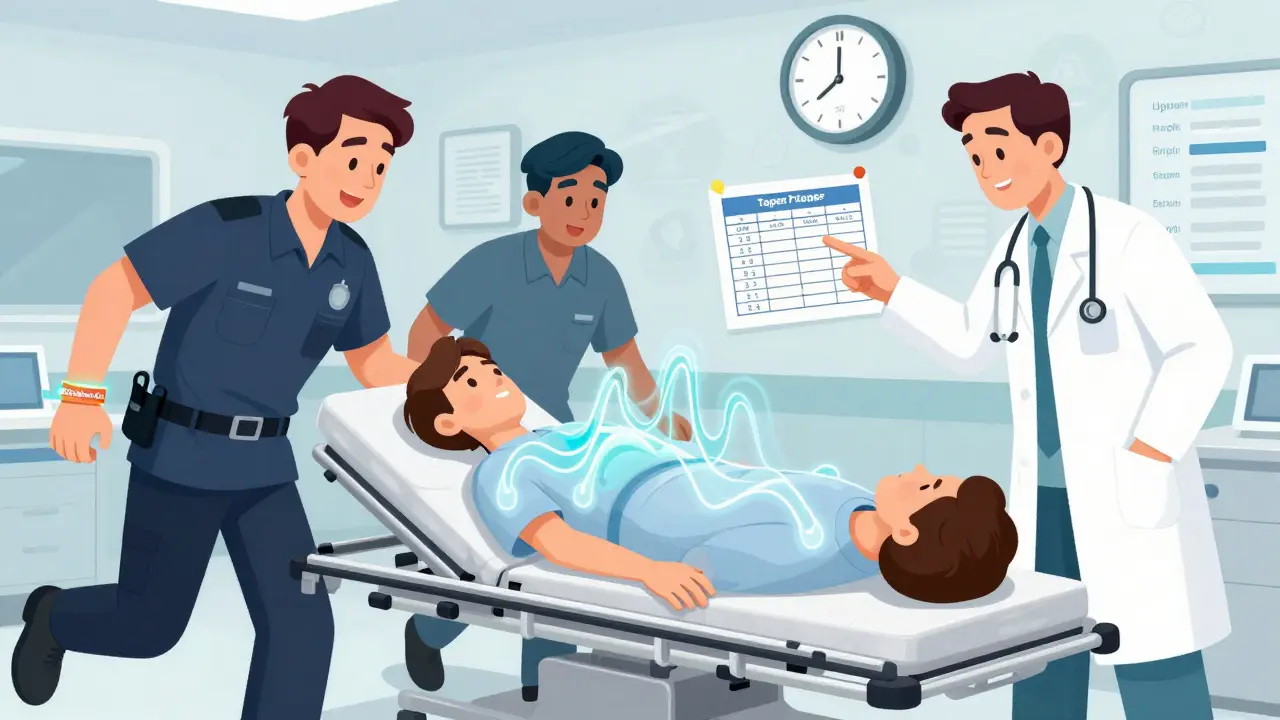
For at least 12 months after stopping steroids, carry a medical alert card or wear a bracelet that says: ‘On Steroid Taper-Risk of Adrenal Insufficiency.’
Why? Because in an emergency, paramedics or ER staff might not know your history. If you’re unconscious after an accident, they won’t know you need IV steroids. The Endocrine Society says adrenal recovery can take up to 18 months. That’s longer than most people think.
What’s New in Steroid Tapering
Doctors are moving away from rigid schedules. The American College of Rheumatology now says: taper based on disease activity, not calendar dates. If your inflammation markers are low and you feel great, you can go faster. If you’re struggling, slow down.
There’s also new tech. Apps like Prednisone Taper Assistant use AI to adjust your plan based on your daily symptoms. In pilot studies, users stuck to their plan 82% more often.
And research is getting smarter. A 2023 study showed CRH stimulation tests can predict who can safely stop steroids with 89% accuracy. It’s not widely available yet, but it’s coming.
When Tapering Goes Wrong
Failure isn’t rare. One in three primary care doctors admit they’re not confident managing complex tapers. That’s why so many patients get stuck: either they’re tapered too fast, or they’re told to stop cold turkey.
And yes, there are lawsuits. In 2022, a patient suffered adrenal crisis after being given vague tapering instructions. The court ruled the doctor failed to provide clear, written guidance. That’s why every major guideline now says: give patients a printed schedule. Not just a verbal note. Not just a PDF. A paper copy they can hold.
If your doctor doesn’t give you one, ask for it. Write down: daily dose, when to reduce, what symptoms to watch for, and what to do if you get sick. Keep it in your wallet.
Final Thought: Patience Is Your Best Medicine
Steroid tapering isn’t a race. It’s a slow dance between your body and your disease. Some people glide through it. Others hit bumps. Both are normal.
The goal isn’t to get off steroids as fast as possible. It’s to get off them without losing your health in the process. Listen to your body. Track your symptoms. Stick to the plan. And remember-you’re not weak for needing time. You’re smart for taking it.


Kiranjit Kaur
22 December, 2025 . 05:57 AM
This is so needed 💪 I was tapered too fast and ended up in the ER with dizziness and nausea. Took me 3 months to recover. Your breakdown of phases? Perfect. I’m printing this out and giving it to my doctor tomorrow. 🙏
Sam Black
22 December, 2025 . 21:35 PM
The bit about hydrocortisone had me nodding. I had a specialist push it on me last year-said it was ‘more physiological.’ Turned out it was just a way to bill more visits. Prednisone’s fine if you’re slow and steady. Also, the salt tip? Game-changer. I’ve been adding a pinch to my morning water since week 2 of Phase 3. No more lightheadedness when I stand up. 🌊
Tony Du bled
24 December, 2025 . 04:03 AM
I tapered off 10mg over 5 months. Felt like my body was crawling out of a cave. The fatigue was brutal. But walking 10 minutes twice a day? That’s what got me through. Not the meds. Not the labs. Just moving. Even on days I wanted to die, I dragged my ass outside. Best decision I made.
Art Van Gelder
24 December, 2025 . 20:19 PM
Let me tell you something nobody talks about-steroid withdrawal isn’t just physical. It’s psychological. You start doubting every ache, every yawn, every bad night’s sleep. Is this the disease coming back? Or is this just my adrenals trying to reboot? I kept a spreadsheet. Daily energy. Pain score. Mood. Sleep quality. I tracked it like a NASA mission. And guess what? The numbers didn’t lie. When I saw my energy dip but my CRP stayed flat? That’s when I knew: it’s withdrawal, not flare. I stopped panicking. I started listening. And I made it. Took seven months. No regrets. If you’re going through this, keep a log. Not for your doctor-for you. Your body’s talking. Are you listening?
Kathryn Weymouth
26 December, 2025 . 19:37 PM
I appreciate the clarity of this post, especially the distinction between withdrawal symptoms and disease flare. However, I must note that the claim regarding ‘68% of patients report symptoms when reducing below 10 mg’ lacks a cited source. While anecdotal evidence is valuable, peer-reviewed data would strengthen the argument. Additionally, the recommendation to ‘add sea salt’ should be qualified with a note about hypertension risk, particularly in patients with comorbid conditions. Precision matters-especially when lives are at stake.
Herman Rousseau
27 December, 2025 . 02:27 AM
I’ve been helping people taper for years. This? This is the real deal. I tell my patients: you’re not weak for needing time. You’re not failing if you have to pause. And you’re not crazy for feeling like crap. It’s biology. I’ve seen people cry because they thought they were ‘broken.’ Nope. Just rebuilding. I give them this exact list: walk, meditate, sleep, salt. No magic. Just consistency. And if they’re sick? Double the dose. No shame. No hesitation. Your body’s asking for help. Give it.
Aliyu Sani
28 December, 2025 . 07:46 AM
yo i been on pred for 11 months n my doc just said ‘cut by 5mg evry 2 wks’ wtf. no one told me bout phase 3 or sick day rules. i almost died last month when i got the flu. i was at 2.5mg and i didnt double it. ended up in the hospital. they gave me iv hydrocort. i still dont know if i shoulda stayed on pred. but now i got the alert card. i print it out every time i see a doc. they all look at me like i’m crazy. but i’m not. i’m just alive. 🤝
Sai Keerthan Reddy Proddatoori
28 December, 2025 . 22:42 PM
This is all propaganda from Big Pharma. Steroids are poison. The body makes its own cortisol just fine. They’re making you dependent so you’ll keep paying. Why not try fasting? Or turmeric? Or just pray? I’ve seen people get better without drugs. This ‘tapering’ nonsense is just keeping you hooked. Don’t trust doctors. Trust nature.