Many people believe that if a product is labeled "natural," it cannot possibly harm their prescribed medications. This assumption is dangerous. In modern healthcare, herbal supplements are not just vitamins; they are biologically active compounds that can change how your body processes medicine. The American College of Clinical Pharmacology formally recognized these interactions as serious health concerns back in 2015. Yet, nearly half of the patients in recent studies take herbal remedies alongside conventional treatments without telling their doctors.
The problem isn't limited to one country. While 70-80% of people in developing nations rely on traditional herbal medicines as primary healthcare, developed nations see increasing complementary use. A University of Florence pharmacovigilance study found 50% of patients were mixing herbal remedies with standard prescriptions. When these mixtures happen, the consequences can range from reduced medication effectiveness to life-threatening side effects.
How Herbal Products Change Medicine Processing
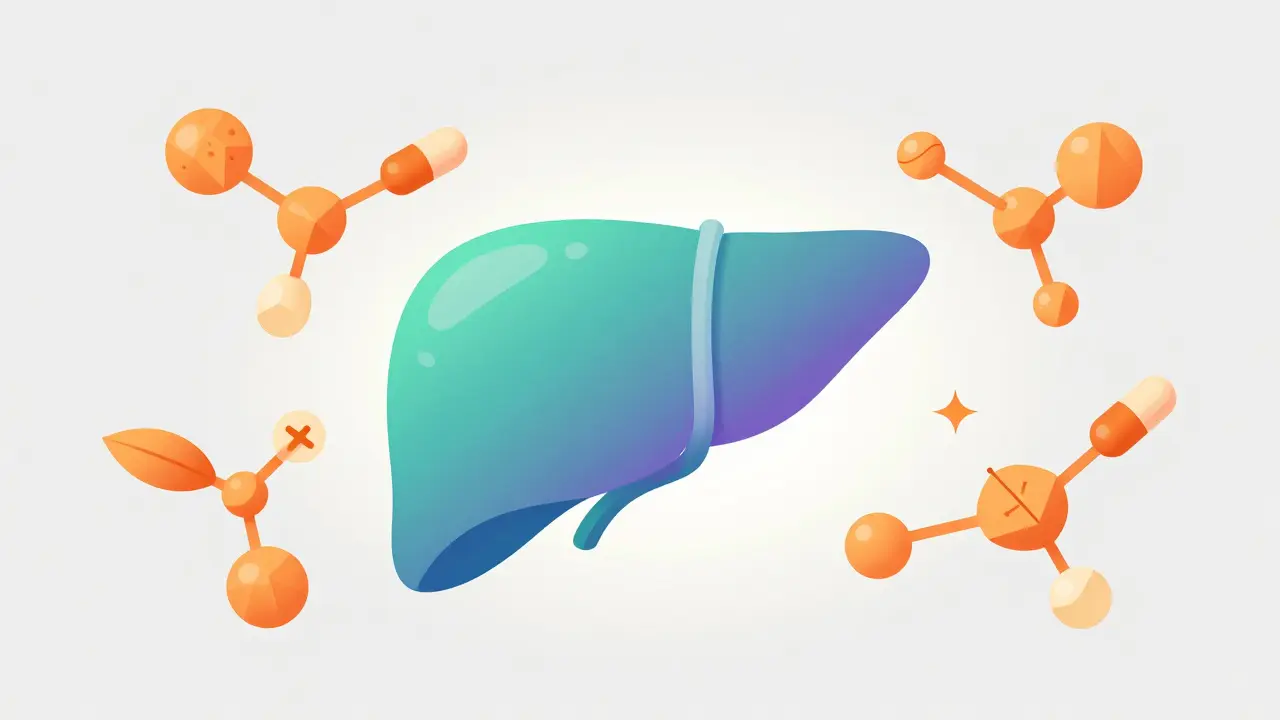
To understand the risk, you need to know how your body handles chemicals. Your liver works like a chemical processing plant. It uses specific enzymes to break down substances so your body can use or eliminate them. One family of enzymes, known as Cytochrome P450 enzymes, metabolizes approximately 50% of all drugs currently on the market. Specifically, the enzyme CYP3A4 is crucial here.
Herbal supplements often alter how these enzymes work. Some herbs inhibit the enzyme, meaning the drug builds up in your blood to toxic levels. Other herbs induce the enzyme, causing your body to destroy the medicine before it can help you. This falls under pharmacokinetic alterations. There are also pharmacodynamic interactions, where the herb and the drug share physiological effects, potentially amplifying a reaction like bleeding or drowsiness.
Transporters also play a role. P-glycoprotein transporters affect drug absorption and elimination. Certain herbal compounds can jam these transporters, changing where a drug goes in your body. These mechanisms drive the interactions we see clinically. A 2014 study published in Frontiers in Pharmacology demonstrated that one popular herb decreased a vital immune-suppressant drug concentration by 57% in transplant patients, risking organ rejection.
High-Risk Herbs You Should Know About
Not all herbs carry the same level of risk. Some are relatively harmless, while others act almost like drugs themselves. Identifying the high-risk players is essential for your safety.
St. John's Wort: This is widely considered the most clinically significant example. It functions as a potent inducer of CYP3A4 and P-glycoprotein. Clinical studies show it reduces plasma concentrations of affected drugs by 20-70%. If you are taking HIV protease inhibitors, oral contraceptives, or digoxin, this herb could render those medications ineffective. A review identified it interacting with at least 15 major drug classes.
| Herb | Risk Level | Primary Mechanism | Potential Consequence |
|---|---|---|---|
| St. John's Wort | Very High | CYP3A4 Induction | Reduced drug levels (failure) |
| Ginkgo Biloba | Moderate | Blood Thinning | Increased bleeding risk |
| Garlic | Moderate | CYP3A4 Modulation | Reduced antiviral efficacy |
| Goldenseal | High | CYP3A4 Inhibition | Toxic blood levels |
Ginkgo Biloba: Many people use this for memory or circulation. However, it inhibits CYP2C19 and CYP2C9 enzymes. More concerning is its effect on blood clotting. An analysis of five studies involving 1,200 patients showed combining Ginkgo with warfarin increased bleeding risk by approximately 30%. This is a critical danger for anyone on anticoagulants.
Garlic: You probably eat garlic for flavor, but concentrated supplements behave differently. Research shows garlic decreases plasma concentrations of saquinavir by 51% through enzyme induction. If you are on specific antivirals or heart medications, high-dose garlic supplements might stop your prescription from working as intended.
Goldenseal: Often used for immune support, it inhibits CYP3A4 and CYP2D6. This can increase blood levels of drugs like metoprolol by 20-30%. A 2020 review documented 23 specific drug interactions, including dangerous spikes in toxicity for cough suppressants containing dextromethorphan.

The Silence Between Patient and Provider
A major part of the problem is communication. Patients rarely tell their doctors about the bottles sitting in their cupboard. A 2016 study of 299 Israeli inpatients found that 25% consumed herbal supplements, yet hospital teams were unaware of this in 72% of cases. This silence contributes directly to adverse events.
Discussions on professional forums like Reddit's r\/medicine feature physicians reporting unexplained INR fluctuations due to undisclosed ginkgo use. Hematologists have noted multiple bleeding incidents directly attributable to herb-drug interactions. On consumer surveys, Consumer Reports found that 68% of supplement users did not discuss herbal supplement use with their doctors. Furthermore, 62% of these users also took prescription medications.
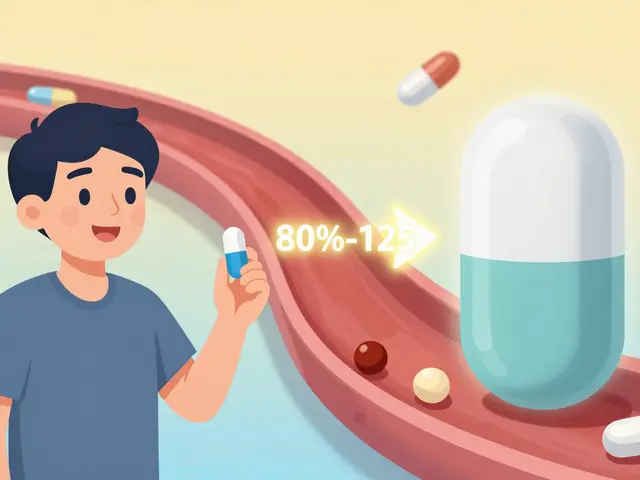
There is a reason for this secrecy. Most people view pills from the pharmacy as "real medicine" and herbs from the store as "safe food." This mindset prevents disclosure. To close this gap, experts recommend asking specifically about teas, herbs, or natural products during intake rather than asking a general question about supplements. Visual aids showing common herbal products have been proven to increase patient disclosure by 47% compared to verbal questioning alone.
Why Labels Might Not Warn You
You might expect a warning label to catch these dangers, but regulation differs significantly from standard drugs. In the United States, the regulatory landscape operates under the 1994 Dietary Supplement Health and Education Act (DSHEA). This law does not require pre-market safety testing for interactions. Manufacturers are responsible for quality, but they aren't mandated to prove safety against other drugs before selling.
Data shows only 15% of dietary supplement products marketed in the U.S. included interaction warnings despite containing herbs. The FDA issues warning letters regarding risks, but in 2022, only 12 letters were issued despite monitoring over 80,000 products. This creates a significant blind spot for consumers relying solely on packaging information.
Recent developments offer some hope. The FDA released draft guidance in 2023 recommending mandatory interaction testing for new botanical drugs. Additionally, the European Medicines Agency implemented comprehensive interaction study requirements for herbal medicinal products in 2024. However, until these become universal standards globally, personal vigilance remains your best defense.
Safety Protocols for Patients
Since you cannot rely entirely on regulators or automatic disclosure from providers, you must manage your own safety. Start by creating a complete inventory of everything you swallow. Include teas, powders, and tinctures. Take this list to your appointment.
- Ask specifically: Tell your doctor, "I want to take [Herb Name]. Is it safe with [Medication Name]?" Generic questions get generic answers.
- Check online databases: Resources like Natural Medicines Comprehensive Database provide curated interaction data.
- Monitor symptoms: Watch for unexpected bruising, dizziness, or sudden loss of symptom control.
- Consolidate care: Try to use one pharmacist for all your prescriptions and supplements if possible.
Pharmacists at Mayo Clinic report spending an average of 12 minutes per patient counseling on high-risk combinations. With St. John's wort interactions requiring up to 18 minutes of discussion on average, you should be prepared for that conversation. If your doctor dismisses your concern, seek a second opinion. Even natural supplements can interact with medicines used to treat heart and blood vessel problems, potentially causing life-threatening consequences.
Frequently Asked Questions
Can I take vitamin D with my prescription medications?
Vitamin D generally has a lower interaction profile compared to concentrated herbal extracts, but it can still interact with steroids and heart medications. Always confirm with your pharmacist, especially since many multivitamins contain mixed ingredients that may trigger reactions.
Is St. John's Wort safe for mild depression?
While it is effective for some mood disorders, St. John's Wort carries a very high risk of rendering other medications ineffective. Dr. Paul Offit described it as capable of rendering dozens of medications ineffective. Avoid it if you are on any prescription antidepressants or hormonal birth control.
What should I do if I forget to tell my doctor about supplements?
Tell them immediately. Most interaction risks can be mitigated once the provider knows what you are taking. Monitoring your symptoms closely in the interim helps catch early signs of toxicity or treatment failure.
Do natural food sources interact with drugs like supplements?
Usually not in normal culinary quantities. Eating a clove of garlic is different from consuming 5,000mg of garlic extract daily. Interaction risks typically arise with concentrated doses found in pill or tincture form.
Are there tools to check interactions automatically?
Yes, emerging artificial intelligence tools can predict new risks. The University of California released a prediction engine in March 2024 with 87% accuracy. However, human clinical oversight remains the gold standard for decision-making.




Michael Kinkoph
29 March, 2026 . 17:50 PM
The sheer lack of intellectual rigor displayed by the general populace is staggering; indeed, one must consider that ignorance often masquerades as virtue when discussing self-medication protocols. It is profoundly disturbing that individuals prioritize pseudoscience over established biochemistry. They simply refuse to understand the enzymatic pathways that govern metabolic stability. Furthermore, the assumption that nature dictates safety is a fallacy propagated by uneducated sources. We observe that toxicity levels can escalate without warning in vulnerable populations.
Jonathan Sanders
30 March, 2026 . 11:38 AM
Sure, lets act like everyone has the same access to high-brow medical knowledge you have Jonathan. It's easy to judge when you aren't the one swallowing the weird green pills hoping they work. People just want to feel better without waiting weeks for insurance approval. You sound like a textbook come to life and frankly nobody cares about your lecture. Just buy a vitamin instead of preaching about liver enzymes. 😂
emma ruth rodriguez
1 April, 2026 . 09:49 AM
It is essential to recognize that the regulatory framework often fails to protect the average consumer adequately. Many individuals operate under the dangerous misconception that natural origins equate to benign safety profiles universally. We must acknowledge the complex biological mechanisms at play when introducing foreign compounds into the system. The cytochrome system acts as the primary gatekeeper for metabolizing substances in the hepatic region efficiently. When inhibitors are present within the digestive tract, serum concentrations rise beyond therapeutic thresholds rapidly. Conversely, enzyme inducers lower drug efficacy by accelerating clearance rates significantly and dangerously. Clinicians need to document every single supplement alongside standard prescriptions consistently and without fail. Failure to disclose usage leads to unpredictable adverse events during critical hospitalization procedures frequently. The current FDA guidelines strongly suggest monitoring for bleeding risks specifically with ginkgo biloba usage patterns. Patients often withhold information due to fear of judgment from their concerned healthcare providers unfortunately. Comprehensive education campaigns should focus on specific examples rather than vague general warnings alone. Visual aids have shown significant promise in increasing disclosure rates during routine intake interviews successfully. Pharmacists are uniquely positioned to catch potential discrepancies before dispensing medications occur. Regular review of comprehensive medication lists should include non-pharmaceutical items voluntarily. Ultimately, patient advocacy requires active personal participation in one own healthcare decisions today immediately.
Christopher Curcio
2 April, 2026 . 11:33 AM
You hit the nail on the head regarding the CYP3A4 induction pathways. Most consumers do not realize that pharmacokinetic alterations can happen even with subclinical doses of botanicals. The transport protein efflux systems like P-gp are often overlooked in general discussions about herb-drug interactions. Bioavailability changes are not always linear and depend heavily on the matrix of the supplement formulation. Inhibition kinetics vary widely depending on whether the compound is competitive or non-competitive in binding affinity. We see significant variance in clinical presentation because baseline genetics influence enzyme activity too. It is crucial to maintain blood level monitoring when initiating concurrent therapy regimens involving these agents.
Rick Jackson
3 April, 2026 . 01:37 AM
I totally agree that hiding supplements from doctors is a terrible idea.
dPhanen DhrubRaaj
4 April, 2026 . 22:34 PM
yes i think people should just tell truth to doctors so they dont get hurt later on
sanatan kaushik
5 April, 2026 . 10:57 AM
Natural does not mean safe and anyone telling you otherwise is selling you something. We ignore ancient wisdom at our own peril sometimes but modern drugs are dangerous too. If you mix them up you might die and nobody cares enough to stop you. People trust labels way too much without reading the fine print on bottles. It is stupid to assume the government protects you from every snake oil salesman out there. You have to fight for your own health because no one else will do it for you.
Debbie Fradin
5 April, 2026 . 17:30 PM
Wow someone actually got it right finally instead of the usual nonsense we read daily here. But let's be real half the crowd will still drink holy water thinking it fixes cancer next week. They ignore basic logic until it bites them in the ass hard. At least you admitted that supplements are basically unregulated poison sometimes. Most people are too proud to admit they need help managing their own chemistry safely. Hopefully the stats wake them up before they end up in the morgue though.
Charles Rogers
7 April, 2026 . 12:08 PM
It is an absolute travesty that modern society allows such negligence to persist unchecked in the marketplace. We have witnessed countless tragedies resulting from poor communication between patients and their trusted providers. The silence surrounding these interactions suggests a collective denial of reality regarding personal health management. One must wonder if the priority lies with profit margins rather than genuine patient safety outcomes. The data is clear yet people continue to walk blindly into harm without proper guidance. Ignorance is bliss until the organ failure sets in and the consequences become irreversible permanently. We need stricter laws immediately to force transparency on packaging labels worldwide. Until then individuals must shoulder the burden of research themselves to avoid catastrophic errors. It is heartbreaking to see preventable injuries caused by simple misunderstandings about dosage forms. The moral obligation falls squarely on the shoulders of those who consume these products recklessly. Society must evolve beyond the naive belief that mother nature offers only cures without side effects.
Adryan Brown
8 April, 2026 . 01:55 AM
Your perspective carries a lot of weight and I can see why you feel so strongly about the situation. There are certainly valid concerns regarding the lack of oversight in the current regulatory environment globally. However, painting everyone with the same brush might discourage people from seeking help entirely when they need it. We should encourage open dialogue rather than fear-mongering which might drive behavior underground further. Balance is key when trying to improve public health literacy around sensitive topics like supplementation. Most people genuinely believe they are doing the right thing for their wellness journey. Constructive criticism helps far more than judgment ever could achieve in the long run. We all have room to grow in how we discuss these complex medical interactions safely together. Maybe sharing resources gently would reach more people than harsh condemnation strategies ever could. Empathy goes a long way when bridging the gap between different viewpoints on care. Let us focus on solutions that empower individuals rather than shaming them excessively.
Angel Ahumada
8 April, 2026 . 18:00 PM
people really need to stop trusting everything they see online without checking facts because that is how you get sick fast
Vikash Ranjan
9 April, 2026 . 09:10 AM
Actually online databases are improving and AI tools are getting pretty accurate now so maybe things are changing. Not everyone is doomed to make mistakes anymore with better tech available to help. Sometimes people just need the right tools to make good choices easier to find. I think we are moving past the era of total confusion slowly but surely.
Kendell Callaway Mooney
11 April, 2026 . 05:33 AM
Just make sure you ask your pharmacist about every bottle you put on the shelf at home. They can check if two things fight each other inside your body easily. Keep a list on your phone so you can show it quickly at appointments. Simple steps save lives more than worrying about everything all day long.
Beccy Smart
12 April, 2026 . 20:31 PM
Good tips 🤩 I forgot about the pharmacy trick 😅 My mom mixes teas with meds all the time ☕️ Hope she doesn't end up in the ER 🏥😰 Thanks for sharing 🙌
Jonathan Alexander
13 April, 2026 . 11:28 AM
I remember my aunt took St Johns wort while on birth control and she ended up pregnant unexpectedly later. It was a nightmare for her whole family honestly. She cried for weeks about it and blamed the doctor who told her it was okay. Now she is terrified of anything labeled natural at the store counter. We try to stay away from that stuff now to be safe.