
Pancreatic cancer is often called a "silent" disease because it rarely shows obvious signs until it has already spread. This aggressive malignancy starts in the pancreas, a six-inch gland tucked behind your stomach that handles blood sugar and digestion. Because of its hidden location, doctors can't simply feel a tumor during a routine checkup, which is why so many cases are found late. However, understanding the subtle red flags and the latest medical breakthroughs can change the outlook for patients.
| Metric | Value / Data | Context |
|---|---|---|
| 5-Year Survival (Overall) | 12% | All stages combined |
| 5-Year Survival (Localized) | 44% | Caught before spreading |
| Diagnosis Stage | 80% | Diagnosed at Stage III or IV |
| Annual Incidence Growth | 1.5% | CDC data 2010-2019 |
The Vague Red Flags: What to Watch For
Most people think of jaundice-yellow skin or eyes-as the primary sign of pancreatic cancer. While that affects about 70% of people with tumors in the head of the pancreas, other symptoms are much more subtle and easily mistaken for common stomach bugs or aging. For instance, abdominal or back pain is reported by up to 75% of patients, but it's often dismissed as a pulled muscle or indigestion.
Keep an eye out for these specific changes:
- Unexplained Weight Loss: About 60% of patients lose weight without changing their diet or exercise habits.
- Stool Changes: Look for pale, greasy stools that float. This happens because the cancer blocks bile from reaching the intestines.
- Digestive Distress: A persistent loss of appetite or nausea that doesn't go away.
- Dark Urine: When bilirubin builds up in the blood (exceeding 2.5 mg/dL), your urine may look tea-colored or brown.
One of the most surprising early warnings isn't physical pain, but metabolic change. Research from Columbia University shows that 80% of patients develop diabetes within 18 months of their diagnosis. If you suddenly develop high blood sugar (above 126 mg/dL fasting) in your 50s or 60s without a family history of the disease, it's worth mentioning to your doctor.
Interestingly, some patients experience psychological shifts first. A significant number report depression or anxiety about six months before any physical symptoms appear. While mental health struggles are common, this pattern has emerged as a potential early indicator for some.
The Diagnostic Hurdle: Why It's Hard to Find
The biggest problem with this cancer is that there is currently no standard screening test for the general public. You can't just get a "pancreas screen" during a yearly physical. Most blood tests, like the CA 19-9 biomarker, are better at monitoring existing cancer than finding new tumors. In early stages, CA 19-9 only catches about 30-50% of cases.
For those at high risk-such as people with BRCA2 mutations or a history of hereditary pancreatitis-the approach is different. High-risk individuals often start annual monitoring at age 50 using MRI or endoscopic ultrasound to catch growths while they are still resectable.
If a doctor suspects something is wrong, they usually follow a specific sequence:
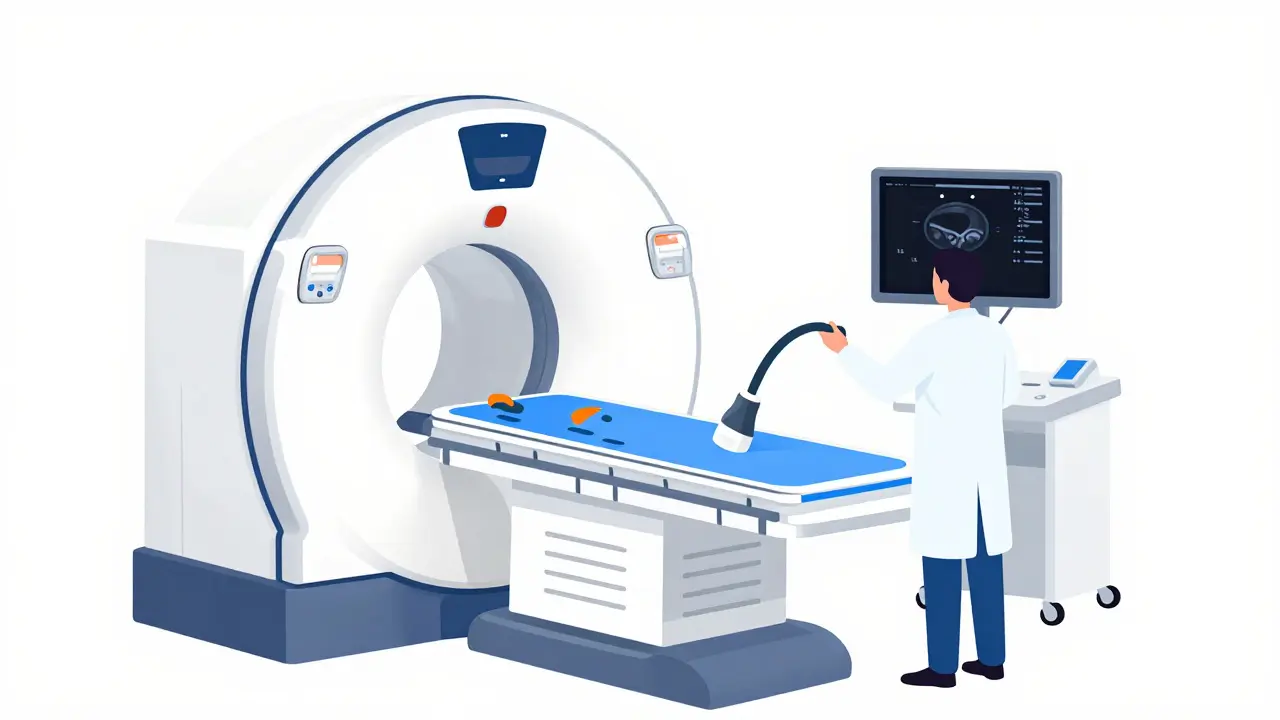
- Imaging: A CT scan is the go-to. It's 90% accurate for tumors larger than 3cm, but its effectiveness drops to 60% for smaller growths.
- Biopsy: The gold standard is an endoscopic ultrasound-guided fine needle aspiration, which provides about 95% accuracy in confirming the cancer.
- Bloodwork: Checking for elevated CA 19-9 levels (typically above 37 U/mL) to help gauge the disease's activity.
Treatment Breakthroughs: Moving Beyond the Basics
For decades, the only real hope was the Whipple procedure (pancreaticoduodenectomy). This is a complex surgery to remove the head of the pancreas, part of the small intestine, and the gallbladder. While still the only potential cure, it's only an option for a small percentage of patients whose tumors haven't spread.
The real excitement in recent years is in neoadjuvant therapy-treating the tumor with chemotherapy before surgery to shrink it. The FOLFIRINOX regimen (a cocktail of 5-fluorouracil, leucovorin, irinotecan, and oxaliplatin) has shown response rates of 58% in tumors that were previously considered too risky to operate on.
For those with metastatic disease, the outlook is shifting. The PRODIGE 24 trial showed that modified FOLFIRINOX could push median survival from around 20 months (with older drugs like gemcitabine) up to over 54 months. That's a massive leap in quality and quantity of life.

The Future: Genetic Targeting and AI
We are moving toward a world of "personalized" cancer care. Instead of one-size-fits-all chemo, doctors are looking at the genetic makeup of the tumor. For example, patients with BRCA mutations now use olaparib as a maintenance therapy to slow progression. For the rare subset of patients with MSI-H/dMMR tumors, the drug pembrolizumab has shown a 40% response rate.
The next frontier is the "liquid biopsy." Researchers are working on blood tests that can detect mutant KRAS proteins. This could allow doctors to find cancer with a simple blood draw long before a tumor is visible on a scan. Furthermore, AI is stepping in; Google Health's LYNA algorithm can now analyze pathology slides with over 99% accuracy, helping pathologists spot cancer cells that the human eye might miss.
Can pancreatic cancer be caught early?
Yes, but it is difficult because symptoms are vague. The best chance for early detection is for high-risk individuals (those with genetic mutations like BRCA2) to undergo regular screening via MRI or endoscopic ultrasound. For others, paying attention to new-onset diabetes or unexplained weight loss and seeking medical advice is the best approach.
What is the difference between the Whipple procedure and chemotherapy?
The Whipple procedure is a surgery designed to physically remove the tumor and surrounding tissue; it is the only potentially curative treatment. Chemotherapy, such as FOLFIRINOX, uses powerful drugs to kill cancer cells. It is often used to shrink tumors before surgery (neoadjuvant) or to slow the spread of the disease in advanced stages (palliative).
Is CA 19-9 a reliable screening test?
Not for general screening. While CA 19-9 is a useful biomarker for tracking how a patient is responding to treatment or checking for recurrence, it only detects 30-50% of early-stage cancers. It can also be elevated by non-cancerous conditions, making it unreliable as a standalone diagnostic tool for the public.
Why is new-onset diabetes a warning sign?
Pancreatic tumors can interfere with the organ's ability to produce insulin or trigger a systemic response that increases blood glucose levels. About 80% of patients develop diabetes within 18 months of diagnosis, often as one of the very first measurable signs of the disease.
What are the latest survival rates?
While the overall 5-year survival rate is around 12%, it jumps to 44% if the cancer is localized. For advanced stages, new multimodal treatments have increased median survival from roughly 6 months in the early 2000s to between 12 and 15 months today, with some specific trials showing even longer outcomes using modified FOLFIRINOX.
Next Steps and Troubleshooting
If you are concerned about your symptoms or family history, don't wait for "obvious" signs. Schedule a visit with a gastroenterologist or an oncologist. If you have a known family history of BRCA mutations, ask specifically about a surveillance program involving MRCP (Magnetic Resonance Cholangiopancreatography).
For those already in treatment, the biggest challenge is often managing the side effects of heavy chemotherapy. Discuss "supportive care" or palliative specialists with your medical team; they focus on quality of life, nutrition, and pain management, which allows patients to tolerate aggressive treatments like FOLFIRINOX more effectively.




Carol Yang
26 April, 2026 . 09:20 AM
Hope these new AI tools actually get rolled out soon because waiting for symptoms is just terrifying.
Vijay AGarwal
27 April, 2026 . 17:46 PM
My goodness, the sheer horror of the Whipple procedure is something no one should ever have to endure! It is an absolute nightmare of a surgery that leaves you feeling like a jigsaw puzzle put back together by a toddler! But thank heavens for neoadjuvant therapy, which is a literal godsend for those of us praying for a fighting chance!
Anand Mehra
29 April, 2026 . 05:16 AM
stats are just numbers to hide the void no real cure here just slowing the inevitable
Nikita Shabanov
1 May, 2026 . 01:57 AM
For those worried about the BRCA2 mutation, it's important to note that MRCP is specifically designed to look at the bile ducts and pancreatic duct without invasive surgery. It's a non-contrast option usually, which is great for people with kidney issues or allergies to contrast dyes.
Majestic Blue Band
1 May, 2026 . 23:16 PM
It is honestly just too convenient that we are being told to watch for 'psychological shifts' and depression as early warning signs because once you label a person as mentally unstable, you can dismiss every other physical symptom they report as just being 'all in their head' while the pharmaceutical companies rake in billions from these 'breakthrough' drugs that probably have side effects they aren't even mentioning in these sanitized articles, and don't even get me started on how the AI algorithms are likely just a way for the government to track our biological markers in real-time without our consent!
Brittney Prince
2 May, 2026 . 14:08 PM
the whole thing smells like a big pharma scam to get us on 'maintenance therapy' forever
Gauri Parab
2 May, 2026 . 17:21 PM
Imagine actually believing a CT scan is 'accurate' when it misses 40% of small growths. The diagnostic framework described here is laughably rudimentary and frankly, if you're relying on this basic summary for your health, you're just playing Russian roulette with your pancreas. The lack of a standard screening test isn't a 'hurdle', it's a systemic failure of medical priority that only an amateur would overlook.
Kristen O'Neal
3 May, 2026 . 13:40 PM
The point about new-onset diabetes is actually a huge clue for doctors to look deeper. I wonder if there are specific blood sugar patterns that differentiate this from Type 2 diabetes early on. It would be amazing if we could get a more accessible screening tool for the general population soon.
Nila Sawyer
3 May, 2026 . 23:03 PM
This is such a powerful reminder to listen to our bodies and not ignore the little things! 🌟 It's so encouraging to see that survival rates are improving thanks to new science, and we just need to keep supporting the researchers who are working on these liquid biopsies because that's going to be a total game changer for so many families! Keep fighting and stay positive everyone! 💪✨❤️
Sharyl Foster
4 May, 2026 . 05:22 AM
Please. CA 19-9 is basic knowledge. Everyone knows it's useless for screening but great for tracking. It's not some 'hurdle', it's just how biomarkers work. Honestly, the article treats this like it's some shocking revelation when it's literally Medicine 101.
suresh kumar
5 May, 2026 . 00:44 AM
Which hospitals are using this LYNA AI thing? I want to know if my cousin's doctor is using outdated eyes or the fancy robot eyes. Give me the list of the top clinics that aren't just stealing money from desperate people!
sachin singh
6 May, 2026 . 06:14 AM
The mention of the PRODIGE 24 trial is quite promising. I would be interested to know if there are similar multimodal trials currently recruiting for patients who are not eligible for the Whipple procedure.