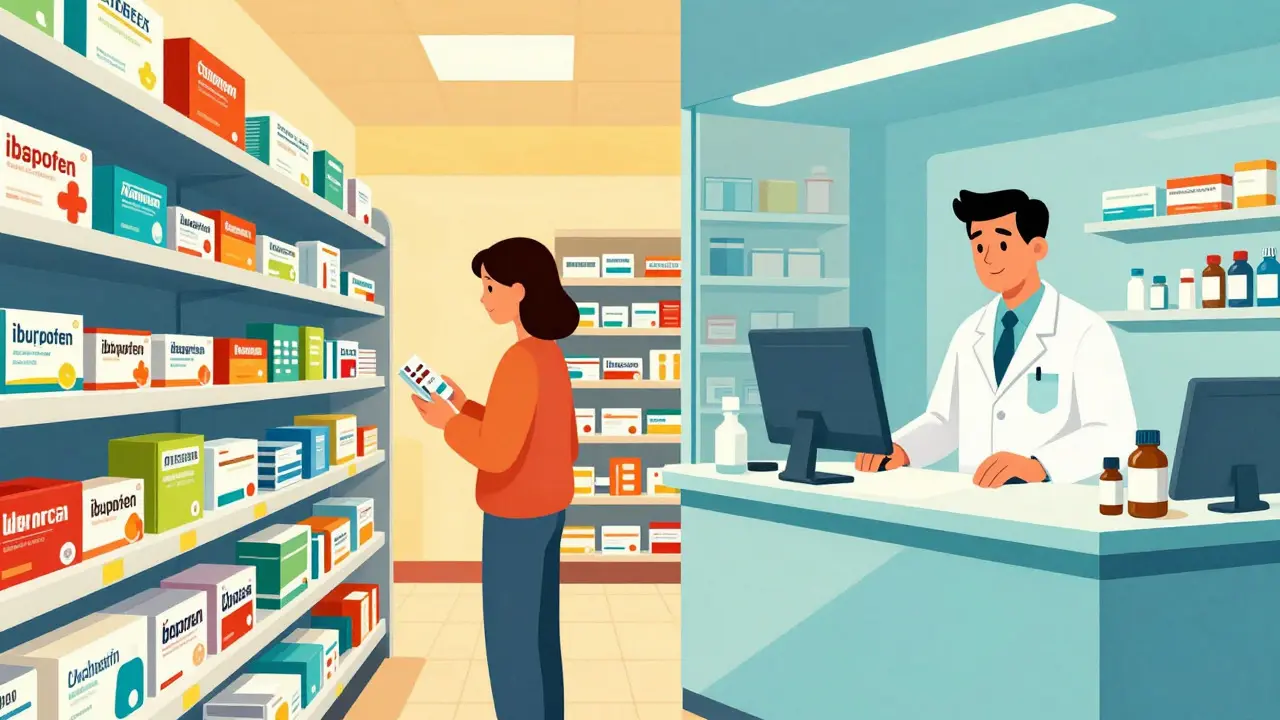
You’re in pain, or maybe you’re just congested, and the pharmacy aisle is staring back at you. On one side, there’s a wall of colorful boxes-ibuprofen, antihistamines, heartburn relief-all available right now. On the other side, behind the counter, are the medicines that require a doctor’s note. Which one do you grab? It’s not just about convenience; it’s about safety, potency, and whether your body actually needs a professional’s oversight.
Choosing between over-the-counter (OTC) and prescription medications isn’t always obvious. While OTC drugs are designed for self-treatment of minor issues, they aren’t harmless candy. Prescription drugs offer higher potency but come with stricter rules and potential side effects. Knowing when to reach for which can save you money, prevent dangerous interactions, and get you feeling better faster.
The Core Difference: Regulation and Access
At its heart, the difference comes down to how the U.S. Food and Drug Administration (FDA) regulates them. Both categories are strictly monitored for safety and effectiveness, but the path to the shelf is different. Prescription drugs go through a rigorous New Drug Application (NDA) process, proving they work for specific, often complex conditions under medical supervision. OTC medications follow the OTC Drug Monograph system, which acts like an approved recipe book for ingredients deemed safe for consumers to use without a doctor.
This regulatory split dates back to the 1938 Federal Food, Drug, and Cosmetic Act, with the 1951 Durham-Humphrey Amendment formally creating the prescription category. Today, there are over 800 active OTC ingredients powering more than 100,000 products, compared to over 20,000 prescription products. The key takeaway? If it’s on the open shelf, the FDA has determined it’s safe for self-diagnosis and self-treatment. If it’s behind the counter, it likely requires professional monitoring due to higher potency or complexity.
Potency Matters: Why Strength Varies
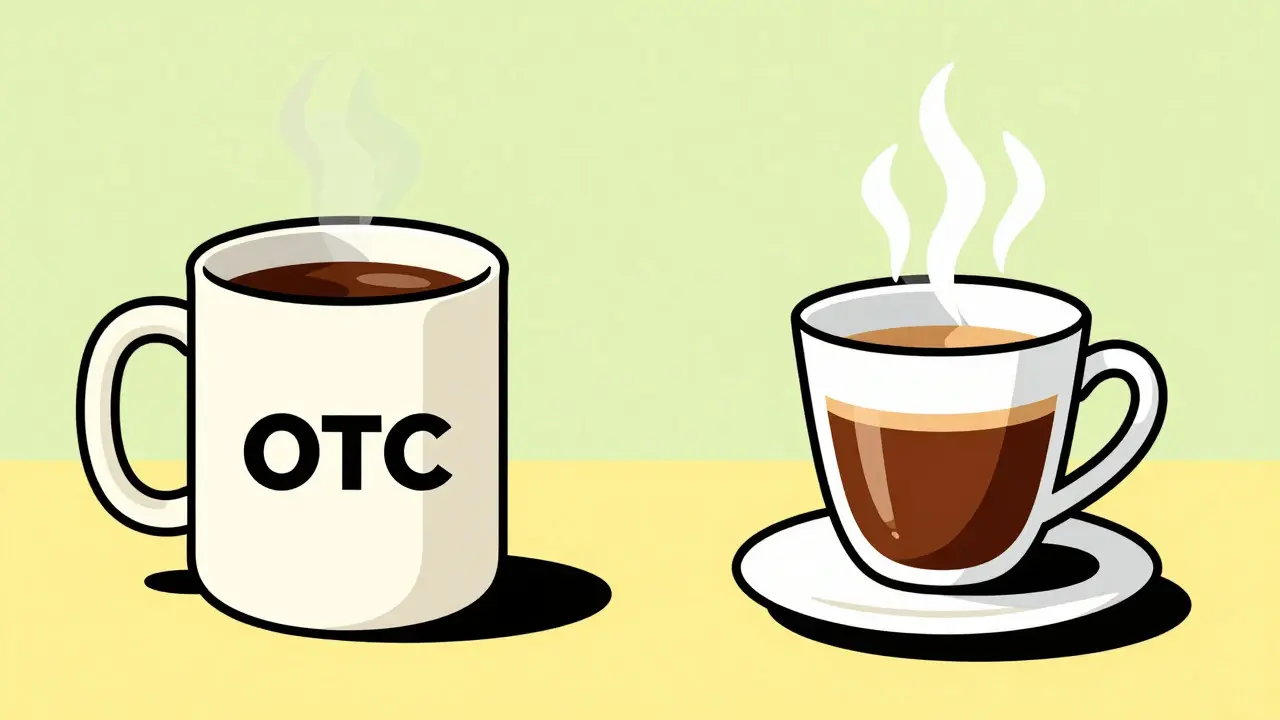
One of the biggest misconceptions is that OTC and prescription versions of the same drug are identical. They often share the same active ingredient, but the concentration differs significantly. Think of it like coffee: OTC is a standard cup, while prescription might be a double-shot espresso.
Take hydrocortisone cream for skin irritation. You can buy 1% strength OTC, which works fine for mild insect bites or minor rashes. But if you have severe eczema or a strong allergic reaction, a doctor might prescribe 2.5% hydrocortisone. Similarly, ranitidine for heartburn comes in 75 mg tablets OTC, but prescription strengths jump to 150 mg or 300 mg. Higher potency means faster or stronger relief, but also a higher risk of side effects and interactions. That’s why doctors control access-they need to ensure your body can handle the increased dose.
| Attribute | OTC Medications | Prescription Medications |
|---|---|---|
| Access | Shelves in pharmacies, supermarkets, gas stations | Licensed pharmacies only, requires physician order |
| Potency | Lower concentrations, safer for self-use | Higher concentrations, targeted for severe cases |
| Cost | Out-of-pocket, generics as low as $4/100 tabs | Often covered by insurance, copays vary |
| Diagnosis | Self-diagnosed (headaches, colds, mild allergies) | Physician-diagnosed (hypertension, diabetes, severe migraines) |
| Risk Profile | Low interaction risk, misuse via overuse | Higher interaction risk, requires monitoring |
When to Choose OTC: Self-Care Basics
OTC medications are your first line of defense for common, self-limiting conditions. These are issues where symptoms are mild to moderate, easy to recognize, and unlikely to cause long-term harm if treated conservatively. Think occasional headaches, seasonal allergies, minor heartburn, or a common cold.
Dr. Jessica Ailani, director of the MedStar Georgetown Headache Center, notes that OTC options work well for symptoms with a gradual onset over hours. For example, if you wake up with a dull headache from stress, acetaminophen or ibuprofen usually suffices. The American Migraine Foundation recommends OTC analgesics like Tylenol, Advil, or Aleve for mild migraines occurring less than 10 days per month. The goal here is symptom management without unnecessary medical intervention.
However, "self-diagnosable" doesn’t mean "ignore warning signs." If your headache is sudden and explosive, accompanied by vision changes, or persists beyond a few days, OTC meds won’t fix the underlying issue-and you might delay critical care. Stick to OTC for:
- Mild pain (headaches, muscle aches, menstrual cramps)
- Seasonal allergies (itchy eyes, sneezing)
- Occasional heartburn or indigestion
- Cold and flu symptoms (congestion, cough)
- Minor skin irritations (rashes, insect bites)
When to Seek Prescription: Beyond Self-Treatment
Prescription medications step in when conditions are severe, chronic, or require precise diagnosis. If OTC meds fail after a week, or if symptoms disrupt your daily life, it’s time to see a doctor. Prescription drugs address complex issues like hypertension, diabetes, severe asthma, and chronic migraines.
Consider migraines again. While OTC ibuprofen helps mild cases, severe attacks often require triptans-prescription drugs that target specific migraine pathways. Dr. Ailani points out that oral OTC meds take longer to absorb, making them less effective for sudden, debilitating pain. Triptans, available in pills, injections, or nasal sprays, act faster and more precisely. Similarly, for allergies, if OTC antihistamines like Zyrtec or Claritin don’t cut it, a doctor might prescribe montelukast (Singulair), which works differently and takes up to two days to reach full effect.
Prescriptions also shine in preventive care. Statins for cholesterol, insulin for diabetes, or birth control pills aren’t things you guess your way into. They require blood tests, ongoing monitoring, and dosage adjustments. Using OTC alternatives for these conditions is like trying to put out a house fire with a garden hose-it might dampen the flames, but it won’t stop the blaze.
The Rx-to-OTC Switch: What’s Changing?
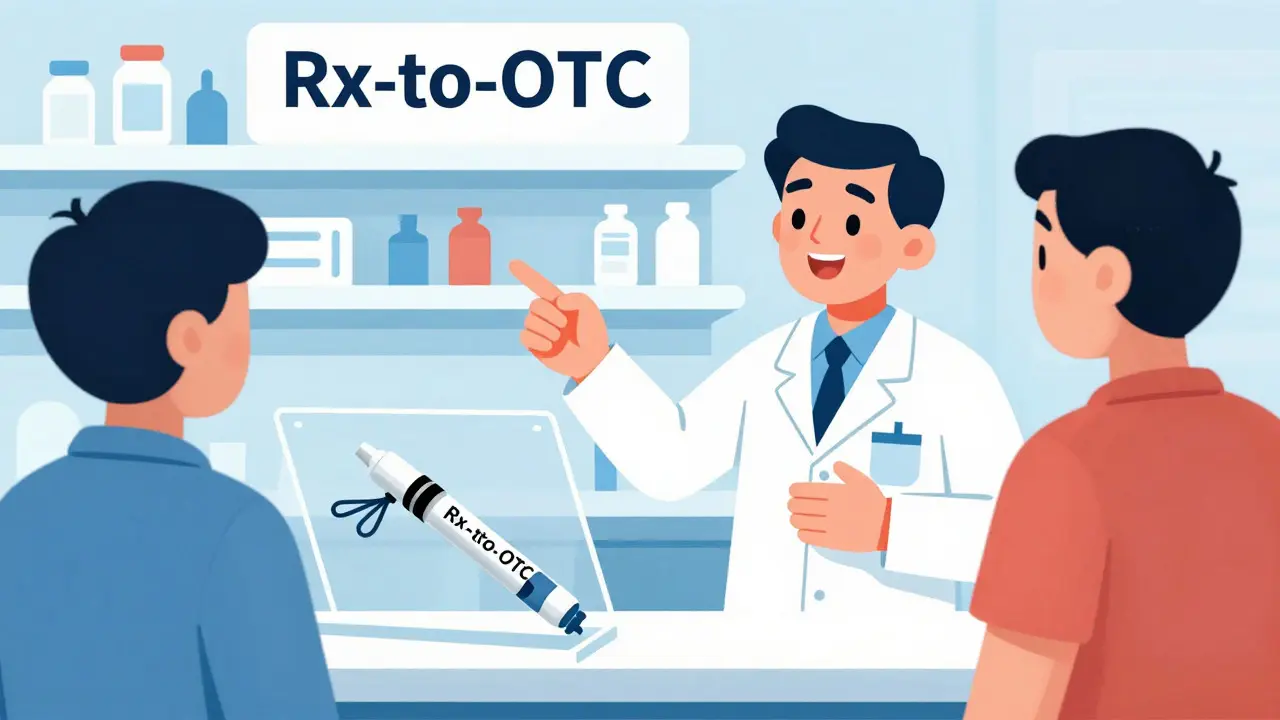
The line between OTC and prescription isn’t static. Over time, some drugs move from behind the counter to open shelves-a process called the "Rx-to-OTC switch." This happens when extensive safety data proves a drug is safe for self-use. Fexofenadine (Allegra) for allergies, esomeprazole (Nexium) for heartburn, and adapalene (Differin) for acne all made this transition.
In April 2023, the FDA approved the first OTC version of epinephrine (EpiPen), previously prescription-only for life-threatening allergies. This shift empowers patients but demands caution. Just because a drug is OTC doesn’t mean it’s weak. EpiPen auto-injectors save lives, but improper use can be dangerous. Always read labels carefully and consult a pharmacist if you’re unsure.
Industry trends show this shift accelerating. Between 2010 and 2022, 15 medications switched to OTC, up from 8 in the previous decade. Experts predict 20-25 more switches by 2030, particularly in allergy, heartburn, and topical treatments. As accessibility grows, so does responsibility. Consumers must understand that "available" doesn’t equal "appropriate" for every situation.
Cost Considerations: Is OTC Always Cheaper?
A common myth is that OTC meds are always cheaper than prescriptions. In reality, it depends on your insurance and the specific drug. Store-brand generics, like ibuprofen 200mg, can cost as little as $4 for 100 tablets, versus $15 for brand-name Advil. However, if you have Medicare Part D or private insurance, a prescription copay might be lower than the out-of-pocket OTC price.
For example, a generic prescription for a high-potency acid reducer might cost $10 with insurance, while the OTC equivalent runs $20. Conversely, if you rarely need medication, paying cash for OTC avoids insurance premiums and deductibles. Always compare costs before buying. Pharmacists can help calculate whether a prescription makes financial sense for your situation.
Safety First: Avoiding Pitfalls
All medications carry risks, even OTC ones. Misuse is the biggest danger. Taking too much ibuprofen can damage your stomach lining or kidneys. Combining multiple cold medicines with overlapping ingredients (like acetaminophen) can lead to liver toxicity. Always check labels for active ingredients and avoid doubling up.
Interactions matter too. St. John’s Wort, a popular OTC supplement, can reduce the effectiveness of birth control pills and antidepressants. Warfarin, a prescription blood thinner, interacts with many OTC pain relievers. If you’re on regular medication, talk to your pharmacist before adding anything new. They’re trained to spot these conflicts and can suggest safer alternatives.
Finally, don’t ignore persistent symptoms. If heartburn lasts more than two weeks, or allergies interfere with sleep, see a doctor. Chronic issues often signal underlying problems that OTC meds mask rather than cure. Early diagnosis prevents complications down the road.
Practical Decision Guide
To simplify your choice, ask yourself these questions:
- How severe are my symptoms? Mild to moderate? Try OTC. Severe or disabling? See a doctor.
- How long have I had them? Less than 7-10 days? OTC may suffice. Longer? Get checked.
- Do I have other health conditions? High blood pressure, diabetes, or kidney disease? Consult a professional before self-medicating.
- Am I taking other medications? Potential interactions? Ask a pharmacist.
- Is cost a factor? Compare OTC prices with prescription copays. Generics often win.
Remember, pharmacists are accessible experts. In 2022, 89% of community pharmacists reported counseling patients on OTC vs. prescription choices. Don’t hesitate to walk in and ask, "What’s best for my situation?" Their advice can save you time, money, and health risks.
Are OTC medications less effective than prescription drugs?
Not necessarily. OTC meds are highly effective for mild to moderate conditions like headaches, allergies, and minor pain. Prescription drugs offer higher potency for severe or chronic issues. Effectiveness depends on matching the medication to the condition’s severity, not just the label type.
Can I switch from a prescription to an OTC version of the same drug?
Yes, but consult your doctor first. OTC versions often have lower doses or different formulations. For example, switching from prescription-strength hydrocortisone to OTC 1% cream might not provide enough relief for severe eczema. Your doctor can advise if the switch is appropriate for your case.
Why are some medications only available by prescription?
Prescription-only status usually indicates higher potency, greater risk of side effects, or need for professional monitoring. Drugs for conditions like hypertension or diabetes require precise dosing and regular check-ups to ensure safety and efficacy. The FDA restricts access to prevent misuse and ensure proper diagnosis.
Is it safe to use OTC medications long-term?
Long-term OTC use should be discussed with a healthcare provider. While some meds like antacids are safe for occasional use, chronic reliance on painkillers or decongestants can lead to rebound effects or organ damage. Persistent symptoms warrant medical evaluation to address root causes.
How do I know if my condition needs a prescription?
If symptoms are severe, last more than 7-10 days, worsen despite OTC treatment, or significantly impact daily life, seek medical advice. Conditions like uncontrolled fever, chest pain, or difficulty breathing require immediate professional attention. When in doubt, consult a doctor or pharmacist.