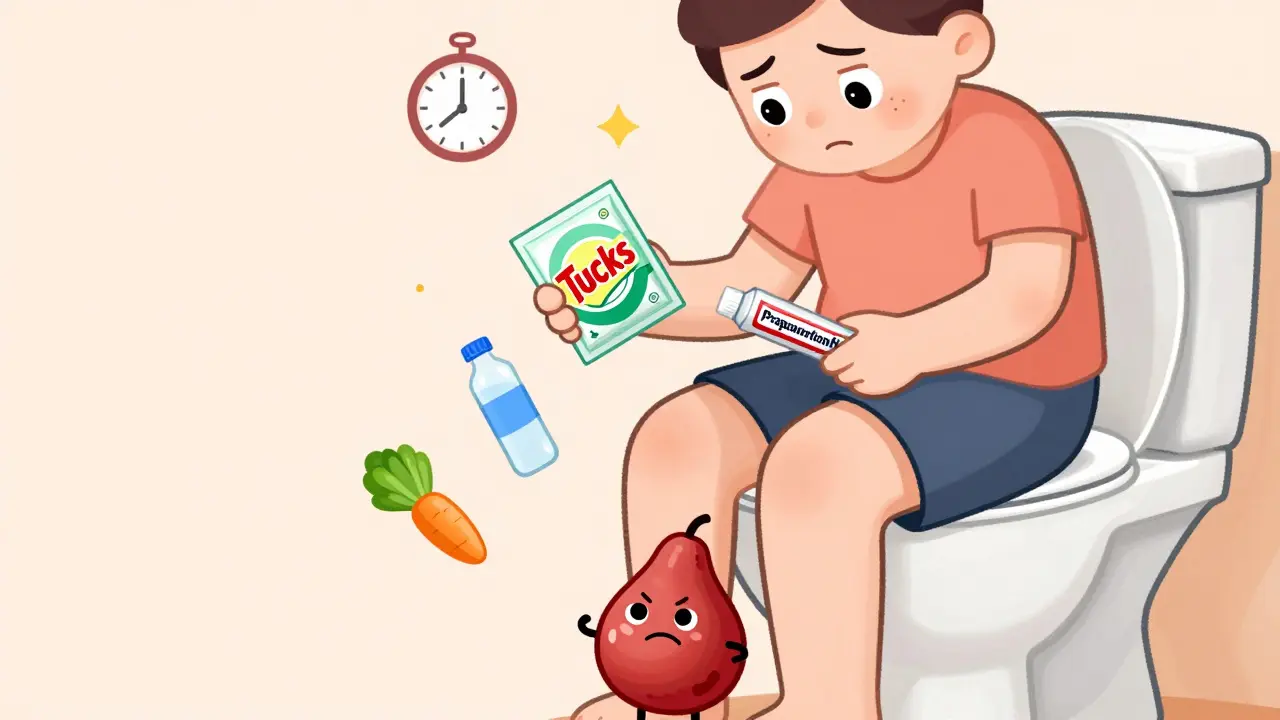
More than half of us will deal with hemorrhoids by the time we turn 50. They’re not rare, not shameful, and often not serious-but they’re painfully uncomfortable. You’ve probably reached for an OTC cream, wipe, or suppository at least once. Maybe you bought Preparation H after a long flight or used Tucks pads after a tough bowel movement. And maybe, like many, you wondered: Is this actually helping, or am I just wasting money and time?
What OTC Hemorrhoid Treatments Actually Do
OTC hemorrhoid treatments don’t cure hemorrhoids. They don’t shrink swollen veins or fix the root cause-like straining, constipation, or prolonged sitting. What they do is mask the symptoms: pain, itching, burning, and swelling. Think of them like a bandage on a cut. It doesn’t heal the skin, but it makes it bearable while your body does the real work.
There are four main types of active ingredients in these products:
- Local anesthetics like benzocaine and pramoxine numb the area. They work fast-within minutes-and last 2 to 4 hours. Good for sudden flare-ups.
- Astringents like witch hazel (14% in Tucks pads) tighten tissues and reduce swelling. They give quick cooling relief but wear off in 30 to 60 minutes.
- Vasoconstrictors like phenylephrine (0.25% in Preparation H) shrink blood vessels. They reduce puffiness but only last a few hours and can cause rebound swelling if overused.
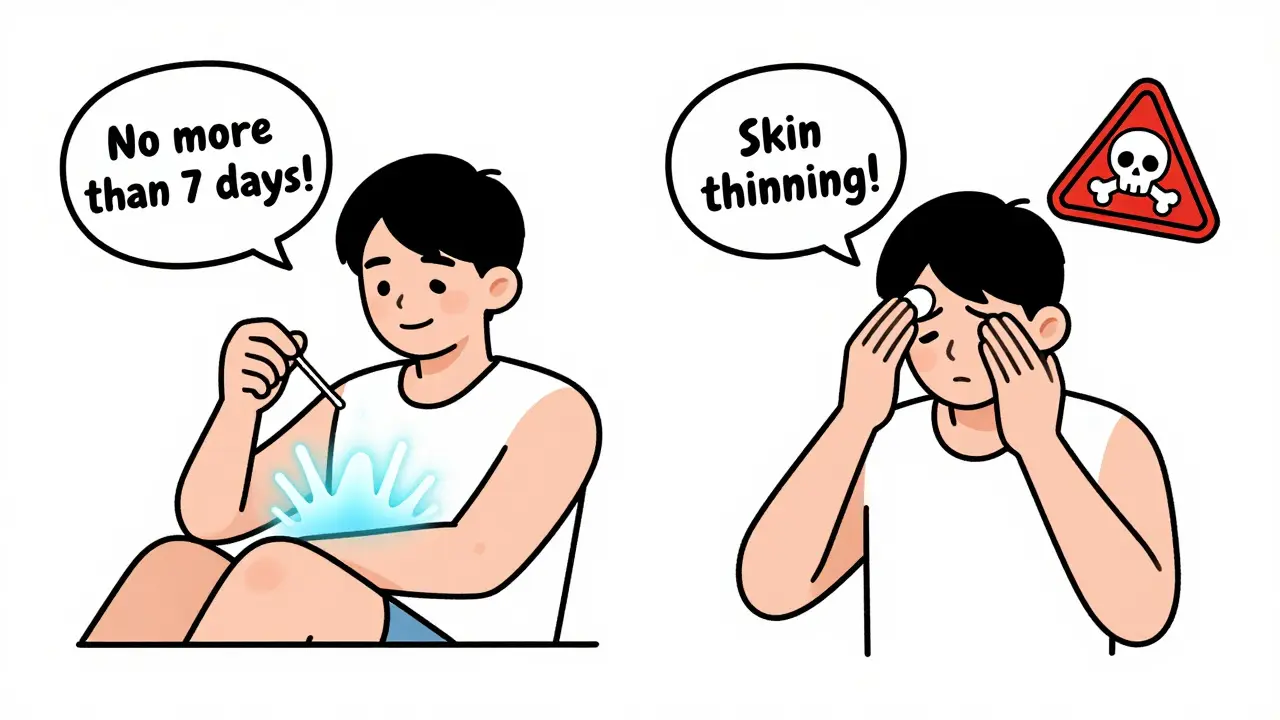
- Corticosteroids like hydrocortisone (1%) fight inflammation. They take 3 to 4 days to show real results and shouldn’t be used longer than a week without medical advice.
Combination products like Anusol HC (pramoxine + hydrocortisone) are more effective than single-ingredient options. Clinical studies show they work 40% better in reducing discomfort. But even the best OTC product won’t fix a prolapsed hemorrhoid or stop serious bleeding.
Choosing the Right Product for Your Type
Not all hemorrhoids are the same. Where they are and how bad they are changes what works.
External hemorrhoids (under the skin around the anus) are the most painful. They swell up and can feel like a tender lump. For these, witch hazel pads or numbing creams work best. Apply after every bowel movement. Many users report instant relief from the cooling effect-especially when the pad is chilled in the fridge first.
Internal hemorrhoids (inside the rectum) don’t hurt much unless they prolapse. But they often cause bleeding or a feeling of fullness. Suppositories are the way to go here. Hydrocortisone suppositories (25mg) are recommended by the Mayo Clinic. Insert them right after a bowel movement, when the rectum is empty. That’s when absorption is highest. Use them 2 to 4 times a day for up to a week.
Don’t use hydrocortisone creams inside the rectum. They’re not designed for that. Suppositories are. Zinc oxide creams like Calmoseptine are also safe for sensitive skin and can be used externally or on mild internal irritation. They don’t absorb into the bloodstream, so they’re low-risk.
When OTC Treatments Work-And When They Don’t
Most people get relief with OTC products-if they use them right. But here’s the catch: 75% of cases respond to conservative care, according to the American Society of Colon and Rectal Surgeons. That means your hemorrhoid is likely grade I or II: small, not prolapsed, and not bleeding heavily.
But if you’re dealing with grade III or IV hemorrhoids-those that stick out and won’t go back in-OTC products are barely helpful. NIH data shows only 15% symptom improvement in these cases. That’s not because the cream is weak. It’s because the problem is structural. No cream can pull a prolapsed hemorrhoid back inside.
Also, if you’ve been using the same cream for 7 days and nothing’s changed, stop. You’re not being stubborn-you’re delaying real help. Tampa Colorectal Specialists found that 82% of patients who needed medical procedures waited too long because they kept trying OTC stuff.
How to Use OTC Treatments Right
Most people don’t use these products correctly. That’s why so many say they “didn’t work.” Here’s what actually helps:
- Keep it clean. Wash the area gently with warm water after every bowel movement. Pat dry-not rub. Moisture makes itching worse.
- Apply with clean hands or an applicator. Don’t use your fingers if they’re dirty. Use a cotton swab or the applicator that comes with the product. Dirty application can cause infection.
- Don’t overdo it. Applying more than 4 times a day or using it longer than 7 days can irritate the skin or cause thinning (especially with hydrocortisone).
- Use sitz baths. Sit in warm (not hot) water for 15 to 20 minutes, 2 to 3 times a day. It reduces swelling and soothes pain. Add nothing-no Epsom salts, no tea tree oil. Just water.
- Store properly. Some creams and suppositories need refrigeration. Check the label. Leaving them on the bathroom counter can make them less effective.
YouTube videos with real demonstrations have helped users get the technique right. One study showed people who watched a 5-minute tutorial improved their application accuracy by 40%.
Red Flags: When to See a Doctor
There are times when OTC treatments are not enough. In fact, waiting too long can make things worse. See a doctor right away if you have:
- Rectal bleeding that’s new, heavy, or doesn’t stop. Hemorrhoids can bleed, but so can colon cancer. Don’t assume.
- Severe pain that doesn’t improve with OTC meds or sitz baths. That could mean a blood clot in the hemorrhoid (thrombosed hemorrhoid), which needs quick treatment.
- Prolapsed hemorrhoids that won’t go back in. You can’t push them back? That’s a medical issue.
- Symptoms lasting more than 7 days despite proper use. If it’s still bothering you after a week, you need a different plan.
- Change in bowel habits like diarrhea, constipation, or narrow stools. These aren’t typical hemorrhoid signs.
Doctors have better tools: stronger prescription creams (2.5% hydrocortisone), rubber band ligation (95% effective), or minimally invasive procedures. These aren’t scary. Most are done in an office in under 15 minutes.

What Real People Say
On Reddit’s r/hemorrhoids, 125,000+ members share what works. Most say witch hazel pads give instant relief but don’t last. Preparation H helps with swelling but feels greasy. Hydrocortisone creams? Many say “nothing happened after 7 days.”
On Amazon, Tucks pads have a 4.4/5 rating. The 5-star reviews all say the same thing: “Instant cooling relief.” The 1-star reviews? “Used it for 10 days. No change.”
One user wrote: “I used Preparation H for 3 days, then started sitz baths. By day 5, the swelling was gone. I kept using the pads for another 2 days just to be safe.” That’s the pattern. It’s not magic. It’s consistency.
The Bigger Picture
The OTC hemorrhoid market made $1.2 billion in the U.S. last year. Preparation H alone sold $444 million worth. But here’s the truth: most of that money is spent by people who don’t need it-or who are using it wrong.
Doctors agree: OTC products are fine for mild, short-term flare-ups. But they’re not a long-term fix. If you’re constantly buying creams, you’re treating symptoms, not causes. The real solution? Eat more fiber, drink more water, avoid straining, and move more. Those habits prevent hemorrhoids from coming back.
And if you’re still stuck after a week? Don’t feel embarrassed. Don’t wait. See a doctor. There’s no shame in getting help. Hemorrhoids are common. Pain shouldn’t be normal.
Can I use OTC hemorrhoid cream for internal hemorrhoids?
Only if it’s a suppository. Creams and ointments are meant for external use. For internal hemorrhoids, use hydrocortisone suppositories (25mg), inserted after a bowel movement. Creams applied externally won’t reach internal tissue effectively.
How long should I use hydrocortisone cream for hemorrhoids?
Use it for no more than 7 days. Hydrocortisone reduces inflammation, but it can thin your skin if used too long. If you don’t see improvement after 3 to 4 days, it’s unlikely to help. Don’t keep using it hoping it’ll work later.
Is witch hazel better than Preparation H?
It depends on your symptoms. Witch hazel is great for quick cooling relief and reducing surface swelling. Preparation H (with phenylephrine) shrinks blood vessels and reduces puffiness. Many people use both: witch hazel pads for immediate comfort, then Preparation H for longer-lasting swelling control. Neither cures hemorrhoids-they just make them easier to live with.
Why won’t my hemorrhoid go away even after using OTC treatments?
If it’s still bothering you after 7 days of proper use, it’s likely more serious than a mild flare-up. You might have a grade III or IV hemorrhoid, a blood clot, or another condition like an anal fissure. OTC products can’t fix structural problems. See a doctor. You’re not wasting their time-you’re being smart.
Can hemorrhoids be cured without surgery?
Yes-many can. Mild cases (grade I and II) often resolve with lifestyle changes: more fiber, water, exercise, and avoiding straining. Procedures like rubber band ligation (not surgery) can treat larger ones without hospital stays. Surgery is only needed for the most severe, recurrent cases. Most people avoid it entirely with early action.
Are there any natural remedies that actually work?
Witch hazel is the only natural ingredient proven to help. Aloe vera, coconut oil, and tea tree oil are popular online but have no clinical backing for hemorrhoids. Some can even irritate sensitive skin. Stick to what’s tested: witch hazel, hydrocortisone, zinc oxide, and sitz baths. Don’t risk more irritation with unproven remedies.
What to Do Next
If you’re using OTC products and feeling better, keep going-but only for up to 7 days. Then, focus on prevention: eat vegetables, drink water, don’t sit for hours, and go to the bathroom when you feel the urge.
If you’re still in pain, bleeding, or have something sticking out? Don’t wait. Make an appointment with your doctor or a colorectal specialist. It’s not a big deal. Most clinics can treat it in one visit. You’ll feel better faster than you think.
And remember: you’re not alone. Millions of people deal with this. The key isn’t finding the perfect cream. It’s knowing when to stop trying and start getting real help.



Tiffany Machelski
16 December, 2025 . 11:20 AM
i used tucks pads like 3x a day for a week and it did NOTHING. i thought i was doing it right lol. maybe i just need to chill and stop sitting on my butt so much.
SHAMSHEER SHAIKH
17 December, 2025 . 08:58 AM
Dear fellow human beings, I must express with profound respect and deep sincerity: the wisdom contained herein is not merely medical advice-it is a lifeline thrown across the chasm of suffering. Let us not underestimate the dignity of self-care, nor the courage it takes to seek help when the body rebels. Thank you for this clarion call to awareness.
James Rayner
18 December, 2025 . 15:19 PM
it's wild how we treat our bodies like machines you can just slap a sticker on... but they're not. they're messy, emotional, weird little ecosystems. i used hydrocortisone for 10 days once because i was scared to admit it wasn't working. now i know: if it ain't better in 7, you're not healing-you're just waiting.
🫂
Souhardya Paul
20 December, 2025 . 01:18 AM
just wanted to add that i started doing sitz baths after work-just warm water, no fancy stuff-and it made a bigger difference than any cream. i also switched to a stool to elevate my feet when i poop. weird, i know, but it stopped the straining. small changes, big results.
also, i read this article while on the toilet. ironic? maybe. helpful? absolutely.
Josias Ariel Mahlangu
20 December, 2025 . 13:13 PM
people these days think a cream fixes everything. you don't need a miracle ointment-you need to stop eating junk, stop sitting all day, and stop being lazy. this isn't rocket science. it's basic hygiene and discipline. if you're still in pain after a week, you're not sick-you're careless.
anthony epps
20 December, 2025 . 20:08 PM
i used the witch hazel thing and it felt cold. that was it. no magic. i thought it was supposed to fix it. turns out it just makes it feel better for a minute. now i drink more water. it’s boring but it helps.
Andrew Sychev
22 December, 2025 . 15:41 PM
THEY SOLD YOU A LIE. PREPARATION H IS A $20 SCAM MADE BY CORPORATIONS WHO KNOW YOU’RE TOO EMBARRASSED TO SEE A DOCTOR. THEY WANT YOU TO KEEP BUYING IT FOREVER. YOUR BODY ISN’T BROKEN-YOUR TRUST IS. STOP WASTING MONEY. GO TO A DOCTOR. NOW.
Dan Padgett
22 December, 2025 . 17:26 PM
you know, back home in Nigeria, we use a leaf called 'iru' boiled in water and sit in it-no fancy bottles, no plastic tubes. just nature’s own chill. and guess what? it works. not because it’s magic, but because it’s gentle. we don’t chase quick fixes-we listen to our bodies. maybe we’ve forgotten how to do that here.
the cream? it’s like putting a bandage on a broken leg. feels nice, but the bone’s still cracked.
Hadi Santoso
24 December, 2025 . 04:28 AM
so i tried the fridge-chilled tucks pads and it was like a mini ice bath for my butt. instant relief. but then i realized-i was only using them after i pooped. i started using them before too, just to cool things down. weird, right? but now i don’t feel like i’m sitting on fire all day.
also, i got a bamboo seat cushion. my chair was the problem. who knew?
Arun ana
24 December, 2025 . 17:29 PM
good breakdown. i’ve been using hydrocortisone suppositories for 4 days now. not a miracle, but the burning’s gone. i’ll stick to the 7-day rule. also, i love that you mentioned cleaning with water only. no wipes. no soap. just water. that was a game-changer for me.
🙏
Kayleigh Campbell
26 December, 2025 . 11:36 AM
so i used the cream, the pads, the suppositories, the sitz baths, the fiber, the water... and still had a hemorrhoid that looked like a tiny angry grape. then i went to the doctor. they did a rubber band thing in 10 minutes. no anesthesia. no scars. i didn’t die. i didn’t even cry.
turns out i was just too embarrassed to ask for help. dumb. but now i’m free. go see a doctor. your butt will thank you.
Rich Robertson
26 December, 2025 . 21:10 PM
the fact that this article exists and gets this much attention says something about our culture. we’re so afraid of discomfort that we’ll spend hundreds on temporary fixes instead of changing how we live. i used to be the guy who bought 3 different creams a month. now i eat broccoli, drink water, and stand up every hour. the hemorrhoids? gone. not because of medicine-because of habit.
you don’t need a miracle. you need a routine.
Michelle M
28 December, 2025 . 14:06 PM
i used to think this was just something you had to live with. like bad knees or gray hair. but then i realized-it’s not a part of aging. it’s a sign you’re not taking care of yourself. and that’s okay. we all slip. but healing doesn’t come from a tube. it comes from listening. from changing. from being kind to your body, even when it’s messy.
you’re not broken. you’re just out of balance. and balance? that’s something you can build. slowly. gently. beautifully.