Opioid Overdose Early Detection Tool
Check for Early Signs of Opioid Overdose
Opioid-induced respiratory depression (OIRD) is the #1 cause of opioid overdose deaths. Early detection is critical—before breathing slows to dangerous levels. This tool helps you identify key warning signs before it's too late.
When someone takes an opioid-whether it’s prescription painkillers like oxycodone or illegal drugs like fentanyl-their breathing can slow down, sometimes to a stop. This isn’t a rare side effect. It’s the #1 reason people die from opioid overdoses. In 2022, over 107,000 people in the U.S. died from drug overdoses, and 80% of those involved opioids. Most of those deaths happened because the brain stopped telling the lungs to breathe. This isn’t just sedation. It’s a targeted, life-threatening shutdown of the breathing system.
How Opioids Kill by Stopping Breathing
Opioids don’t just make you sleepy. They hijack specific brain circuits that control breathing. For decades, doctors thought opioids simply depressed the whole respiratory center in the brainstem. But recent research shows it’s far more precise-and dangerous.
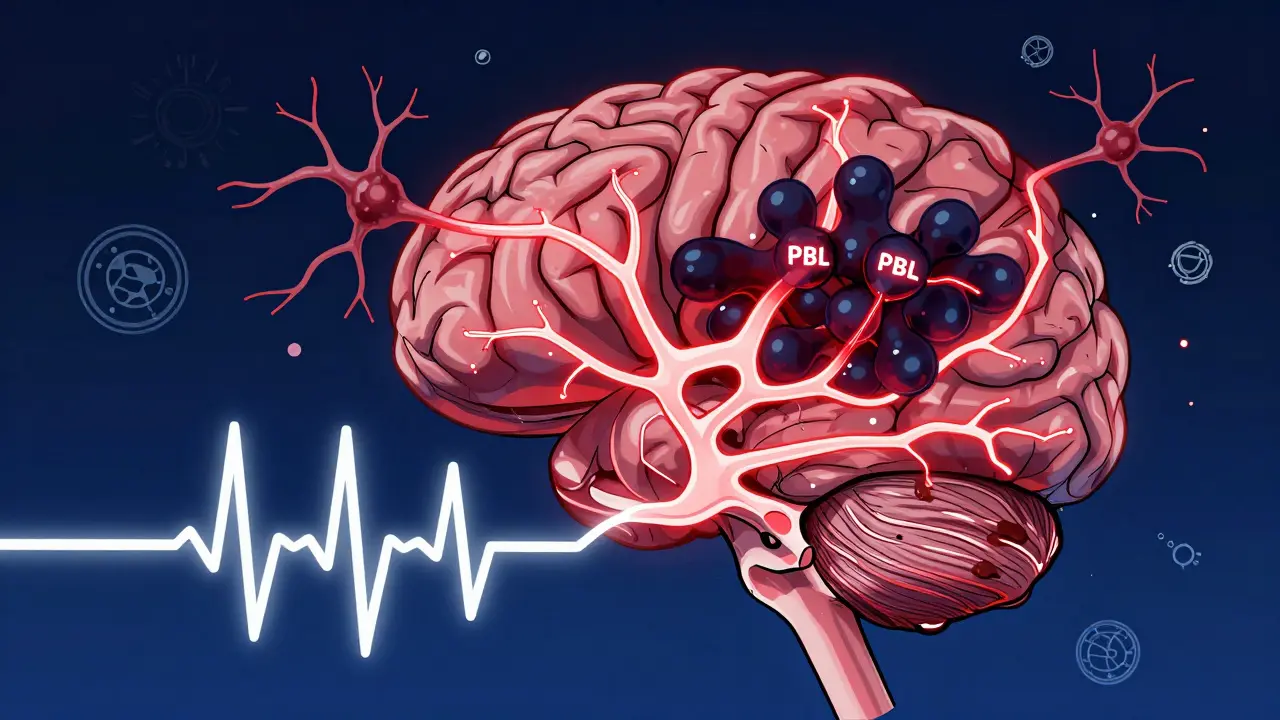
Scientists now know that a small group of neurons in the lateral parabrachial nucleus (PBL), especially those with the µ-opioid receptor (Oprm1), act like a master switch for breathing rhythm. When opioids bind to these neurons, they hyperpolarize them-essentially turning them off. A 2021 study in PNAS found that injecting morphine into rats completely broke the link between these neurons and breathing rate. The neurons stopped firing, and breathing dropped by over 50%.
But it’s not just one area. The preBötzinger Complex (preBötC), another key brain region, is hit in two ways at once. Opioids reduce how often these neurons fire by over 60%, and they also mess up how well they communicate with each other. That’s why simply giving more oxygen doesn’t fix it. The signal to breathe is broken, not the lungs.
One of the most telling signs of opioid-induced respiratory depression is prolonged expiration. Normally, you breathe in and out in a smooth rhythm. With opioids, the exhale gets stretched out-sometimes to over two seconds. That’s why the breathing rate plummets while the amount of air moved per breath (tidal volume) stays mostly normal. This is why pulse oximeters can miss early warning signs. The person might still have decent oxygen levels, but their breaths are too far apart to keep up.
Why Fentanyl Is So Much More Dangerous
Heroin used to be the main culprit in overdoses. Now, it’s mostly synthetic opioids like fentanyl and its analogs. Fentanyl is 50 to 100 times stronger than morphine. A tiny amount-just 0.05 mg-can shut down breathing in seconds. That’s why overdoses today happen faster and harder than they did 10 years ago.
What’s worse, fentanyl and its cousins bind more tightly to the µ-opioid receptor than morphine does. That means they’re harder to displace with naloxone, the standard overdose reversal drug. Even after giving 2 mg of naloxone, many patients still have breathing rates below 8 breaths per minute. Emergency responders report that fentanyl overdoses don’t bounce back like heroin ones. You need to monitor patients for 4+ hours after reversal because the opioid can re-enter the bloodstream as it redistributes from fat tissue.
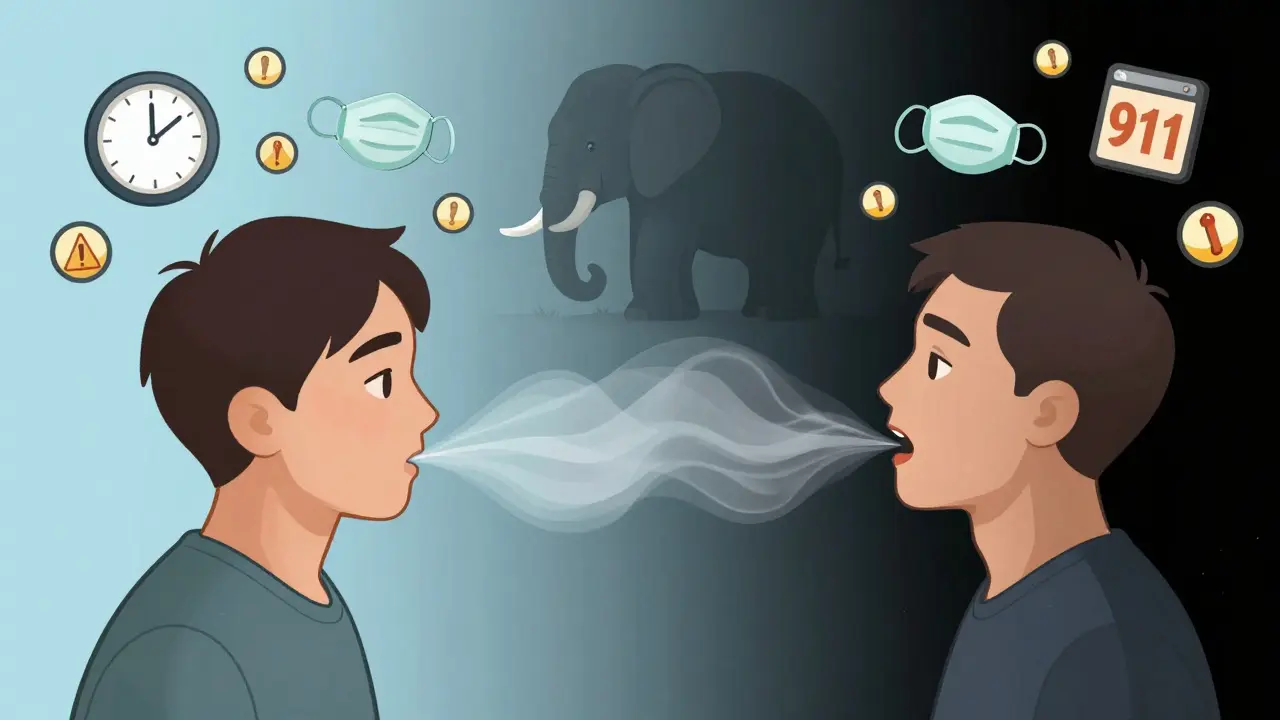
Carfentanil, a fentanyl analog used to tranquilize elephants, is 10,000 times stronger than morphine. In 2023, it was found in 14.2% of fatal overdoses. Standard naloxone auto-injectors deliver only 2 mg-far too little to reverse carfentanil. That’s why some EMS teams now carry 10 mg doses in vials and syringes, even though it’s not FDA-approved for that use.
How Doctors Spot Opioid Breathing Problems Early
Many clinicians miss early signs of respiratory depression because they’re looking for the wrong things. Slowed breathing is obvious-but by the time someone’s breathing 6 times a minute, they’re already in deep trouble. The real window for intervention is much narrower.
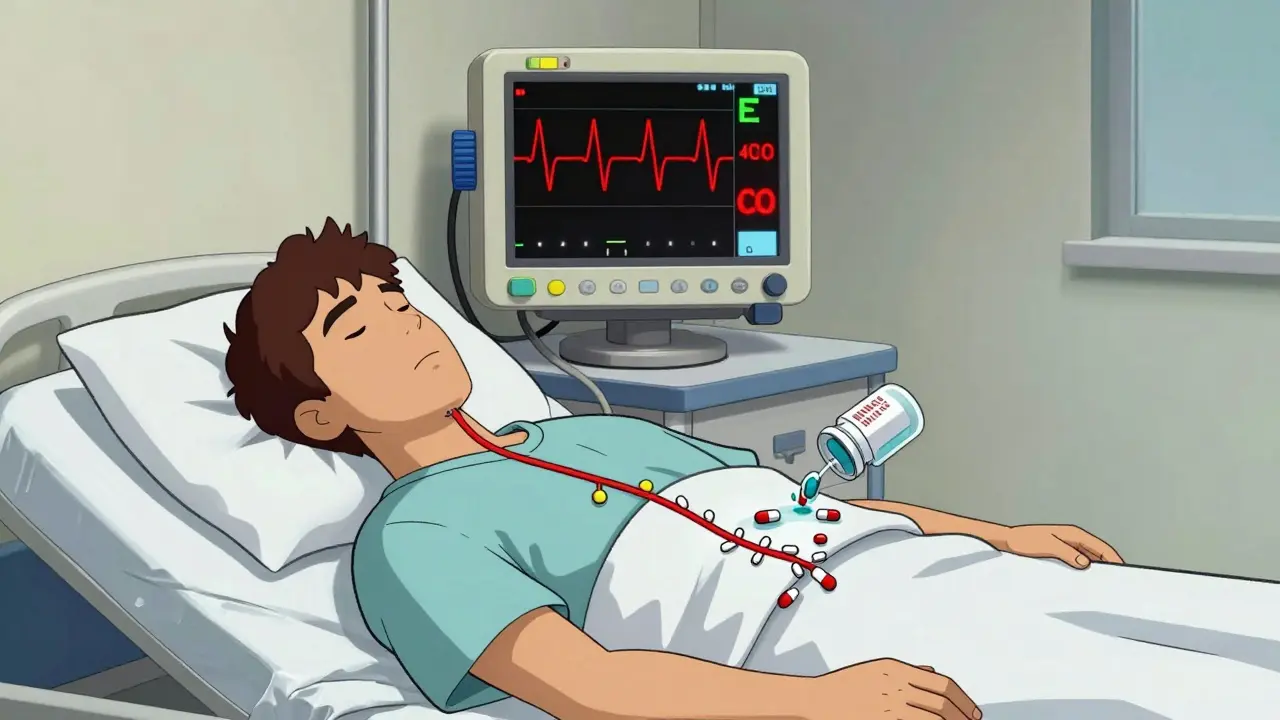
Capnography, which measures carbon dioxide in exhaled breath, is the gold standard for early detection. Unlike pulse oximeters, which track oxygen levels, capnography shows you the actual breathing pattern. It picks up changes in respiratory rate and pattern 62 seconds before oxygen drops. In a 2022 Johns Hopkins study, 89.2% of critical care nurses said capnography was essential for catching OIRD before it became critical.
Look for these red flags:
- Respiratory rate under 12 breaths per minute
- Expiratory pause longer than 1.5 seconds
- Irregular or shallow breathing
- End-tidal CO2 above 50 mmHg
These aren’t just numbers. They’re early warnings. In a 2022 simulation study, novice clinicians missed these signs in 37.5% of cases. That’s why hospitals are now required by the Joint Commission to document respiratory rate, depth, oxygen saturation, and end-tidal CO2 for every patient receiving opioids.
Reversing Overdose-And Why It Often Fails
Naloxone is the only FDA-approved drug that can reverse opioid respiratory depression. It works by kicking opioids off the µ-opioid receptors. But it’s not perfect.
First, naloxone doesn’t fix the synaptic transmission problem in the preBötC. That’s why Dr. Jan-Marino Ramirez says you need higher doses to reverse breathing than you do to reverse pain. The drug has to overcome two separate failures: neuron silencing and broken communication.
Second, naloxone’s effects wear off faster than most opioids. Fentanyl lasts 2-4 hours. Naloxone lasts 30-90 minutes. That’s why 41% of patients reversed in NYC emergency rooms needed a second dose within 90 minutes. If you send someone home after one shot, they could slip back into respiratory arrest.
There’s also a cruel irony: naloxone can trigger severe withdrawal. Patients who are dependent on opioids may go into full-blown withdrawal within minutes-sweating, vomiting, shaking, and in extreme cases, violent. A 2023 study found that 22% of patients left the hospital against medical advice after naloxone because they couldn’t handle the withdrawal. That’s why some ERs now use a 4-2-1 protocol: give 0.4 mg IV, wait 2 minutes, repeat if needed, up to three doses total. This gives enough reversal to save breathing without triggering full withdrawal.
What’s Coming Next
The future of opioid overdose reversal isn’t just better doses of naloxone. It’s smarter, targeted drugs.
In 2023, the FDA approved the first biosensor for OIRD: the RespiRhythm Monitor. It doesn’t wait for breathing to slow. It detects changes in neural activity in the parabrachial nucleus through the skin, giving a warning 83 seconds before respiratory rate drops. That’s enough time to intervene before oxygen falls.
Two new drugs are in late-stage trials. Brix51 targets GPR83 receptors in the PBL and restored 78% of breathing in early trials. TAK-861 is a biased opioid agonist that still relieves pain but barely affects breathing-only 12.7% respiratory depression at full pain-relieving doses.
But even these breakthroughs won’t fix the root problem: the flood of ultra-potent synthetic opioids on the streets. As Dr. Nora Volkow warned in April 2024, “Without addressing the synthetic opioid contamination crisis, even perfect reversal agents will face increasingly potent challenges.”
What You Need to Know
If you or someone you know uses opioids-even prescription ones-here’s what matters:
- Never use alone. Someone needs to be there to call 911 and administer naloxone.
- Keep naloxone on hand. It’s available without a prescription in most states.
- Know the signs: slow, shallow, or irregular breathing. Don’t wait for unconsciousness.
- Call 911 even after giving naloxone. Monitoring is critical.
- Capnography isn’t just for hospitals. Portable versions are now available for first responders and harm reduction programs.
Opioid-induced respiratory depression isn’t a mystery anymore. We know exactly where it happens, how it works, and how to stop it. But knowledge only saves lives if it’s acted on. Every minute counts.
Can you overdose on prescription opioids without using them illegally?
Yes. Opioid-induced respiratory depression can happen with any opioid, even when taken exactly as prescribed. People with chronic pain, especially those on long-term high-dose regimens, are at risk. The risk increases with age, liver or kidney disease, sleep apnea, or when combined with alcohol, benzodiazepines, or other sedatives. The FDA requires black box warnings on all opioid prescriptions for this reason.
Why doesn’t oxygen help someone with opioid-induced respiratory depression?
Oxygen helps when the lungs aren’t getting enough air, but in opioid overdose, the problem isn’t the lungs-it’s the brain. The brainstem stops sending the signal to breathe. Giving oxygen doesn’t restart that signal. The person may still have high oxygen levels but be breathing so slowly that CO2 builds up to toxic levels. That’s why capnography (measuring CO2) is more useful than pulse oximetry (measuring oxygen) in these cases.
Is naloxone safe to use if you’re not sure it’s an opioid overdose?
Yes. Naloxone only works on opioid receptors. If there are no opioids in the system, it has no effect. It won’t harm someone who overdosed on alcohol, cocaine, or other drugs. If someone is unresponsive and breathing slowly or not at all, give naloxone immediately. The worst-case scenario is they wake up angry from withdrawal-not dead.
How long should you monitor someone after giving naloxone?
At least 4 hours. Naloxone wears off faster than most opioids, especially fentanyl and its analogs. Studies show 41% of patients need a second dose within 90 minutes. Even if they seem fine, they can slip back into respiratory arrest. Continuous monitoring with capnography is ideal. If that’s not available, check breathing every 15 minutes and be ready to give more naloxone.
Can you get addicted to naloxone?
No. Naloxone has no euphoric effect and doesn’t activate reward pathways in the brain. It’s not addictive. It’s a pure opioid blocker. People who use it to reverse overdoses don’t develop tolerance or dependence. It’s a life-saving tool, not a substance of abuse.
Are there alternatives to naloxone being developed?
Yes. New drugs like Brix51 and TAK-861 are in clinical trials. Brix51 targets a different brain pathway (GPR83) to restore breathing without blocking pain relief. TAK-861 is a new type of opioid that provides pain relief with minimal respiratory depression. These aren’t available yet, but they represent the next generation of overdose reversal-targeted, safer, and more effective than naloxone.


Takeysha Turnquest
21 December, 2025 . 03:38 AM
They say opioids kill by silencing the brain's breath switch. But what if the real switch was turned off long before the pill was ever swallowed?
Our bodies were never meant to live in this kind of quiet. We've been numbing the signal for decades. The opioid crisis isn't a drug problem. It's a soul problem.
Lynsey Tyson
22 December, 2025 . 09:46 AM
I had a cousin who got prescribed oxycodone after surgery and ended up needing naloxone twice. She didn't even know she was at risk. This stuff is terrifying. Everyone should have a kit. Just keep one in your glovebox.
Edington Renwick
23 December, 2025 . 04:36 AM
Capnography is the gold standard? Yeah right. That’s what hospitals use to justify charging $1200 for a 20-minute monitor. Meanwhile, people are dying in parking lots because EMS can’t get there in time. The system is broken. The science is just the glitter on the coffin.
Aboobakar Muhammedali
24 December, 2025 . 11:20 AM
I work in a clinic in Delhi and we see this every week. People come in with fentanyl laced weed or fake Xanax. No one knows what they’re taking. Naloxone is rare here. We use oxygen and hope. It’s not enough. We need education not just equipment.
anthony funes gomez
24 December, 2025 . 12:22 PM
The preBötzinger Complex-specifically the µ-opioid receptor-mediated hyperpolarization of rhythmogenic neurons-is the primary locus of opioid-induced respiratory depression (OIRD), as demonstrated by Ramirez et al. (PNAS, 2021). However, the downstream dysregulation of synaptic efficacy within the preBötC network-manifested as reduced phase-locking and increased inter-spike variability-compounds the effect, rendering standard interventions like oxygenation physiologically inert. This is not mere respiratory depression; it’s a targeted neural disconnection.
Laura Hamill
25 December, 2025 . 23:09 PM
This is all a hoax. The government made opioids dangerous so they could push their surveillance tech. That RespiRhythm Monitor? It’s a spy chip. They’re tracking your breathing to predict when you’ll OD so they can lock you up. And naloxone? It’s a placebo. The real cure is prayer. 🙏
Alana Koerts
26 December, 2025 . 19:39 PM
You say capnography is essential. But 89% of nurses say that? That’s not science, that’s groupthink. And who cares if you breathe 6 times a minute? If you’re still alive, you’re fine. Stop overmedicalizing normal human suffering.
Dominic Suyo
28 December, 2025 . 06:45 AM
Fentanyl’s not the villain. It’s the symptom. The real killer is the collapse of community. People aren’t dying because they took too much-they’re dying because no one’s left to care enough to check on them. We replaced connection with convenience. Now we’re surprised when the lights go out?
Kevin Motta Top
28 December, 2025 . 11:52 AM
In the U.S., we treat addiction like a moral failure. In Portugal, they treat it like a health issue. Same drugs. Different results. We need policy, not panic.
Henry Marcus
30 December, 2025 . 10:43 AM
Naloxone is a trap. The FDA approved it so Big Pharma could sell more opioids after the ‘reversal’-then charge you $1200 for the next dose. The whole system is rigged. They want you dependent on the fix, not the cure. Wake up.
William Liu
31 December, 2025 . 12:06 PM
This is why we need to stop stigmatizing people who use drugs. Everyone deserves a chance. Keep naloxone handy. You might save someone’s life today.