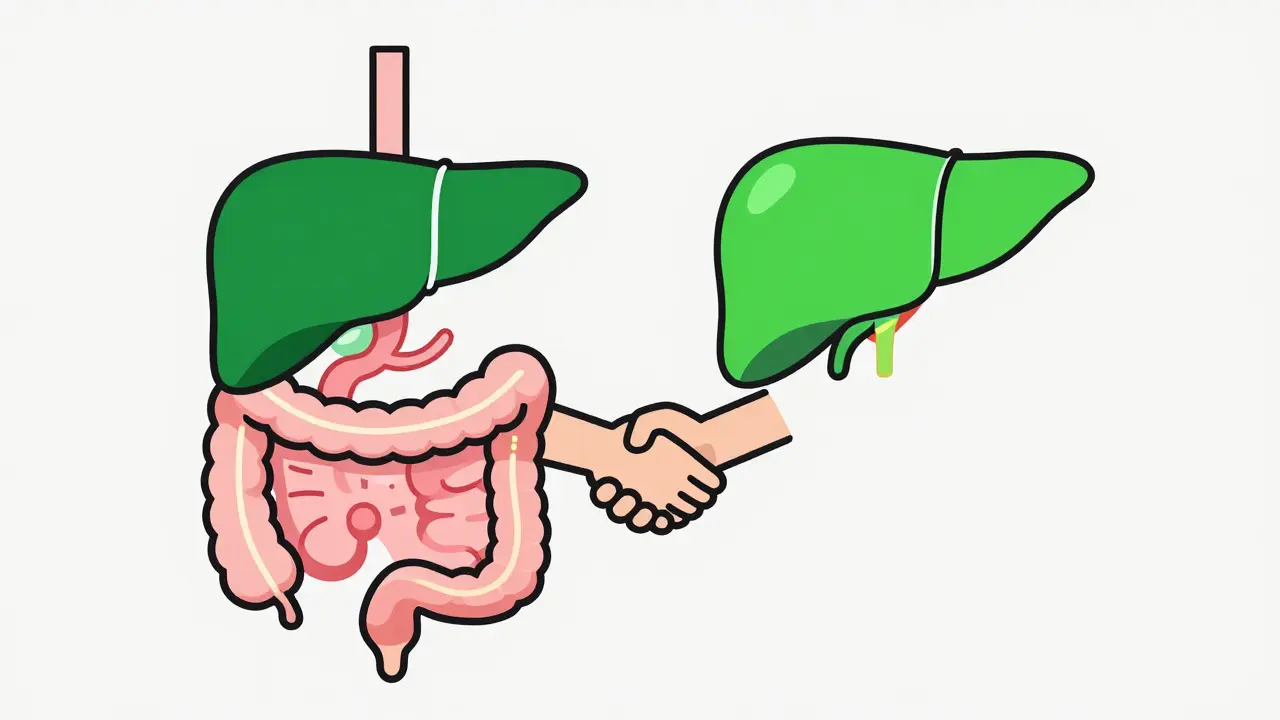
Nonalcoholic Fatty Liver Disease, often referred to as NAFLD, is quietly affecting one in three adults worldwide. By April 2026, we know something that doctors struggled to explain just five years ago: your liver problems often start in your gut. In fact, more people now understand this condition under the newer name Metabolic dysfunction-associated steatotic liver disease (MASLD). This shift isn't just bureaucratic; it highlights that excess fat in the liver is part of a broader metabolic issue driven by what you eat and who lives inside your digestive tract.
The Silent Conversation Between Your Gut and Liver
You might wonder how your intestines influence your liver cells. Think of the gut and liver as neighbors sharing a wall. The portal vein is the hallway connecting them directly. About 70% of the blood leaving your intestine flows straight into the liver before going anywhere else. This means anything your gut releases-nutrients, toxins, bacteria fragments-goes to the liver first. When researchers looked at patients with NAFLD, they found roughly 90% had some form of gut barrier dysfunction. Essentially, the lining of the gut becomes "leaky," allowing harmful substances like Lipopolysaccharides (LPS) to pass through. These bacterial toxins trigger inflammation in the liver, which then stores fat in response to the stress.
A 2024 study published in Frontiers in Gastroenterology noted that blood levels of these inflammatory markers were 2.3 times higher in NAFLD patients compared to healthy individuals. It creates a vicious cycle: the inflamed liver becomes insulin resistant, leading to more fat storage, which worsens the leaky gut further. If you're sitting there feeling tired or bloated, it might be this axis misfiring.
What Is Living Inside You?
Your digestive system hosts trillions of microbes known as the Gut Microbiome. In a healthy state, these bacteria help break down food and produce compounds that protect the liver. But in cases of fatty liver disease, the composition shifts. Researchers call this dysbiosis. A meta-analysis in 2021 showed that many patients have reduced diversity in their gut flora. Specifically, beneficial bacteria like Bacteroides vulgatus often drop off, while others, such as Barnesiella intestinihominis, take over.
| Metric | Healthy Controls | NAFLD Patients |
|---|---|---|
| Bacterial Diversity | High α-diversity | Reduced α-diversity |
| Short-Chain Fatty Acids | ~43.9 mM (Butyrate) | ~18.7 mM (Butyrate) |
| LPS Levels in Blood | 1.2 EU/mL | 2.8 EU/mL |
| Firmicutes Ratio | Standard Balance | Often Imbalanced |
The difference in short-chain fatty acids (SCFAs) is particularly telling. Butyrate, produced by good bacteria, acts as fuel for your gut lining, keeping that wall tight. Without enough of it, toxins slip through. Studies indicate that restoring these levels can reduce liver stiffness. You aren't just starving the liver of bad inputs; you are actively feeding it the right protective chemicals.

Dietary Interventions That Work
If your goal is to reverse the trend, food is the primary tool. The Mediterranean diet remains the gold standard, but with specific tweaks for the liver. A randomized trial involving 70 patients found that adding 30 grams of walnuts daily to a Mediterranean plan cut hepatic fat by 32% over six months. Why walnuts? They provide fiber that feeds the good bugs.
- Fiber Target: Aim for 25-30 grams daily. Whole grains and vegetables are key sources.
- Fructose Limit: Keep sugar and high-fructose corn syrup intake below 25 grams per day. Fructose bypasses normal metabolism and goes straight to the liver to become fat.
- Fats: Prioritize monounsaturated fats (olive oil, avocados) representing 25-35% of your calories.
- Clean Up: Eliminate ultra-processed foods. Even small amounts of processed snacks disrupt bacterial balance.
You don't need a complex prescription. Real meals work better than pill bottles. However, simply eating less isn't always enough; you must change the ratio of nutrients. This supports the repair of the gut lining while simultaneously reducing the metabolic burden on the liver.
The Weight Loss Benchmarks
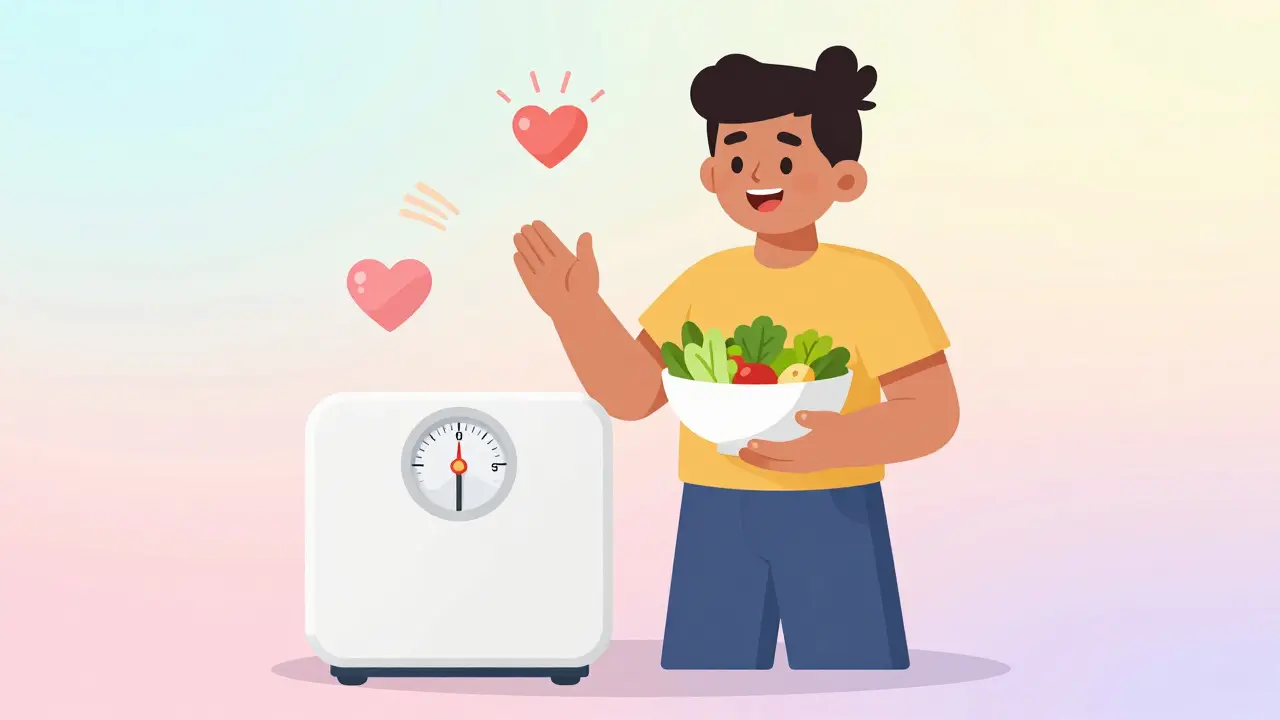
Weighing the scale matters, but losing fat specifically from the liver matters more. According to AASLD 2023 guidelines, you need distinct targets depending on your starting point. Losing 5% of total body weight helps stop simple fat accumulation (steatosis). To actually heal inflammation (NASH), you generally need closer to 7% to 10%. One major 2023 analysis showed that 10% weight loss resolved NASH in nearly half of the participants.
This sounds daunting, but a structured approach works best. Combining caloric restriction (around 1,200-1,500 kcal/day) with exercise outperforms diet alone. It lowers ALT enzymes significantly faster. While intermittent fasting, like the 5:2 method, gets popular on forums, consistency with nutrient density beats timing tricks for most people.
Supplements and Probiotic Therapy
Food fixes foundation, but supplements can bridge gaps. Probiotics aren't magic bullets, but specific multi-strain formulas show promise. Clinical trials using combinations like Lactobacillus rhamnosus and Bifidobacterium longum saw a 23% reduction in liver fat fraction after 24 weeks. Look for products delivering at least 1 billion CFUs daily. Prebiotics like inulin are equally vital because they serve as fertilizer for the probiotics you already have or supplement. Taking 10g/day of inulin increased fecal butyrate by almost 50% in studies.
However, do not expect miracles overnight. Dr. Anna Mae Diehl of Johns Hopkins cautions that without fixing the root metabolic causes, benefits are temporary. These tools support the lifestyle change, they don't replace it.
Navigating the Path Forward
Success requires patience. Structured programs involving behavioral counseling see nearly 70% remission rates at two years. Self-directed attempts often stall due to social pressure or craving cycles. If you have access to specialized care, seek out multidisciplinary teams. The financial cost of specialized diets or supplements can add up, averaging $150 extra weekly, so prioritize the changes that give the highest yield: removing sugar and increasing fiber.
Can NAFLD be reversed completely?
Yes, especially in early stages. Research indicates that losing 7-10% of body weight can resolve non-alcoholic steatohepatitis (NASH) in many patients. Simple fatty liver often resolves with even 5% weight loss.
Does alcohol consumption affect fatty liver treatment?
While NAFLD is defined by low alcohol intake, recent terminology (MASLD) focuses on metabolic health. However, avoiding alcohol entirely during active treatment helps maximize liver healing potential and removes confounding factors.
Which probiotic strains are best for liver health?
Multi-strain formulations containing Lactobacillus rhamnosus GG and Bifidobacterium longum have shown clinical benefits in reducing liver fat. Specific doses like 10^9 CFU taken twice daily are typically used in successful trials.
How quickly does the gut respond to diet changes?
Some microbial populations shift within days of dietary changes, but structural improvements in the gut barrier and reduction in liver inflammation usually take several weeks to months. Most patients report feeling less bloated within the first month.
Is Fecal Microbiota Transplant (FMT) an option?
Currently, FMT is considered experimental for NAFLD. Pilot studies show modest enzyme improvement but inconsistent histological changes. Doctors generally reserve this for severe cases under clinical supervision.


sophia alex
2 April, 2026 . 01:43 AM
Only the wealthy can afford these changes 😒 Real health is a luxury good 💰. Most working class people don't have money for organic walnuts.
Mark Zhang
3 April, 2026 . 17:10 PM
I hope you're not being too dismissive about accessibility here. Small changes like swapping sugar for water cost nothing. Anyone can make an effort regardless of income level.
Jenna Carpenter
5 April, 2026 . 03:31 AM
Suger is bad. Dont drink soda. Fix yer gut before its too late!! Yuo need to stop eating processed crap now.
Brian Shiroma
5 April, 2026 . 05:48 AM
Sounds like marketing for walnut companies.
simran kaur
5 April, 2026 . 15:32 PM
The pharmaceutical industry wants you sick so they can sell drugs. This article is too nice about diet. They hide the fact that chemicals cause the leaky gut.
Rachelle Z
6 April, 2026 . 14:48 PM
Wait.... so... fructose... causes... FAT???!!!! 😱🍓🚫 That is wild news to hear!
Aysha Hind
6 April, 2026 . 19:20 PM
This microbiome agenda feels suspicious. Why now? Big Sugar knew this for decades. You people are playing into the corporate narrative of natural healing.
Hope Azzaratta-Rubyhawk
8 April, 2026 . 05:17 AM
IGNORE THE HATERS! FIX YOUR GUT! You have the power to change your biology TODAY! Do not let fear stop you from eating right!
Dipankar Das
8 April, 2026 . 16:45 PM
It is imperative that patients adhere to the scientific guidelines presented. Clinical evidence suggests weight reduction is the most reliable intervention method available.
Ace Kalagui
9 April, 2026 . 17:18 PM
In my family we always ate very differently than what you see here. Back home in the Philippines, our grandparents never worried about calories counting. They simply ate what grew in the soil near their homes. Rice was a staple but it was often wild brown rice. They did not know about LPS levels or anything fancy like that. Yet they lived to be ninety years old without medication. It makes me wonder if modern science is missing the forest for the trees. We focus so much on metrics that we forget the simple connection. My aunt tried taking those walnuts you mentioned in the article. She said she felt better but mostly she liked the taste of them. Sometimes the body knows what it needs better than a chart. I think we should prioritize community meals over isolated supplements. Eating together reduces stress which actually helps digestion significantly. So while I support the dietary guidelines listed above. I believe the emotional component of nutrition is equally critical. We must honor where our food comes from deeply.
Branden Prunica
9 April, 2026 . 23:29 PM
I cried today when I looked at my stomach. It is just huge and soft. I feel like the disease is winning against me personally. Everyone else seems fine.
angel sharma
10 April, 2026 . 10:14 AM
You have to push through that negative thinking immediately. Your body is capable of regeneration you cannot imagine yet. Every meal is a chance to reset the system entirely. Do not give up on yourself even for a single moment of weakness. Consistency over time will rewrite your cellular health completely. Focus on the next step forward and ignore the past mistakes. The liver wants to heal itself if you remove the toxic load. Trust the process of metabolic repair to work in your favor. Strength comes from daily choices rather than sudden magic events. Keep walking the path until the inflammation fully subsides.