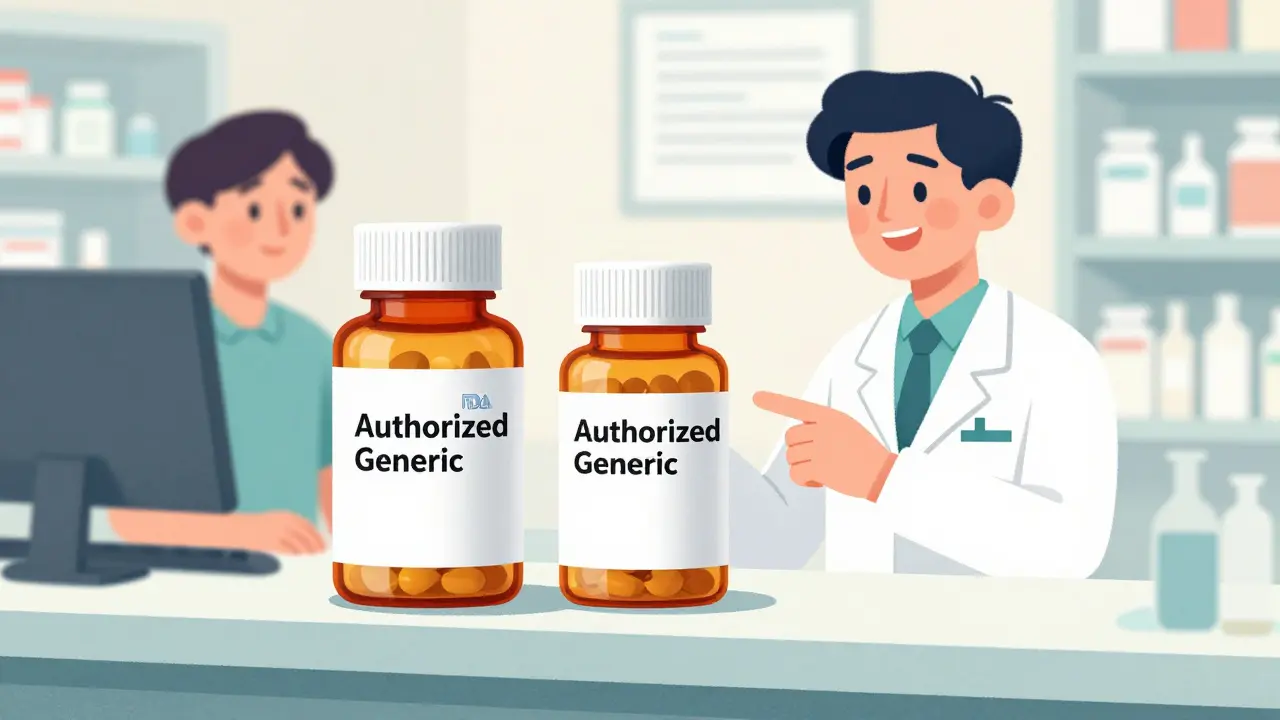
When your prescription switches from a brand-name drug to a generic, you expect to pay less. But what if the generic you get is authorized-identical to the brand in every way, down to the inactive ingredients? That’s the reality with authorized generics, and insurance companies are starting to treat them differently. Unlike regular generics, which are made by other companies after the brand’s patent expires, authorized generics come straight from the original manufacturer. They’re the same pill, just without the brand name on the bottle. And for insurers, that makes all the difference in how they’re covered.
What Exactly Is an Authorized Generic?
An authorized generic isn’t a copy. It’s the exact same drug the brand company sells, but packaged and labeled under a different name. Think of it like a car manufacturer selling the same model under a different dealership brand. The engine, the seats, the paint-it’s all identical. The FDA defines it as a drug approved under the original New Drug Application (NDA), meaning it never went through the Abbreviated New Drug Application (ANDA) process that regular generics do. That’s why there’s no need for bioequivalence studies. It’s already proven safe and effective because it’s the same product.
As of 2023, the FDA lists 147 active authorized generics, including well-known drugs like Protonix, Ocella, and Yasmin. These aren’t rare outliers-they’re major medications with high patient volumes. The key difference? They’re priced like generics but perform like brands. For patients with allergies to certain fillers or those on narrow therapeutic index drugs (like warfarin or levothyroxine), this matters. Switching to a regular generic might trigger an adverse reaction. An authorized generic eliminates that risk entirely.
Why Insurers Care About Formulary Placement
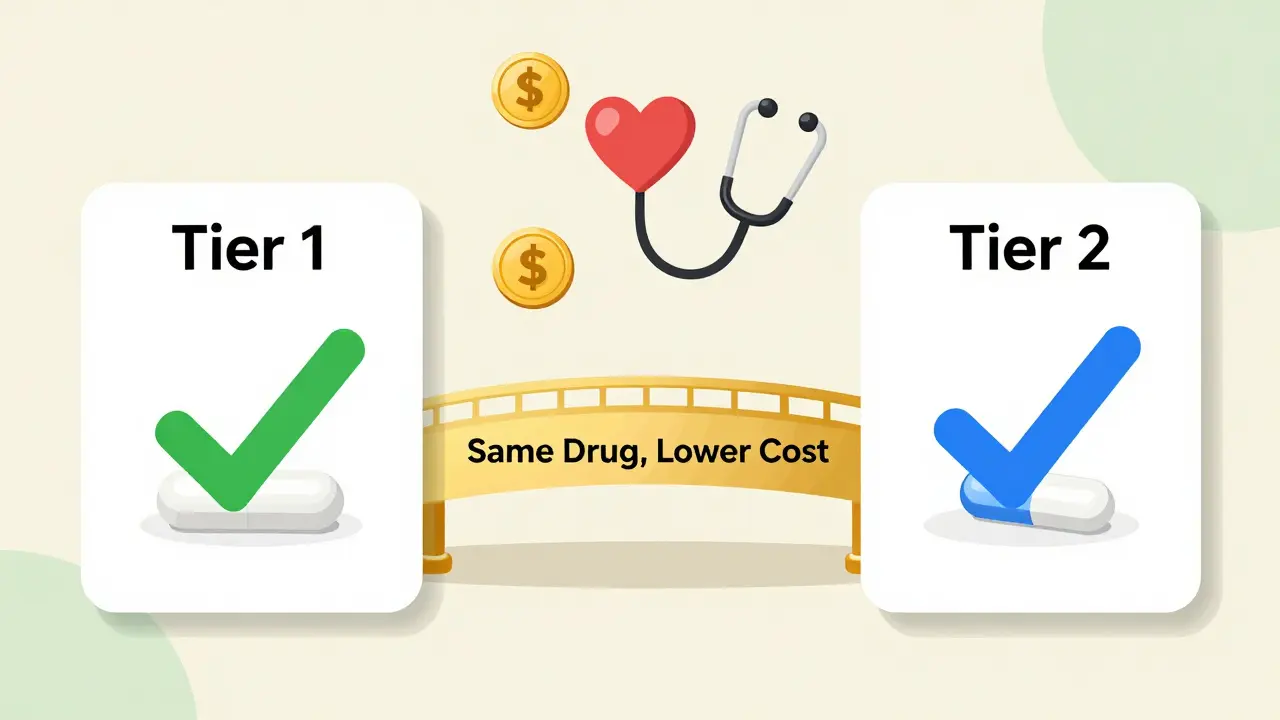
Formulary placement is how insurance plans organize drugs into tiers. Tier 1 usually means low-cost generics. Tier 3 or 4 means expensive brand-name drugs. The question for insurers: where do authorized generics go?
Most plans place them in Tier 2-same as regular generics. A 2022 study of 1,247 Medicare Part D plans found that 87% treated authorized generics exactly like conventional generics. That means lower copays, fewer prior authorizations, and fewer restrictions. For patients, this translates to savings. One user on Reddit shared that their insurance denied the brand-name Synthroid but approved the authorized version with a $10 copay instead of $50. That’s a 80% drop in out-of-pocket cost.
But here’s the catch: not all plans do this. About 12% still treat authorized generics as brand-name drugs, forcing patients to pay more. Why? Because some pharmacy benefit managers (PBMs) don’t have the right codes in their systems. Authorized generics don’t appear in the FDA’s Orange Book-the database most pharmacy systems rely on to identify generics. Without the right NDC code, the system doesn’t recognize it as a generic. The result? A claim gets rejected, or worse, it’s processed as a brand drug.
How Authorized Generics Compare to Regular Generics
| Feature | Authorized Generic | Regular Generic |
|---|---|---|
| Manufacturer | Original brand company | Separate generic manufacturer |
| Approval Path | Under original NDA | Through ANDA |
| Active Ingredients | Identical to brand | Identical to brand |
| Inactive Ingredients | Identical to brand | May differ |
| Formulary Tier | Usually Tier 2 (like generics) | Tier 1 or 2 |
| Availability | Only 15-20% of brand drugs have them | Available for most branded drugs |
That last point-availability-is critical. Only about one in five brand-name drugs has an authorized generic version. That means for many medications, patients don’t have this option. And when they do, it’s often the only generic available for months, or even years, after patent expiration. That’s because brand manufacturers use authorized generics to delay competition from true generic makers. A 2021 study found that in 22% of cases, the launch of an authorized generic slowed down the entry of other generics. That’s a double-edged sword: patients get a safe, low-cost option now, but long-term price competition may be delayed.
Real-World Impact on Costs and Claims
It’s not just theory. Data shows authorized generics cut costs. A Health Affairs study found that Medicare Part D plans with explicit policies covering authorized generics saved 7.3% per member per month compared to plans that didn’t. That’s not a small number-it adds up to hundreds of millions in savings across the system.
Claims approval rates tell another story. Express Scripts reported that 89% of authorized generic claims were approved on the first try in 2023. That’s only slightly lower than traditional generics (92%) and much higher than brand-name drugs (76%). So, when the system is set up right, authorization isn’t a barrier-it’s a smooth path to savings.
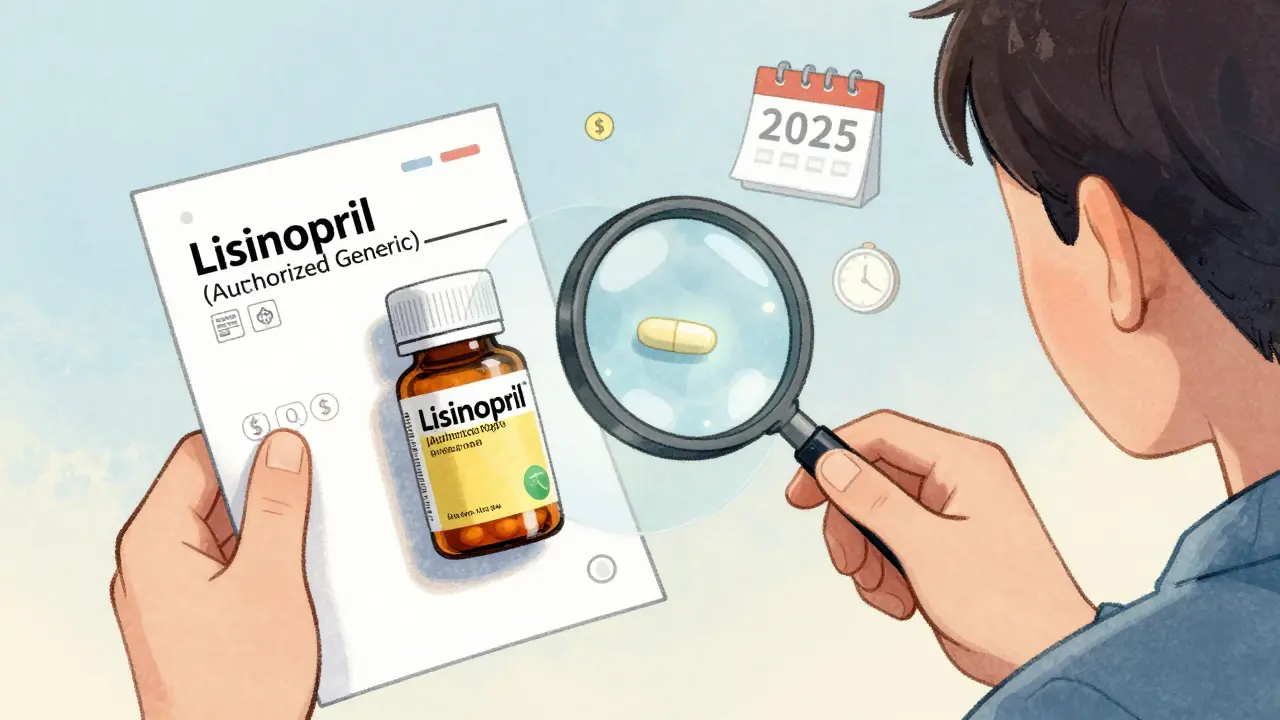
But getting it right takes work. Walgreens found a 12% error rate in processing authorized generics before they updated their systems. Why? Because pharmacists and billing staff often don’t know how to identify them. Unlike regular generics, which have distinct names like “metformin,” authorized generics might be labeled as “Lisinopril (Authorized Generic)” or just “Lisinopril” with a different label. Without proper training or database flags, they look like the brand.
What’s Changing in 2025 and Beyond
Things are shifting fast. The Inflation Reduction Act of 2022 pushed Medicare Part D to prioritize lower-cost options. By 2025, CMS expects a 15-20% increase in authorized generic coverage as part of efforts to cap out-of-pocket costs. Major PBMs are already acting. OptumRx launched an “Authorized Generic First” policy for 47 high-cost drugs in January 2023. Express Scripts added special flags to their formulary system in late 2022 to auto-identify these drugs.
Employers are catching on too. According to the Kaiser Family Foundation’s 2023 survey, 68% of large employers plan to offer better coverage for authorized generics than for traditional generics in their 2024 plans. That’s a big deal. It means the incentive isn’t just about cost-it’s about reliability. If a patient has had bad reactions to other generics, an authorized version is the safest bet. Insurers are starting to see that as a way to reduce complications, ER visits, and overall care costs.
At the same time, regulators are watching. The FTC has flagged authorized generics as a potential anti-competitive tool. If a brand company uses them to block other generics from entering the market, that’s a problem. But right now, the benefits for patients and payers outweigh the risks-especially when there’s no other generic available.
What Patients and Prescribers Need to Know
If you’re on a brand-name drug and your insurance starts pushing you to a generic, ask: is it an authorized generic? You can check the FDA’s list of authorized generics online or ask your pharmacist. If it is, you’re getting the same drug, just cheaper. No need to worry about switching effects.
Prescribers should be aware too. When writing a prescription, specify “dispense as written” if you’re concerned about substitution. But if you’re open to the authorized version, say so. Many patients don’t realize they have a choice-and they’re paying more than they need to.
Pharmacists are on the front lines. With tools like Prime Therapeutics’ AG Tracker, which covers 98% of authorized generics, they can quickly verify what they’re dispensing. But without those systems, mistakes happen. That’s why training matters. A simple checkbox in the pharmacy software can prevent a denied claim or a confused patient.
Why This Matters for Everyone
Insurance coverage of authorized generics isn’t just a pharmacy policy-it’s a bridge between affordability and safety. For patients with complex conditions, allergies, or sensitive metabolisms, it’s often the only safe generic option. For insurers, it’s a rare win-win: lower costs without the risk of therapeutic failure. For manufacturers, it’s a way to keep revenue flowing without losing market share.
But the system isn’t perfect. Gaps in coding, lack of awareness, and inconsistent coverage still leave people stranded. The good news? The momentum is building. More plans are recognizing the value. More patients are asking for it. And with the FDA streamlining reporting under GDUFA III, the visibility of authorized generics will only get better.
If you’re on a high-cost medication, don’t assume your only option is the brand. Ask about the authorized generic. It might be sitting right there on the shelf, waiting to save you money-and maybe even your health.
Are authorized generics the same as brand-name drugs?
Yes, authorized generics are pharmacologically identical to their brand-name counterparts. They contain the same active and inactive ingredients, are made in the same facility, and follow the same manufacturing process. The only difference is the labeling-they’re sold without the brand name, which is why they cost less.
Why do insurance companies cover authorized generics at generic rates?
Because they’re therapeutically equivalent to the brand and priced like generics. Insurers treat them as generics to reduce costs without risking patient outcomes. Studies show that placing them in the same formulary tier as regular generics leads to lower overall drug spending and fewer adverse events.
Can I request an authorized generic from my pharmacist?
Yes. If your prescription is for a brand-name drug that has an authorized generic version, you can ask your pharmacist to dispense it instead. You may need to confirm with your insurance that it’s covered, but in most cases, it will be approved at the generic copay.
Why aren’t authorized generics available for all drugs?
Only about 15-20% of brand-name drugs have authorized generic versions. This is because the brand manufacturer must choose to produce and market one. Some companies do it to maintain revenue after patent expiry; others avoid it to encourage competition from other generics. It’s a business decision, not a regulatory one.
Do authorized generics affect my drug’s effectiveness?
No. Because they’re made by the original manufacturer using the same formula and process, authorized generics are just as effective as the brand. In fact, for patients sensitive to inactive ingredients, they’re often safer than regular generics, which can have different fillers or dyes.
How do I know if my drug has an authorized generic?
Check the FDA’s official list of authorized generics, available online. You can also ask your pharmacist or check your insurance plan’s formulary. Many pharmacy apps now flag authorized generics when you search for a medication. If your drug is on the list, you have an option that’s cheaper and just as safe.




Rachel Liew
30 January, 2026 . 18:16 PM
i just asked my pharmacist for the authorized generic of my thyroid med and they looked at me like i spoke alien. i had to show them the FDA list on my phone. why is this so hard??
Nicki Aries
1 February, 2026 . 09:12 AM
This is insane. I’ve been paying $45 for Synthroid for years-then my insurance switched me to the authorized generic and my copay dropped to $8. I cried. Not because I’m emotional-because this is the first time my insurance did something right. Why isn’t this standard everywhere??
Ed Di Cristofaro
2 February, 2026 . 17:53 PM
Of course the brand companies are hiding behind ‘authorized generics’ to stall real competition. They’re not trying to help you-they’re trying to keep you hooked while they milk the last drops of profit. It’s capitalism, folks. Don’t be fooled.
vivian papadatu
3 February, 2026 . 13:53 PM
As someone who’s had bad reactions to regular generics-especially with levothyroxine-this is a game-changer. I used to have to call my doctor every time my insurance tried to switch me. Now I just say ‘authorized generic only’ and they usually listen. 🙌
Melissa Melville
4 February, 2026 . 13:35 PM
So let me get this straight… the same pill, different label, and suddenly it’s ‘generic price’? Sounds like a scam if you ask me. But hey, if it saves me money, I’ll take it. 😏
Deep Rank
6 February, 2026 . 08:53 AM
you know what this really is? it's not about saving money, it's about control. the big pharma and the big insurance are in cahoots, they want you to think you're getting a deal but really they're just making you dependent on their system. and if you don't know about authorized generics, you're just a sheep. i've been researching this for 3 years and no one listens, but i'm telling you now: they're lying to you. it's all a game. and the worst part? your pharmacist doesn't even know what they're giving you half the time. i saw a friend get the wrong thing and her blood pressure went haywire. it's not safe. it's not right. it's corporate greed in a pill bottle.
Bryan Coleman
7 February, 2026 . 10:54 AM
My doc never mentioned this until I asked. Now I’m on an authorized generic for my blood pressure med and it’s been smooth sailing. No side effects, same as before. Just cheaper. Why don’t more people know about this?
Sami Sahil
9 February, 2026 . 01:55 AM
Guys, if you're on a high-cost med, ask for the authorized generic. It’s like getting the same coffee but from the store brand-same beans, half the price. Seriously, try it. Your wallet will thank you. 🙏
Bob Cohen
10 February, 2026 . 06:03 AM
So… the system works when it works. But when it doesn’t? You’re stuck paying brand prices because some IT guy at Express Scripts didn’t update his database. Classic. We’re all just glitches in the machine.
Ishmael brown
11 February, 2026 . 00:03 AM
Authorized generics are just the first step. Next thing you know, they’ll start charging extra for ‘brand-quality’ generics. And then we’ll be back to square one. 😏
Jaden Green
12 February, 2026 . 06:35 AM
Let’s be honest-this entire discussion is a distraction. The real issue is that pharmaceutical monopolies are engineered by lobbyists, and this ‘authorized generic’ nonsense is just a PR stunt to make people think they’re getting a fair deal. Meanwhile, the actual cost of manufacturing hasn’t changed in 20 years. You’re not saving money-you’re being manipulated into thinking you are. The system is rigged, and you’re all just rearranging deck chairs on the Titanic.
Lu Gao
12 February, 2026 . 07:44 AM
My mom’s on an authorized generic for her cholesterol med-same pill, $12 instead of $75. She didn’t even know it was different until I showed her the label. Now she tells everyone. 💡
Angel Fitzpatrick
13 February, 2026 . 09:05 AM
Authorized generics? More like authorized exploitation. The FDA’s Orange Book is a joke. PBMs are feeding you lies wrapped in a pill. The same company that makes your brand drug is now selling you the same thing at a discount-while they’re still charging insurers $100 a bottle. They’re playing both sides. And guess who pays? YOU. This isn’t healthcare-it’s a Ponzi scheme with aspirin.