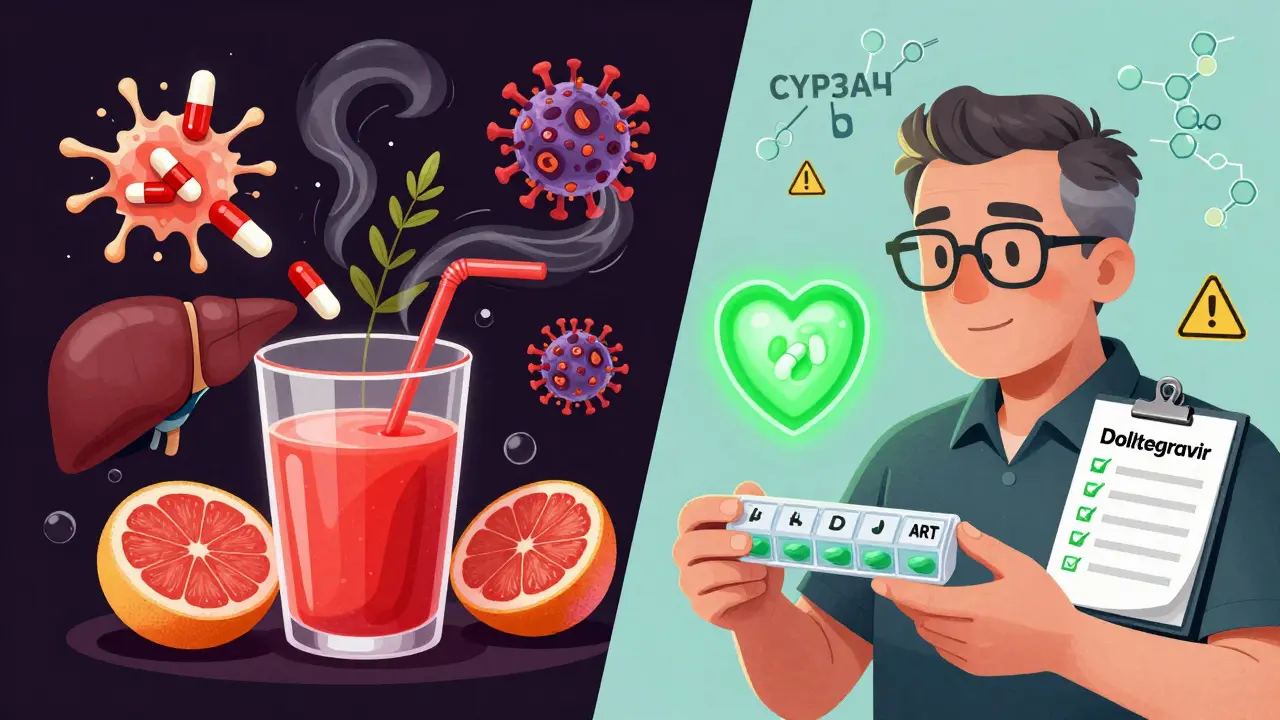
When you're taking antiretroviral therapy (ART) to manage HIV, it's easy to assume your meds are working fine as long as your viral load is undetectable. But what if the painkiller you take for your back, the statin for your cholesterol, or even the herbal supplement your cousin swears by is quietly messing with your HIV treatment? That’s not hypothetical. It’s happening right now to thousands of people living with HIV, especially those over 50 who are juggling multiple prescriptions. The truth is, some common medications can make your ART less effective-or worse, cause life-threatening side effects.
Why ART Interactions Are More Dangerous Than You Think
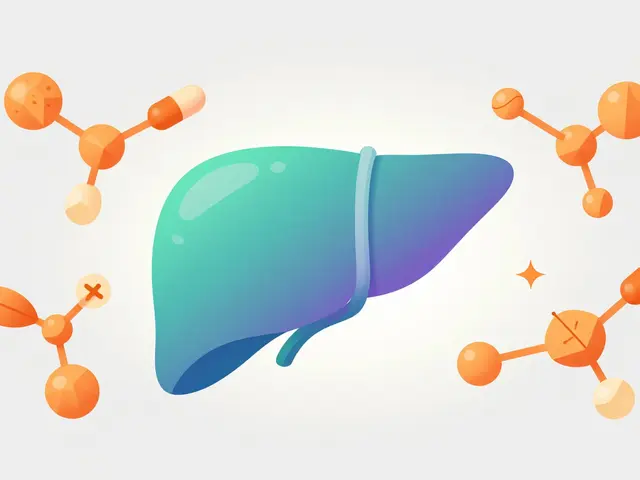
Antiretroviral drugs don’t just fight HIV. They also interact with your body’s drug-processing system-mainly the liver enzymes called cytochrome P450 (CYP3A4) and transporters like P-glycoprotein. Some ART drugs block these systems, making other meds build up to toxic levels. Others speed them up, making your HIV meds wash out too fast. This isn’t a minor detail. It’s a medical emergency waiting to happen. Take ritonavir and cobicistat, the two boosters used to make other HIV drugs work better. They’re powerful inhibitors of CYP3A4. That means they can turn safe doses of other drugs into dangerous ones. For example, combining ritonavir with simvastatin or lovastatin can spike statin levels by 20 to 30 times. That’s not just muscle pain-it’s rhabdomyolysis, a condition where muscle tissue breaks down and can shut down your kidneys. It’s so dangerous that guidelines say: never mix these two. Even something as simple as an inhaled steroid for asthma or allergies can become risky. Fluticasone and budesonide, when used with ritonavir-boosted ART, can cause adrenal insufficiency or Cushing’s syndrome. One study found 17% of patients on this combo ended up hospitalized because their bodies stopped making enough cortisol. That’s not a side effect-it’s a system failure.The Big Three: Which ART Classes Are Riskiest?
Not all antiretrovirals are created equal when it comes to interactions. The class you’re on makes a huge difference. Protease inhibitors (PIs), especially boosted ones-like darunavir/ritonavir or atazanavir/cobicistat-are the most problematic. Ritonavir alone has over 200 documented interactions. Cobicistat isn’t far behind. These drugs are great at stopping HIV from becoming resistant, but they’re like a traffic jam for your metabolism. They slow down the breakdown of dozens of other drugs, including blood thinners, antidepressants, and even erectile dysfunction meds like sildenafil (Viagra) and avanafil. With sildenafil, you can’t take the usual 50-100 mg dose-you’re limited to 25 mg every 48 hours. Avanafil? Completely off-limits. Non-nucleoside reverse transcriptase inhibitors (NNRTIs) like efavirenz are the opposite. They don’t block metabolism-they speed it up. Efavirenz can slash the levels of other drugs by up to 75%. That’s a problem if you’re on birth control, antifungals, or even some cancer drugs. Your HIV treatment might still work, but the other meds? They stop working. Etravirine is better-it barely affects other drugs. But efavirenz? Still used in some places because it’s cheap. And that’s where the risk lives. Integrase strand transfer inhibitors (INSTIs) like dolutegravir and bictegravir are the new standard for a reason. They have minimal interactions. Bictegravir has only seven major ones. Dolutegravir? Just eight. That’s a massive improvement over ritonavir’s 217. But don’t assume they’re completely safe. Dolutegravir can lower metformin levels by 33%, which might mean your diabetes control slips. And bictegravir? It drops by 71% if you take rifampin-common for TB treatment. That’s a red flag for people in high-TB areas or those with a history of TB.The Hidden Culprits: Over-the-Counter, Herbal, and Recreational Drugs
Most people don’t think of their daily aspirin or St. John’s Wort as dangerous. But they are. St. John’s Wort, a popular supplement for mild depression, is a CYP3A4 inducer. It can knock down efavirenz levels by 50-60%. That’s enough to cause HIV resistance. One patient I read about stopped taking his ART because he thought the side effects were too much-he switched to St. John’s Wort. His viral load jumped within weeks. He didn’t realize he’d just made his HIV untreatable. Even common painkillers can be risky. NSAIDs like ibuprofen are usually fine, but with certain ART regimens, they can pile up and stress your kidneys. And don’t forget the recreational stuff. Ketamine, used recreationally, stays in your system longer when you’re on ritonavir because your liver can’t break it down. That means a normal dose can lead to prolonged hallucinations, high blood pressure, or even seizures. And then there’s the silent one: supplements. Garlic pills, grapefruit juice, vitamin E-it’s not just St. John’s Wort. Grapefruit juice boosts levels of some ART drugs, especially maraviroc. A single glass could push your drug levels into dangerous territory.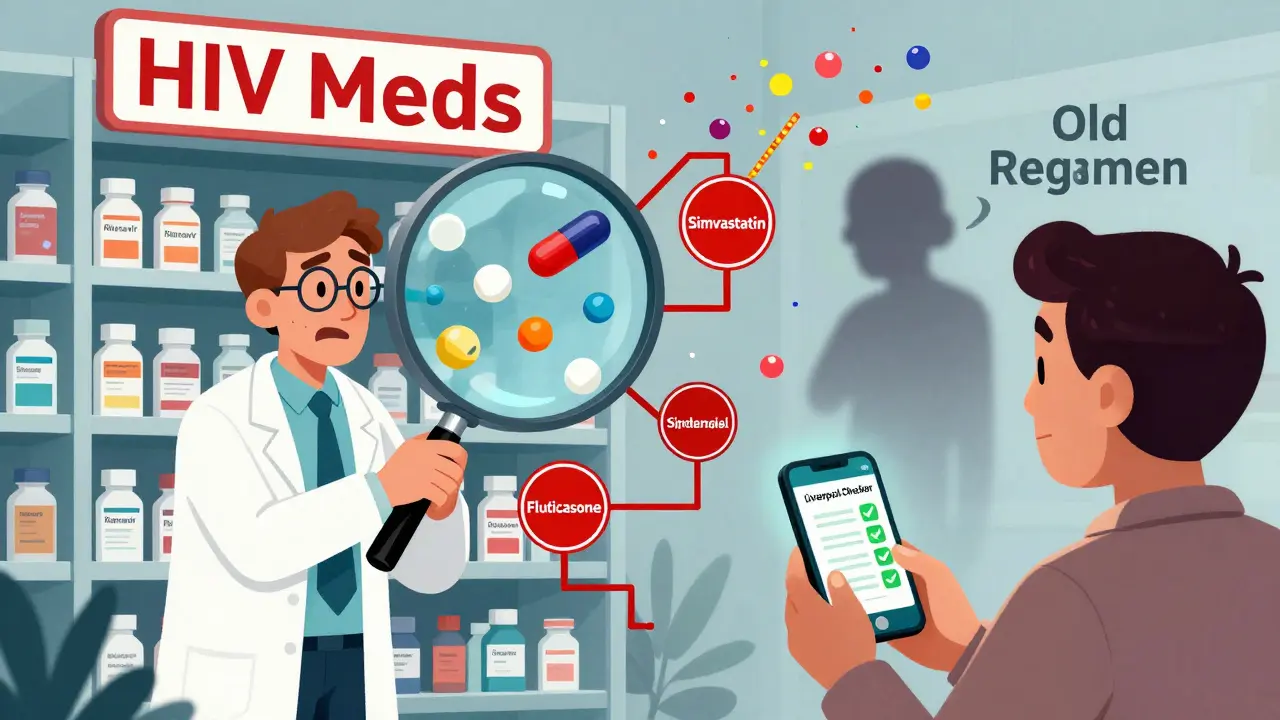
What to Do: A Practical Checklist
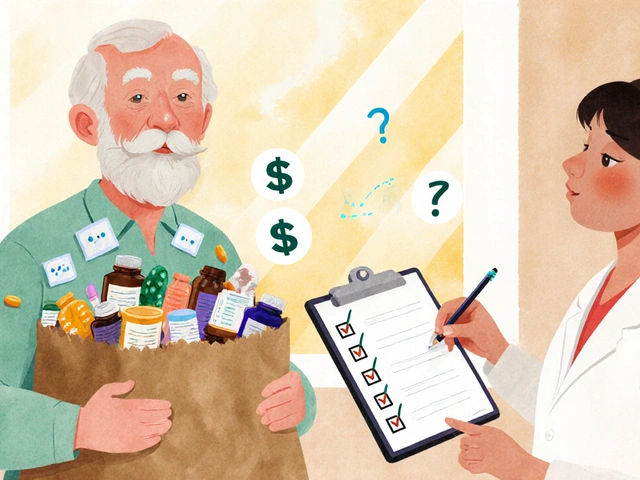
You don’t need to be a pharmacist to protect yourself. Here’s what actually works:- Make a full list of everything you take: prescriptions, OTC meds, vitamins, herbs, even topical creams. Don’t leave anything out.
- Check every new drug before you take it-even if your doctor didn’t mention it. Use the University of Liverpool HIV Drug Interactions Checker (it’s free, reliable, and updated monthly).
- Never start or stop supplements without telling your HIV provider. What’s ‘natural’ isn’t always safe.
- Ask about alternatives. If you’re on a boosted PI and need a statin, ask for pitavastatin or fluvastatin. They’re safe. Simvastatin? Not even a discussion.
- When switching ART, your other meds might need adjusting. If you go from ritonavir to dolutegravir, your tacrolimus (if you’re on it) needs a 75% dose cut. Your doctor might not know this unless you remind them.
- Keep a log. Note any new symptoms: muscle pain, dizziness, nausea, unusual fatigue. These could be early signs of an interaction.
Who’s Most at Risk-and Why
The risk isn’t random. It’s tied to age and complexity. Half of all people living with HIV in the U.S. are over 50. That’s up from 12% in 2005. These people aren’t just on ART-they’re on meds for high blood pressure, diabetes, arthritis, depression, heart disease. The average 65+ HIV patient takes 9.2 medications. Each extra pill increases your chance of a dangerous interaction by 18%. And every year you’ve had HIV? That adds another 7% risk. Cardiovascular disease is now the leading cause of death in people with HIV over 50. That means statins, beta-blockers, and blood thinners are common. But many of those drugs interact badly with ART. A 2022 study found 23% of dangerous interactions involved cardiovascular meds. Calcium channel blockers like amlodipine? Ritonavir bumps their levels by 1.6 times. That can cause your blood pressure to crash. And then there’s metabolic syndrome. People on PI-based ART plus antipsychotics like olanzapine have over three times the risk of developing it. That’s weight gain, high blood sugar, high cholesterol-all worsened by drug interactions.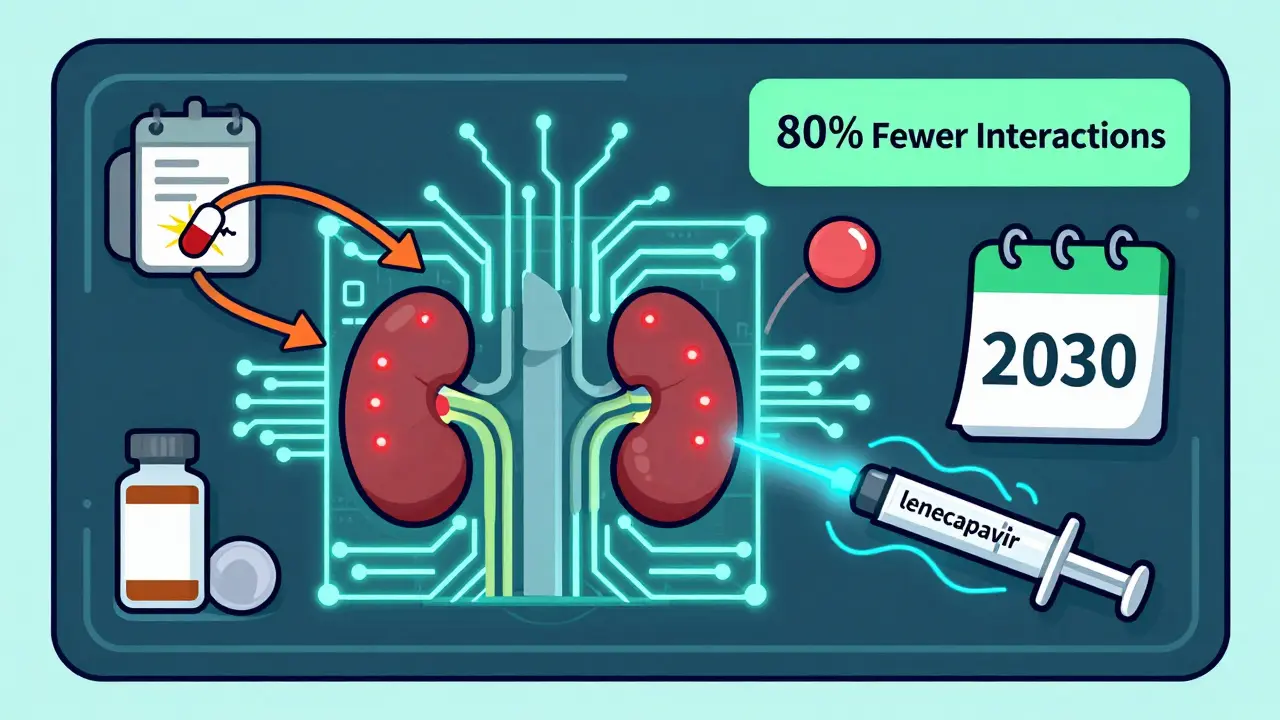
What’s Changing-and What’s Next
The good news? Things are getting better. New ART regimens like dolutegravir/bictegravir are now first-line for most people because they’re simpler, safer, and have fewer interactions. The latest guidelines from the U.S. Department of Health and Human Services (October 2023) now recommend INSTIs over boosted PIs unless there’s a specific reason not to. New drugs like lenacapavir, injected just twice a year, are promising because they don’t rely on liver enzymes. That means fewer interactions. The NIH is spending $12.7 million in 2024 to develop even cleaner drugs. By 2030, experts predict next-gen ART will have 80% fewer clinically significant interactions than today’s boosted PI regimens. That’s huge. But until then, you still need to be vigilant.Final Reality Check
You’re not being paranoid if you’re worried about your meds interacting. You’re being smart. HIV is no longer a death sentence. But it’s still a lifelong condition that requires careful management. Your ART isn’t just about viral load-it’s about your whole body. Don’t assume your pharmacist or doctor knows every interaction. Many don’t. Use the Liverpool checker. Keep a list. Speak up. A simple question-“Could this interact with my HIV meds?”-could save your life. The goal isn’t to scare you. It’s to empower you. You’re not just surviving HIV. You’re living with it. And that means you deserve a treatment plan that works-safely-for the long haul.Can I take ibuprofen with my HIV meds?
For most people on INSTI-based regimens like dolutegravir or bictegravir, ibuprofen is safe at standard doses. But if you’re on a ritonavir- or cobicistat-boosted regimen, long-term or high-dose ibuprofen can increase the risk of kidney stress or stomach bleeding. Always check with your provider, especially if you have kidney issues or take blood thinners.
Is it safe to use St. John’s Wort with ART?
No. St. John’s Wort is a strong inducer of CYP3A4 and can reduce levels of efavirenz, nevirapine, and some PIs by 50% or more. This can lead to HIV drug resistance. Even if you feel better on the herb, it’s not worth risking your treatment. Talk to your doctor about safer alternatives for depression or anxiety.
Why can’t I take Viagra normally if I’m on ART?
If you’re on a ritonavir- or cobicistat-boosted regimen, Viagra (sildenafil) can build up to dangerous levels, increasing the risk of low blood pressure, vision changes, or priapism. The safe dose is 25 mg every 48 hours-not the usual 50 or 100 mg. Avanafil is completely contraindicated. Always confirm your dose with your provider before taking any ED medication.
Are newer HIV drugs safer for drug interactions?
Yes. INSTIs like dolutegravir and bictegravir have far fewer interactions than older boosted PIs. Newer drugs like lenacapavir (injected every 6 months) are designed to avoid liver enzyme interactions entirely. If you’re on an older regimen, ask your doctor if switching to a simpler, safer option is right for you.
What should I do if I start a new medication?
Always check the Liverpool HIV Drug Interactions Checker before taking anything new-even over-the-counter or herbal. Then tell your HIV provider immediately. Don’t wait for your next appointment. Some interactions need immediate action. Your provider might need to adjust your ART, your other meds, or both.
Can I stop my ART if I’m taking something risky?
Never stop your ART without medical advice. Stopping can cause your viral load to rebound, leading to resistance and making future treatment harder. Instead, talk to your provider. There’s almost always a safer alternative-whether it’s changing your ART, switching your other medication, or adjusting the dose.
For more information, refer to the U.S. Department of Health and Human Services Guidelines (October 2023) and the University of Liverpool HIV Drug Interactions Checker, both updated as of early 2026.

Rachel Wermager
5 January, 2026 . 08:12 AM
Let’s be clear: the CYP3A4 inhibition profile of ritonavir and cobicistat is not just a footnote-it’s a pharmacokinetic landmine. When you combine these boosters with substrates like simvastatin, you’re looking at AUC increases of 2000-3000%, which directly correlates with rhabdomyolysis risk. The FDA black box warning exists for a reason. Even fluticasone, a topical steroid, becomes a systemic glucocorticoid overload when CYP3A4 is suppressed. This isn’t theoretical-it’s documented in case reports from the CDC’s HIV Surveillance Program. You need to treat drug interactions like you treat viral load: non-negotiable.
Tom Swinton
7 January, 2026 . 06:42 AM
I just want to say-this is the kind of post that makes me feel seen. I’m 58, on dolutegravir, and I take metformin, lisinopril, and a daily omega-3. I didn’t realize dolutegravir could lower metformin by 33%-I thought I was just getting older and my blood sugar was slipping. I checked the Liverpool site last night and adjusted my dose with my endo. Thank you for saying what so many doctors won’t. You’re not paranoid-you’re proactive. And that’s the difference between surviving and thriving. Keep speaking up. We need more people like you. 💪❤️
Leonard Shit
8 January, 2026 . 18:56 PM
huh. so st. john’s wort is bad. got it. i used to take it for my ‘mild depression’-now i know why i kept getting weird dizzy spells. my doc never mentioned it. oops. anyway. thanks for the info. i’ll stop. also, grapefruit juice is now officially on my no-list. who knew? 🤷♂️
Gabrielle Panchev
9 January, 2026 . 04:05 AM
Let’s not pretend this is just about ART-this is about the entire pharmaceutical-industrial complex exploiting vulnerable populations. Why are we still prescribing ritonavir-boosted regimens in 2026 when INSTIs exist? Because Big Pharma profits from complex, high-margin drug cocktails. And why do doctors still prescribe simvastatin with boosted PIs? Because they’re lazy. Because they don’t bother checking interactions. Because the system is designed to keep you dependent, confused, and paying for more pills. This isn’t medicine-it’s a money trap. And you’re being sold a lie that ‘undetectable’ equals ‘safe.’ It doesn’t. Not if your liver is drowning in statins.
Katelyn Slack
10 January, 2026 . 00:14 AM
i read this and just cried. i’ve been on art for 15 years and never knew about the kidney risks with ibuprofen. i’ve been taking 800mg daily for my arthritis. my doctor said it was fine. now i’m scared. thank you for sharing this. i’m going to call my clinic tomorrow. you saved me from something i didn’t even know was happening.
Melanie Clark
11 January, 2026 . 08:35 AM
They don’t want you to know this because if you knew how dangerous your meds are you’d stop taking them and then where would the industry be? The CDC knows. The NIH knows. But they’re silent. Why? Because if people realized that their ‘lifesaving’ ART could cause adrenal failure from a simple inhaler… they’d riot. This is controlled poisoning disguised as care. And the ‘Liverpool checker’? A placebo. They only list 80% of interactions. The rest? Hidden in unpublished studies. You think you’re safe? You’re just being manipulated. Wake up.
Saylor Frye
11 January, 2026 . 17:49 PM
Wow. So the entire HIV treatment paradigm is basically just a glorified drug interaction bingo card? I mean, I get it-INSTIs are better. But still. We’re talking about people on 9+ meds. It’s not a treatment plan. It’s a full-time job. And you’re supposed to memorize which statin you can and can’t take based on your ART? That’s not healthcare. That’s a survival game with a 50% chance of dying from a Tylenol overdose.
Kiran Plaha
11 January, 2026 . 21:52 PM
thank you for this. i am from india and we still use efavirenz a lot because it's cheap. i didn't know it makes birth control useless. my sister is on it and uses pills. she could get pregnant without knowing. this is serious. i will tell her to check with doctor. also, is there a free checker in hindi? i want to share with others.
Tiffany Adjei - Opong
12 January, 2026 . 06:13 AM
Okay, but let’s be real-how many people actually use the Liverpool checker? Like, 90% of HIV patients are either too old, too poor, or too overwhelmed to navigate a website that requires you to input 17 different meds and their dosages. And don’t even get me started on the fact that most community pharmacies don’t have pharmacists trained in HIV interactions. So this ‘checklist’? It’s great for people with insurance, a laptop, and a PhD in pharmacology. For the rest of us? It’s just another reminder that we’re not being treated as humans. We’re being treated as data points.
Wesley Pereira
13 January, 2026 . 22:46 PM
So… let me get this straight. If you’re on a boosted PI, you can’t take Viagra normally, you can’t take statins, you can’t use asthma inhalers, and you can’t even have grapefruit juice? And the ‘safe’ alternative is switching to an INSTI-which, by the way, might still interact with your TB meds? So basically, your entire life becomes a minefield of ‘don’t touch this, don’t take that.’ And the only solution is to beg your doctor to switch you to something new… which they might not have on formulary? Yeah. Welcome to modern HIV care. It’s not a cure. It’s a 24/7 compliance nightmare. And we’re supposed to be grateful? 😅
Isaac Jules
14 January, 2026 . 19:39 PM
YOU’RE ALL JUST PANICKING OVER NOTHING. I’ve been on darunavir/ritonavir for 12 years. I take simvastatin. I drink grapefruit juice. I use fluticasone. I’m fine. My viral load is undetectable. My creatinine is normal. My CPK is fine. So stop scaring people with ‘case reports’ and ‘studies.’ If your body can handle it, it handles it. Not everyone is a fragile lab rat. Maybe you should stop Googling and start living. #StopTheFearmongering
Amy Le
15 January, 2026 . 15:45 PM
So the real issue isn’t the drugs-it’s the fact that we’ve turned HIV from a death sentence into a chronic condition that requires more medical oversight than a nuclear power plant. And now we’re expected to be our own pharmacists, nutritionists, and compliance officers? Meanwhile, the government spends billions on PrEP but nothing on patient education. This isn’t progress. It’s a bureaucratic nightmare wrapped in a ‘you’re lucky to be alive’ bow. 🇺🇸 #HIVIsNotAGame