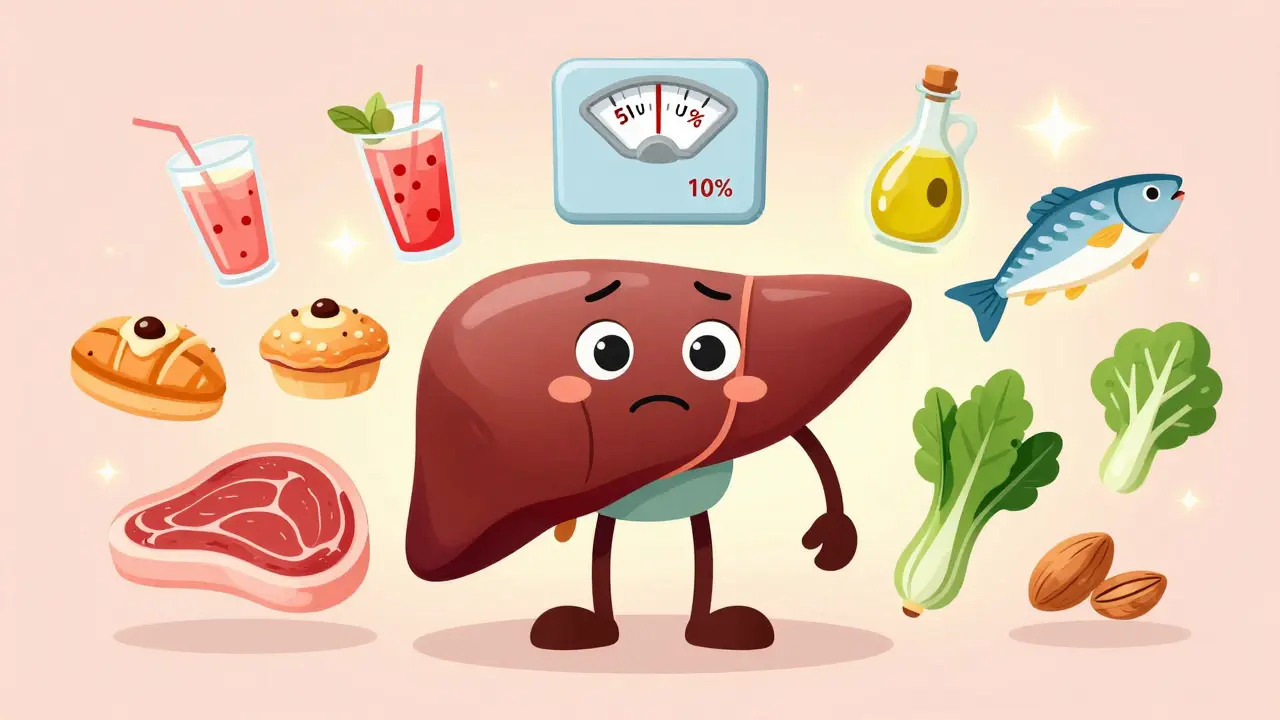
Non-alcoholic fatty liver disease (NAFLD), now called MASH (Metabolic Dysfunction-Associated Steatohepatitis), isn’t just about a little extra fat in your liver. It’s a silent, growing threat tied directly to how you eat, move, and manage your metabolism. About 1 in 4 adults globally have some form of fatty liver, and if you’re carrying extra weight, especially around your midsection, your liver is paying the price. The good news? Losing even a small amount of weight can reverse the damage. The better news? We now have real, science-backed tools to help - not just diets and workouts, but medications that actually target the liver itself.
Why Weight Loss Is the Foundation of MASH Treatment
There’s no magic pill that replaces losing weight when it comes to MASH. That’s not opinion - it’s what every major liver association agrees on. Studies show that losing just 5% of your body weight reduces fat in the liver. Lose 10% or more, and you start seeing actual healing: less inflammation, less scarring, even reversal of early fibrosis. This isn’t theoretical. It’s seen in liver biopsies and imaging scans.
But here’s the hard part: most people struggle to lose even 5%. A three-year study found that fewer than one in three people managed it, and only a quarter kept it off. Why? Because weight loss isn’t just about willpower. It’s about biology, environment, habits, and support. That’s why treatment now combines lifestyle changes with medical help - not as alternatives, but as partners.
The Best Diet for MASH: It’s Not a Fad, It’s the Mediterranean Pattern
Forget keto, intermittent fasting, or juice cleanses. The diet with the strongest evidence for MASH is the Mediterranean diet. Not because it’s trendy, but because it works. A meta-analysis showed people following this pattern had statistically significant drops in liver enzymes (ALT), liver fat, and liver stiffness - all key markers of disease progression.
What does it look like in real life?
- More vegetables, fruits, beans, nuts, and whole grains
- Healthy fats from olive oil, avocados, and fatty fish like salmon
- Lean proteins like chicken, eggs, and legumes
- Limited red meat, sugary drinks, and refined carbs like white bread and pastries
- No alcohol - ever. Even small amounts can worsen liver damage
This isn’t about counting every calorie - though reducing daily intake by 500 to 1,000 calories helps most people lose 1 to 2 pounds a week. It’s about swapping out harmful foods for ones that reduce inflammation and improve insulin sensitivity. Studies show this diet lowers liver fat even without major weight loss, which means it’s helping your liver directly, not just indirectly through shedding pounds.
Exercise: How Much You Need and What Actually Works
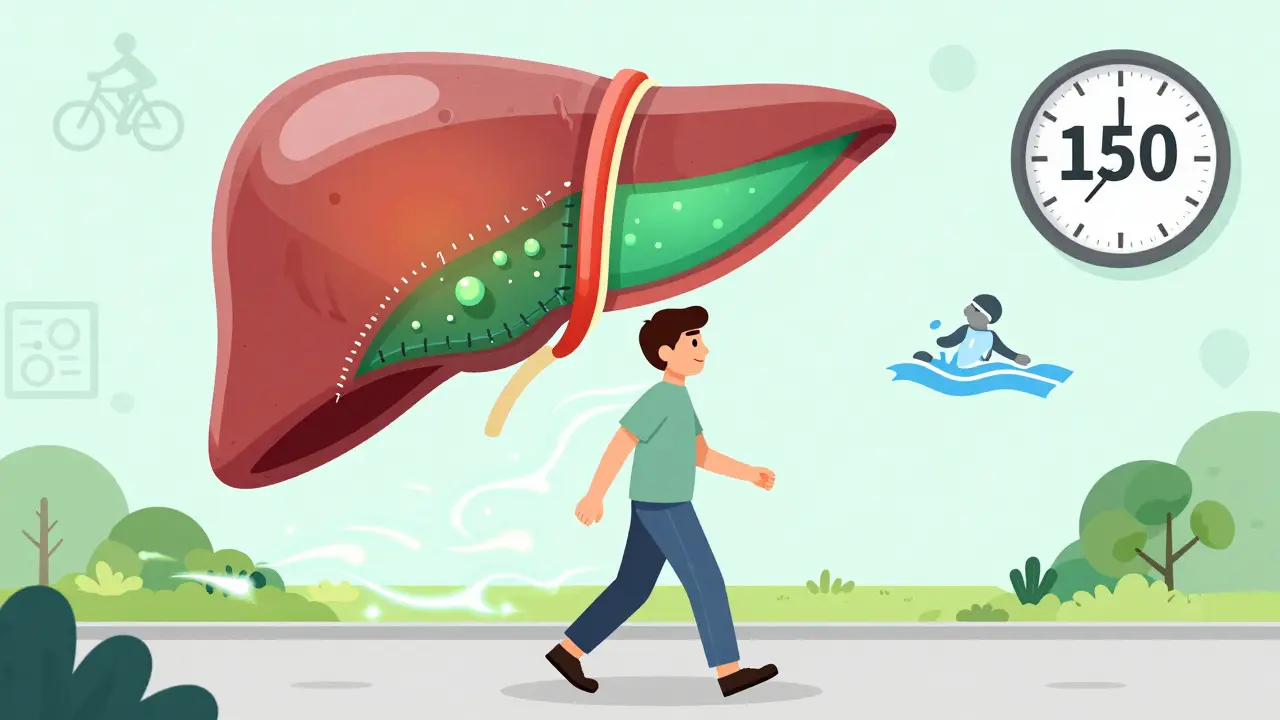
You don’t need to run marathons or lift heavy weights to help your liver. But you do need to move - consistently. The recommendation? At least 150 minutes of moderate exercise per week. That’s 30 minutes, five days a week. Brisk walking counts. Cycling. Swimming. Dancing. Even gardening.
Here’s what the data says: aerobic exercise reduces liver fat by about 20% on average, even without weight loss. Strength training adds another layer of benefit by improving insulin sensitivity. The best approach? Combine both. Two days of resistance training (bodyweight squats, push-ups, dumbbells) plus three days of walking or cycling gives you the full effect.
And don’t wait until you’ve lost weight to start moving. Get moving now. Movement improves blood flow to the liver, reduces fat buildup, and helps your body use insulin better - all critical for MASH. If you’ve been inactive, start with 10-minute walks after meals. Build from there.
The New Medication Breakthrough: Semaglutide (Wegovy)
In August 2025, the FDA approved semaglutide (brand name Wegovy) for treating MASH in adults with moderate-to-advanced liver scarring. This was huge - the first time a drug was approved specifically for liver damage caused by metabolic dysfunction, not just for weight loss or diabetes.
Semaglutide works by mimicking a hormone your body makes naturally - GLP-1 - that tells your brain you’re full, slows digestion, and helps your pancreas release insulin when needed. It’s the same drug used as Ozempic for type 2 diabetes, but Wegovy is dosed higher for weight loss and liver benefits.
Clinical trials showed:
- Nearly 90% of patients stayed on the drug for over a year
- Two-thirds saw reduced liver inflammation
- More than one-third had less liver scarring
- One-third improved in both inflammation and fibrosis
That’s not just modest improvement. That’s disease modification. And unlike older drugs like metformin (which only slightly lowers liver enzymes) or orlistat (which has no proven benefit on liver tissue), semaglutide targets the root causes: excess fat, insulin resistance, and inflammation.
But Is It Better Than Diet and Exercise?
Here’s the tricky part: most studies haven’t compared semaglutide head-to-head with a well-executed lifestyle plan. So we don’t know yet if it’s better than a strict Mediterranean diet and regular exercise. What we do know is this: for most people, diet and exercise alone aren’t enough to reach the 10% weight loss needed for real liver healing.
Semaglutide isn’t a replacement - it’s a powerful tool to help you get there. Think of it like insulin for diabetes. You still need to eat well and move, but the medication makes it possible to do so without constant hunger, cravings, and metabolic resistance.
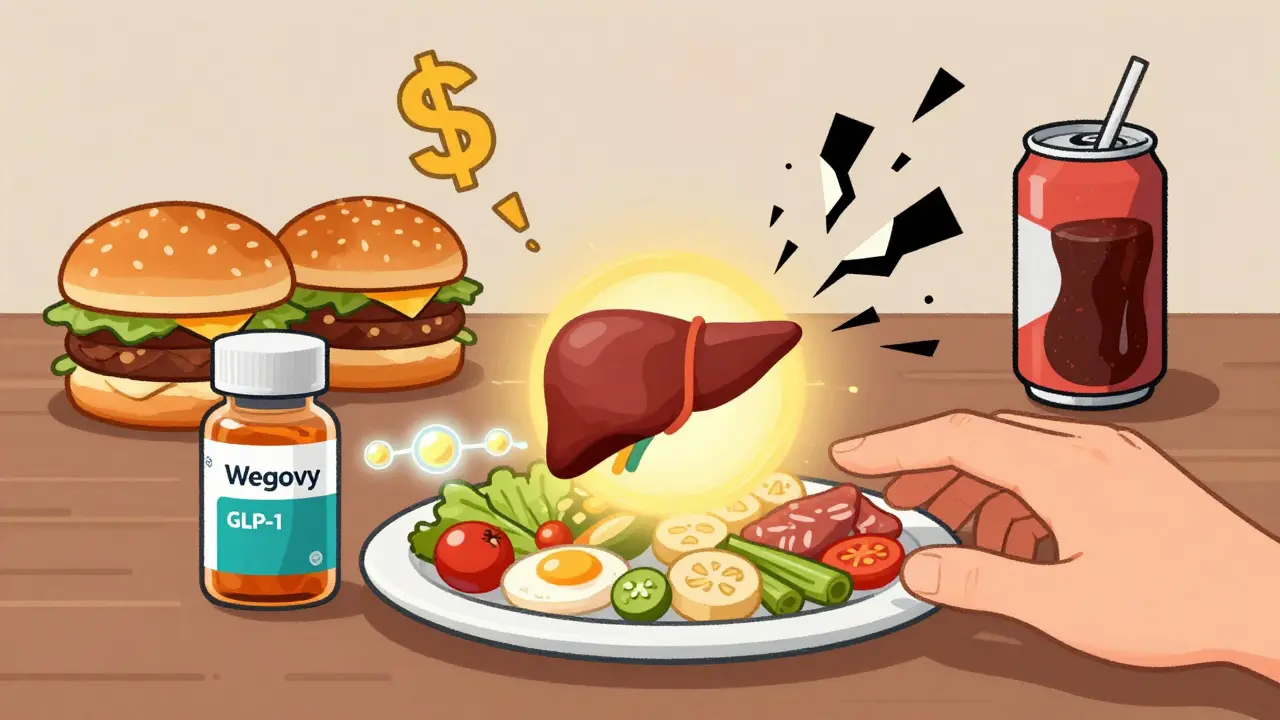
Side effects? Nausea, bloating, and diarrhea are common at first - but most people adapt within weeks. The real barrier? Cost. Wegovy runs about $1,350 a month without insurance. Most insurance plans don’t cover it for MASH yet, even though it’s FDA-approved. Some require a BMI over 30 or a diagnosis of type 2 diabetes. That makes it inaccessible for many, especially those who need it most.
Other Medications: What Works and What Doesn’t
There are other drugs out there, but their role is limited:
- Metformin: Used for diabetes, it may lower liver enzymes slightly, but no study has shown it improves liver fibrosis or reduces fat in the liver long-term.
- Orlistat: A fat-blocking pill. Some early studies suggested it might help, but no solid evidence it reverses liver damage.
- SGLT2 inhibitors (like empagliflozin): These diabetes drugs help the kidneys flush out sugar. Early data shows they reduce liver fat, but large trials for MASH are still ongoing.
- Combination drugs (like phentermine/topiramate): Approved for weight loss, but no proven benefit for liver outcomes.
Right now, semaglutide stands alone as the only medication with clear, direct evidence of healing liver tissue in MASH. Others may help with weight or blood sugar, but they don’t yet show the same level of liver repair.
Real-World Challenges: Plateaus, Cravings, and Staying on Track
Even with the best plan, sticking to it is hard. Around 60% of people hit a weight loss plateau after six months. Food cravings spike. Motivation dips. That’s normal. It doesn’t mean you’ve failed.
What helps?
- Work with a dietitian who understands MASH - not just weight loss, but liver-friendly nutrition
- Find a support group or online community - sharing struggles reduces isolation
- Track progress beyond the scale: better sleep, more energy, lower blood sugar, improved blood pressure
- Use behavioral strategies: mindful eating, stress management, sleep hygiene
And if you’ve tried everything and still can’t lose weight? Talk to your doctor about semaglutide. It’s not a last resort - it’s a valid option for people with metabolic liver disease who need extra help.
The Big Picture: MASH Is a Metabolic Disease - Not Just a Liver Problem
MASH doesn’t live in isolation. It’s the liver’s response to insulin resistance, high blood sugar, high triglycerides, and belly fat. That’s why treating it means treating the whole system. Lowering cholesterol? Helpful. Controlling blood pressure? Helpful. Managing diabetes? Essential. Cutting out alcohol? Non-negotiable.
The FDA’s approval of Wegovy signals a shift: we’re finally treating MASH as a serious disease, not just a side effect of being overweight. But the foundation hasn’t changed. Diet and exercise are still the bedrock. Medication is the accelerator.
For many, the path forward looks like this: start with the Mediterranean diet and 150 minutes of weekly movement. If you’re not losing enough weight after 3-6 months, talk to your doctor about semaglutide. Don’t wait until your liver is badly scarred. Start now. Your liver doesn’t need perfection - it needs progress.
Can you reverse MASH without losing weight?
It’s very unlikely. While some dietary changes (like switching to a Mediterranean diet) can reduce liver fat even without major weight loss, the strongest evidence for reversing scarring and inflammation comes from losing 10% or more of your body weight. Medications like semaglutide help you get there, but they work best when paired with healthy eating and movement.
Is semaglutide safe for long-term use?
So far, yes. Clinical trials show that nearly 90% of people stayed on semaglutide for over a year, and side effects like nausea usually fade after a few weeks. Long-term safety data beyond two years is still being collected, but no major red flags have emerged. It’s not recommended for people with a personal or family history of medullary thyroid cancer or multiple endocrine neoplasia syndrome type 2.
How quickly does semaglutide work for the liver?
Improvements in liver fat and inflammation can be seen as early as 12-24 weeks in clinical trials. Fibrosis reduction takes longer - typically 48 weeks or more. The full benefit often requires 12-18 months of consistent use. It’s not a quick fix, but the changes are real and measurable.
Can I take semaglutide if I don’t have diabetes?
Yes. Semaglutide (Wegovy) is approved for MASH regardless of whether you have diabetes. The key requirement is a diagnosis of MASH with moderate-to-advanced liver fibrosis, confirmed by imaging or biopsy. It’s designed for metabolic liver disease, not just diabetes.
What if I can’t afford semaglutide?
Many people can’t afford it right now - it costs over $1,300 a month without insurance. Talk to your doctor about patient assistance programs from the manufacturer, or explore generic alternatives like metformin (though less effective). Focus on diet and exercise first - they’re free, proven, and foundational. Some insurance plans cover it for obesity if your BMI is over 30, even if not yet for MASH. Don’t give up - ask your provider to help you navigate options.
If you’re living with MASH, you’re not alone. And you don’t have to do this alone either. The tools to heal your liver exist - diet, movement, and now, targeted medication. Start with one change. Build from there. Your liver will thank you.

Becky Baker
26 December, 2025 . 00:11 AM
So let me get this straight - we’re now prescribing weight loss drugs like they’re candy because people won’t stop eating pizza? 🤦♀️ I get it, the liver’s sad, but why not just teach folks to cook instead of slapping a $1,300/month patch on the problem? This country’s gone full corporate medical dystopia.
Sumler Luu
27 December, 2025 . 14:16 PM
I appreciate the science here - really do. But I’ve seen too many people get discouraged because they can’t hit 10% weight loss. Even 3% helped my liver enzymes drop. Progress isn’t all or nothing. Small wins matter more than perfection.
sakshi nagpal
28 December, 2025 . 12:27 PM
As someone from India where NAFLD is rising fast due to processed food influx, I find this article both timely and sobering. The Mediterranean diet isn’t just ‘Western’ - it’s ancestral to many traditional diets here too: lentils, greens, turmeric, minimal sugar. We just lost touch with it. Medications help, but culture and community are the real healers.
Sandeep Jain
30 December, 2025 . 11:50 AM
semaglutide sounds cool but like… i tried it for a bit and my stomach was like ‘what the actual f’’. also why is it so damn expensive? my cousin’s dad got it on some trial and he’s been fine but he’s got good insurance. what about the rest of us?
roger dalomba
30 December, 2025 . 23:20 PM
Wow. A drug that makes you less hungry. Groundbreaking. Next they’ll invent water that hydrates you. 🙄
Meanwhile, people are still eating Cheetos for breakfast. The real problem isn’t the liver - it’s the collective inability to not be a lazy sack of carbs.
Brittany Fuhs
31 December, 2025 . 14:45 PM
Anyone who thinks diet and exercise are ‘free’ hasn’t tried buying organic produce, grass-fed meat, and gym memberships while working two jobs. This isn’t about willpower - it’s about systemic neglect. But hey, if you’re not rich enough to afford Wegovy, maybe you deserve your fatty liver. #PersonalResponsibility
Sophia Daniels
1 January, 2026 . 14:43 PM
Let’s be real - this isn’t medicine. It’s a corporate love letter to Big Pharma wrapped in a Mediterranean salad.
They took a diabetes drug, slapped ‘liver healing’ on it, and now we’re all supposed to be thrilled? 🤡
Meanwhile, the real solution - eating real food, moving your body, sleeping like a human - is free. But it doesn’t have a patent. So no one’s selling it.
Also - if you think ‘150 minutes a week’ is enough, you’ve never tried walking after a 12-hour shift while your kid screams for snacks. 😭
Fabio Raphael
2 January, 2026 . 20:51 PM
I’ve been on semaglutide for 8 months. Nausea was brutal at first - like, ‘why did I do this’ brutal. But after 6 weeks, it just… stopped. I lost 14% of my body weight. My liver enzymes are normal now. I still eat Mediterranean-style - just less of it. The drug didn’t replace the diet, it made the diet possible. I’m not ‘cured’ - I’m healing. And that’s enough.
Amy Lesleighter (Wales)
4 January, 2026 . 16:04 PM
eat real food move your body sleep enough dont drink alcohol
thats it
no magic
no pills
just basics
but basics are hard when everything around you is designed to make you fat
Rajni Jain
5 January, 2026 . 23:09 PM
my aunt did this without meds - she swapped white rice for quinoa, walked after dinner every night, and cut out soda. lost 12% in 8 months. her liver scan looked like a new person. she’s 67. if she can do it, we all can. just start small. one meal at a time 💪
Natasha Sandra
6 January, 2026 . 12:10 PM
semaglutide is a game changer 😭 I cried when my doctor said I qualified. I’ve been trying for 5 years. now I’m actually sleeping through the night. no more 3am cookie raids 🍪➡️💤 thank you science 💖