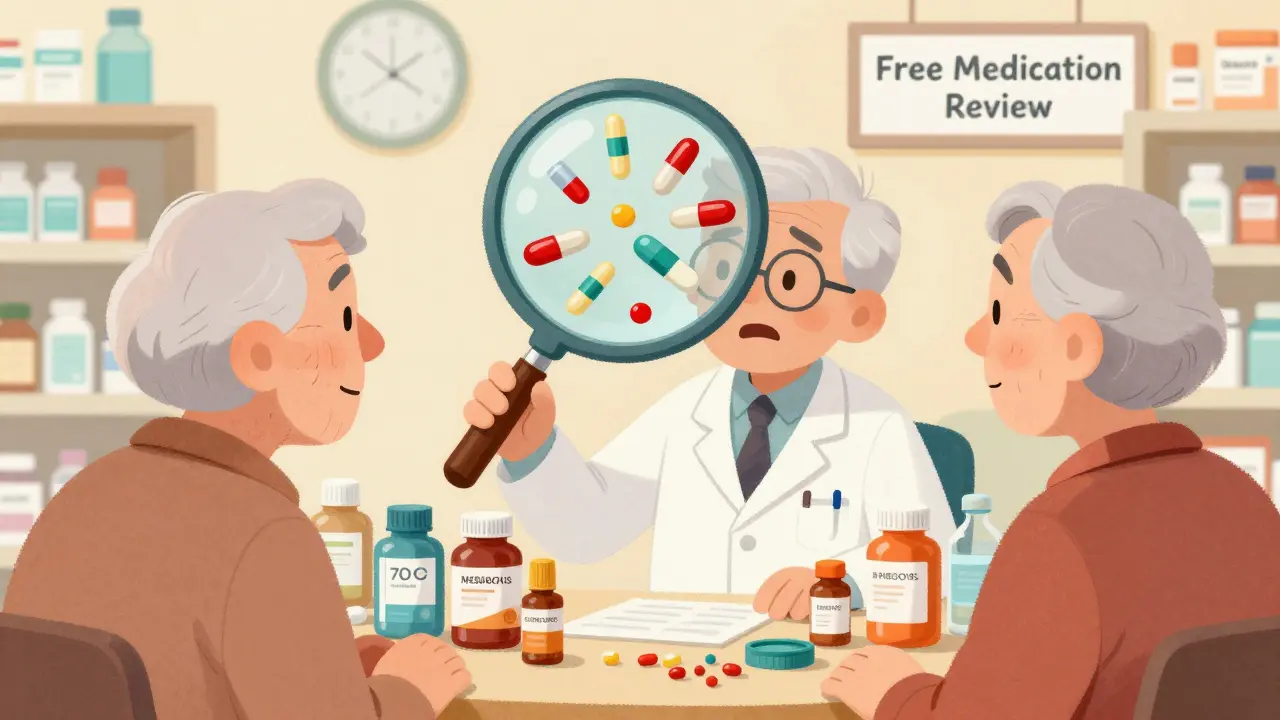
Most people think of their pharmacy as just a place to pick up prescriptions. But if you’re taking more than a few medications - especially for chronic conditions like diabetes, high blood pressure, or heart disease - your pharmacist can be one of your most important health allies. Pharmacy consultation services aren’t optional extras. They’re a proven safety net. And they’re free or low-cost for most people with Medicare Part D or private insurance.
What a Pharmacy Consultation Actually Covers
A pharmacy consultation isn’t just a quick chat while you wait for your pills. It’s a full review of every medication you take - prescription, over-the-counter, vitamins, and supplements. Pharmacists check for dangerous interactions, duplicate prescriptions, incorrect doses, and drugs that don’t match your health conditions.
For example, a 72-year-old man in Perth was taking three blood pressure meds, a cholesterol drug, and a common pain reliever. His pharmacist noticed the pain reliever was raising his blood pressure and increasing his risk of kidney damage. The pharmacist contacted his doctor, swapped it out for a safer option, and saved him from a potential hospital stay.
These reviews also catch things doctors miss. A 2023 study showed that pharmacists identified medication errors in 40% of patient lists during care transitions - like after a hospital discharge. That’s not rare. That’s standard.
Why Pharmacists Are the Last Line of Defense
You see your doctor maybe once or twice a year. You visit your pharmacy 17 times a year on average. That’s more than double. Pharmacists see your meds every time you refill. They notice when you’re not picking up a drug. They spot when a new prescription clashes with an old one.
Dr. Lucian Leape from Harvard put it simply: “Pharmacists are the last line of defense against medication errors.” And it’s true. A Veterans Affairs study found that pharmacist-led interventions prevented 87% of severe adverse drug events. That means real harm - falls, kidney failure, internal bleeding - was stopped before it happened.
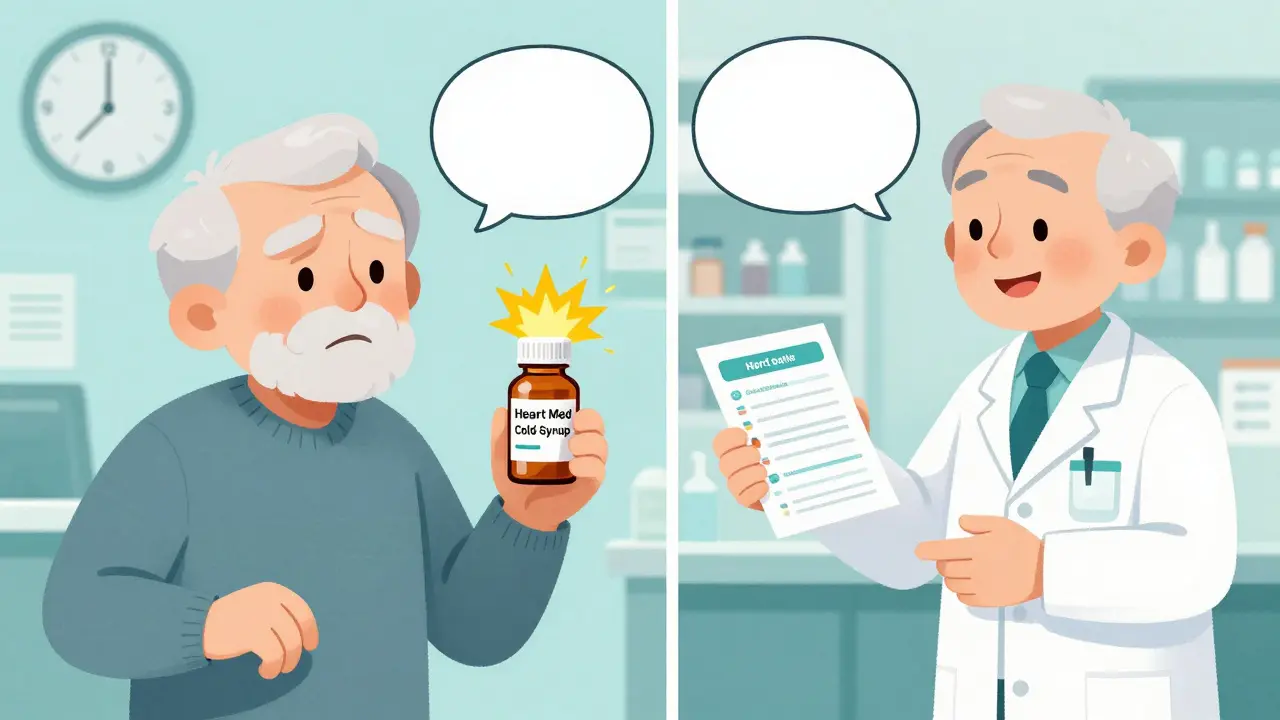
And it’s not just about avoiding danger. Pharmacists help you save money. One patient in a 2023 survey saved $200 a month because her pharmacist found a generic alternative that worked just as well. Another avoided a $1,500 ER visit because his pharmacist caught a dangerous combo of his heart med and a common cold syrup.
Who Qualifies for Free Consultations?
If you’re on Medicare Part D, you’re likely eligible for a free, comprehensive medication review. As of 2023, all Part D plans must offer this service to anyone with:
- Three or more chronic conditions (like diabetes, heart failure, COPD, or depression)
- Four or more Medicare-covered prescription drugs
- Expected to spend over $5,000 a year on meds
That’s more than 14 million people. And since April 2023, the eligibility rules got easier. You no longer need eight prescriptions - just four. If you’re taking meds for high blood pressure, arthritis, and thyroid issues? You qualify.
Private insurance is catching up. About 43% of commercial plans now cover full medication reviews. Check your plan’s website or call customer service. Ask: “Do you cover Medication Therapy Management (MTM)?” If they say yes, schedule your appointment.
How to Get the Most Out of Your Consultation
Don’t just show up. Come prepared.
- Bring every pill bottle - even the ones you don’t take anymore. Include supplements, herbal remedies, and OTC drugs like ibuprofen or melatonin.
- Write down your biggest concerns. Are you dizzy after taking your pills? Having trouble swallowing them? Forgetting doses? These matter.
- Ask these three questions:
- “Is there a cheaper version of this drug?”
- “Could any of these interact with each other?”
- “What should I do if I miss a dose?”
- Ask for a written action plan. A good pharmacist will give you a one-page summary of your meds, what they’re for, and what to watch for. Keep it in your wallet.
Some pharmacies offer private consultation rooms. If yours doesn’t, ask to speak in the back or schedule a time when it’s less busy. You deserve privacy.
What If Your Pharmacy Doesn’t Offer This?
It’s rare - 97% of U.S. community pharmacies offer some form of consultation. But if yours doesn’t, ask why. Say: “I’ve heard pharmacists can help prevent dangerous drug interactions. Do you offer medication reviews?”
If they say no, switch pharmacies. This isn’t a luxury. It’s basic care. Look for pharmacies with signs saying “Medication Therapy Management” or “Free Medication Review.” Chain pharmacies like CVS, Walgreens, and local independents with certified pharmacists are your best bets.
Telehealth consultations are now common. If you can’t get in person, ask if they offer phone or video reviews. About 62% of pharmacies now offer this - up from just 18% before the pandemic.
What Pharmacists Can’t Do (And What You Still Need Your Doctor For)
Pharmacists aren’t doctors. They can’t diagnose conditions or change your prescriptions on their own. But they can flag problems and call your doctor with a recommendation. Most doctors welcome the input - especially when it prevents an ER visit.
Here’s what pharmacists can do:
- Spot dangerous drug combos
- Find cheaper alternatives
- Explain how and when to take meds
- Check for duplicate prescriptions
- Update your medication list
- Advise on side effects
Here’s what they can’t do:
- Prescribe new drugs (in most states)
- Order lab tests
- Change your diagnosis
Think of your pharmacist as your medication detective. Your doctor is your overall health captain. They work together.
Real Results, Real People
Patients who use these services report:
- 89% better understanding of their meds
- 76% improved adherence - meaning they actually take their pills
- 28% better control of conditions like diabetes and high blood pressure
One woman in Arizona was taking five pills a day for her diabetes and high blood pressure. She felt tired all the time. Her pharmacist discovered she was taking two drugs that both lowered blood pressure - and her dose was too high. After adjusting one, her energy came back. Her blood pressure stabilized. And she cut her monthly cost by $80.
Another man in Florida was about to be discharged from the hospital after a heart attack. The pharmacy team reviewed his new meds and caught that one drug was known to cause dangerous swelling in kidney patients - which he had. They called the doctor. The prescription was changed. He went home safe.
Barriers - And How to Overcome Them
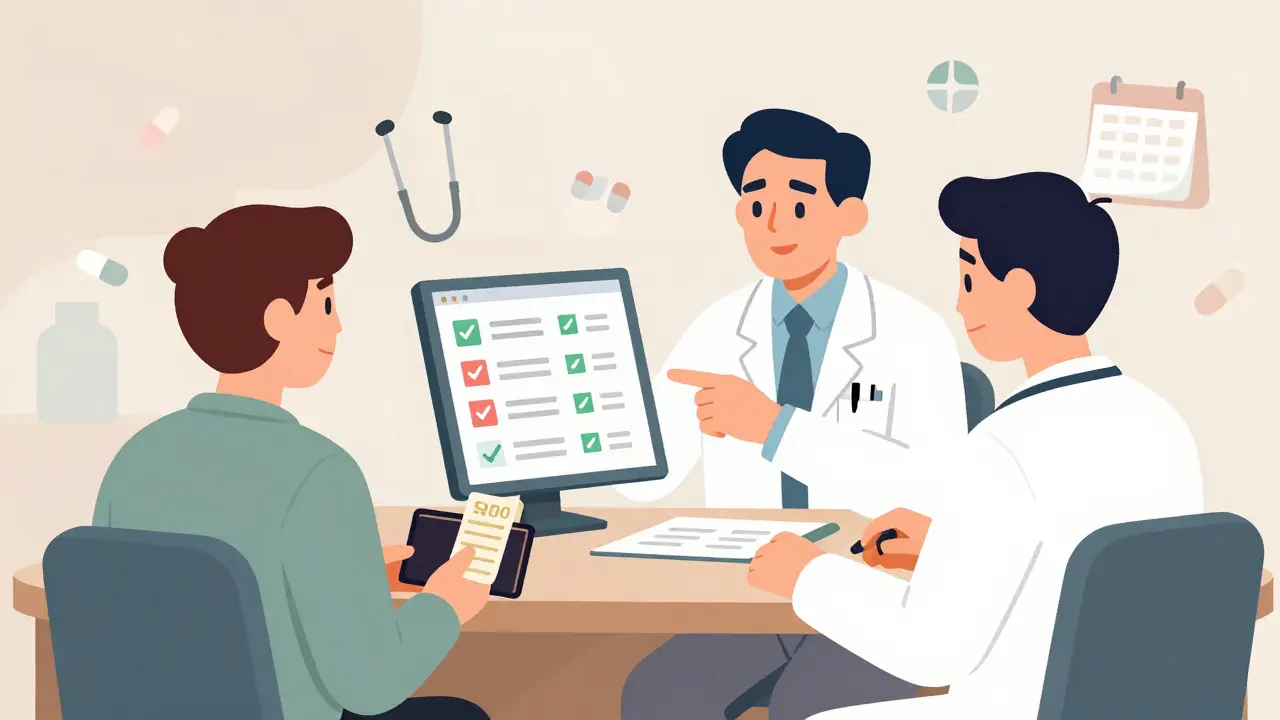
Not every pharmacy does this perfectly. A 2022 survey found pharmacists in busy stores only had 6.2 minutes per patient - far below the recommended 15 minutes. That’s why you need to be proactive.
Here’s how to beat the system:
- Schedule your consultation. Don’t wait until you’re picking up your prescription.
- Go during off-hours - early morning or late afternoon.
- Ask for the pharmacist by name. Build a relationship.
- Follow up. If you get new meds, call back and ask if they’ve been reviewed.
Also, many pharmacies now use automated systems to flag eligible patients. If you qualify, you should get a call or letter. If you haven’t heard anything, reach out first.
What’s Next for Pharmacy Consultations?
The field is growing fast. By 2027, the medication management market will be worth over $7 billion. More states are letting pharmacists start certain medications - like for high blood pressure or smoking cessation - without a doctor’s script. That’s huge.
And more health systems are putting pharmacists right into primary care teams. In 61% of hospitals now, pharmacists sit in on doctor visits. That’s up from 39% just five years ago.
Pharmacy consultations aren’t going away. They’re becoming essential.
Frequently Asked Questions
Is a pharmacy consultation really free?
Yes, if you’re on Medicare Part D and meet the eligibility criteria - which includes having three or more chronic conditions and taking four or more prescriptions. Most private insurers now cover it too, though you should confirm with your plan. Even if there’s a small fee, it’s often less than a copay.
How often should I get a medication review?
At least once a year. But if you’ve had a hospital stay, started or stopped a drug, or changed doctors, schedule one right away. Medications change fast - your review should too.
Can my pharmacist refill my prescriptions without a doctor’s order?
In most states, no. Pharmacists can’t renew prescriptions on their own. But in 22 states, they can initiate certain medications - like for high blood pressure, diabetes, or smoking cessation - under a standing order. Ask your pharmacist what’s allowed where you live.
What if I don’t have insurance?
Many pharmacies still offer free consultations regardless of insurance - especially for seniors or patients with chronic conditions. Call ahead and ask. Even if there’s a small fee, it’s worth it. A single medication error can cost thousands in emergency care.
Can I bring my family member to the consultation?
Absolutely. Many people bring a spouse, child, or caregiver. It’s easier to remember everything with two sets of ears. Just let the pharmacist know ahead of time so they can make sure the room is ready.
Next Steps
If you take more than three medications, don’t wait. Call your pharmacy today. Ask if they offer a medication review. If they say yes, book it. If they say no, ask why - and consider switching.
Keep your medication list updated. Use the paper summary your pharmacist gives you. Take it to every doctor’s appointment. Bring it to the ER if you ever go.
Pharmacies are open longer than clinics. They’re easier to get into. And they know your meds better than anyone. Use them - not just to pick up pills, but to protect your health.


Jason Shriner
10 January, 2026 . 15:40 PM
so like... pharmacists are now our medication therapists? next they'll be giving us hugs and asking about our childhood. i'm just here for the free ibuprofen.
Jennifer Littler
12 January, 2026 . 01:10 AM
MTM protocols under CMS guidelines are demonstrably cost-effective for polypharmacy populations, particularly in transitional care settings. The 40% error detection rate aligns with JCAHO benchmarks from 2022. Documented outcomes include reduced readmissions and improved adherence metrics.
Matthew Miller
12 January, 2026 . 09:26 AM
this is why america is broken. you need a 12-page guide to not die from your own pills. my grandpa took three meds for 40 years and never once had a 'consultation'. he just didn't die. what the fuck is wrong with us?
Madhav Malhotra
14 January, 2026 . 04:32 AM
in india, we just ask the pharmacist at the corner shop. they know your whole family's meds by heart. sometimes they even give you extra pills if you're low on cash. this whole system feels so... American. like you need a spreadsheet to survive.
Sam Davies
15 January, 2026 . 02:44 AM
Ah yes, the noble pharmacist - the unsung hero of the capitalist healthcare circus. How quaint that we’ve outsourced cognitive labor to someone who’s paid minimum wage to spot the fact that you’re taking two drugs that cancel each other out. Bravo, America. You’ve turned medicine into a puzzle game.
Christian Basel
16 January, 2026 . 06:14 AM
MTM? really? i just want my script. why do i need a 20-minute lecture on why my melatonin is 'potentially interacting' with my blood pressure med? i'm not a clinical trial participant. i'm just trying to sleep.
Alex Smith
18 January, 2026 . 03:18 AM
i used to think pharmacists were just the people who handed me my pills and said 'take with food.' then i found one who actually remembered my name and asked if i'd been having dizziness. turns out my antihistamine was wrecking my BP. now i go to the same place every time. they're not just employees. they're lifesavers.
Roshan Joy
18 January, 2026 . 12:27 PM
i love this! 🙌 my mom in Delhi takes 7 meds and we just call the pharmacy every month - they write everything down and even call her doctor if something looks off. no fancy forms, no insurance hoops. just a human who cares. why can't we do this everywhere? 💛
Michael Patterson
18 January, 2026 . 12:42 PM
this is so overcomplicated. you got a prescription? take it. you feel weird? go to the er. why are we turning pharmacies into mini clinics? next thing you know they'll be doing pap smears and giving flu shots while handing you your lisinopril. also, i typoed 'medication' like 5 times in this comment so i'm not even mad.
Priya Patel
19 January, 2026 . 10:33 AM
OMG I JUST DID THIS AND IT CHANGED MY LIFE 🤯 my pharmacist found out my 'vitamin' was actually a high-dose potassium pill that was making my heart race. she called my doc, we switched it, and now i'm not scared to walk up stairs. also she gave me a sticker. i framed it.
Alfred Schmidt
20 January, 2026 . 17:19 PM
I've been waiting for someone to say this. My insurance dropped my MTM coverage last year. Now I have to pay $45 for a 10-minute chat where they tell me what I already know. Meanwhile, my doctor hasn't called me back in 14 months. This isn't healthcare. This is a scam wrapped in a brochure.
Sean Feng
21 January, 2026 . 06:55 AM
just call your pharmacy and ask if they do reviews if they say no switch