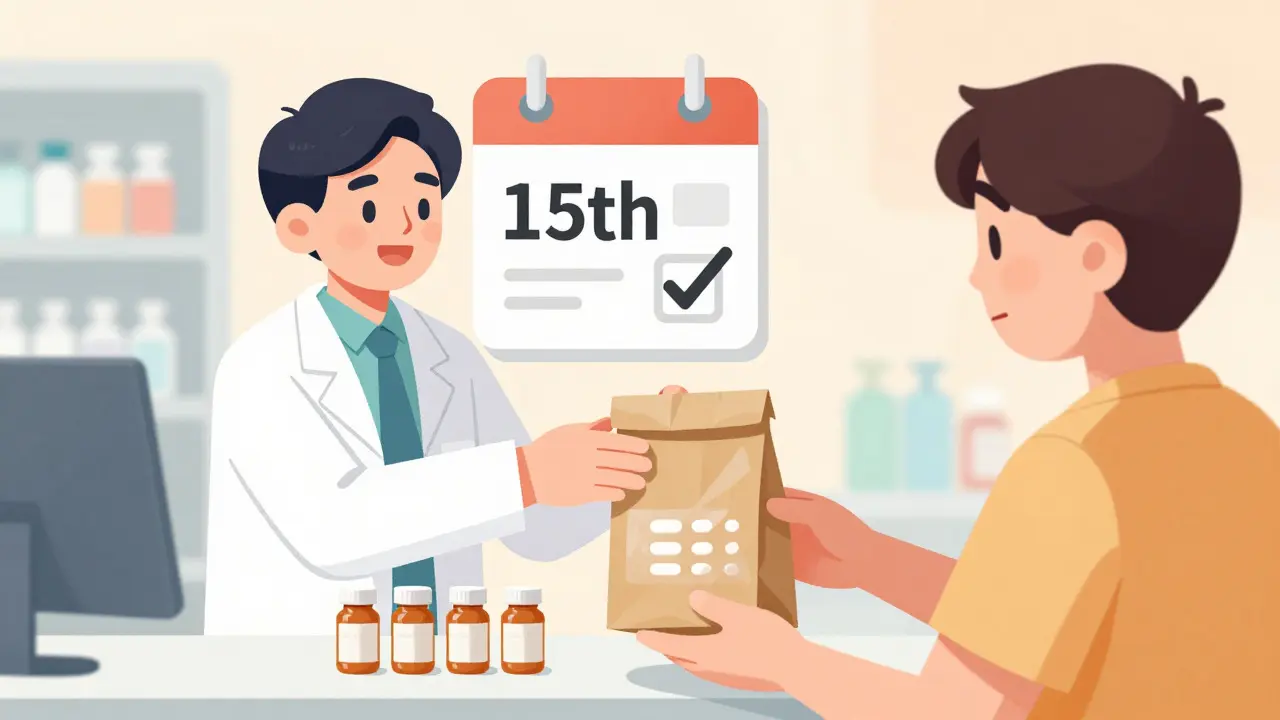
Imagine walking into your pharmacy on the 15th of every month and picking up everything you need for the next 30 days in one go. No more juggling different refill dates for blood pressure meds, diabetes pills, and cholesterol drugs. No more panic at 8 PM on a Tuesday because you realized you’re out of your morning medication. This is exactly what refill synchronization, often called med sync, offers.
If you manage multiple prescriptions, this service might be the missing link in keeping your health stable. It’s not just about convenience; it’s a proven strategy to boost medication adherence, which means taking your medicine exactly as prescribed, every time. Non-adherence affects roughly half of patients with chronic conditions, leading to preventable hospital visits and higher costs. By aligning all your refill dates to a single day each month, pharmacies help remove the mental load and logistical hurdles that cause people to skip doses or run out of meds entirely.
What Is Refill Synchronization?
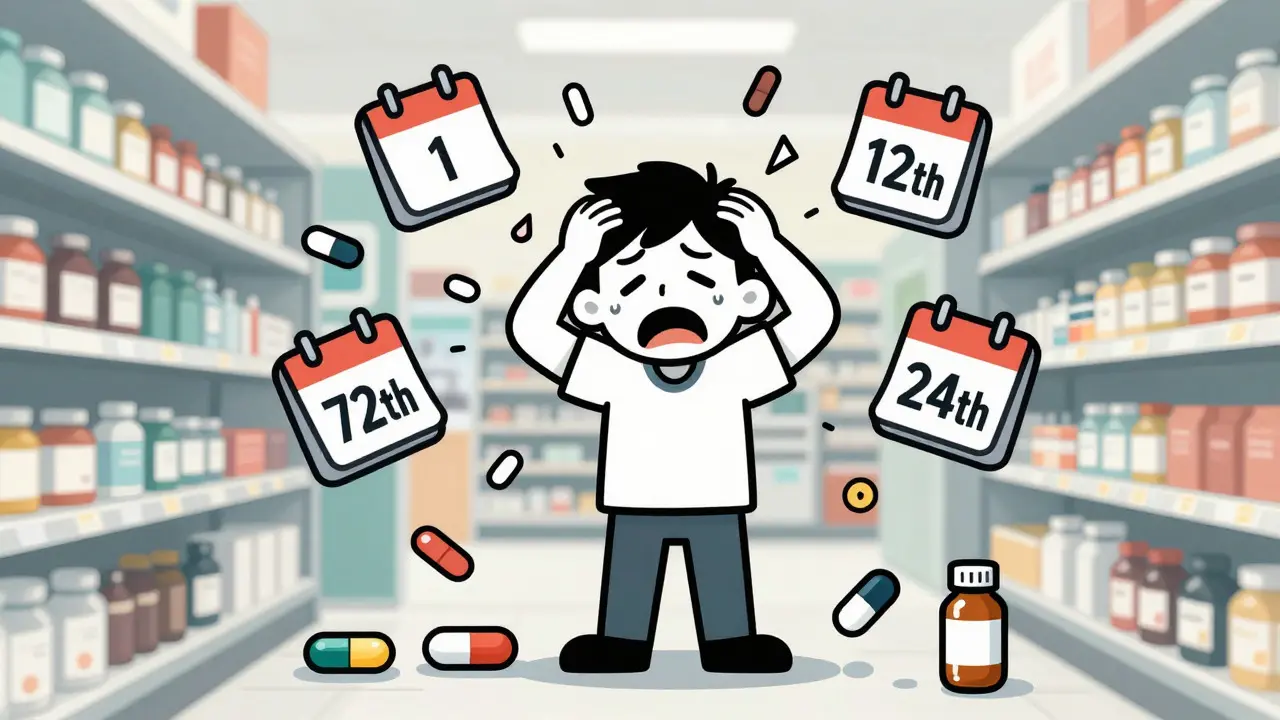
Refill synchronization is a pharmacy service that consolidates a patient's multiple medication refill dates onto one coordinated date each month. Instead of having three different medications due on the 1st, 12th, and 24th, they are all adjusted so you pick them up together on, say, the 15th.
This concept gained traction in the early 2010s as pharmacists looked for practical ways to tackle the widespread issue of non-adherence. Major retail chains like CVS and Walgreens helped formalize these programs around 2010-2012. The core idea is simple: complexity kills compliance. When managing several chronic conditions, remembering different schedules is hard. Syncing simplifies the process.
For example, if you take Metformin, Lisinopril, and Atorvastatin, your pharmacist reviews your current supply. They might give you a few extra days' worth of pills initially to shift everyone to the same start date. From then on, you have one appointment, one pickup, and one reminder.
Why Adherence Matters More Than You Think
You might think skipping an occasional dose doesn’t matter much. But for chronic conditions like hypertension, diabetes, or high cholesterol, consistency is everything. Studies show that even small improvements in adherence can lead to significant health gains.
According to research published in the American Journal of Managed Care, synchronized refill schedules were linked to better adherence among Medicare Advantage patients. Another study in Health Affairs found that patients using med sync had a Proportion of Days Covered (PDC) of 0.87 compared to 0.84 for those without sync-a 3 percentage point gain. That might sound small, but across millions of patients, it translates to fewer emergency room visits and better disease control.
The World Health Organization estimates that 50% of patients with chronic diseases don't take their meds correctly. Med sync directly attacks two main reasons for this: forgetfulness and schedule confusion. By creating a predictable routine, it turns medication management from a chore into a habit.
How to Get Started with Med Sync
Getting enrolled isn’t complicated, but it does require some initial work. Here is how the process typically unfolds:
- Initial Consultation: Your pharmacy team reviews all your current prescriptions. They check dosages, frequencies, and insurance coverage. This step ensures there are no drug interactions and confirms which meds are suitable for syncing (usually maintenance medications).
- Synchronization Plan Creation: Pharmacists calculate how to adjust your quantities. You might receive a slightly larger amount of one medication now to bridge the gap until the new unified date arrives. This is where clear communication is key-ask questions if you’re unsure why your pill count looks different.
- Monthly Review and Refill: Once synced, the pharmacy proactively manages your refills. They’ll prepare your meds ahead of time and send reminders via text, email, or app notifications.
- Pickup or Delivery: On your designated day, you pick up all your meds at once. Many pharmacies now offer delivery options, making it even easier to stay compliant without leaving home.
The initial enrollment takes about 20-30 minutes per patient, according to the ASHP Medication Synchronization Resource Guide. After that, monthly maintenance only requires 5-10 minutes of pharmacist time. For you, it means spending less time worrying about when to refill and more time living your life.
Who Benefits Most from Syncing?
Not everyone needs med sync. If you only take one occasional antibiotic, it’s overkill. But if you fall into certain categories, this service could transform your health management.
| Patient Profile | Why It Helps | Expected Outcome |
|---|---|---|
| Patients with 3+ Maintenance Meds | Reduces cognitive load of tracking multiple dates | Higher PDC scores, fewer missed doses |
| Elderly Patients | Simplifies routine, reduces travel frequency | Better chronic disease control (BP, glucose) |
| Busy Professionals | Fits into a single monthly slot | Consistent adherence despite busy schedules |
| Medicare Advantage Beneficiaries | Aligns with plan incentives for adherence | Potential cost savings and improved Star Ratings |
Research shows that adherence improvements are especially pronounced for patients exclusively using retail pharmacies rather than mail-order services. The American Journal of Managed Care study noted PDC differences of 0.08-0.11 for retail users versus 0.01-0.03 for mail-order users when synced. This suggests that the personal touch and regular interaction in a community pharmacy play a big role in success.
Common Challenges and How to Overcome Them
Med sync isn’t perfect. There are hurdles, primarily involving insurance plans and patient education.
Insurance Restrictions: Some plans restrict early refills. To sync, pharmacists sometimes need to dispense a partial fill or get prior authorization. A 2018 NCPA survey found that 47% of pharmacists faced challenges with insurance restrictions on early refills. Don’t let this stop you-ask your pharmacist to handle the paperwork. They deal with this daily and know how to navigate the system.
Patient Resistance: Changing routines is hard. Some patients worry about receiving "extra" pills initially. It helps to understand that these aren’t freebies; they’re adjustments to align your schedule. Clear counseling during the first visit is crucial. As one pharmacy intern noted on Reddit, explaining the concept takes time, but once patients understand the benefit, satisfaction rates soar.
Complex Dosing: Medications with varying frequencies (e.g., taken every other day vs. daily) can be tricky to sync perfectly. In these cases, pharmacists may use blister packs or specialized packaging to keep things organized within the synced framework.

Real-World Impact: Stories and Data
Data supports the theory, but real stories bring it to life. Consider the case of a 72-year-old patient with hypertension, diabetes, and hyperlipidemia documented by Farmington Drugs. Before med sync, his adherence was 65%. After enrolling, it jumped to 92%. His blood pressure and glucose levels stabilized significantly, reducing his risk of complications.
User feedback mirrors these findings. An 87% satisfaction rate was reported in a 2016 Walgreens survey. On online forums, users share similar experiences. One user mentioned, “Since my pharmacist synced my 5 medications to the 15th of each month, I haven’t missed a single dose in 18 months.”
The financial impact is also notable. Health Affairs estimated that a 1 percentage point improvement in cardiovascular medication adherence could save Medicare $206 million annually. While individual savings vary, avoiding hospitalizations and doctor visits adds up quickly for any household.
Is Med Sync Right for You?
If you struggle to remember when to refill, find yourself running out of meds unexpectedly, or feel overwhelmed by managing multiple prescriptions, med sync is likely a good fit. It’s particularly effective for those on maintenance therapies for chronic conditions.
To get started, talk to your pharmacist. Ask if they offer a synchronization program. Most major chains and many independent pharmacies do. Be prepared for an initial consultation where you review all your medications. Bring a list of your current prescriptions, including dosages and how long you’ve been on them.
Remember, the goal isn’t just to pick up pills-it’s to stay healthy. Simplifying the logistics removes barriers, allowing you to focus on what matters most: your well-being.
Does refill synchronization cost extra?
In most cases, no. Refill synchronization is a service provided by the pharmacy to improve care, not a separate product. However, always check with your specific pharmacy and insurance plan, as policies can vary. Some pharmacies may charge a small fee for comprehensive medication therapy management (MTM) services that accompany sync, but the sync itself is usually included in standard dispensing fees.
Can I sync medications from different doctors?
Yes, absolutely. One of the biggest benefits of med sync is consolidating prescriptions from multiple prescribers into one manageable schedule. Your pharmacist will coordinate with your doctors’ offices if any changes or authorizations are needed to align the refills.
What happens if I miss my sync date?
If you miss your scheduled pickup, contact your pharmacy immediately. Most systems allow for a grace period. Depending on your insurance and the medication type, you may be able to pick up a partial refill or wait until the next cycle. Regular reminders via text or app can help prevent this.
Are all medications eligible for synchronization?
Most maintenance medications for chronic conditions are eligible. However, acute medications (like antibiotics for infections), controlled substances with strict limits, or drugs requiring special handling (like certain injectables) might not be suitable for full synchronization. Your pharmacist will determine which meds can be included in your sync plan.
How long does it take to set up med sync?
The initial setup typically takes 20-30 minutes for a comprehensive review. This includes checking your history, adjusting quantities, and explaining the new schedule. Monthly maintenance is much quicker, often just a few minutes for pickup and brief check-ins.