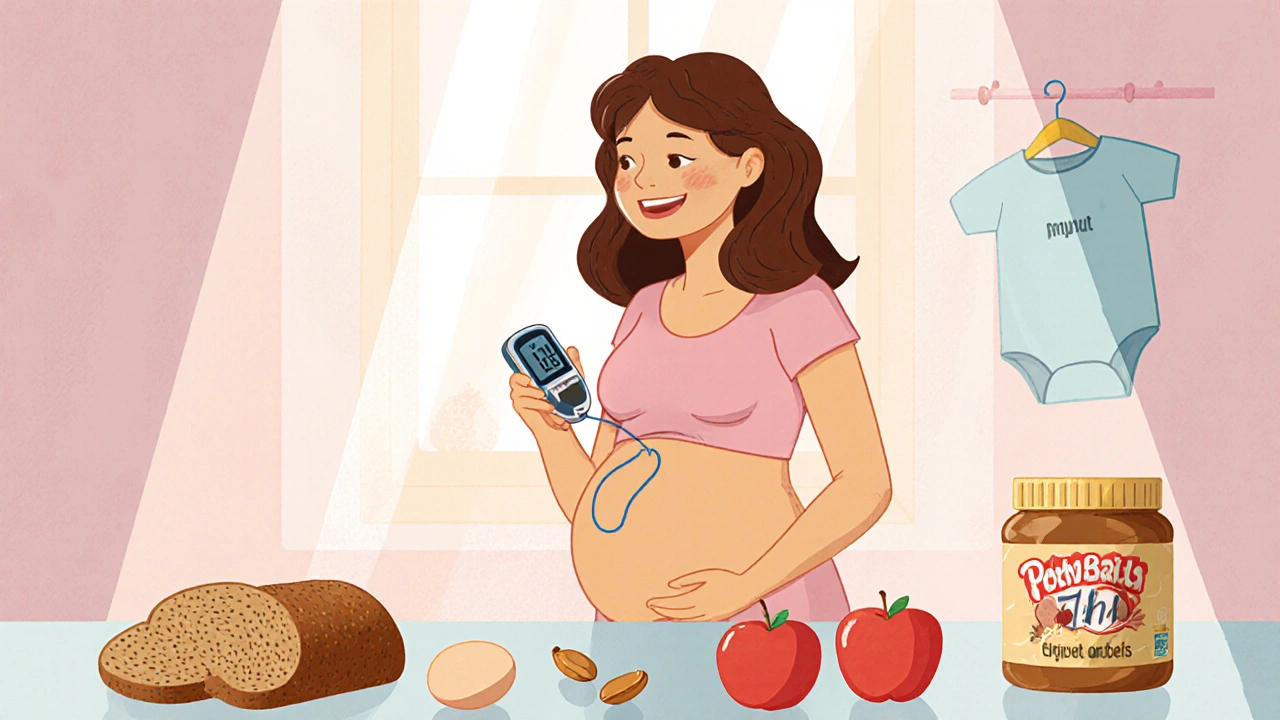
When you’re pregnant, your body changes in ways you never expected. One of the most surprising? Your pancreas suddenly has to work three times harder. That’s because the placenta produces hormones that block insulin - your body’s natural way of keeping blood sugar in check. For about 2 to 10% of pregnant women, this leads to gestational diabetes - high blood sugar that starts during pregnancy and usually goes away after birth. But if it’s not managed, it can lead to big problems: a baby too big to deliver safely, low blood sugar in the newborn, or even preeclampsia for the mom.
The good news? If you catch it early and follow a clear plan, you can have a healthy pregnancy with outcomes nearly identical to women without gestational diabetes. The key is simple: keep your blood sugar steady. Not too high, not too low. And you don’t need to be a nutritionist or a scientist to do it.
What Your Blood Sugar Numbers Should Be
Doctors don’t just say "eat better" - they give you exact targets. These aren’t guesses. They’re based on years of research showing what keeps both you and your baby safe.
- Fasting or before meals: under 95 mg/dL (5.3 mmol/L)
- One hour after eating: under 140 mg/dL (7.8 mmol/L)
- Two hours after eating: under 120 mg/dL (6.7 mmol/L)
If you’re using a glucose meter, these are the numbers you’ll be checking. Most women test four to six times a day - before breakfast, after each meal, and sometimes at bedtime. It sounds like a lot, but once you get into the rhythm, it becomes part of your routine. Skipping checks? That’s one of the biggest reasons babies end up in the NICU. Women who test less than four times a day are more than twice as likely to have complications.
Food Is Your First Tool - Not Your Enemy
You might hear "gestational diabetes" and think you have to give up carbs forever. That’s not true. You just need to be smarter about them.
Carbs make up 35-40% of your daily calories. That’s about 45 grams per meal and 15-30 grams per snack. One slice of bread = 15 grams. One cup of cooked rice = 15 grams. One apple = 15 grams. That’s your "carb choice." You get about 17 to 19 of those per day.
Here’s what works best:
- Choose complex carbs: whole grains, beans, lentils, oats, sweet potatoes - not white bread, sugary cereal, or pastries.
- Pair every carb with protein or fat. An apple alone spikes sugar. An apple with a tablespoon of peanut butter? The spike drops by about 30%.
- Eat protein first. A simple trick: eat your chicken or eggs, then your veggies, then your rice or bread. Women who do this report 25-40 mg/dL lower blood sugar after meals.
- Three meals and two to three snacks daily. Don’t skip breakfast. Fasting sugar often rises if you go too long without eating.
Many women use apps like MyFitnessPal to track their carbs. One Reddit user said, "I didn’t realize how much sugar was in my morning yogurt until I counted it. Now I make my own with plain yogurt and berries. My numbers dropped overnight."
Move Your Body - Even Just a Little
You don’t need to run a marathon. Just move.
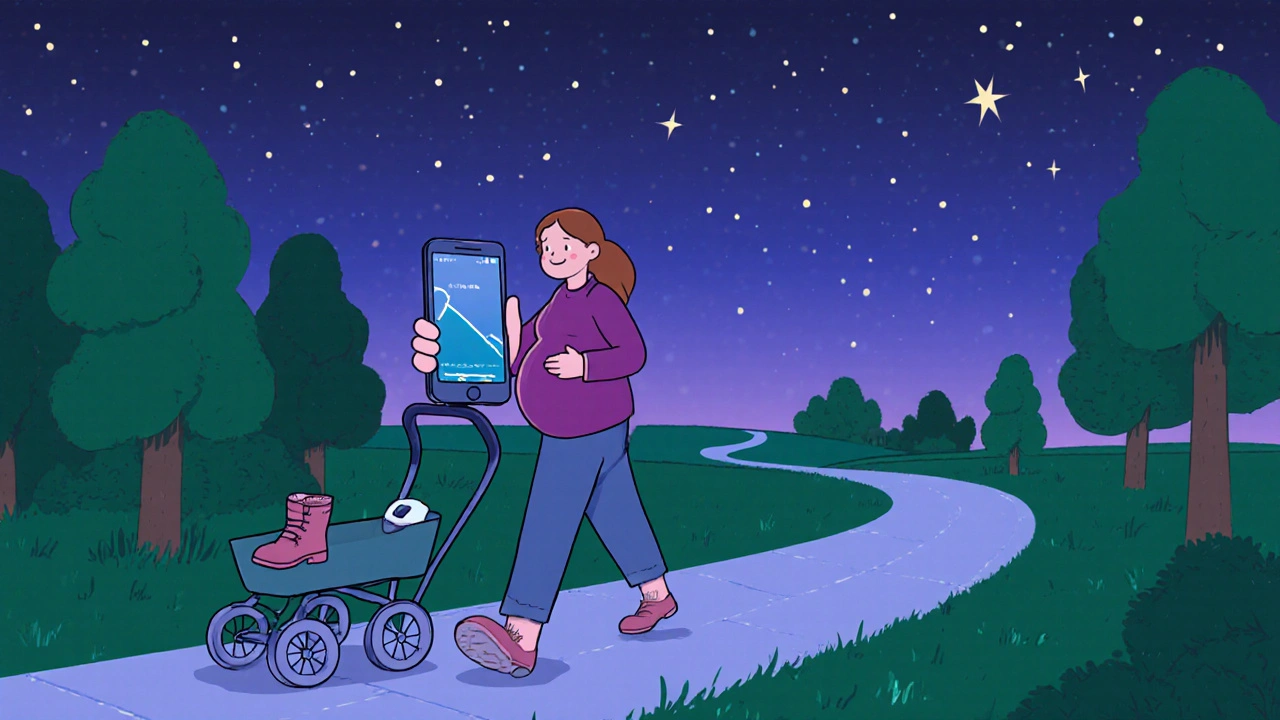
Thirty minutes of brisk walking, swimming, or prenatal yoga five days a week can lower your blood sugar by 20-30 mg/dL after meals. The best time? 15 to 30 minutes after eating. That’s when sugar from your food is rising. A walk then helps your muscles soak up the glucose.
One study found that women who took a 15-minute walk after dinner cut their nighttime blood sugar by an average of 18 mg/dL. Another found morning walks reduced fasting sugar by 15-25 mg/dL. That’s huge.
If you’re tired, start with 10 minutes. Do it after lunch. Do it after dinner. Movement doesn’t have to be perfect - it just has to happen.
When Diet and Exercise Aren’t Enough
Here’s something most women don’t expect: about 15-30% of women with gestational diabetes need insulin. It’s not a failure. It’s just biology.
Your pancreas can’t make enough insulin to overcome the placental hormones. That’s not your fault. It’s not because you ate too much cake. It’s just how your body works right now.
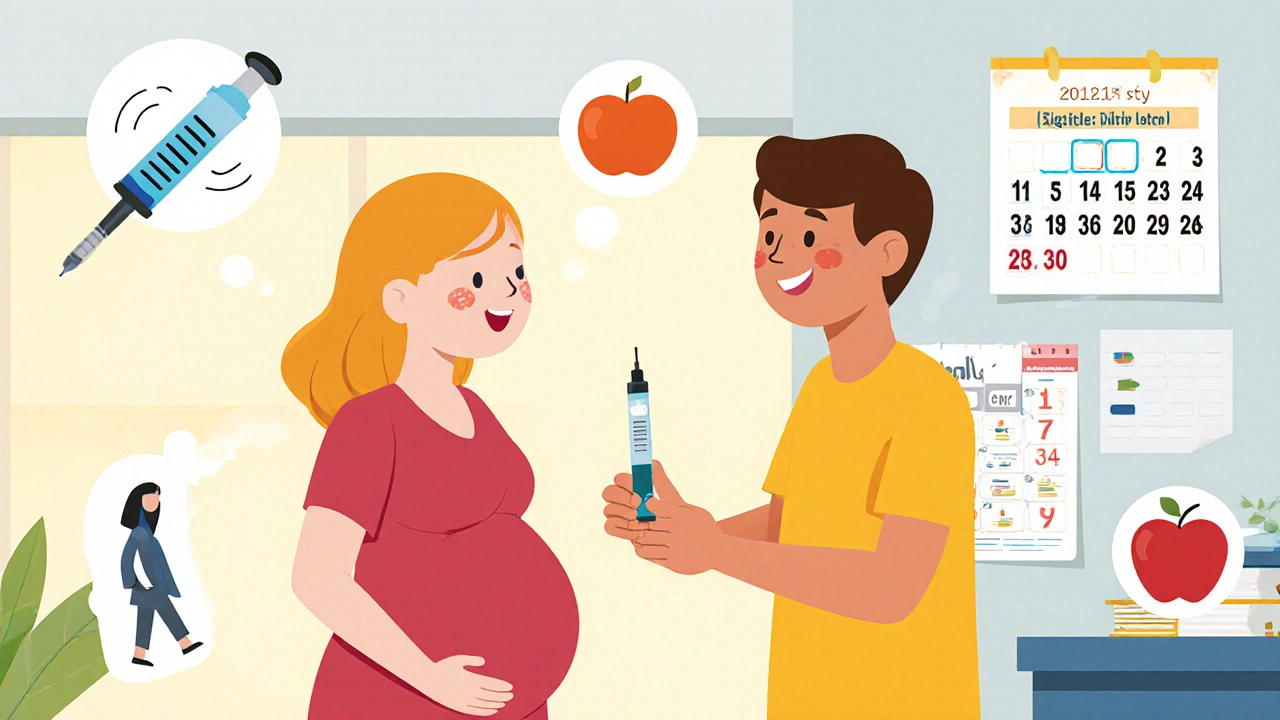
Insulin is safe during pregnancy. It doesn’t cross the placenta. It’s given as a shot - usually in the belly or thigh. Many women are scared of needles, but most say the fear is worse than the shot. And once they start, their numbers improve fast.
Some doctors prescribe metformin, an oral pill. But it’s not the first choice. Studies show about 30% of women on metformin still need insulin later. Insulin is more predictable. And it’s been used safely for decades.
If your doctor suggests insulin, don’t panic. Ask for a diabetes educator. They’ll show you how to give the shot, how to store it, and how to adjust doses. Most women feel confident within a week.
Continuous Glucose Monitors - The Game Changer
Traditional finger pricks give you a snapshot. A continuous glucose monitor (CGM) gives you a movie.
A CGM is a tiny sensor worn on your arm or belly. It checks your sugar every 5 minutes and sends the data to your phone. You see trends - not just numbers. You see how your sugar drops after a walk. You see how it spikes after a snack you thought was "healthy."
Studies show CGMs reduce the risk of having a baby too big by 39% and cut severe newborn low blood sugar by 54%. That’s why more OBs are offering them - especially for women who’ve had trouble hitting targets with finger sticks.
They’re not covered by all insurance yet, but if you’re struggling, ask your doctor. Many clinics have programs to help with cost.
What Happens After the Baby Is Born
Here’s the thing: gestational diabetes usually disappears after delivery. About 70% of women see their blood sugar return to normal.
But here’s the warning: half of those women will develop Type 2 diabetes within 10 years.
That’s why you can’t just forget about it. You need a follow-up test 6 to 12 weeks after birth. It’s a 75-gram oral glucose tolerance test - same as the one you had during pregnancy. If your fasting sugar is over 126 mg/dL or your 2-hour sugar is over 200 mg/dL, you have diabetes. If it’s between those numbers, you have prediabetes.
And here’s the hopeful part: if you lose 5-7% of your body weight after birth and stay active, you cut your risk of Type 2 diabetes by 58% over 15 years. That’s not magic. That’s science.
Make a plan: get your postpartum test. Talk to a dietitian. Walk with your baby in the stroller. Eat whole foods. Sleep when you can. These aren’t "lifestyle changes" - they’re your next steps to staying healthy.
Emotional Support Matters More Than You Think
Getting diagnosed with gestational diabetes can feel isolating. One survey found 68% of women felt anxious or overwhelmed. Many were scared of insulin. Some felt guilty, like they "caused" it.
But gestational diabetes isn’t your fault. It’s caused by hormones your body makes to help your baby grow. You didn’t eat too much sugar. You didn’t fail.
Find support. Join a group like DiabetesSisters or Reddit’s r/GestationalDiabetes. Talk to your diabetes educator. Ask your partner to learn with you. One woman said, "My husband started counting carbs with me. We made a grocery list together. It turned something scary into something we did as a team."
It’s okay to cry. It’s okay to be frustrated. But don’t let shame stop you from checking your sugar or asking for help. Your health - and your baby’s - depends on you staying connected to your care team.
What Not to Do
There are a few common mistakes that make managing gestational diabetes harder:
- Skipping meals to "save carbs" - that makes fasting sugar worse.
- Drinking fruit juice or sweetened tea - even "natural" sugar spikes fast.
- Waiting until 28 weeks to get tested - if you’re high risk (overweight, family history, previous GDM), ask for testing at your first visit.
- Not recording your numbers - without a log, your doctor can’t see patterns or adjust your plan.
- Ignoring fasting highs - if your morning sugar is always over 95, talk to your doctor. A small bedtime snack with protein and a little carb (like cheese and 6 crackers) often helps.
And don’t let conflicting advice confuse you. Some OBs say eat more carbs. Some dietitians say eat fewer. Stick to the plan your care team agrees on. If you’re getting mixed messages, ask for a diabetes educator. They’re trained to cut through the noise.
You’ve Got This
Gestational diabetes is a challenge, but it’s not a life sentence. It’s a signal - your body’s way of saying, "Let’s get this right." And you’re already doing the hard part: paying attention.
With the right food, movement, and support, you can keep your numbers where they need to be. You can have a healthy birth. You can protect your baby’s future. And you can protect your own health for the years ahead.
You’re not alone. Thousands of women have walked this path before you. And they came out stronger on the other side. So will you.
Can I still eat carbs if I have gestational diabetes?
Yes - but you need to choose the right kinds and control the portions. Focus on whole grains, beans, vegetables, and fruit. Avoid sugary foods and drinks. Pair carbs with protein or fat to slow down sugar spikes. Most women get 45 grams of carbs per meal and 15-30 grams per snack, totaling about 17-19 carb choices a day.
Will I need insulin during my pregnancy?
About 15-30% of women with gestational diabetes need insulin. It doesn’t mean you failed. It means your body needs extra help to manage blood sugar. Insulin is safe during pregnancy and doesn’t cross the placenta. Many women start with one shot a day, often at bedtime, and adjust based on their numbers. Your care team will guide you.
Is gestational diabetes my fault?
No. It’s caused by hormones from the placenta that make your body resistant to insulin. It’s not because you ate too much sugar or didn’t exercise enough. Some women are more likely to get it - if you’re overweight, over 25, have a family history, or had GDM before - but even healthy women can develop it. It’s not a punishment. It’s a condition that needs management.
What should I eat for breakfast if I have gestational diabetes?
Avoid sugary cereals, toast with jam, or fruit juice. Instead, try: 2 eggs with spinach and avocado, 1/2 cup oatmeal with 1 tablespoon chia seeds and a few berries, or plain Greek yogurt with nuts and a small apple. Include protein and healthy fat with every meal to prevent morning spikes. Many women find eating protein first - like eggs before toast - helps keep fasting sugar lower.
How often should I check my blood sugar?
Most women check four to six times a day: before breakfast, one hour after each meal, and sometimes at bedtime. This helps spot patterns - like if your sugar spikes after lunch or stays high in the morning. Checking less than four times a day increases the risk of complications. Keep a log of your readings and what you ate - it helps your doctor adjust your plan.
What happens after I give birth?
About 70% of women’s blood sugar returns to normal after delivery. But you still need a follow-up test 6-12 weeks postpartum using a 75-gram glucose tolerance test. If it’s normal, get screened every 1-3 years - because half of women with gestational diabetes develop Type 2 diabetes within 10 years. Losing 5-7% of your body weight and staying active cuts that risk by 58%.
Can I breastfeed if I have gestational diabetes?
Yes - and you should. Breastfeeding helps lower your blood sugar and reduces your risk of developing Type 2 diabetes later. It also helps your baby’s metabolism. You may need a small snack before or during feeding to prevent low blood sugar. Drink water and keep a quick carb source nearby, like a banana or glucose tablet, just in case.
Are continuous glucose monitors (CGMs) worth it for gestational diabetes?
If you’re struggling to hit your targets with finger pricks, yes. CGMs show real-time trends, not just snapshots. Studies show they reduce the risk of having a baby too big by 39% and severe newborn low blood sugar by 54%. They’re especially helpful if you have wide swings or don’t feel symptoms when your sugar is high or low. Insurance coverage varies, but many clinics offer support to help you get one.
Next steps: If you’ve just been diagnosed, schedule an appointment with a certified diabetes educator. Ask for a meal plan, a glucose log, and a walking routine. Bring your partner. Take notes. You’re not just managing a number - you’re building a healthier future for you and your child.




jamie sigler
30 November, 2025 . 23:35 PM
Ugh, another one of those "just walk after meals" articles. Like I have time to stroll after eating when I’m puking and exhausted. My OB just told me to eat less sugar and left it at that. Good luck with your perfect blood sugar numbers when you’re up every two hours feeding a baby that won’t stop screaming.
Matthew Higgins
2 December, 2025 . 07:33 AM
Bro, I just watched my sister go through this and honestly? The CGM was a game-changer. She was crying over her numbers every day until she got one. Suddenly she could see how her 3pm snack of "healthy" granola bar spiked her like a rocket. She started eating cheese and almonds instead. No more panic. No more guilt. Just data. I cried when she told me her baby was born at 7lbs 2oz and her sugar was normal at 6 weeks postpartum. This ain’t about perfection - it’s about awareness.
Scott Collard
2 December, 2025 . 11:43 AM
Carbs at 45g per meal? That’s dangerously high for gestational diabetes. The ADA guidelines are outdated. You should be under 30g per meal, ideally keto-adapted. Insulin is not a last resort - it’s a tool. But you’re clearly not ready for real science if you’re still recommending oatmeal.
Brandy Johnson
3 December, 2025 . 00:35 AM
It is imperative to note that the prevalence of gestational diabetes in the United States has increased by 30% over the past decade, correlating directly with the proliferation of processed food consumption and sedentary lifestyles among pregnant women. This article, while superficially helpful, perpetuates a dangerous narrative of individual responsibility without addressing systemic dietary failures.
Peter Axelberg
3 December, 2025 . 01:25 AM
I had GDM with both my kids and let me tell you - the walking thing works better than people think. I used to think I was too tired, too bloated, too everything. But I started doing 10 minutes after dinner, just pacing around the living room while my husband watched the toddler. Didn’t even need to leave the house. My numbers dropped within a week. And yeah, I still ate carbs - just not the kind that come in a box with a cartoon on it. My second kid was born at 8lbs, no NICU, no insulin. Just consistency. Not perfection. Consistency.
Monica Lindsey
3 December, 2025 . 23:35 PM
Anyone who eats sweet potatoes as a "healthy carb" is kidding themselves. That’s just sugar with a side of fiber. Real women eat eggs, meat, and greens. No grains. No fruit. No excuses. If your sugar’s high, you’re eating wrong. Period.
Bernie Terrien
4 December, 2025 . 08:47 AM
Insulin isn’t scary - it’s just your pancreas throwing a tantrum. And honestly? It’s way less traumatic than a 10-pound baby stuck in the birth canal. I was terrified of needles too. Then I did it. Felt like a tiny pinch. My sugar dropped like a rock. My OB said, "You just gave your baby the gift of not being a human watermelon." Best. Day. Ever.
Jennifer Wang
4 December, 2025 . 14:33 PM
It is clinically recommended that all patients diagnosed with gestational diabetes undergo a 75-gram oral glucose tolerance test between 6 and 12 weeks postpartum. Failure to adhere to this protocol increases the risk of undiagnosed type 2 diabetes by 4.7-fold. Furthermore, postpartum weight loss of 5-7% of pre-pregnancy BMI, combined with 150 minutes of moderate-intensity aerobic activity weekly, has been shown to reduce diabetes incidence by 58% over a 15-year period, per the Diabetes Prevention Program outcomes study.
stephen idiado
4 December, 2025 . 19:40 PM
Western medicine is failing pregnant women. In Nigeria, we manage GDM with bitter leaf tea, moringa, and fasting cycles. No insulin. No CGMs. No panic. Your culture is sick. Your sugar is high because you eat too much processed food. Go back to ancestral eating.