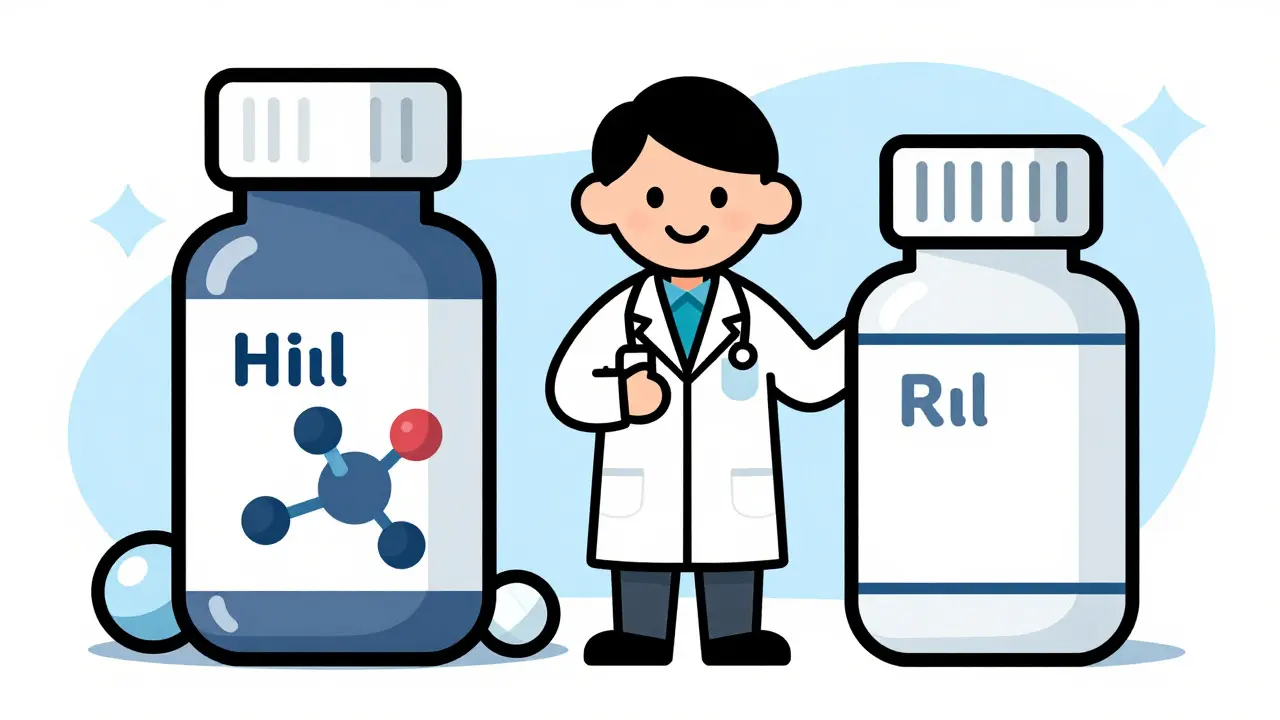
When you pick up a prescription at your local pharmacy, there is a 90% chance that the medication in your hand is not the brand-name drug originally developed by a major pharmaceutical company. It is a generic drug, which is a medication with the same active ingredients and therapeutic effect as a brand-name drug but sold at a significantly lower price. This massive shift toward generics has saved the U.S. healthcare system trillions of dollars, but it raises a critical question: how do we know these cheaper alternatives are safe? The answer lies in the rigorous regulatory authority of the U.S. Food and Drug Administration (FDA) and its specific pathway for approving these medications.
The FDA does not treat generic drugs as second-class citizens in terms of safety or efficacy. Instead, it uses a streamlined but strict legal framework to ensure they perform exactly like their brand-name counterparts. Understanding this process is essential for patients, pharmacists, and industry professionals who rely on the integrity of the American drug supply chain.
The Legal Foundation: Hatch-Waxman and the ANDA Pathway
To understand how generics get approved, you first need to look at the law that created the modern generic market. Before 1984, bringing a new drug to market was incredibly expensive, costing billions of dollars in research and clinical trials. Once a patent expired, other companies could copy the drug, but they had no incentive to do so because they couldn't recoup those initial costs. At the same time, brand-name companies held patents for too long, keeping prices high.
The Hatch-Waxman Act, officially known as the Drug Price Competition and Patent Term Restoration Act of 1984, solved this problem. It created a balanced system where brand-name manufacturers get extended patent protection to offset development time, while generic manufacturers get a shortcut to approval once that patent expires. This shortcut is called the Abbreviated New Drug Application (ANDA), which is the regulatory submission required for generic drug approval under Section 505(j) of the Federal Food, Drug, and Cosmetic Act.
Unlike a New Drug Application (NDA), which requires years of preclinical animal studies and human clinical trials to prove safety and efficacy, an ANDA relies on existing data. The generic manufacturer does not need to repeat costly clinical trials. Instead, they must prove two things: pharmaceutical equivalence and bioequivalence. This approach reduces development costs from approximately $2.6 billion for innovator drugs to just $2.4-$6.3 million for generics, making them affordable for everyone.
What Bioequivalence Actually Means
You might wonder if "identical" means every single ingredient in the pill is the same. Not quite. The FDA requires that the generic drug contain the exact same active ingredient-the part that treats your condition-in the same strength, dosage form (like a tablet or capsule), and route of administration (like oral or injection). However, inactive ingredients, such as fillers, binders, or dyes, can differ. This is why generic pills might look different or have a slightly different taste than the brand-name version.
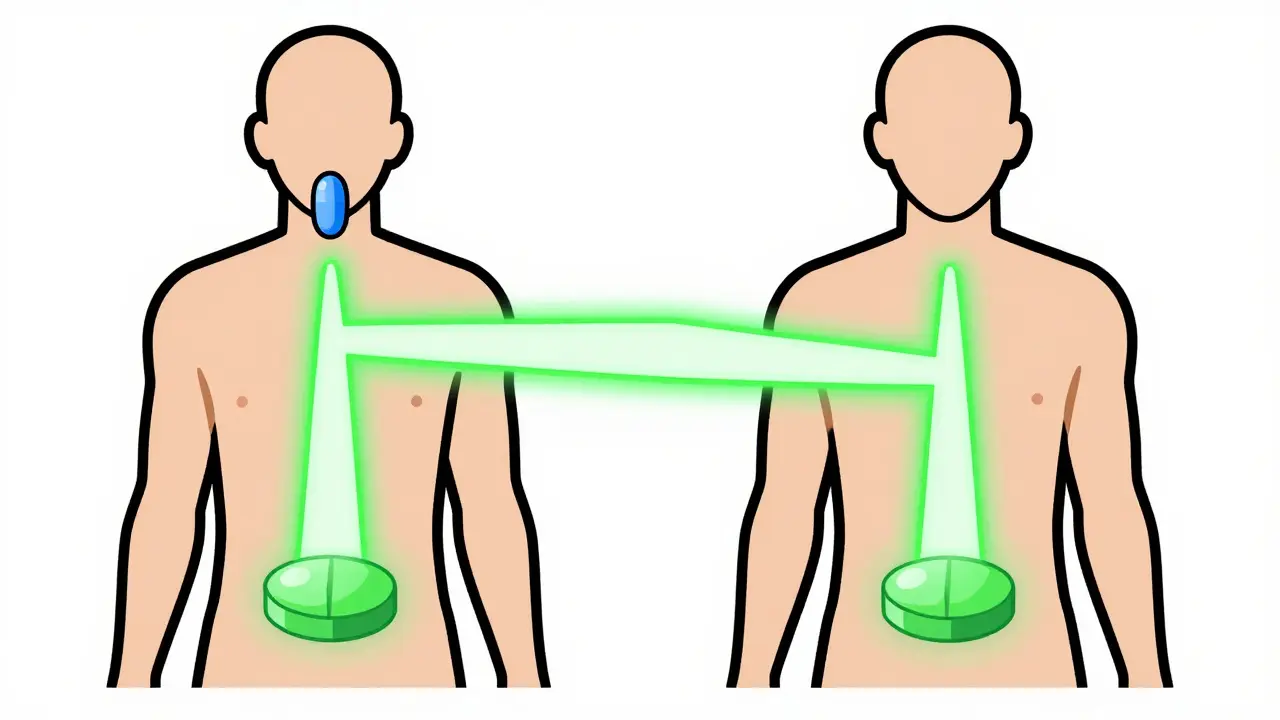
The real test is bioequivalence, which refers to the comparison of the rate and extent to which the active ingredient becomes available at the site of drug action. In simpler terms, does your body absorb the generic drug at the same speed and amount as the brand-name drug? If yes, they are considered therapeutically equivalent.
Most bioequivalence studies involve 24 to 36 healthy volunteers. Researchers measure pharmacokinetic parameters, specifically AUC (Area Under the Curve) and Cmax (maximum concentration). For a generic to be approved, the 90% confidence interval for the ratio of these metrics must fall within 80.00%-125.00%. This statistical range ensures that any difference in absorption is clinically insignificant. You won't feel a difference in how well the drug works because your body processes it identically.
The Review Process: From Submission to Approval
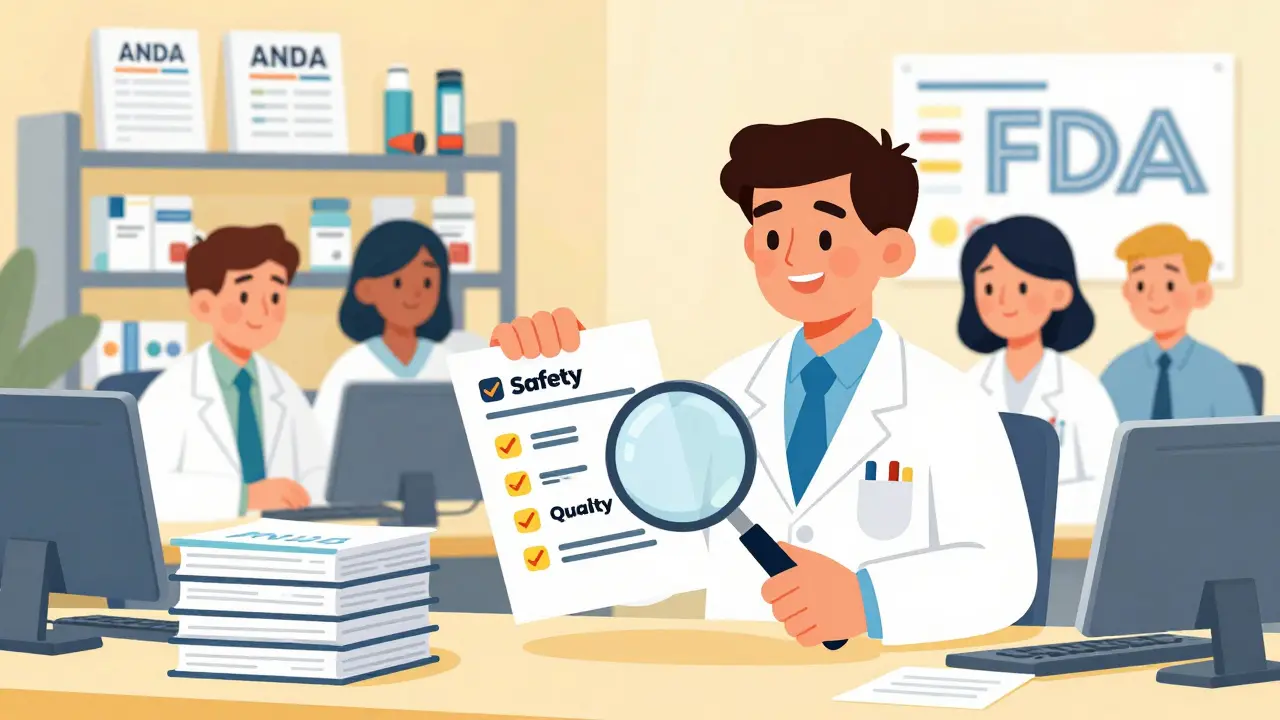
Submitting an ANDA is not a simple paperwork exercise. It is a massive undertaking involving 15,000 to 20,000 pages of documentation. The FDA’s Office of Generic Drugs (OGD), located within the Center for Drug Evaluation and Research (CDER), handles these reviews. The process follows a structured timeline governed by the Generic Drug User Fee Amendments (GDUFA).
- Filing Review: First, the FDA checks if the application is complete. If key sections are missing, they issue a Refuse-to-Receive (RTR) letter. In 2022, about 15.3% of submissions received RTRs, often due to incomplete Chemistry, Manufacturing, and Controls (CMC) data.
- Substantive Review: Once filed, the clock starts ticking. Under GDUFA III, the Target Action Date (TAD) for standard applications is 10 months. Priority reviews, such as for drugs in shortage or first-time generics, have an 8-month TAD.
- Inspection: The FDA inspects the manufacturing facilities to ensure they comply with Current Good Manufacturing Practice (CGMP) regulations. About 82.7% of generic drug facilities were inspected annually in recent reports.
- Approval: If everything checks out, the FDA approves the ANDA, and the drug is listed in the Orange Book, signaling it is ready for the market.
In fiscal year 2023, the FDA approved 1,256 ANDAs, a 12.7% increase from the previous year. This efficiency helps keep the drug supply robust, especially when shortages occur.
Complex Generics: The New Frontier
Not all generics are simple tablets. The market is shifting toward complex generic drugs, such as inhalers, topical creams, extended-release formulations, and transdermal patches. These products require specialized bioequivalence methodologies because proving they work the same way is harder than for a simple pill.
In 2023, 37.5% of FDA approvals involved complex products, up from 22.1% in 2018. Dr. Sally Choe, Deputy Center Director for Pharmaceutical Quality at CDER, notes that the review process has evolved to address this complexity without sacrificing scientific rigor. The FDA has launched initiatives like the Complex Generic Drugs Initiative to refine guidance documents. As a result, the approval rate for first-time generics has risen to 83.6%, compared to 67.2% in 2018.
| Feature | New Drug Application (NDA) | Abbreviated New Drug Application (ANDA) |
|---|---|---|
| Primary Goal | Prove safety and efficacy of a new molecule | Demonstrate bioequivalence to an existing drug |
| Clinical Trials | Required (Phase I, II, III) | Not required (relies on reference drug data) |
| Development Cost | ~$2.6 billion | $2.4 - $6.3 million |
| Time to Market | 10-15 years | 3-4 years |
| Regulatory Authority | FDA CDER (Office of New Drugs) | d>FDA CDER (Office of Generic Drugs)
Quality Control and Safety Oversight
Safety is the cornerstone of the FDA’s role. Even after approval, the agency maintains strict oversight. Manufacturers must adhere to CGMP regulations (21 CFR parts 210 and 211), which cover everything from raw material sourcing to final product testing. The FDA conducts regular inspections and monitors adverse event reports through the FAERS database.
Some patients report perceived differences in effectiveness between generics and brands. However, FDA investigations show that 92.3% of these cases are due to underlying disease progression rather than product issues. Consumer satisfaction remains high, with 78.4% of patients expressing confidence in FDA-approved generics according to a 2023 CVS Health survey.
The cost savings are substantial. Generics account for 90% of prescriptions filled in the U.S. but only 23% of spending, saving consumers $132.6 billion annually. Pharmacists report that generics reduce out-of-pocket costs by 80-85% compared to brand-name equivalents.
Future Trends and Global Context
The landscape of generic drug regulation is evolving. GDUFA IV, negotiated in 2024, commits $2.1 billion through 2027, with $412 million dedicated to complex generics. The FDA is also integrating artificial intelligence into reviews and prioritizing domestic manufacturing. A new pilot program announced in October 2025 offers faster reviews for generics manufactured in the U.S., reducing Target Action Dates by 30%.
Internationally, the U.S. ANDA pathway differs from systems like the European Medicines Agency’s hybrid application or Japan’s mandatory in vivo studies for all products. The U.S. model is widely regarded as efficient, balancing speed with scientific rigor. With 2,147 pending applications for first generics as of early 2024, the FDA aims to maintain its momentum, projecting 1,500-1,700 annual approvals by 2027.
How does the FDA ensure generic drugs are as effective as brand-name drugs?
The FDA requires generic manufacturers to demonstrate bioequivalence through rigorous studies. These studies prove that the generic drug is absorbed into the bloodstream at the same rate and extent as the brand-name drug. The active ingredient, strength, dosage form, and route of administration must be identical. Statistical limits (80-125% confidence interval) ensure any minor differences are clinically insignificant.
Why are generic drugs so much cheaper than brand-name drugs?
Generic drugs are cheaper because manufacturers do not have to repeat the expensive clinical trials and research required for new drugs. They rely on the existing safety and efficacy data of the brand-name drug. Development costs for generics are typically $2.4-$6.3 million, compared to ~$2.6 billion for innovator drugs. This cost savings is passed on to consumers.
What is the Hatch-Waxman Act?
The Hatch-Waxman Act of 1984 is the legislation that established the current generic drug approval system in the U.S. It created the Abbreviated New Drug Application (ANDA) pathway, allowing generics to enter the market quickly after patents expire. It also provided patent term extensions for brand-name drugs to compensate for time lost during FDA review.
Can generic drugs have different inactive ingredients?
Yes, generic drugs can have different inactive ingredients, such as fillers, binders, or colors. However, the active ingredient-the part that treats the condition-must be identical in type and amount. Differences in inactive ingredients may cause variations in appearance or taste but should not affect therapeutic performance unless a patient has a specific allergy.
How long does it take for the FDA to approve a generic drug?
Under GDUFA III, the FDA targets a 10-month review period for standard ANDA applications and 8 months for priority reviews. The total time from development to market is typically 3-4 years, significantly faster than the 10-15 years required for new drugs. Delays can occur if additional information is needed or if manufacturing inspections reveal issues.
What are complex generic drugs?
Complex generic drugs include products like inhalers, topical creams, extended-release formulations, and transdermal patches. They are harder to replicate because proving bioequivalence requires specialized methods beyond standard blood tests. The FDA has increased focus on these products, with over 37% of recent approvals being complex generics.
Is it safe to switch from a brand-name drug to a generic?
Yes, switching to an FDA-approved generic is safe for the vast majority of patients. Studies show that 92.3% of reported efficacy issues are due to disease progression, not the drug itself. Pharmacists and doctors routinely substitute generics for brands to save costs without compromising care. Patients with rare allergies to inactive ingredients should consult their provider.



Diana Wiechecka
17 May, 2026 . 17:09 PM
This is actually really interesting! 🌟 I never knew about the Hatch-Waxman Act before reading this. It makes so much sense why generics are cheaper since they skip the expensive trials. Thanks for sharing this info! 👏
Kathryn Byrd
19 May, 2026 . 09:24 AM
In many European countries, the substitution of brand-name drugs for generics is handled differently, often involving stricter oversight or different reimbursement models. The US approach seems quite unique in its aggressive push for cost reduction through this specific legal framework. It would be fascinating to compare the long-term health outcomes between the US system and those in Germany or France where the regulatory environment differs slightly.
Tanya KLIMCHUK Klimchuk
21 May, 2026 . 05:54 AM
Listen here, you need to understand that the science is solid. Bioequivalence is not a 'joke' as some might claim; it is a rigorous statistical method designed to ensure therapeutic equivalence. If you think otherwise, you are ignoring decades of pharmacokinetic data. The 80-125% range is standard across the industry for good reason. Do your homework before spreading misinformation.
Javier Arauz
23 May, 2026 . 01:50 AM
I don't care about the fancy stats or the international comparisons. What matters is that American companies should be making these drugs right here in the USA. We need domestic manufacturing control. Outsourcing production to foreign facilities creates security risks and quality issues that no amount of paperwork can fix. Keep our medicine supply chain independent and strong.
Kris Wong
24 May, 2026 . 15:35 PM
The whole ANDA process is a sham designed to protect big pharma interests while pretending to help consumers. 😡 They let companies cut corners on inactive ingredients which often contain harmful allergens or toxins that aren't disclosed. The FDA is just a puppet of the industry. Wake up sheeple! The 'savings' are just money funneling back into the corrupt system. 🚩
Christina Moran
24 May, 2026 . 17:48 PM
i mean i get the point but like my pharmacist always says dont worry about it lol. the pills look diffrent sometimes but they work fine for me. also why do they change the colors all the time? its annoying when u cant tell them apart in the bottle. anyway thx for explaining it.
mardy duffy
25 May, 2026 . 12:23 PM
Boring. Just give me the drug and stop lecturing me about patents and bioequivalence. I pay too much for meds already.
Desirea Gaona
25 May, 2026 . 17:04 PM
It is important to recognize that the transition from brand-name to generic medications represents a significant advancement in public health accessibility. The regulatory frameworks established by the Hatch-Waxman Act have successfully balanced intellectual property rights with the public's right to affordable healthcare. While concerns regarding manufacturing quality are valid, the extensive inspection protocols mandated by CGMP regulations provide a robust safeguard against substandard products. Patients should feel confident in the efficacy of FDA-approved generics, as the scientific evidence supporting their therapeutic equivalence is substantial and well-documented.