Patient Benefit-Risk Visualizer
Regulatory labels often use complex statistics. This tool simulates the FDA's new push for visual communication by converting percentages into easy-to-read icon arrays.
Input Clinical Data
Visual Assessment
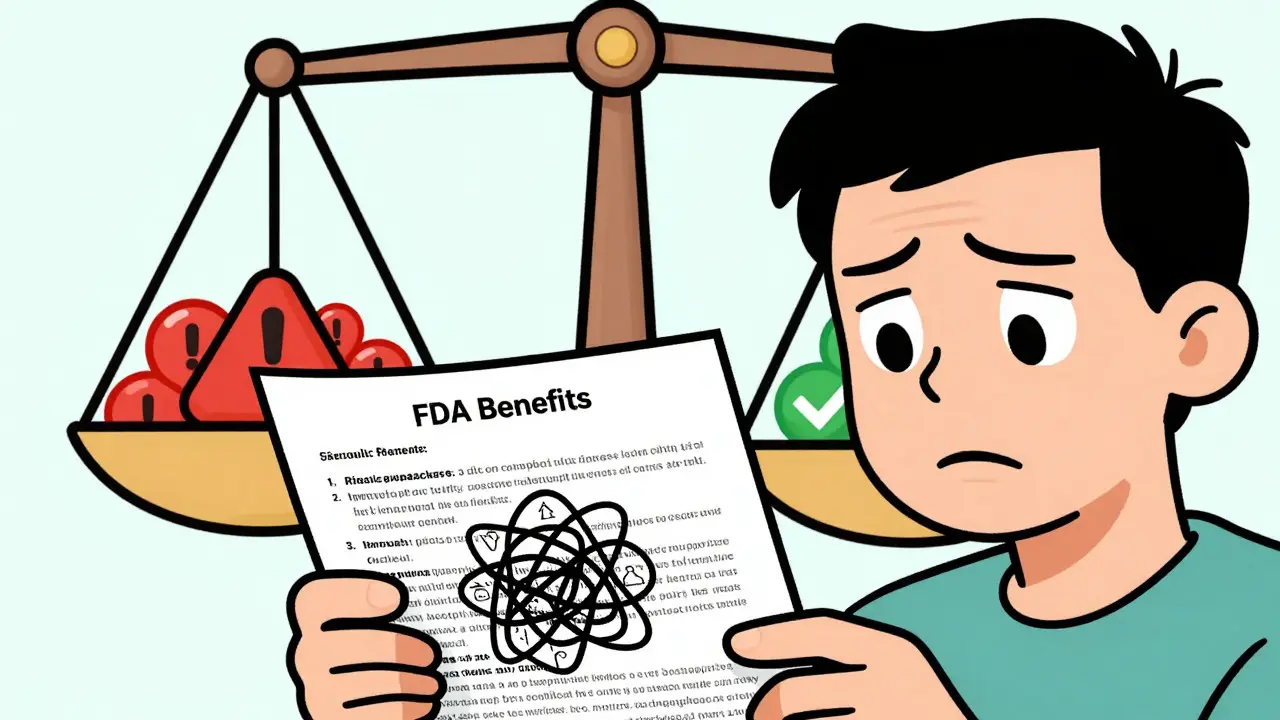
Have you ever stared at a medication guide or an FDA-approved label and felt like you were reading a different language? You aren’t alone. The FDA benefit-risk assessment is the structured regulatory process used by the U.S. Food and Drug Administration to determine if a drug's therapeutic advantages outweigh its potential harms is complex, technical, and often buried in dense legal jargon. For patients, this creates a gap between what regulators know and what patients understand. But understanding these statements isn't just academic-it’s crucial for making informed decisions about your health.
What Is the FDA Benefit-Risk Framework?
The core of every drug approval decision rests on one question: Do the benefits outweigh the risks? This isn't a casual guess; it’s a rigorous evaluation governed by the Benefit-Risk Assessment for New Drug and Biological Products guidance document finalized by the U.S. Food and Drug Administration (FDA) in December 2021. This framework guides reviewers at the Center for Drug Evaluation and Research (CDER) and the Center for Biologics Evaluation and Research (CBER) as they evaluate New Drug Applications (NDAs) and Biologics License Applications (BLAs).
Think of this framework as a balancing scale. On one side, you have the therapeutic context-how serious is the condition? Are there other treatments available? On the other side, you have the specific benefits of the new drug and its associated risks. The FDA doesn't just look at whether a drug works; they look at whether it works *better* or *safer* than existing options, or if it offers a solution where none existed before. For breakthrough therapies targeting life-threatening diseases, the threshold for acceptable risk might be higher because the unmet need is so great. For a mild allergy, the tolerance for severe side effects is virtually zero.
Where to Find Risk-Benefit Info in Drug Labels
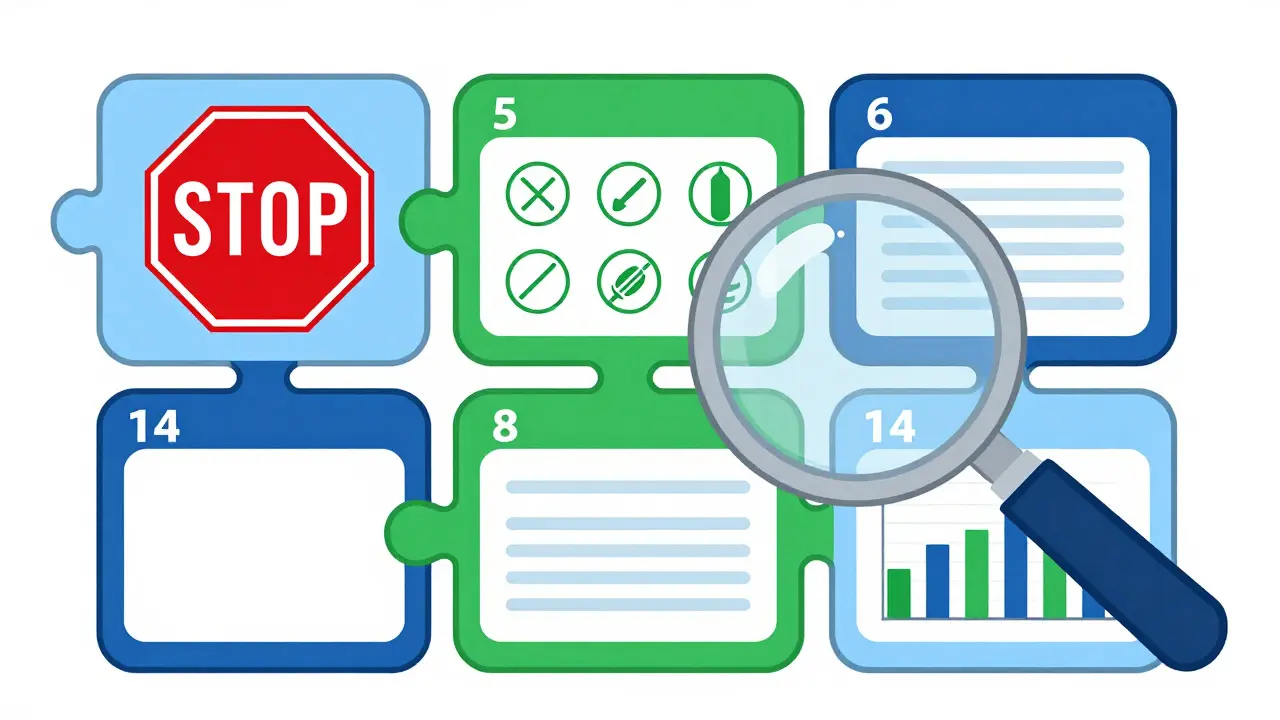
If you want to decode the official stance on a medication, you need to know where to look. The FDA mandates that certain sections of the labeling contain integrated summaries of benefits and risks. These are not random placements; they follow a strict structure defined in regulations like 21 CFR 314.50(c)(5)(viii). Here is where the critical information hides:
- Section 5 (Contraindications): This lists situations where the drug should absolutely not be used because the risks clearly outweigh any possible benefit. If you fall into this category, the drug is unsafe for you.
- Section 6 (Adverse Reactions): This details the side effects observed during clinical trials. Pay attention to the frequency percentages. A side effect occurring in 1% of patients is different from one affecting 50%.
- Section 8 (Use in Specific Populations): Risks can vary dramatically depending on age, pregnancy status, or kidney function. This section breaks down how the risk-benefit profile shifts for subgroups.
- Section 14 (Clinical Studies): This provides the hard data behind the claims. It shows exactly how much better the drug performed compared to a placebo or standard care.
- Highlights Section: This is a condensed overview designed for quick reference, summarizing the most critical dosing, safety, and efficacy points.
The challenge for patients is that these sections are written for healthcare professionals, not laypeople. They use terms like "statistically significant" or "relative risk reduction" without always explaining what those numbers mean for your daily life.
| Regulatory Body | Primary Methodology | Strengths | Weaknesses for Patients |
|---|---|---|---|
| U.S. FDA | Qualitative Framework (BRF) | Flexible across diverse drug types; accounts for therapeutic context | Lacks standardized quantitative metrics; inconsistent presentation |
| European Medicines Agency (EMA) | PrOACT-URL (Quantitative) | Data-driven; effective for vaccines and clear statistical outcomes | Can be overly technical; less focus on individual patient preference |
| UK MHRA | Patient Preference Integration | Explicitly incorporates patient values and preferences | Complex to implement universally; subjective variability |
Why Current Labels Fail Patients
Despite the rigorous science behind approvals, the communication often misses the mark. According to a study by the National Health Council involving 1,842 patients, only 22% reported feeling "very confident" in interpreting risk-benefit information in drug labels. For patients with limited health literacy, that number drops to a staggering 9%. Why is the disconnect so large?
One major issue is the reliance on relative risk rather than absolute risk. A label might state that a drug reduces the risk of a heart attack by 50%. That sounds incredible, right? But if the baseline risk was 2%, a 50% reduction means your risk drops to 1%. The absolute benefit is only 1 percentage point. Without seeing the absolute numbers, patients may overestimate the drug's impact while underestimating the burden of side effects.
Another hurdle is the tension between population-level data and individual circumstances. The FDA’s 2021 guidance acknowledges that their assessment considers the "intended patient population as a whole." However, your doctor and you are making a decision for *you*. A side effect that is unacceptable for the general population might be tolerable for you if the alternative is losing your vision or mobility. Conversely, a rare but severe risk might be a dealbreaker for someone who is otherwise healthy. Current labels rarely help patients navigate this personal calculus.
The Push for Patient-Friendly Communication
Change is slowly coming. Driven by laws like the 21st Century Cures Act (2016) and the FDA Reauthorization Act (2017), there is a mandate to incorporate patient experience into regulatory decisions. The FDA’s Patient-Focused Drug Development initiative has gathered thousands of comments, with 78% of respondents requesting clearer explanations of how benefits compare to alternatives. Many specifically asked for visual aids.
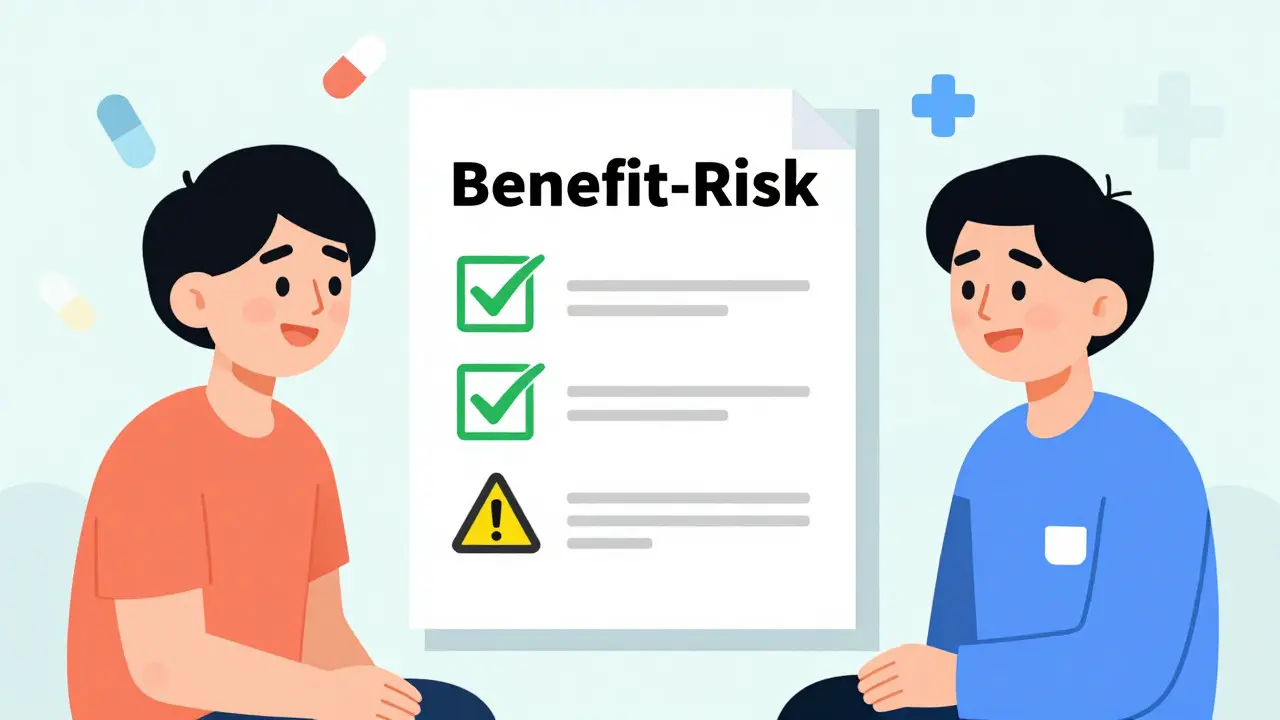
In response, the FDA launched a pilot program in September 2023 requiring six sponsors of new oncology drugs to include "Patient Benefit-Risk Summary" sections. These summaries are written at a 6th-grade reading level and include visual representations of key data. Additionally, the agency partnered with the National Library of Medicine to develop standardized "Benefit-Risk Icons"-simple pictograms that show the magnitude of benefit versus risk. Imagine seeing three green checkmarks for benefit and one red warning sign for risk, rather than parsing pages of text.
While adoption is still low-only 17% of new molecular entities approved in 2022 included visual summaries-the trend is accelerating. Industry analysts predict that by 2026, nearly half of all new drug labels will feature these visual tools. This shift recognizes that transparency isn't just about releasing data; it's about making that data usable.
How to Decode Your Own Medication Label
Until universal visual standards are implemented, you can take steps to interpret the information yourself. Don't rely solely on the marketing materials provided by the pharmaceutical company. Go directly to the source. Use the FDA’s DailyMed website or the drug’s official prescribing information PDF. Look for these specific clues:
- Check the Absolute Numbers: In the Clinical Studies section, look for the actual percentages. Did 10 out of 100 people improve, or 1 out of 100? Context matters.
- Compare to Placebo: Ensure the benefits shown are significantly better than doing nothing or taking a sugar pill. Some drugs show modest improvements that may not justify harsh side effects.
- Read the Boxed Warning: If a drug has a "Black Box Warning," it is the FDA’s strongest safety alert. It indicates a known risk of serious or life-threatening adverse events. Understand what triggers this warning.
- Look for Contraindications: Before starting, verify that your medical history doesn’t place you in a group where the drug is strictly forbidden.
- Ask for Visuals: When discussing treatment with your doctor, ask them to draw out the risk-benefit balance. Say, "Can you show me visually how likely I am to benefit versus how likely I am to suffer a side effect?"
Remember, the FDA’s role is to ensure that, on average, the drug is safe and effective for the approved population. Your role, alongside your healthcare provider, is to decide if that average applies to your unique situation. By learning to read between the lines of the label, you move from being a passive recipient of medicine to an active partner in your care.
What does the FDA mean by "benefits outweigh risks"?
This phrase means that for the intended patient population, the positive therapeutic outcomes (such as reduced mortality, improved quality of life, or disease control) are clinically significant enough to justify the potential negative side effects. It is a comparative judgment made against existing treatment options and the severity of the condition being treated.
Where can I find the full risk-benefit statement for a drug?
The most comprehensive information is found in the "Prescribing Information" or "Full Prescribing Information" (FPI) available on the FDA’s DailyMed website or the manufacturer’s site. Specifically, review Sections 5 (Contraindications), 6 (Adverse Reactions), and 14 (Clinical Studies) for detailed data.
Why do some drug labels seem more confusing than others?
Confusion often arises because labels are legally required to be written for healthcare professionals, using medical terminology. Additionally, drugs for complex conditions like cancer or autoimmune diseases have nuanced risk profiles that are harder to simplify than drugs for common ailments like allergies. The lack of standardized visual aids also contributes to difficulty in comprehension.
What is a Black Box Warning?
A Black Box Warning is the FDA’s most stringent safety alert for prescription drugs. It appears in a black border around the text and indicates that the drug carries a significant risk of serious or life-threatening adverse events. It requires prescribers to carefully weigh these risks against the benefits before prescribing.
Are FDA labels changing to be easier for patients to read?
Yes. The FDA has initiated pilot programs requiring plain-language summaries and visual icons for certain high-risk drugs, such as new oncology treatments. While not yet universal, the trend is moving toward greater transparency and patient-centered communication, driven by recent legislative mandates and patient advocacy.