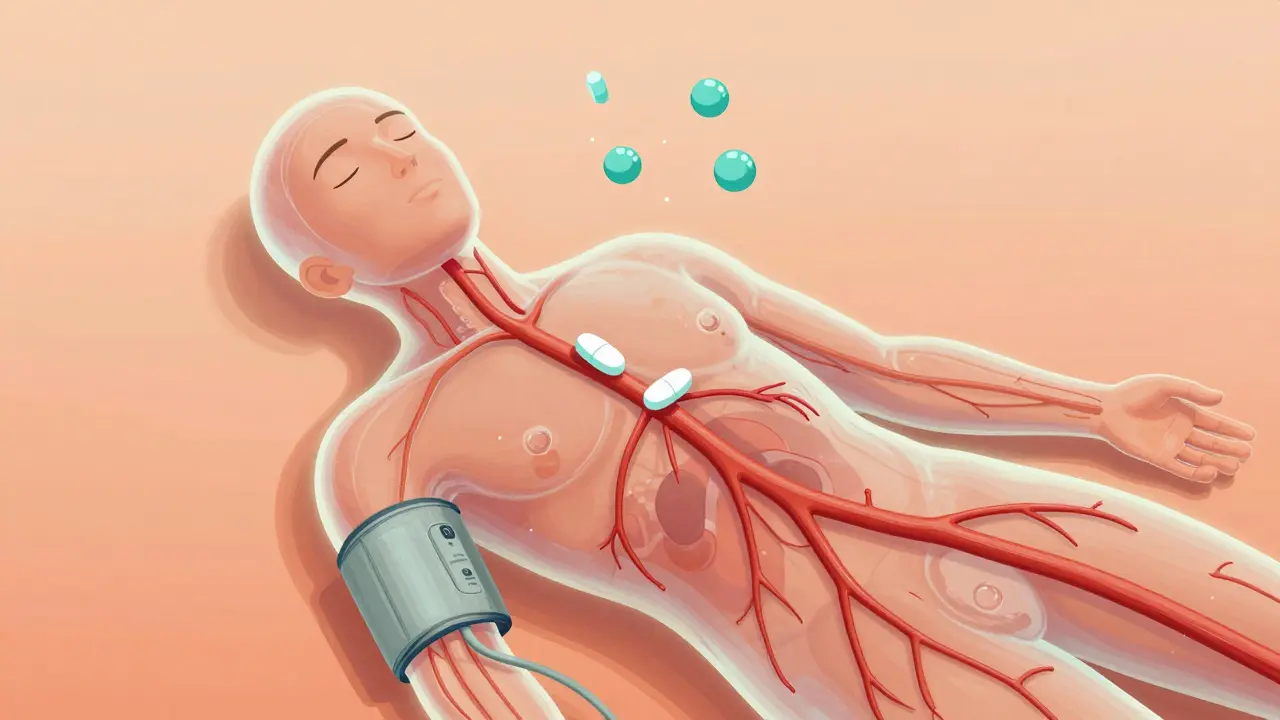
High blood pressure doesn’t always cause symptoms, but it’s quietly increasing your risk of heart attack, stroke, and kidney damage. If your doctor says you need medication, it’s not because you’re weak-it’s because your body needs help keeping pressure under control. With so many options-ACE inhibitors, beta blockers, calcium channel blockers, diuretics-it’s easy to feel overwhelmed. This isn’t about memorizing drug names. It’s about understanding what each one does, how it affects you, and why your doctor might pick one over another.
How Blood Pressure Medications Actually Work
Your blood pressure isn’t just a number on a screen. It’s the force your heart uses to push blood through your arteries. When that force is too high for too long, your arteries stretch, your heart works harder, and your organs pay the price. Medications don’t cure high blood pressure. They help your body manage it better by targeting different parts of the system.
Some drugs tell your blood vessels to relax. Others tell your kidneys to flush out extra salt and water. Some slow down your heart rate. Each class works differently, and that’s why combinations are so common. You might not need just one pill-you might need two or three working together to get your numbers where they need to be.
ACE Inhibitors: The Vasodilators with a Cough Problem
ACE inhibitors-like lisinopril, enalapril, and ramipril-are among the most prescribed blood pressure meds. Their name comes from what they block: angiotensin-converting enzyme. That enzyme normally helps make a hormone called angiotensin II, which tightens blood vessels. By blocking it, these drugs let your vessels relax, lowering pressure.
They’re especially useful if you have diabetes, chronic kidney disease, or heart failure. Studies show they protect the kidneys better than some other classes. But there’s a catch: about 1 in 5 people develop a dry, tickly cough that won’t go away. It’s not dangerous, but it’s annoying enough that many people stop taking them. One Reddit user, u/BloodPressureWarrior, switched from lisinopril to losartan after eight months of sleepless nights from the cough-and their blood pressure stayed stable.
Doctors in the U.S. often recommend ACE inhibitors for Black patients without kidney disease, based on older trial data showing ARBs (their close cousins) may be less effective in this group. But that’s changing. Newer evidence suggests individual response matters more than race alone.
Beta Blockers: Slowing the Heart, Not Always the Best First Choice
Medications like metoprolol, atenolol, and carvedilol reduce your heart rate and the force of each beat. That lowers pressure. They were once first-line for everyone. Now, they’re mostly reserved for specific cases.
They’re still the go-to after a heart attack. They help the heart heal and reduce the chance of another one. They’re also used in heart failure and certain arrhythmias. But for simple high blood pressure? Not always the best pick.
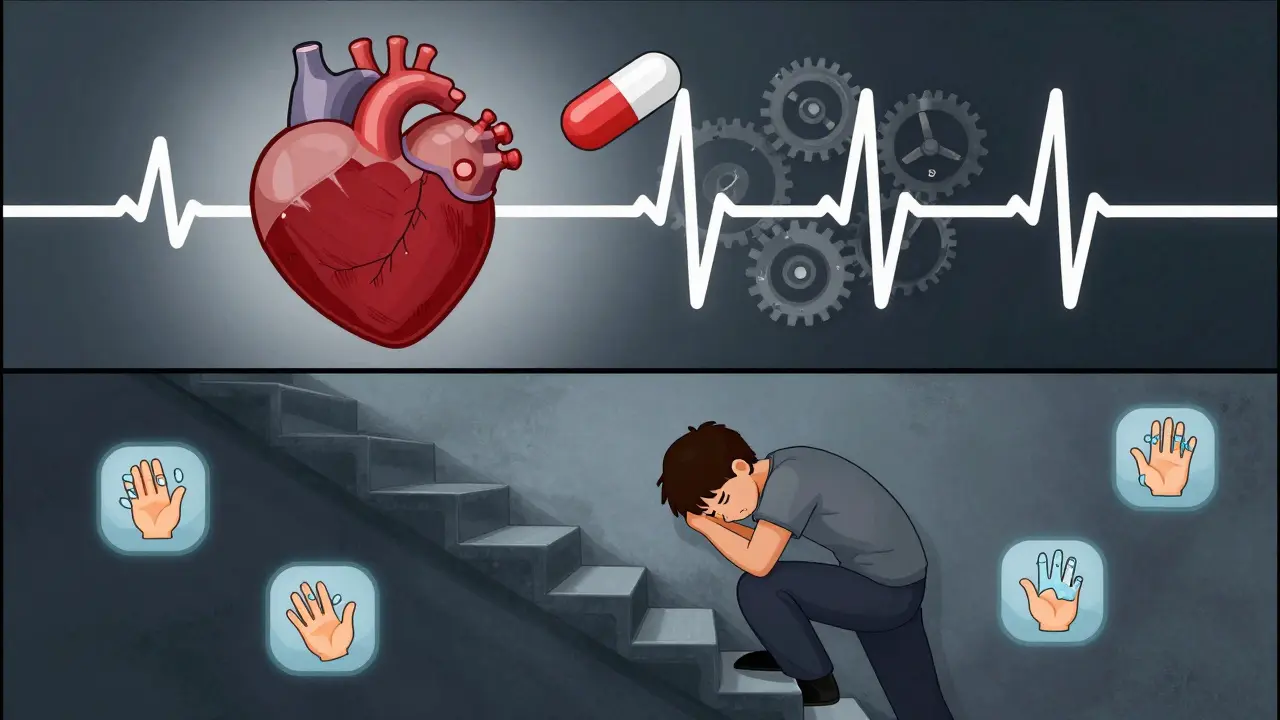
Side effects are common: fatigue, cold hands, dizziness, and sometimes trouble sleeping or sexual dysfunction. A Drugs.com review from June 2023 called metoprolol “the pill that made me feel like a zombie.” That’s not rare. In fact, 10-15% of people stop beta blockers because of how they make them feel.
They’re also risky for people with asthma-they can trigger bronchospasm-and for those with diabetes, since they can hide the warning signs of low blood sugar.
Calcium Channel Blockers: The Reliable Workhorses
Drugs like amlodipine, nifedipine, and diltiazem stop calcium from entering muscle cells in your arteries. That makes the vessels relax and widen. They’re powerful, predictable, and work well regardless of your weight or age.
They’re especially good for older adults with isolated systolic hypertension (high top number, normal bottom number). The ASCOT trial showed amlodipine reduced heart attacks and strokes better than atenolol. And unlike ACE inhibitors, they don’t cause a cough.
The downside? Ankle swelling. About 4 in 10 people on amlodipine notice puffiness in their feet or legs. It’s not dangerous, but it’s uncomfortable. Grapefruit juice can also interfere with some calcium channel blockers, raising drug levels by up to 300%. If you love grapefruit, talk to your pharmacist.
They’re often combined with ACE inhibitors or ARBs in single pills like Exforge or Lotrel. That’s a smart move-better control, fewer pills, higher adherence.
Diuretics: Flush Out the Fluid, Not Just the Salt
Diuretics-often called water pills-help your kidneys get rid of extra sodium and water. Less fluid in your bloodstream means lower pressure. The most common are thiazide-like diuretics: chlorthalidone and indapamide.
Here’s something surprising: chlorthalidone is better than hydrochlorothiazide (HCTZ), even though HCTZ is prescribed more often. A 2020 trial showed chlorthalidone reduced cardiovascular events by 21% more than HCTZ at the same dose. It also lasts longer-24 hours instead of 12. Yet many doctors still default to HCTZ because it’s cheaper and more familiar.
Side effects include frequent urination, dizziness when standing up, and electrolyte imbalances (low potassium, sodium). That’s why blood tests every 3-6 months are important. People with gout should be cautious-diuretics can raise uric acid levels.
Diuretics are often paired with other drugs. Benicar HCT and Diovan HCT combine an ARB with HCTZ. These combo pills are easier to manage and improve adherence by 26%, according to the NEJM.
ARBs: The ACE Inhibitor Alternative Without the Cough
ARBs-like losartan, valsartan, and olmesartan-do something very similar to ACE inhibitors: they block angiotensin II from tightening blood vessels. But they do it at the receptor level, not by stopping its production.
That small difference means no dry cough. If you couldn’t tolerate lisinopril, losartan is often the next step. The LIFE study showed losartan reduced heart attacks and strokes better than atenolol in patients with enlarged hearts.
They’re equally effective for kidney protection in diabetics. Some studies suggest they might be slightly less effective than ACE inhibitors in Black patients, but newer data is challenging that idea. For most people, ARBs are a safe, well-tolerated alternative.
Why Combination Pills Are Becoming the Norm
Most people with high blood pressure need more than one drug. The American Heart Association says that 47% of U.S. patients are on two or more medications. Taking separate pills every day is hard. Forgetting one can spike your pressure.
Fixed-dose combinations-like Exforge (amlodipine + valsartan), Lotrel (amlodipine + benazepril), or Diovan HCT (valsartan + HCTZ)-solve that. You take one pill instead of two or three. Adherence jumps. Blood pressure control improves.
And the cost? Generic combos can be as low as $10-$15 a month with discount programs. Brand names like Exforge cost $350 without insurance. Always ask for the generic.
What Your Doctor Isn’t Telling You (But Should)
There’s no universal best drug. What works for your neighbor might not work for you. Your age, weight, race, kidney function, and other conditions matter more than the drug name.
Here’s what doctors should consider:
- If you’re over 60 and have high systolic pressure? Start with a calcium channel blocker.
- If you have diabetes or kidney disease? ACE inhibitor or ARB.
- If you’ve had a heart attack? Beta blocker.
- If you’re Black and don’t have kidney disease? ACE inhibitor may still be preferred, but ARBs are fine too.
- If you’re overweight? Diuretics work better than in lean people-but chlorthalidone works best.
And here’s the big one: your goal isn’t just to get your number down. It’s to get it to 120-130 mmHg systolic if you’re high-risk. The SPRINT trial proved that lowering it to 120 instead of 140 cut heart attacks and deaths by nearly a third.
Real-Life Choices: What People Actually Do
People switch meds all the time-not because they’re noncompliant, but because they’re trying to feel better.
One man in Perth switched from lisinopril to losartan after his cough kept him awake for weeks. Another stopped metoprolol because he couldn’t climb stairs without stopping to catch his breath. A woman with gout switched from HCTZ to amlodipine after her uric acid spiked.
Side effects aren’t just inconvenient-they’re reasons people quit. That’s why your doctor should ask: “How are you feeling?” not just “What’s your BP today?”
What to Watch For and When to Call Your Doctor
Some side effects are normal. Swelling, frequent urination, dizziness-these happen often and usually settle in a few weeks.
But call your doctor right away if you experience:
- Sudden swelling of the face, lips, or tongue (sign of angioedema-rare but dangerous with ACE inhibitors)
- Severe dizziness or fainting
- Chest pain or irregular heartbeat
- Signs of low potassium: muscle cramps, weakness, heart palpitations
- Dark urine, yellow skin, or extreme fatigue (possible liver or kidney issue)
Don’t stop your meds on your own. Stopping suddenly can cause rebound high blood pressure-which is dangerous.
The Future: Personalized Medicine and New Tools
Research is moving fast. In 2023, scientists identified genetic markers that predict who responds best to which drug. That could mean blood tests telling your doctor, “You’ll do better on amlodipine than lisinopril.”
There’s also a new implantable device called renal denervation. It zaps nerves around the kidneys to lower blood pressure. The FDA approved it in late 2023 for people whose blood pressure won’t budge with meds.
And new dual-action drugs like sacubitril/valsartan (Entresto) are being tested for hypertension-not just heart failure. Early results are promising.
But none of this replaces the basics: taking your pills, eating less salt, moving daily, and checking your pressure regularly. Medications help. But they’re not magic.
What You Can Do Today
Start with these three steps:
- Ask your doctor: “Which class of drug are you prescribing, and why?”
- Check your pill bottle: Is it generic? Can you get it cheaper with a GoodRx coupon?
- Track your symptoms: Write down dizziness, cough, swelling, fatigue. Bring it to your next appointment.
High blood pressure isn’t a failure. It’s a condition-and it’s manageable. The right medication, at the right dose, with the right support, can give you years of better health. You don’t have to guess. You just have to ask the right questions.



kenneth pillet
19 January, 2026 . 06:23 AM
I was on lisinopril for a year. Cough was brutal. Like, 3am coughing fits where i thought i was dying. Switched to losartan and boom. No cough, same bp. Docs need to ask how you feel, not just check the number.
Jodi Harding
20 January, 2026 . 19:53 PM
Beta blockers turned me into a zombie. Couldn't walk up stairs without stopping. Why are they still prescribed like they're magic? They're not. They're a last resort.
Danny Gray
22 January, 2026 . 17:17 PM
You know what's really scary? That this whole system is designed to keep you dependent on pills. The pharmaceutical industry doesn't want you to heal. They want you to buy. ACE inhibitors? They're just a gateway drug to lifelong dependency.
Zoe Brooks
23 January, 2026 . 03:23 AM
I switched from HCTZ to chlorthalidone after reading this. My bp dropped 10 points and i didn't even notice the difference until my next checkup. So simple. Why don't more people know this? 😊
Wendy Claughton
24 January, 2026 . 12:04 PM
I love how you mentioned combo pills... I take Lotrel, and honestly? It changed my life. One pill. No more forgetting. No more pill organizer chaos. And the cost? $12/month with GoodRx. I feel so much more in control. 🙌
Stacey Marsengill
25 January, 2026 . 00:36 AM
People don't realize how many of these drugs are just glorified placebos wrapped in corporate marketing. That 'SPRINT trial'? Paid for by Big Pharma. They want you scared of 140. They want you on three pills. Wake up.
Aysha Siera
25 January, 2026 . 04:31 AM
They're hiding the truth. Blood pressure meds are part of the New World Order. The salt, the pills, the 'checkups'-it's all to track you. I stopped all meds. Now I drink lemon water and breathe deep. My bp is lower than ever.
Selina Warren
25 January, 2026 . 06:34 AM
If you're over 60 and have high systolic? Calcium channel blocker. End of story. Why do doctors still push beta blockers on elderly people? It's like they're trying to kill them slowly.
Emma #########
25 January, 2026 . 11:17 AM
I had ankle swelling on amlodipine. So annoying. My pharmacist suggested cutting grapefruit out and it helped a lot. Just a little change. Small wins matter.
Andrew McLarren
26 January, 2026 . 14:25 PM
It is imperative to underscore the clinical significance of adherence to pharmacological regimens. Noncompliance, whether intentional or inadvertent, precipitates deleterious cardiovascular outcomes. One must exercise diligence in pill-taking.
Andrew Short
28 January, 2026 . 01:45 AM
You people are pathetic. You take pills like they're candy and then complain about side effects. If you just ate less salt and exercised, you wouldn't need any of this. But no, you'd rather be a victim.
christian Espinola
29 January, 2026 . 20:03 PM
You mention 'the LIFE study' and 'SPRINT trial' as gospel, but neither were double-blind placebo-controlled for the full duration. And you ignore that ARBs show no mortality benefit over ACE inhibitors in meta-analyses. Your article is misleading.
Chuck Dickson
31 January, 2026 . 07:36 AM
This is exactly the kind of info I wish I had 5 years ago. I was on metoprolol and felt like a ghost. Switched to amlodipine and now I hike every weekend. You're not broken-you just haven't found your right pill yet. Keep asking questions. You got this.
Naomi Keyes
1 February, 2026 . 11:06 AM
I must point out that your reference to 'GoodRx coupons' is financially irresponsible. These are not substitutes for insurance, and encouraging their use may lead to underinsurance and long-term liability. Furthermore, the term 'zombie' is unprofessional and emotionally charged.