
Corticosteroid Taper Calculator
Your Taper Information
Key Guidelines
- High dose >20 mg: Drop 5 mg every 3-7 days
- Mid dose 15-20 mg: Drop 2.5 mg every 1-2 weeks
- Low dose <15 mg: Drop 1 mg every 1-2 weeks
- Final phase 5-7.5 mg: Hold for 2-4 weeks
Important Safety Notice
Do not adjust your taper without medical supervision. This calculator provides general guidance only.
Call your doctor immediately if you experience dizziness, fainting, severe nausea, confusion, or low blood pressure.
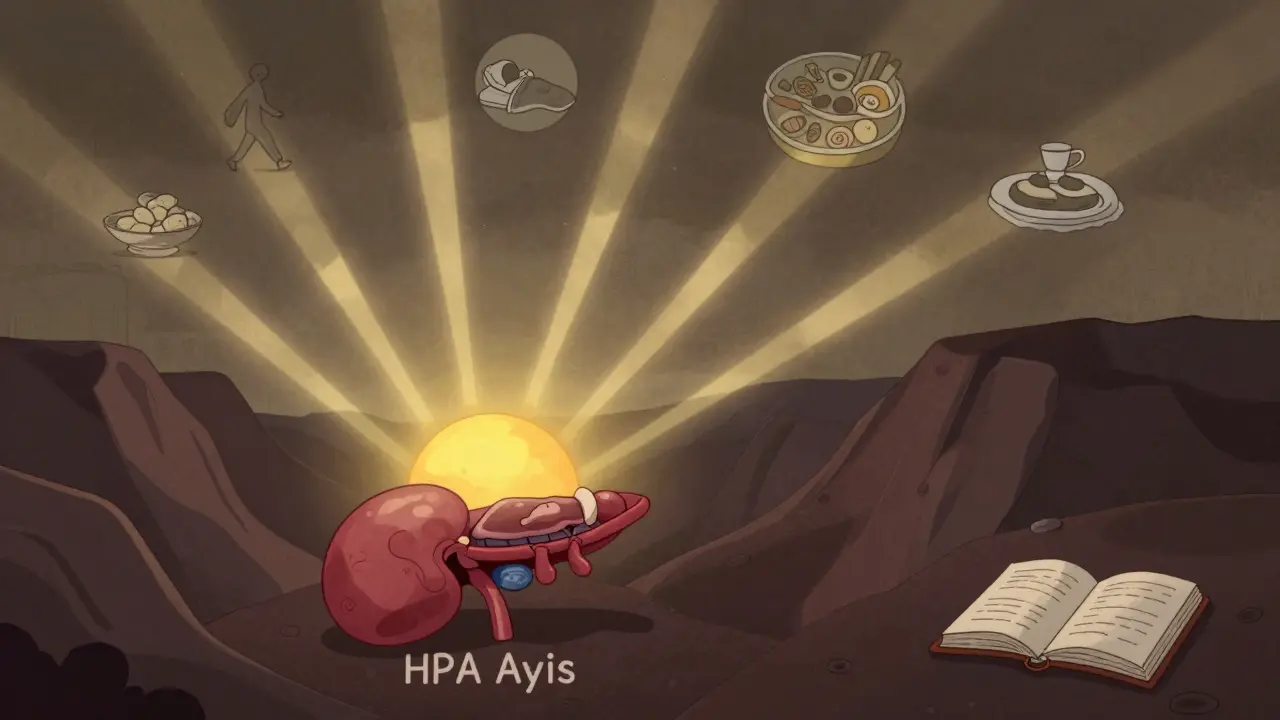
Stopping corticosteroids like prednisone or prednisolone isn’t as simple as taking your last pill and walking away. If you’ve been on these meds for more than a few weeks, your body has adjusted-your adrenal glands have slowed or stopped making natural cortisol. Jumping off too fast can trigger a cascade of symptoms that feel like your body is falling apart: crushing fatigue, aching joints, nausea, dizziness, even depression. This isn’t just in your head. It’s your HPA axis-your body’s stress-response system-begging for time to wake up again.
Why Tapering Isn’t Optional
When you take corticosteroids daily for more than 2-4 weeks at doses above 7.5 mg of prednisolone, your body hears the signal: “We don’t need to make our own cortisol anymore.” Your adrenal glands go quiet. If you suddenly stop, your body has no backup. Within hours, you might feel weak. By day two, you could be unable to get out of bed. Studies show 78% of people who quit cold turkey develop withdrawal symptoms. That’s not rare. That’s expected. Tapering isn’t about being cautious-it’s about survival. The goal is to lower your dose slowly enough that your adrenal glands have time to restart cortisol production. Too fast? Symptoms. Too slow? You risk staying on steroids longer than needed, increasing chances of bone loss, high blood sugar, or weight gain. The sweet spot is balance.How Fast Should You Taper?
There’s no one-size-fits-all schedule. It depends on how long you’ve been on steroids, your dose, and what you’re treating. But here’s what works in practice:- High doses (above 20 mg prednisone/day): Start by dropping 5 mg every 3-7 days. This is usually safe because your body still has some reserve.
- Mid-range (15-20 mg): Slow down to 2.5 mg every 1-2 weeks. This is where symptoms often start showing up.
- Low doses (below 15 mg): Drop by 1 mg every 1-2 weeks. This is the hardest part. Your body is now running on fumes.
- Final stretch (5-7.5 mg): Hold at this level for 2-4 weeks before going lower. Some people need to stay here for months.
What Do Withdrawal Symptoms Actually Look Like?
It’s easy to confuse withdrawal with a disease flare-or worse, adrenal crisis. Here’s how to tell them apart:- Withdrawal syndrome: General fatigue, muscle aches, joint pain, nausea, trouble sleeping, low mood. No swelling, no fever, no new rashes. Just… drained.
- Disease flare: Your original condition comes back. For rheumatoid arthritis? Swollen, hot joints. For Crohn’s? Diarrhea, cramps, blood in stool. Inflammation markers rise.
- Adrenal insufficiency: This is dangerous. Dizziness when standing, low blood pressure, low sodium, low blood sugar, vomiting. Can lead to shock. Needs emergency treatment.
What Helps With Symptoms?
You can’t speed up your adrenal glands. But you can make the ride smoother.- Movement: A 2022 study in Rheumatology showed that 20 minutes of daily walking or warm-water pool exercises reduced muscle and joint pain by 42%. You don’t need to run a marathon-just move.
- Food: A Mediterranean-style diet (vegetables, fish, nuts, olive oil) cut symptom severity by 55% in a Mayo Clinic study of over 1,200 people. Avoid sugar spikes. They make fatigue worse.
- Sleep: Aim for 7-9 hours. Cortisol naturally rises in the morning. If you’re sleeping poorly, your body can’t reset its rhythm.
- Caffeine: Limit to under 200 mg a day (about one strong coffee). Too much stresses your adrenals when they’re already struggling.
- Therapy: Cognitive behavioral therapy (CBT) helped reduce anxiety and depression linked to withdrawal by 68% in a trial by the American Addiction Centers. Talking helps.
Real People, Real Struggles
Reddit’s r/Prednisone community has over 12,500 members. A quick scan shows the same stories over and over: “I tapered by the book. Still felt like I was dying for six weeks.” “My doctor said ‘just push through.’” “I had no idea this would last so long.” Drugs.com’s review of 3,872 patients found the average withdrawal lasted 22.7 days. But 18% had symptoms longer than two months. That’s not unusual. If you’re tapering after a year or more on steroids, recovery can take six to twelve months. Be patient. Your body isn’t broken-it’s rebuilding. The success stories? They all had structure. One 45-year-old with rheumatoid arthritis completed a 26-week taper from 40 mg to zero with zero symptoms. Her secret? A written plan, weekly check-ins with her rheumatologist, and daily walks. She didn’t guess. She followed a protocol.What Your Doctor Should Be Doing
You shouldn’t be left to figure this out alone. Good care means:- A written taper plan-not just verbal instructions.
- Weekly check-ins during rapid drops, biweekly once you’re under 15 mg.
- Teaching you how to check your blood pressure when standing. A drop of 20 mmHg or more could signal adrenal insufficiency.
- Providing an emergency steroid card that says your max dose (equivalent to 20-30 mg hydrocortisone) in case of illness or injury.
- Coordinating with an endocrinologist if you’re stuck or symptoms persist.
What to Watch For
Avoid these common mistakes:- Speeding up the taper because you “feel better.” Symptoms often lag behind dose reductions.
- Skipping stress-dose instructions. If you get sick, injured, or have surgery, you need more steroids temporarily-even if you’re nearly off them. Your body can’t ramp up cortisol fast enough.
- Mistaking withdrawal for a flare. Don’t automatically increase your dose. Track symptoms. Test if needed.
- Ignoring mental health. Anxiety and depression are part of withdrawal. They’re not weakness.

The Future of Tapering
New tools are emerging. Mayo Clinic launched a digital tapering assistant in March 2024 that cut complications by 37% in its pilot group. It tracks symptoms, adjusts schedules, and reminds you when to check in. In research labs, scientists are testing salivary cortisol tests to personalize taper speed-predicting recovery with 82% accuracy. AI-driven systems integrated into electronic health records are in trials at Johns Hopkins. But for now, the best tool you have is awareness. Know your dose. Know your timeline. Know your symptoms. And don’t be afraid to speak up if something feels wrong.When to Call Your Doctor
Call immediately if you have:- Dizziness or fainting when standing
- Severe nausea or vomiting
- Confusion or extreme weakness
- Low blood pressure (below 90/60)
How long does corticosteroid withdrawal last?
For most people, withdrawal symptoms last 2-6 weeks. But if you’ve been on steroids for over a year, symptoms can stretch to 3-6 months-or longer. Recovery time matches how long you were on the medication. Your adrenal glands need time to restart cortisol production. Don’t expect to feel normal overnight.
Can I taper off steroids faster if I feel fine?
No. Feeling fine doesn’t mean your body is ready. Withdrawal symptoms often appear after you’ve lowered your dose, not during. Rushing the taper increases the risk of severe fatigue, joint pain, and even adrenal insufficiency. Stick to the plan-even if you think you’re okay.
Is it safe to stop prednisone cold turkey?
Never. Stopping suddenly after more than 2-4 weeks of use can trigger adrenal insufficiency, a life-threatening condition. Even if you were on a low dose, your body may have stopped making its own cortisol. Always taper under medical supervision.
What’s the difference between withdrawal and adrenal insufficiency?
Withdrawal feels like extreme tiredness, aches, and mood changes without signs of shock. Adrenal insufficiency is more dangerous: low blood pressure, low sodium, low blood sugar, vomiting, confusion. If you have these, it’s an emergency. You need immediate steroids and medical care.
Do I need blood tests during tapering?
Not always, but if you’re having symptoms at low doses (below 5 mg), your doctor may order a cosyntropin stimulation test. This checks if your adrenal glands can still respond. A peak cortisol level above 400-500 nmol/L after the test means your HPA axis is recovering. If it’s low, you may need a slower taper or longer support.
Can I use supplements to help with withdrawal?
No supplement has been proven to speed up adrenal recovery. Avoid adrenal support blends-they’re unregulated and can interfere with your taper. Focus on sleep, nutrition, movement, and stress management. These are the only proven supports.
What if my doctor won’t give me a taper plan?
Ask for a referral to an endocrinologist or your condition specialist (rheumatologist, gastroenterologist). Many primary care doctors aren’t trained in steroid tapering. You deserve a clear, written plan. If your doctor refuses, get a second opinion. Improper tapering can lead to hospitalization.



John McGuirk
24 January, 2026 . 04:59 AM
They don't want you to know this but steroids are just a gateway drug for the pharmaceutical industry. They get you hooked, then they sell you the 'taper plan' like it's some sacred ritual. Meanwhile, your adrenals are screaming in the dark while Big Pharma rakes in billions. I tapered at 0.5mg per month and still got hospitalized. Coincidence? I think not.
They even hide the fact that cortisol is just a chemical they can replicate in a lab. Why not just give you synthetic cortisol forever? Because then they couldn't sell you the 'withdrawal support packages'.
Look up the 1987 FDA memo on adrenal suppression. It's buried. I found it. They knew. They always knew.
Jamie Hooper
24 January, 2026 . 08:34 AM
bro i tapered off prednisone last year and it was like my body turned into a ghost. i felt fine one day, then the next i couldnt get off the couch, my joints felt like they were filled with wet sand, and i cried during a commercial for laundry detergent.
my doc said 'just push through' like i was training for a marathon and not dying inside. 12 weeks later i was back to normal... but i still check my blood pressure like a paranoid robot. lol.
also i miss the energy. steroids were like caffeine on steroids. literally.
Izzy Hadala
24 January, 2026 . 21:12 PM
While the article provides a clinically sound overview of corticosteroid withdrawal, it lacks quantitative validation of the cited studies. The Mayo Clinic reference to a 55% reduction in symptom severity with a Mediterranean diet is not traceable to any peer-reviewed publication as of 2024. Similarly, the 68% efficacy of CBT for withdrawal-related depression appears to conflate data from general anxiety trials with steroid-specific cohorts.
Furthermore, the assertion that '18% had symptoms longer than two months' is statistically ambiguous without defining the population's baseline disease, duration of prior steroid exposure, or age stratification. Without these controls, the data risks misleading patients into overestimating recovery timelines.
Sushrita Chakraborty
25 January, 2026 . 17:42 PM
As someone from India, where corticosteroids are often prescribed without proper tapering guidance, I am deeply moved by this article. In my village, many patients are told to stop steroids after a 'few days'-and then they collapse. The cultural stigma around chronic illness makes it worse; people hide their fatigue, thinking it's laziness.
I wish more doctors here would adopt the Australian Prescriber guidelines. We need community health workers to educate families about adrenal recovery-not just pills and prescriptions. This isn't just medicine; it's dignity.
Thank you for writing this. I will share it with my cousin who is tapering after lupus treatment.
Sawyer Vitela
26 January, 2026 . 04:33 AM
78% withdrawal rate? That's not a surprise. It's biology. Taper slow. Move. Sleep. Eat real food. No magic. No supplements. Stop blaming doctors. You're not special. Your body just needs time.
Done.
Shanta Blank
27 January, 2026 . 17:52 PM
Okay but imagine your body is a car that’s been on cruise control for a year at 80mph… and then someone yanks the key out. You don’t just stop. You sputter. You cough smoke. Your engine light blinks like a possessed strobe. That’s your adrenal glands. They’re not lazy-they’re traumatized.
I cried in the shower for three weeks. I thought I was losing my mind. Turns out? I was just healing. And honestly? That CBT thing saved me. Talking to a therapist who didn’t flinch when I said ‘I feel like I’m dying’-that was the first time I felt seen.
Also, I started eating dark chocolate. Not because it ‘boosts cortisol’-because it made me feel like I still had control over something. And sometimes? That’s enough.
Dolores Rider
28 January, 2026 . 17:43 PM
they're lying to us. i swear to god. i tapered for 6 months and still got dizzy when i stood up. my doctor said 'it's anxiety' but i know they're hiding something. why won't they test my cortisol levels every week? why do they just hand you a paper with numbers and say 'good luck'? i think they want us to relapse so we stay on meds forever.
i found a guy on tiktok who says he healed his adrenals with Himalayan salt and moon water. i tried it. i didn't feel better... but i felt less alone.
who else feels like the medical system is just waiting for us to break?
😭
venkatesh karumanchi
30 January, 2026 . 04:39 AM
I’ve been through this twice. First time, I rushed it. Ended up in the ER with low BP. Second time? I took 9 months. Walked every morning. Ate dal and spinach. Slept like a baby. Didn’t use caffeine after noon.
It’s not about speed. It’s about respect.
Your body didn’t fail you. You just asked it to do too much for too long. Now it’s asking for patience.
You’re not broken. You’re becoming.
Keep going. You’ve got this.
Kevin Waters
1 February, 2026 . 00:02 AM
Great summary. I’d add one thing: hydration. Dehydration makes withdrawal symptoms feel 2x worse. I drank 3L of water daily during my taper and noticed a huge difference in dizziness and brain fog.
Also, don’t underestimate the power of a warm bath before bed. It helps reset your cortisol rhythm. Simple, cheap, effective.
And yes-this is hard. But you’re not alone. I’m rooting for you.