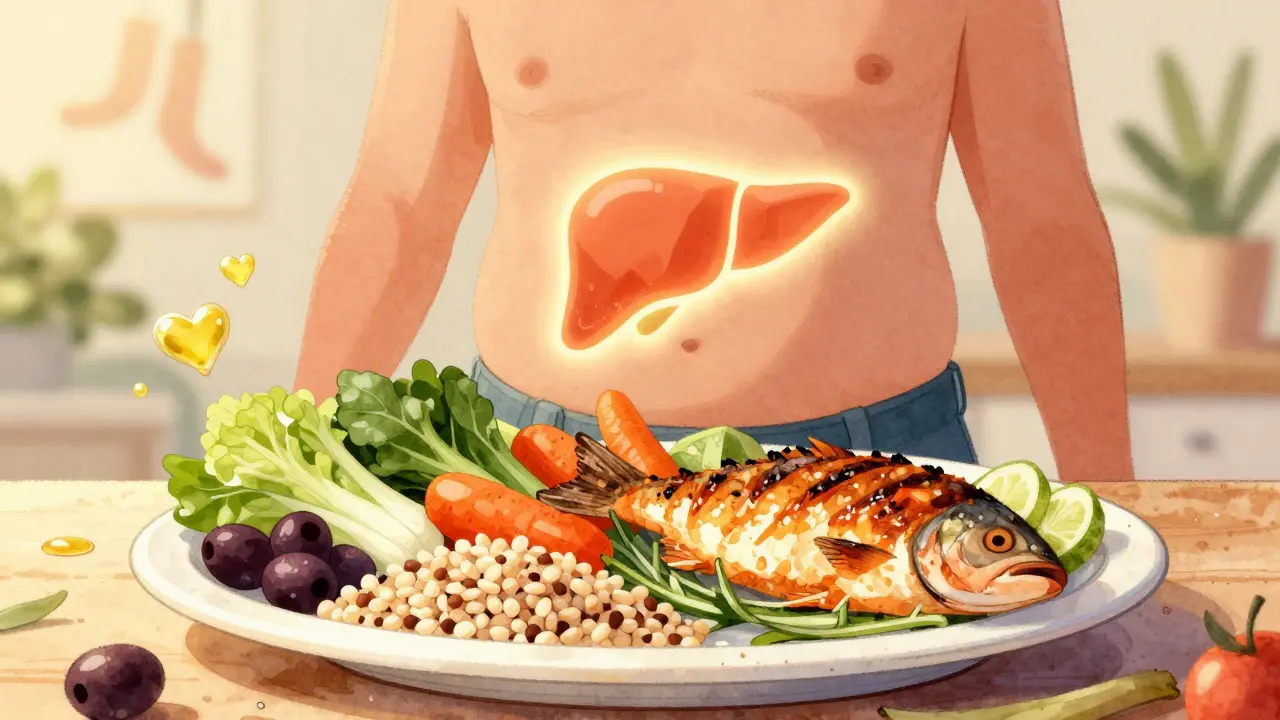
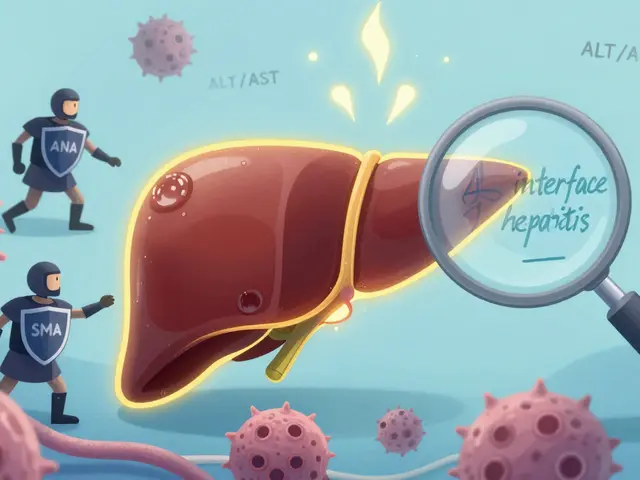
Non-alcoholic fatty liver disease (NAFLD), now called MASH (Metabolic Dysfunction-Associated Steatohepatitis), isn’t just about a little extra fat in the liver. It’s a silent, growing problem affecting nearly 15 million adults in the U.S. alone. And the scary part? It can lead to cirrhosis, liver failure, or even cancer if left unchecked. The good news? The most powerful tool you have isn’t a pill - it’s your plate and your movement. But when lifestyle changes aren’t enough, new medications like semaglutide are changing the game.
Why Weight Loss Is the Foundation of MASH Treatment
There’s no magic cure for MASH. No supplement, no detox, no juice cleanse. The only treatment backed by strong, consistent evidence is weight loss. And it’s not about looking lean - it’s about healing your liver.
Studies show that losing just 5% of your body weight can reduce fat buildup in the liver. Lose 10% or more, and you start reversing scar tissue - the kind that leads to cirrhosis. That’s not theory. That’s what showed up in liver biopsies of real people who lost weight.
But here’s the hard truth: fewer than one in three people with MASH manage to lose even 5% of their weight and keep it off. That’s why most doctors don’t just hand you a list of foods and say, “Go lose weight.” They know it’s harder than it sounds. That’s where structure, support, and sometimes medication come in.
The Best Diet for MASH: Mediterranean, Not Low-Carb or Keto
Forget extreme diets. The Mediterranean diet isn’t trendy - it’s proven. It’s not about cutting carbs completely. It’s about choosing the right ones: whole grains, beans, lentils, and vegetables. It’s about swapping butter for olive oil, red meat for fish, and sugary snacks for fruit.
A major analysis found that people following this diet saw:
- Significant drops in ALT (a liver enzyme that spikes when the liver is damaged)
- Reduced fat in the liver
- Less liver stiffness - a sign of less scarring
Why does it work? Because it fights inflammation and insulin resistance - the two engines driving MASH. High sugar and refined carbs spike blood sugar, which tells your liver to store more fat. Saturated fats from fried foods and processed snacks make inflammation worse.
Practical tips:
- Start meals with vegetables or salad - they fill you up with fewer calories
- Use olive oil for cooking and dressing
- Choose whole fruits over juice
- Limit added sugar to less than 25 grams per day (that’s about 6 teaspoons)
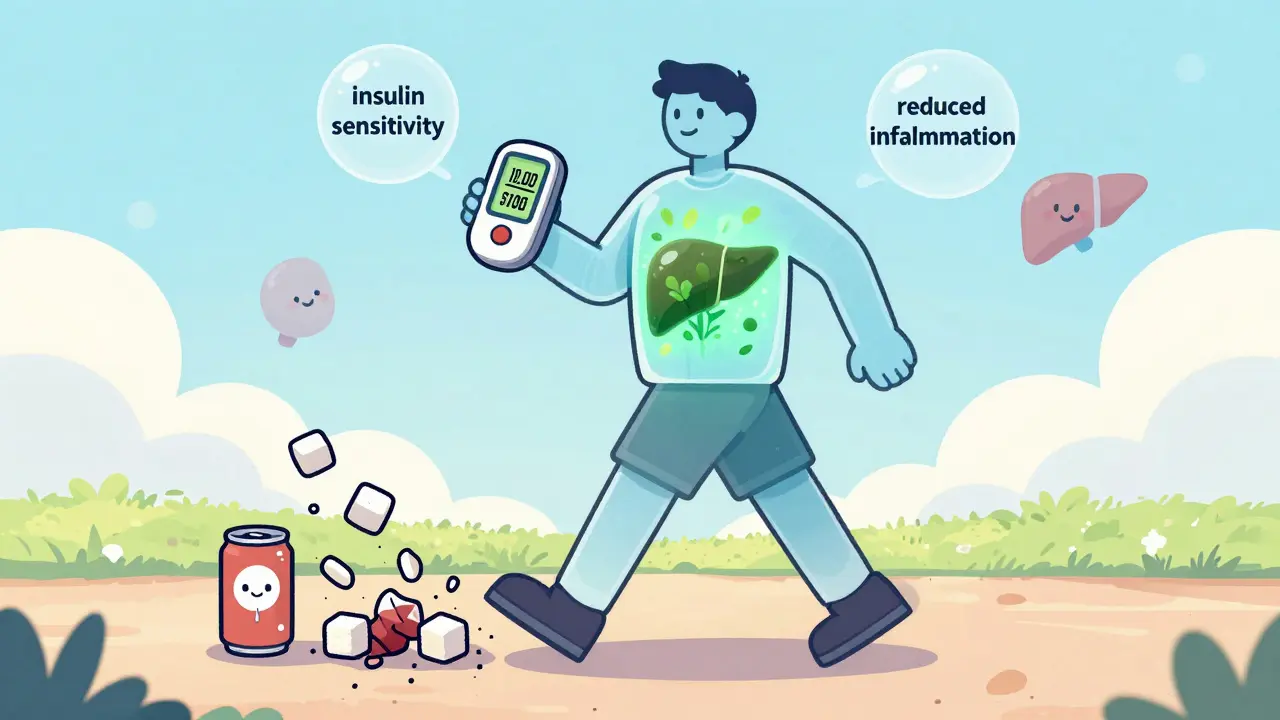
- Drink water, herbal tea, or black coffee - skip soda and sweetened drinks
You don’t need to be perfect. Just make better choices most days. A study showed that even 80% adherence to the Mediterranean diet led to measurable liver improvements.
Exercise: How Much You Need and What Actually Helps
You don’t need to run marathons. You don’t need to lift heavy weights. But you do need to move - consistently.
The Mayo Clinic recommends at least 150 minutes of moderate exercise per week. That’s 30 minutes, five days a week. Brisk walking counts. Cycling counts. Dancing counts. Even gardening if you’re moving enough to break a light sweat.
But here’s what most people don’t realize: exercise helps your liver even if you don’t lose weight. One study found that people who exercised regularly had less liver fat than those who didn’t - even when their weight stayed the same.
Why? Movement improves insulin sensitivity. It reduces inflammation. It helps your body burn fat instead of storing it.
For better results, combine aerobic activity (walking, swimming, biking) with two days of strength training. Lifting weights or doing bodyweight exercises (squats, push-ups, lunges) builds muscle, which burns more calories at rest.
Start small. If you’re not active now, aim for 10 minutes a day. Build up. Track your steps with a phone app. Set a goal: 7,000 steps by week two, 10,000 by week four. Progress beats perfection.
Medication Breakthrough: Semaglutide (Wegovy) for MASH
In August 2025, the FDA approved semaglutide (brand name Wegovy) specifically for treating MASH in adults with moderate-to-advanced liver scarring. This was a landmark moment - the first time a drug was approved for liver disease based on proof it reverses fibrosis.
Semaglutide works by mimicking a hormone your body makes naturally - GLP-1 - that tells your brain you’re full, slows digestion, and helps your pancreas release insulin when needed. The result? People lose weight, their blood sugar drops, and their liver heals.
In clinical trials:
- Nearly 90% of patients stayed on the medication for over a year
- Two-thirds saw reduced liver inflammation
- More than one-third had less liver scarring
- One-third improved in both areas
It’s not a miracle drug. Side effects like nausea, vomiting, or diarrhea are common - especially at first. But for most, they fade after a few weeks. The key is sticking with it.
Cost is a big barrier. Without insurance, Wegovy runs about $1,350 a month. Compare that to metformin, a generic diabetes drug sometimes used off-label for NAFLD - it costs $4 to $40 a month. But metformin doesn’t reliably reduce liver fat or fibrosis. Semaglutide does.
Doctors don’t recommend it as a first-line treatment. It’s for people who’ve tried diet and exercise for months and still haven’t reached their weight loss goals - and who have confirmed liver scarring. Insurance coverage is still spotty. Only about 40% of commercial plans cover it for MASH right now.
Other Medications: What Works and What Doesn’t
There are other drugs doctors sometimes use, but their evidence is weaker.
- Metformin: Used for type 2 diabetes, it helps with insulin resistance. Some studies show small drops in liver enzymes, but it doesn’t reliably reduce fat or scarring in the liver.
- Orlistat: A fat-blocking pill that causes weight loss. It’s been studied in NAFLD, but no clear proof it improves liver tissue.
- SGLT2 inhibitors (like empagliflozin): Originally for diabetes, they help the kidneys flush out sugar. Early data shows promise for liver fat reduction, but large studies are still ongoing.
- Combination drugs (like phentermine/topiramate or naltrexone/bupropion): Approved for weight loss, but no solid data proving they help MASH specifically.
The bottom line: semaglutide is the only medication with strong, direct evidence of improving liver damage in MASH. Everything else is a maybe.
Lifestyle vs. Medication: Which Should Come First?
Here’s the biggest myth: “Medication will fix my liver so I don’t have to change how I eat.” That’s not how it works.
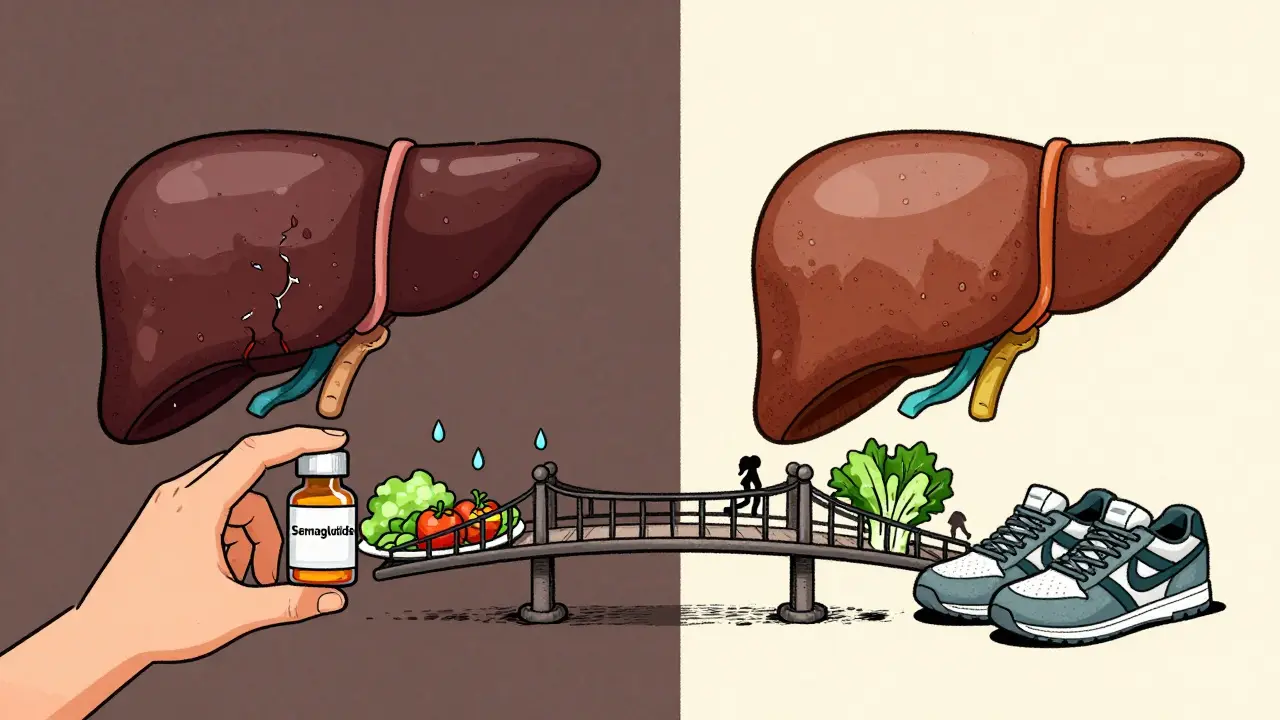
Every expert agrees: medication works best when paired with diet and exercise. Semaglutide helps you lose weight and stick with it - but if you keep eating fried chicken and soda, the liver won’t heal.
Think of it this way: semaglutide gives you the energy and appetite control to follow a healthy plan. It removes some of the biological barriers that make weight loss so hard. But you still have to show up.
Most patients who succeed long-term use medication as a tool - not a crutch. They use it to jumpstart change, then build habits that last.
What to Do Next: A Realistic Plan
If you have MASH, here’s how to move forward:
- Get your liver assessed. Ask for a FibroScan or elastography to check for scarring. If you have moderate-to-advanced fibrosis, semaglutide may be an option.
- Meet with a dietitian. Don’t guess what to eat. Get a personalized plan based on the Mediterranean diet.
- Start moving. Pick one activity you can do three times a week. Walk, swim, or cycle. Build up to 30 minutes.
- Track your progress. Weigh yourself weekly. Take measurements. Note how you feel - more energy? Less bloating?
- Ask your doctor about semaglutide if you’ve tried lifestyle changes for 3-6 months and haven’t lost 5% of your weight.
- Don’t give up on plateaus. They happen to everyone. Adjust calories, change your routine, or add support - therapy, apps, or groups.
Healing your liver isn’t a sprint. It’s a marathon with small wins every day. One less sugary drink. One extra walk. One more vegetable on your plate. These add up.
What to Avoid
Some things make MASH worse - fast.
- Alcohol: Even small amounts can speed up liver damage. No safe level is proven for people with MASH.
- Processed foods: Packaged snacks, frozen meals, fast food - they’re loaded with sugar, bad fats, and salt.
- Supplements marketed for “liver detox”: No evidence they help. Some (like green tea extract in high doses) can actually harm the liver.
- Skipping meals: This can make insulin resistance worse and trigger binge eating later.
Protecting your liver means protecting your whole body. MASH doesn’t live in isolation. It’s tied to diabetes, high blood pressure, and heart disease. Fixing one helps the others.
Can you reverse MASH without losing weight?
No. Weight loss is the only proven way to reduce liver fat and reverse scarring. Exercise helps even without weight loss, but for meaningful improvement - especially in fibrosis - losing 5-10% of body weight is necessary. There are no shortcuts.
How long does it take to see liver improvement?
Some people notice less fatigue or bloating within weeks. Blood tests (like ALT levels) often improve in 3-6 months. But liver biopsies or FibroScans show real changes in fat and scarring after 6-12 months of consistent weight loss. Patience and persistence matter more than speed.
Is semaglutide safe for people with MASH?
Yes - in people with confirmed MASH and moderate-to-advanced fibrosis, it’s been shown to be safe in clinical trials. The most common side effects are nausea, diarrhea, or constipation, which usually improve after the first few weeks. It’s not recommended if you have a personal or family history of medullary thyroid cancer or multiple endocrine neoplasia syndrome. Always discuss your full medical history with your doctor.
Can I take semaglutide if I don’t have diabetes?
Yes. Semaglutide (Wegovy) is approved for weight loss and MASH regardless of whether you have diabetes. Its use for MASH is based on liver improvement, not blood sugar control. Many people without diabetes have benefited from it for liver health.
What if I can’t afford semaglutide?
You still have options. Focus on diet and exercise first. Many people reverse early MASH with just the Mediterranean diet and 150 minutes of weekly activity. Ask your doctor about patient assistance programs from the manufacturer, or check if your insurance covers it for obesity (BMI ≥30). Generic metformin may help with insulin resistance, but it won’t replace the benefits of weight loss.
Do I need to take semaglutide forever?
Not necessarily. Once you’ve lost weight and improved your liver health, you may be able to stop - but only if you’ve built lasting habits. Stopping the medication without maintaining diet and exercise often leads to weight regain and liver fat returning. Think of it as a bridge to healthier habits, not a lifelong dependency.
If you’re struggling to lose weight on your own, you’re not alone. Ask for help - from a dietitian, a physical therapist, a counselor, or your doctor. Healing your liver is one of the most powerful things you can do for your long-term health. And it starts with one step - and one meal - at a time.



Becky Baker
25 December, 2025 . 18:10 PM
Look, I get it - you want us to eat salad and walk more. But let’s be real, most people don’t have time or energy for this. I work two jobs, raise kids, and my liver doesn’t care about your Mediterranean diet. Semaglutide? If it works, I’m all in. No guilt trips, just give me the pill and shut up.
Sumler Luu
26 December, 2025 . 18:19 PM
I appreciate the science here, but I wish the article acknowledged how hard it is to change when you’re drowning in stress and food insecurity. Not everyone can afford olive oil or has access to a safe place to walk. Real talk: systemic stuff matters more than willpower.
sakshi nagpal
27 December, 2025 . 14:52 PM
This is one of the most balanced and evidence-based articles I’ve read on MASH. The emphasis on lifestyle as the foundation - not a quick fix - is refreshing. I’m from India, where NAFLD is rising fast due to sugary drinks and sedentary jobs. The Mediterranean diet is adaptable here too - swap olive oil for mustard oil, use lentils instead of red meat. Small changes, big impact.
Also, the point about semaglutide being a tool, not a crutch, is critical. We need to stop treating medicine like magic and start treating health like a habit.
Sandeep Jain
28 December, 2025 . 13:18 PM
so i tried the med diet for 2 months… lost 8lbs, felt way better. but the nausea from semaglutide? bro i couldnt even keep water down. my doc said ‘just push through’ but my liver was already screaming. i quit. now i just walk 10k steps a day and avoid soda. still not perfect but im alive.
roger dalomba
28 December, 2025 . 18:27 PM
Wow. A whole article about losing weight and not once mentioning intermittent fasting. Pathetic.
Brittany Fuhs
30 December, 2025 . 11:03 AM
Why are we letting Big Pharma dictate our health? Semaglutide costs more than my rent. Meanwhile, my great-grandma healed her liver with cabbage soup and hard work. We’ve lost our minds. Stop buying into this chemical crutch culture.
Sophia Daniels
30 December, 2025 . 13:16 PM
Let me just say - if you’re still reading this and haven’t started walking yet, you’re not broken. You’re just lazy. And I’m not judging… I’m just stating facts wrapped in glitter and coffee breath. Your liver is screaming. Are you listening? Or are you scrolling for ‘quick fixes’ again? #LiverTruth
Fabio Raphael
31 December, 2025 . 03:31 AM
What’s the long-term data on semaglutide for MASH beyond 2 years? I’ve seen studies where weight loss reverses after stopping - does the liver damage come back too? Just wondering if we’re delaying the inevitable or actually curing it.
Amy Lesleighter (Wales)
2 January, 2026 . 03:04 AM
Just eat real food. Walk more. Sleep better. Stop listening to noise. Your liver doesn’t need a PhD - it needs consistency. I’ve seen it work. Not glamorous. Just true.
Rajni Jain
4 January, 2026 . 00:38 AM
to the person who said they quit semaglutide because of nausea - i felt the same. but i started with half dose, drank ginger tea, ate small meals. after 3 weeks it got better. you’re not weak for trying. you’re brave for even considering it. keep going, one step at a time. you got this 💪