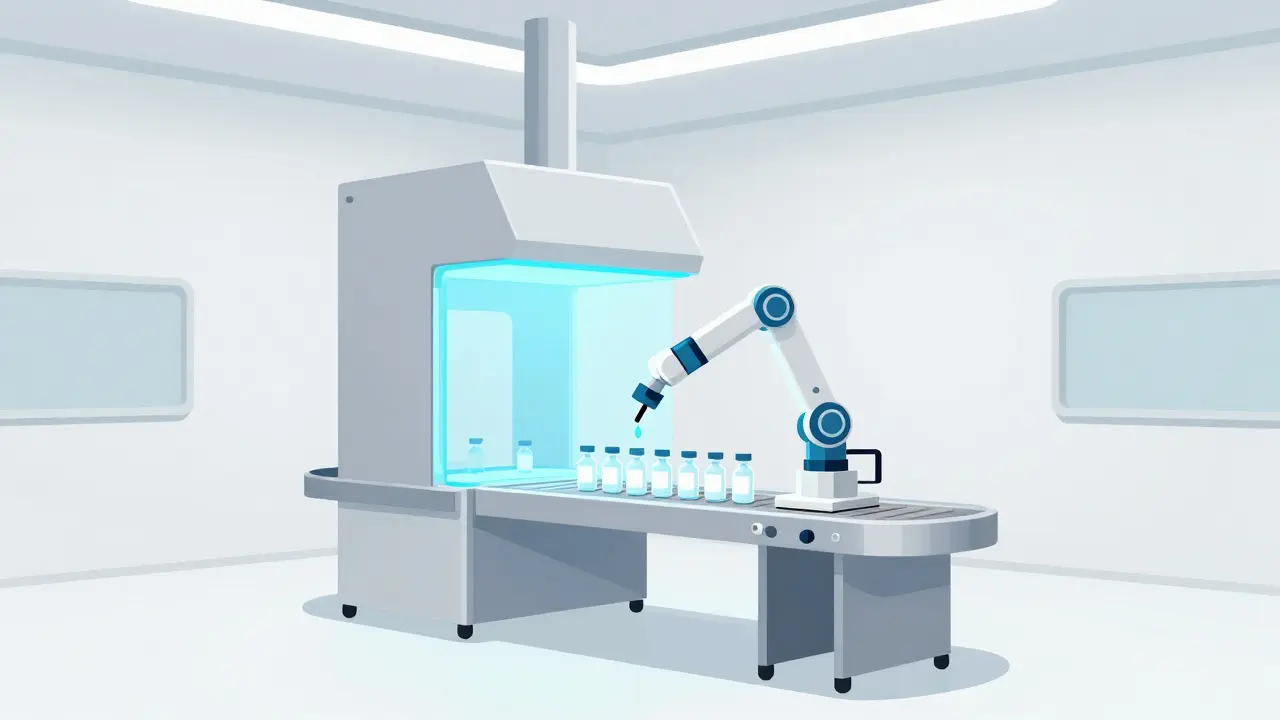
Imagine a pill that looks exactly like the brand-name version. Same color, same shape, same active ingredient. But inside, invisible particles or microbes have compromised its safety. For generic drugs are medicinal products intended to be equivalent to a reference listed drug in dosage form, strength, route of administration, and intended use, this scenario is unacceptable. Regulatory bodies demand that generics perform identically to their innovator counterparts. Achieving this requires more than just mixing chemicals; it demands pristine environments known as cleanrooms.
Cleanroom standards are not just bureaucratic hurdles. They are the physical barrier between safe medication and potential health hazards. Whether you are a facility manager dealing with HVAC upgrades or a quality assurance specialist navigating audits, understanding these standards is critical. This article breaks down how environmental controls protect generic drug quality, the specific metrics you need to hit, and the real-world costs of compliance.
The Foundation of Cleanroom Standards
At their core, cleanroom standards define the limits of airborne particles, microbial contaminants, temperature, humidity, and pressure differentials. These parameters ensure that the product integrity remains intact during manufacturing. The framework didn't appear overnight. It evolved from the U.S. Food and Drug Administration's Current Good Manufacturing Practices (cGMP), codified in 1978 under 21 CFR Parts 210 and 211. These regulations were strengthened by the Kefauver-Harris Amendments, which mandated proof of drug effectiveness.
While the FDA sets the baseline for the United States, other regions have their own rigorous frameworks. The European Union formalized its standards through EudraLex Volume 4, specifically Annex 1, which governs sterile manufacturing. Recently updated in August 2023, this annex emphasizes contamination control strategies over simple particle counts. Internationally, the ISO 14644-1 standard provides the globally recognized classification system based on particle concentration. First published in 1999 and updated in 2015, ISO 14644-1 serves as the technical backbone for many regional regulations.
| Framework | Region | Focus Area | Key Characteristic |
|---|---|---|---|
| FDA cGMP | United States | Facility Design & Process | Emphasizes preventing contamination through design; less prescriptive on specific ISO classes for all areas. |
| EU GMP Annex 1 | European Union | Sterile Manufacturing | Explicit ISO equivalencies for Grades A-D; mandates continuous monitoring and robust contamination control strategies. |
| ISO 14644-1 | Global | Particle Classification | Defines air cleanliness classes based on particle count per cubic meter; used as a reference by other bodies. |
| USP <797> | United States | Compounding Pharmacies | Less stringent than manufacturing; permits ISO Class 7 buffer areas for certain compounding activities. |
Grading the Environment: From Grade A to D
To understand cleanroom standards, you must look at the grading system. This system categorizes environments based on their risk level and required purity. The EU GMP Annex 1 defines four grades, each with specific limits for particles and microorganisms.
Grade A represents the highest level of cleanliness. It is equivalent to ISO Class 5. In this zone, you can have no more than 3,520 particles ≥0.5μm per cubic meter during operations. This area requires unidirectional laminar airflow moving at 0.36-0.54 m/s. You will find Grade A environments where high-risk processes occur, such as filling sterile injectables. The positive pressure differential here must be 10-15 Pascals relative to adjacent areas to prevent dirty air from flowing in.
Grade B serves as the background environment for Grade A operations. At rest, it matches ISO Class 5, but during operations, it allows up to 3,520,000 particles ≥0.5μm/m³. It requires a minimum of 40 air changes per hour. Continuous particle monitoring is mandatory here to detect any immediate deviations.
Grade C is typically used for preparation steps before final filtration. It corresponds to ISO Class 7 at rest and ISO Class 8 during operation. The limit rises to 35,200,000 particles ≥0.5μm/m³ during operations. Minimum air changes drop to 20 per hour.
Grade D is the least stringent, aligning with ISO Class 8 at rest. It allows 35,200,000 particles ≥0.5μm/m³ with no specific operational limit. Only 10 air changes per hour are required. While suitable for lower-risk activities, even Grade D requires strict personnel protocols.
Beyond particles, temperature must stay between 18-26°C, and relative humidity between 30-60% across all classified areas. Microbial limits are equally strict, ranging from 1 CFU/plate in Grade A to 200 CFU/plate in Grade D using settle plates.
The Unique Challenge for Generic Manufacturers
Generic drug manufacturers face a distinct set of pressures. Unlike innovator companies developing new drugs, generics must prove bioequivalence to an existing Reference Listed Drug (RLD). This means your product must behave exactly like the original in the human body. If the RLD was manufactured under strict Grade A/B conditions, your generic version must meet those same standards, regardless of your profit margins.
This creates a significant economic disparity. Innovator drugs often command gross margins of 70-80%, allowing them to absorb high compliance costs. Generic manufacturers, however, operate on slim margins of 15-20%. Implementing ISO Class 5 cleanrooms can cost $250-$500 per square foot. For a small generic producer making a low-cost heparin syringe, maintaining Grade A standards can threaten profitability entirely.
Yet, cutting corners is not an option. The FDA’s Orange Book lists all approved generic drugs and their patent information. To get approval, you submit an Abbreviated New Drug Application (ANDA). This application must demonstrate that your manufacturing process, including environmental controls, ensures consistent quality. Any deviation can lead to rejection. In fact, 42% of complete response letters for sterile generics in 2022 cited environmental monitoring deficiencies, up from 31% in 2018.
Cost vs. Risk: The Economics of Compliance
Why do manufacturers invest heavily in cleanrooms? The answer lies in risk mitigation. Non-compliance carries severe consequences. The FDA issues Form 483 observations for violations found during inspections. Repeated or serious issues lead to warning letters, import alerts, or even consent decrees that shut down production.
Consider the 2012 meningitis outbreak linked to the New England Compounding Center. Inadequate environmental controls allowed fungal contamination, leading to dozens of deaths. For generic manufacturers, the financial stakes are similarly high. In 2022, Aurobindo Pharma faced a $137 million recall of sterile injectables due to inadequate Grade B monitoring. These events underscore that cleanroom standards are not just about passing inspections; they are about patient safety and business survival.
However, the costs are real. Initial validation of a cleanroom takes 3-6 months and costs between $150,000 and $500,000. Ongoing maintenance includes HEPA filter replacements, HVAC servicing, and continuous monitoring systems. Real-time monitoring alone can add $50,000-$100,000 per room. Personnel training is another major expense. Gowning certification requires 40-60 hours of training, and the learning curve for cleanroom operations spans 6-12 months.
Despite these costs, data shows that strict adherence pays off. An ISPE benchmarking study found that facilities implementing full EU Annex 1 requirements experienced 27% fewer quality deviations. Teva’s generic version of Copaxone saw contamination events drop from 12 to 2 per year after installing advanced isolator technology in Grade A areas, enabling FDA approval after previous rejections.
Implementation Strategies for Success
Implementing cleanroom standards effectively requires a strategic approach. Start with a robust Contamination Control Strategy (CCS). This document should outline how you manage risks from people, materials, and equipment. It goes beyond particle counts to include personnel behavior, facility design, and cleaning procedures.
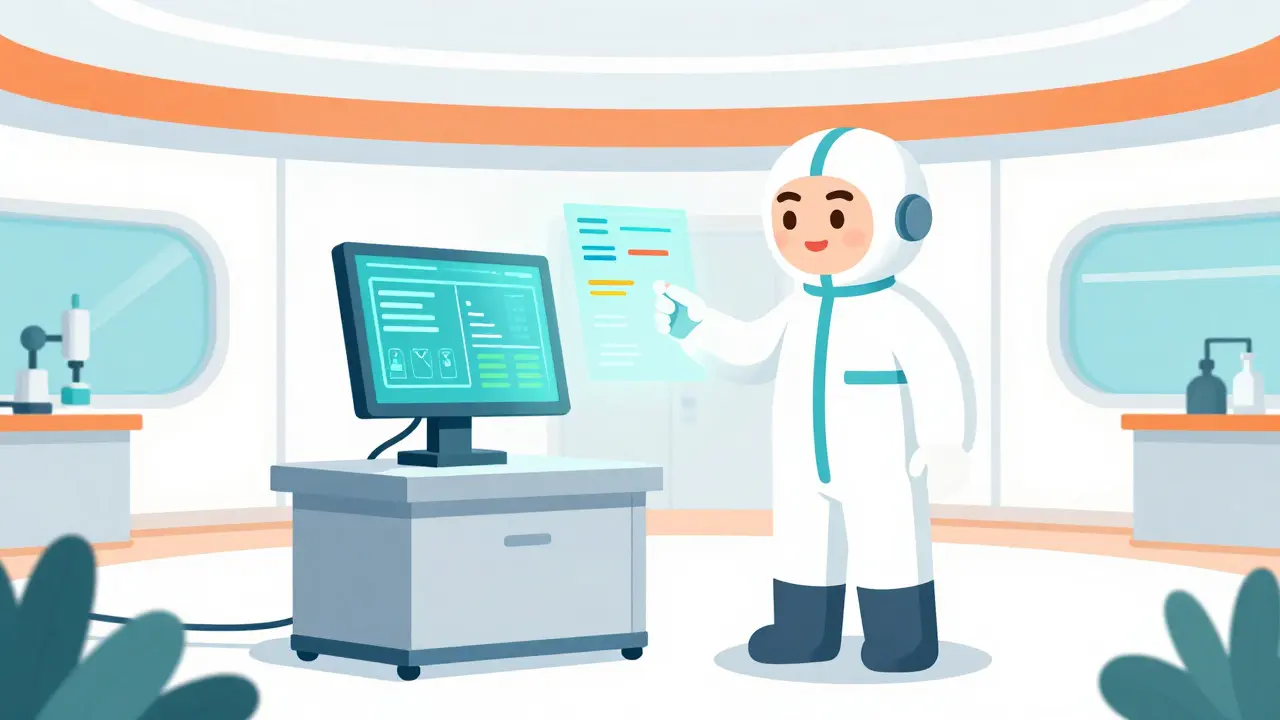
Personnel are often the largest source of contamination. Studies show that 42% of deviations stem from gowning procedures. Invest in thorough training and enforce strict gowning protocols. Use visual aids and regular audits to ensure compliance. Consider using automated gowning systems or smart badges that track movement and alert staff if they breach protocols.
Environmental monitoring must be continuous and validated. Use settled plates, active air sampling, and surface swabs regularly. Ensure your sampling methods are validated to avoid false positives or negatives. For example, viable air sampling should sample at least 1 cubic foot per minute according to ISO 14644-2 standards.
Technology can also help reduce costs. Automation and robotics are becoming more common in cleanrooms. By reducing human presence in Grade A areas, you lower the risk of contamination. AI-powered monitoring systems can predict HVAC failures before they occur, preventing costly downtime. McKinsey projects that increased automation could reduce cleanroom operational costs by 25-30% by 2028.
Future Trends in Cleanroom Standards
The landscape of cleanroom standards is evolving. The revised EU GMP Annex 1, effective August 2023, mandates continuous monitoring and stricter viable air sampling requirements. The FDA is expected to harmonize with these changes in future guidance. This trend toward real-time data collection means facilities must invest in digital infrastructure.
Another emerging area is single-use systems. As biologics and complex generics grow in popularity, manufacturers are adopting single-use containers and tubing to reduce cleaning validation burdens. The Parenteral Drug Association (PDA) is developing Technical Report 81 on this topic, expected in 2024. This shift offers flexibility but introduces new challenges in waste management and supply chain security.
Continuous manufacturing is also gaining traction. The FDA’s 2023 draft guidance on continuous manufacturing for solid dosage forms introduces new cleanroom considerations for integrated production lines. This approach reduces batch sizes and increases efficiency but requires tighter environmental control throughout the entire process.
As biosimilars become more prevalent, the demand for Grade A/B environments will rise. The FDA projects that 50% of new ANDAs by 2025 will require these stringent conditions, up from 35% in 2022. Manufacturers who adapt early will gain a competitive edge.
What is the difference between ISO Class 5 and Grade A?
ISO Class 5 refers to a specific particle count limit defined by the international standard ISO 14644-1, allowing no more than 3,520 particles ≥0.5μm per cubic meter. Grade A is a classification used in EU GMP Annex 1 that corresponds to ISO Class 5 but adds additional requirements such as unidirectional airflow, specific pressure differentials, and microbial limits. Essentially, Grade A includes ISO Class 5 particle limits plus stricter operational and procedural controls.
Why are cleanroom standards critical for generic drugs?
Generic drugs must demonstrate bioequivalence to their reference listed drugs. This means they must perform identically in the body. Contamination from particles or microbes can alter drug efficacy or cause harm. Strict cleanroom standards ensure that the manufacturing environment does not introduce variables that could compromise this equivalence, thereby protecting patient safety and meeting regulatory requirements for approval.
How much does it cost to maintain a Grade A cleanroom?
The initial construction cost for an ISO Class 5 (Grade A) cleanroom ranges from $250 to $500 per square foot. Operational costs include HVAC maintenance, HEPA filter replacements, continuous monitoring systems ($50,000-$100,000 per room), and personnel training. Validation costs range from $150,000 to $500,000 depending on complexity. These costs represent 15-25% of total facility capital expenditure for generic manufacturers.
What happens if a facility fails cleanroom inspections?
Failure to meet cleanroom standards can result in FDA Form 483 observations, warning letters, import alerts, or consent decrees. Severe cases may lead to product recalls, shutdowns, or criminal charges. Financial penalties can be substantial, as seen in the $137 million recall by Aurobindo Pharma in 2022. Repeated non-compliance damages reputation and market access.
Are cleanroom standards too strict for non-sterile products?
Some experts argue that Grade C requirements for non-sterile oral solids create unnecessary costs without measurable quality improvement. However, regulators maintain that strict controls prevent cross-contamination and ensure consistency. While debate exists, current regulations mandate these standards for most pharmaceutical manufacturing to minimize risk. Facilities must comply unless granted specific exemptions based on scientific justification.