Diphenhydramine Sleep Aid Risk Calculator
Assess Your Sleep Aid Risk
This tool calculates your personal risk from using diphenhydramine (Benadryl, ZzzQuil) for sleep based on factors discussed in the article.
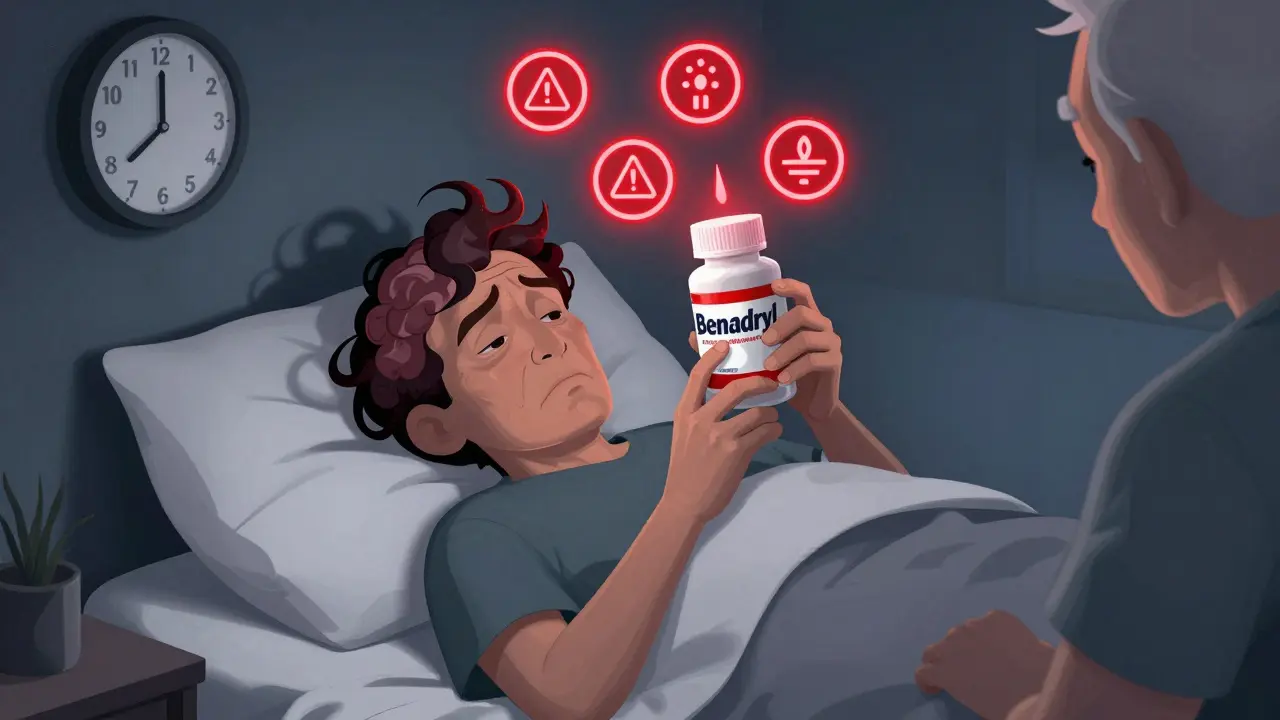
Millions of people reach for diphenhydramine every night-whether it’s Benadryl, Unisom, or ZzzQuil-thinking it’s a quick fix for trouble falling asleep. It’s cheap, easy to find, and works fast. But here’s the truth most labels don’t tell you: diphenhydramine isn’t a sleep solution. It’s a sedative with a growing list of risks, especially if you’re over 50, or using it longer than a few nights.
How Diphenhydramine Really Works
Diphenhydramine is an antihistamine. That means it blocks histamine, a chemical in your brain that keeps you alert. When histamine gets shut down, you feel drowsy. That’s why it’s in allergy pills and sleep aids. But here’s the catch: it doesn’t help your brain sleep naturally. It just knocks you out.This drug crosses the blood-brain barrier easily, which is why it causes sedation. But it also messes with another key system: acetylcholine. That’s the brain chemical involved in memory, focus, and muscle control. That’s why people report dry mouth, blurry vision, constipation, and trouble peeing after taking it. In older adults, this can be dangerous. Studies show diphenhydramine increases the risk of urinary retention in men with enlarged prostates by 30-50%. It can also trigger acute angle-closure glaucoma in people who already have it.
The Next-Day Hangover You Didn’t Sign Up For
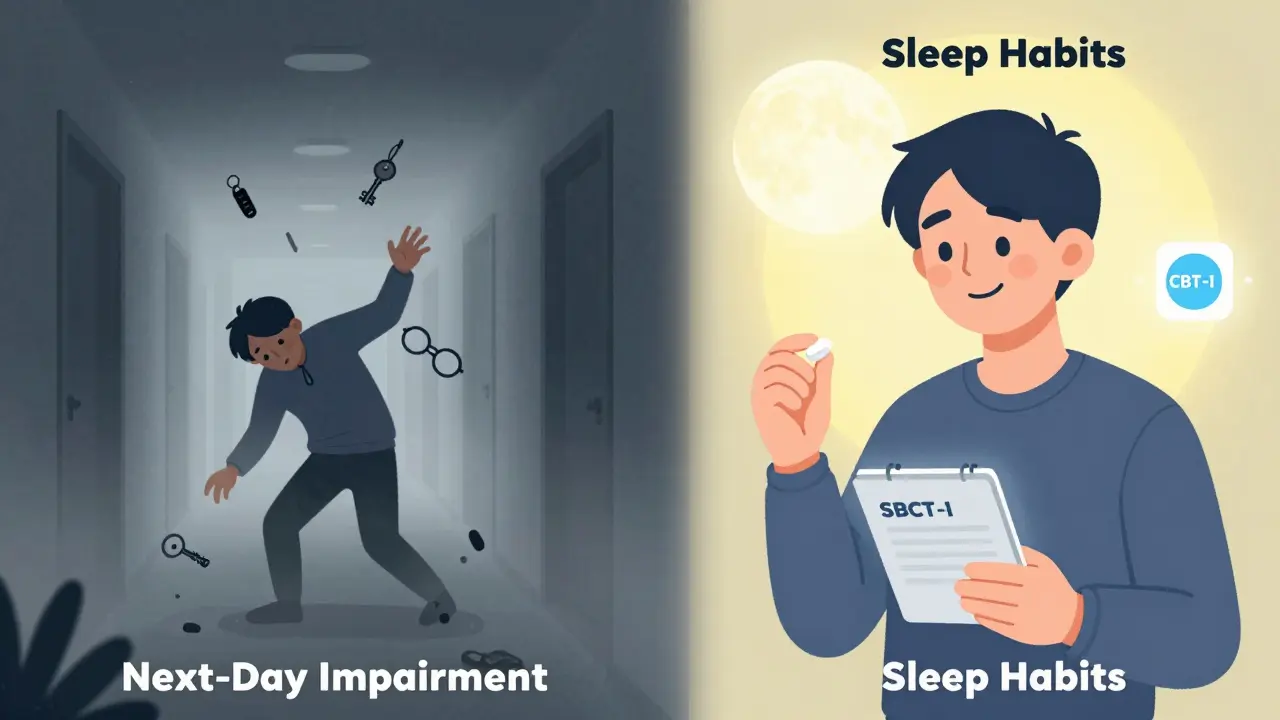
You take it at night. You sleep. You wake up feeling like you’ve been hit by a truck. That’s not just tiredness-it’s residual sedation. A 2021 study found 68% of people using diphenhydramine for sleep reported impaired thinking, slower reaction times, and poor memory the next day. That’s compared to just 12% in the placebo group.Think about driving after a night of using it. A 2023 study compared diphenhydramine to alcohol and found a 50mg dose impaired driving ability as much as a blood alcohol level of 0.10%-above the legal limit in every U.S. state. The FAA bans pilots from using it. The European Medicines Agency says it affects your ability to drive. And yet, people still take it without thinking twice.
Why It Gets Worse Over Time
It doesn’t take long for your body to get used to it. After just 7 days of regular use, two-thirds of users say it stops working as well. That’s tolerance. So you take more. Or you take it longer. But the FDA says diphenhydramine is only for occasional sleeplessness-no more than 14 days in a row.Yet a 2022 study tracking 450 adults found 73% used it beyond 14 days. Nearly half used it for over 30 days straight. That’s not occasional. That’s chronic. And that’s where the real danger kicks in.
The Dementia Risk You Can’t Ignore
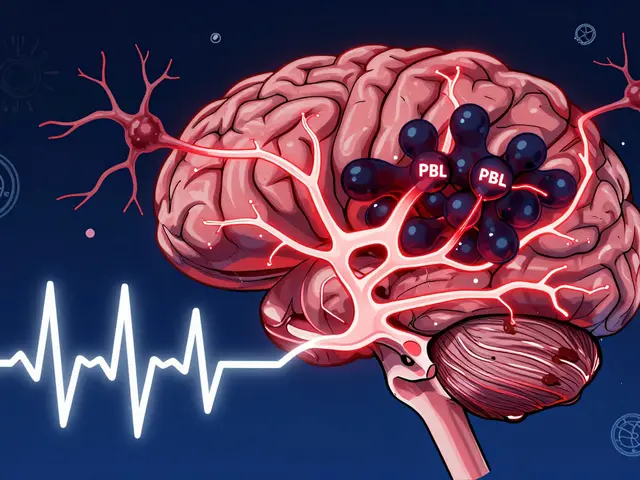
A 2024 study from Johns Hopkins followed more than 3,000 adults over 65 for seven years. Those who regularly took anticholinergic drugs-including diphenhydramine-had a 54% higher risk of developing dementia. That’s not a small bump. That’s a major increase. And it’s not just memory loss. People reported confusion, hallucinations, and mood swings. The FDA updated labels in 2023 to warn about these serious mental side effects, especially in children and older adults.The American Academy of Sleep Medicine says it clearly: diphenhydramine is not recommended for chronic insomnia. The risks outweigh any short-term benefit. Dr. Alon Avidan, director of the UCLA Sleep Disorders Center, called it “the worst possible choice for sleep in older adults.”
Who’s Most at Risk?
You might think this only affects seniors. But it’s not that simple.- People over 65: Higher risk of falls, confusion, urinary retention, and dementia.
- Men with enlarged prostates: Can lead to complete inability to urinate.
- People with glaucoma: Can trigger sudden, painful eye pressure spikes.
- Those with heart conditions: May cause rapid heartbeat.
- Children under 12: Can cause excitability, not sleep-some even have seizures.
And here’s something surprising: younger users aren’t immune. Reddit users under 30 report it works at first, but many say they wake up foggy, anxious, or with heart palpitations. One user wrote: “I thought it was helping me sleep-until I started having panic attacks in the morning.”
What Actually Works Better
There are safer, smarter ways to get better sleep. You don’t need a chemical knock-out.Melatonin is the most popular alternative. It’s not a sedative-it’s a hormone your body makes naturally to signal bedtime. Studies show 2-5 mg taken 30-60 minutes before bed helps people fall asleep faster, especially if they have delayed sleep phase or jet lag. A 2023 meta-analysis found it was effective for 62% of users, with far fewer side effects than diphenhydramine. Next-day grogginess? Only 22% of melatonin users report it, compared to 58% of diphenhydramine users.
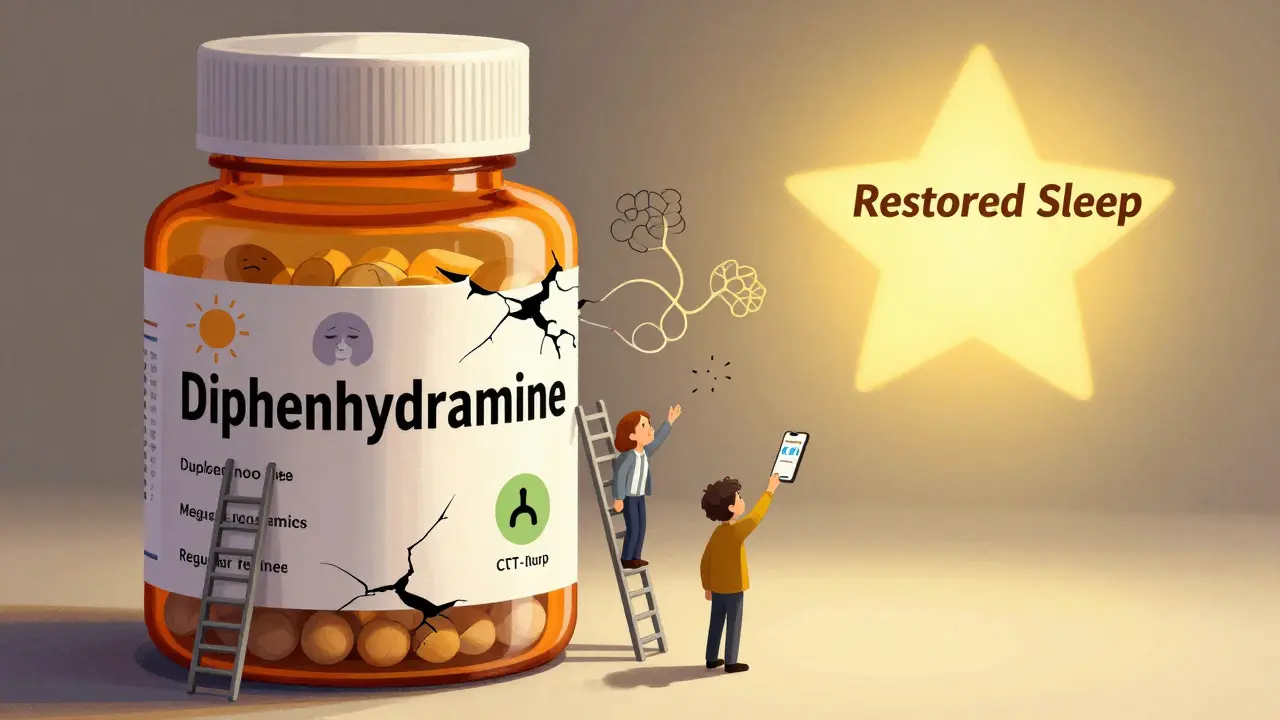
Cognitive Behavioral Therapy for Insomnia (CBT-I) is the gold standard. It’s not a pill. It’s a structured program that teaches you how to retrain your brain around sleep. It fixes the thoughts and habits that keep you awake. The American Academy of Sleep Medicine says it works for 70-80% of people-and the benefits last for years. Unlike pills, it doesn’t wear off. You don’t need to keep taking it.
Some people turn to doxylamine (found in Unisom SleepTabs). It’s similar to diphenhydramine-same risks, same side effects. Just a different chemical. Don’t trade one problem for another.
What About Prescription Sleep Aids?
Drugs like zolpidem (Ambien) or eszopiclone (Lunesta) are stronger and work differently. They’re meant for short-term use under a doctor’s care. But they come with their own risks: dependency, complex sleep behaviors (like sleepwalking or eating while asleep), and withdrawal. They’re not better than diphenhydramine for long-term use. They’re just more controlled.The real solution? Talk to a sleep specialist. If you’ve been struggling for more than a few weeks, you need more than a pill. You need a plan.
What You Can Do Today
If you’re using diphenhydramine right now, here’s what to do:- Stop using it for more than 14 days straight. Ever.
- Try melatonin (2-3 mg) for a week. See if it helps you fall asleep without the fog.
- Write down your sleep habits. What time do you go to bed? Are you scrolling before sleep? Are you drinking caffeine after 2 p.m.?
- Get sunlight in the morning. It resets your internal clock.
- Try a free CBT-I app like Sleepio or CBT-i Coach. They’re backed by science and available at no cost.
You don’t need to suffer through sleepless nights. And you don’t need to risk your brain health for a quick fix. Sleep isn’t about being knocked out. It’s about being restored.
Why This Isn’t Just About Sleep
This isn’t just a “sleep aid” problem. It’s a bigger cultural issue: we treat sleep like a broken machine you can fix with a switch. But your brain isn’t a lightbulb. You can’t just flip a switch and expect it to work perfectly every time.Diphenhydramine was designed in the 1940s to treat allergies-not sleep. It was never meant to be taken night after night. Yet here we are, billions of doses sold every year, with no real warning that it might be quietly harming your memory, your balance, your independence.
There’s a better way. And it doesn’t come in a bottle.





Austin LeBlanc
23 December, 2025 . 13:08 PM
This is why people are dying slowly without knowing it. You think you're just taking a little Benadryl to sleep, but you're basically poisoning your brain with a 1940s antihistamine that was never meant for this. Wake up. It's not a sleep aid, it's a cognitive time bomb.
niharika hardikar
23 December, 2025 . 22:55 PM
It is imperative to underscore the pharmacological implications of chronic anticholinergic burden, particularly in geriatric populations. The data presented herein aligns with the 2024 Johns Hopkins cohort study, which demonstrated a statistically significant elevation in dementia risk (p < 0.001) among long-term users. Clinical guidelines must be strictly adhered to.
EMMANUEL EMEKAOGBOR
24 December, 2025 . 10:15 AM
Thank you for sharing this. I didn't realize how dangerous this was. I've been using Unisom for years because it 'just works.' I'm going to stop tonight and try melatonin instead. Also, I'll start walking outside in the morning. Small changes, right?
CHETAN MANDLECHA
25 December, 2025 . 18:26 PM
Bro, I’ve been taking diphenhydramine since college. 28 now. Used to feel fine. Last month I woke up with my heart racing and couldn’t think straight for 3 hours. Scared the hell out of me. I’m switching to melatonin tomorrow. Thanks for the wake-up call.
Ajay Sangani
27 December, 2025 . 17:36 PM
if you think about it… sleep isnt just a switch… its like a garden… you cant just spray chemicals and expect roses… you gotta tend to the soil… the light… the rhythm… diphenhydramine is like dumping concrete on your garden… sure it stops the weeds… but the flowers… they never come back…
Gray Dedoiko
29 December, 2025 . 15:41 PM
I used to take this every night for months. I didn’t realize how foggy I was during the day until I stopped. My partner said I’d forget conversations right after we had them. That’s when I knew something was wrong. Melatonin didn’t work as fast, but I actually feel like myself now.
Joe Jeter
31 December, 2025 . 06:38 AM
So you’re telling me the FDA’s warning about dementia risk is real, but melatonin’s not regulated and you’re okay with that? And CBT-I is expensive and inaccessible for most people. This post is just fearmongering disguised as helpful advice.
Sidra Khan
31 December, 2025 . 16:01 PM
Also… did anyone else notice how the author didn’t mention that melatonin is literally a hormone your body makes? Like… why are we okay with injecting ourselves with a chemical we already produce? 😐
Lu Jelonek
2 January, 2026 . 15:44 PM
In my country, many elders use diphenhydramine because it’s the only affordable option. We need policy changes-not just individual behavior shifts. Access to CBT-I and proper sleep clinics is a luxury in many places. This is a public health issue, not just a personal one.
Ademola Madehin
3 January, 2026 . 05:54 AM
OMG I just read this and I’m crying. I’ve been taking ZzzQuil for 5 years. I thought I was just tired. Now I realize I’ve been losing my mind slowly. My wife said I started talking nonsense in my sleep. I’m done. I’m deleting the bottle right now. Thank you for saving me.
suhani mathur
3 January, 2026 . 22:43 PM
Oh so now we’re supposed to trust a 2024 Johns Hopkins study over decades of anecdotal ‘it works for me’? Cool. Meanwhile, my grandma takes it every night and still runs her own bakery at 78. Maybe your brain’s fragile. Mine’s not.
Bartholomew Henry Allen
4 January, 2026 . 17:09 PM
Americans are lazy. You want sleep? Wake up earlier. Stop eating sugar. Stop scrolling. Stop whining about needing a pill. This is why your society is collapsing. Discipline. That’s the answer.
Jeffrey Frye
5 January, 2026 . 10:43 AM
you know what’s funny? the FDA says 14 days max but the bottle says ‘as needed’ so who’s really lying here? also i tried melatonin and it just made me weirder dreams. like i dreamed i was a potato. not helpful.