Every year, millions of people take medications that help them feel better. But not every side effect gets reported. In fact, less than 10% of adverse reactions are ever documented. That gap puts patients at risk - not just in one country, but everywhere. If you’re a healthcare worker, a caregiver, or even someone who takes medication regularly, staying informed about global medication safety news isn’t optional. It’s essential.
Know the Global Players
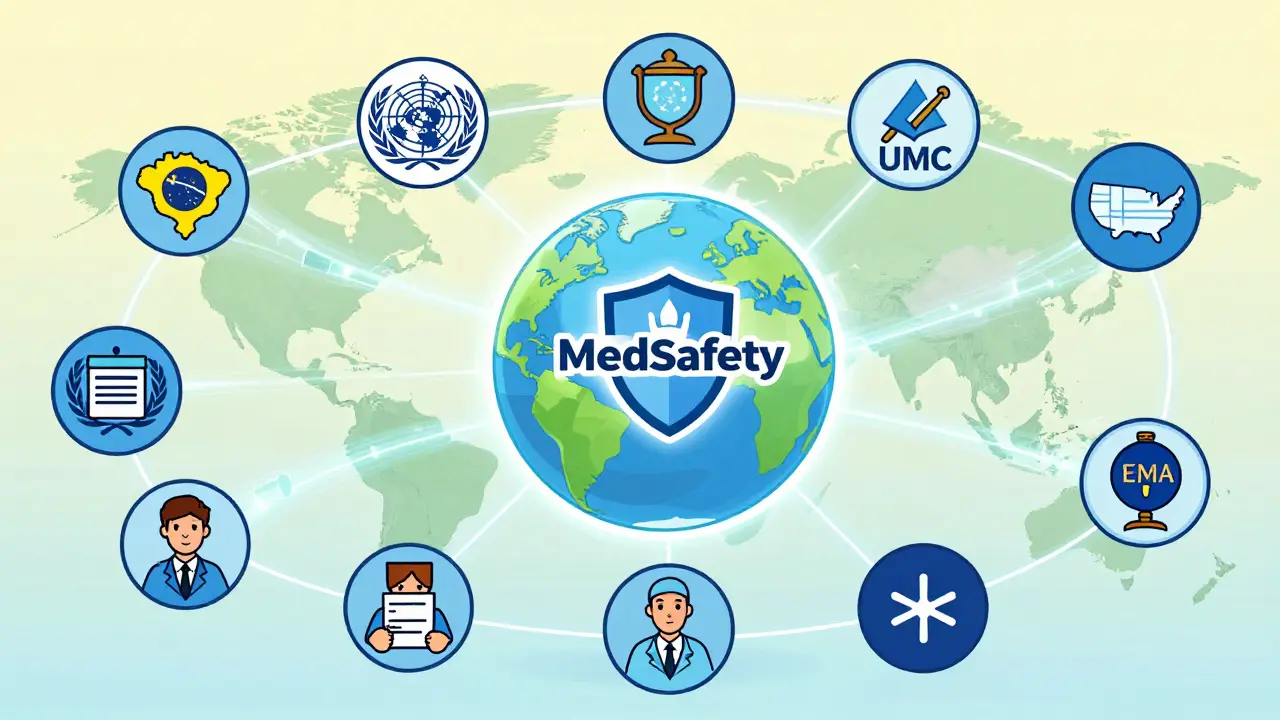
You don’t need to track every health agency in the world, but you do need to know who’s leading the charge. The World Health Organization (WHO) is the backbone of global drug safety. They don’t just issue guidelines - they coordinate a network of 150 countries through the WHO Programme for International Drug Monitoring. This program connects national pharmacovigilance centers so that a dangerous reaction in Brazil can trigger a warning in Australia or Canada. The Uppsala Monitoring Centre (UMC) is WHO’s technical partner. They run the Global Drug Safety Database, which collects and analyzes reports from every corner of the globe. Their work powers alerts you’ll see in your local pharmacy or hospital. In the U.S., the Food and Drug Administration (FDA) runs the Sentinel Initiative, which monitors over 300 million patient records in real time. In Europe, the European Medicines Agency (EMA) enforces strict reporting rules - each country must submit at least 500 adverse event reports per million people annually. And in the UK, the Medicines and Healthcare products Regulatory Agency (MHRA) runs the Yellow Card scheme - a simple, free system where anyone can report side effects from medicines, vaccines, or even herbal products.Follow the Campaigns That Matter
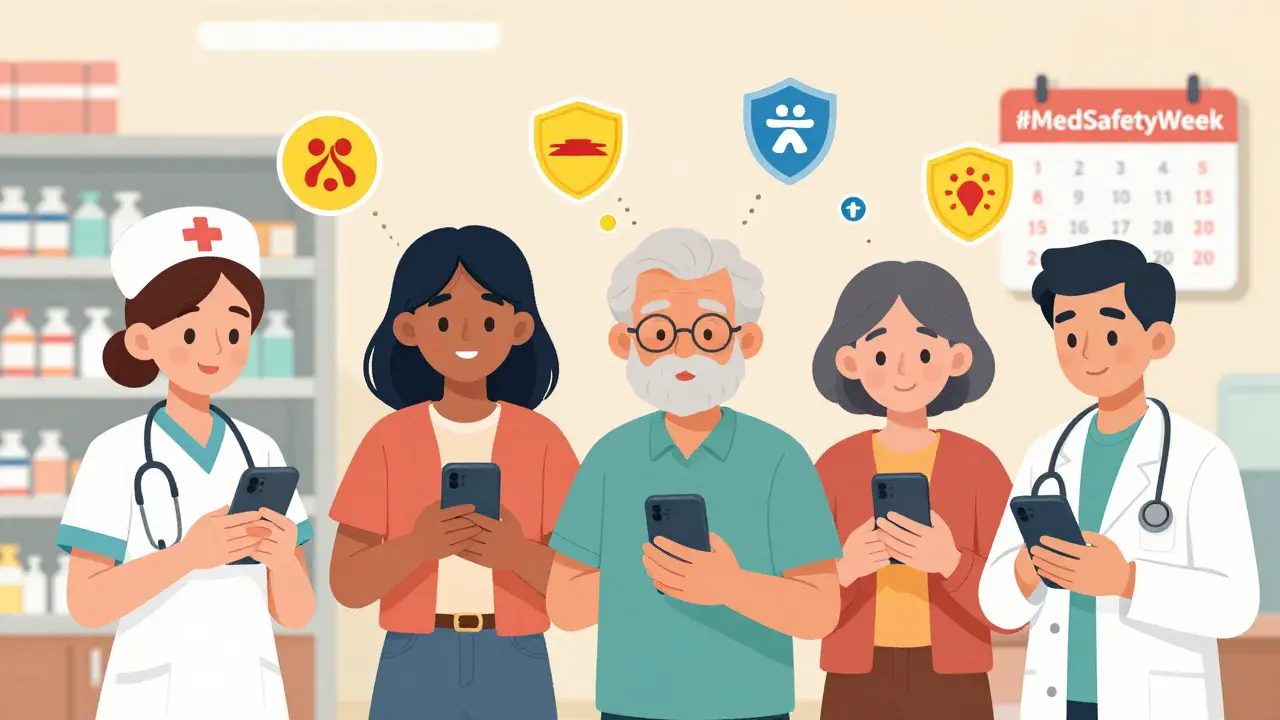
Global awareness doesn’t happen by accident. It’s driven by focused campaigns. The biggest one is #MedSafetyWeek, organized by UMC every November. In 2025, it runs from November 3 to 9 - its 10th anniversary. The theme? “We can all help make medicines safer.” That’s not just a slogan. It’s a call to action.During #MedSafetyWeek, health organizations worldwide release toolkits, posters, videos, and apps to help you report side effects. You’ll see them in clinics, pharmacies, and even on social media. Follow hashtags like #MHRAYellowCard, #ReportSideEffects, and #patientsafety - they’re where real-time updates pop up.
Another key date is World Patient Safety Day, held every September 17. In 2025, the focus is on newborn care - but the message is broader: safe medication use starts at birth. WHO releases new data, case studies, and policy updates on this day. Bookmark it.
Use the Right Tools - Not Just the Popular Ones
You can’t rely on Google alerts or random news sites. You need direct feeds from trusted sources.- Subscribe to WHO’s Medicines Safety email alerts - they’re free and go out monthly. No fluff, just updates on drug recalls, new warnings, and policy changes.
- Download the Yellow Card app (available for iOS and Android). It lets you report side effects in under two minutes. In Australia, pharmacists who use it report a 30% increase in reporting accuracy.
- Check the Institute for Safe Medication Practices (ISMP) website. They publish biennial Targeted Medication Safety Best Practices for Community Pharmacy. The 2025-2026 edition includes practical tools like weight-based dosing checklists and vaccine administration protocols. One pharmacist in Perth told me they prevented a fatal pediatric error last year using just one of these checklists.
- For clinical decision support, Medi-Span is used in hospitals across Saudi Arabia, Canada, and Australia. It reduced medication errors by 40% in trials. It’s not public, but if you work in a hospital, ask your pharmacy department if they use it.
Don’t ignore the U.S. Pharmacopeia (USP). Their World Standards Week sets the technical bar for drug labeling, electronic health records, and pharmacogenomics. If your hospital uses automated dispensing systems, they’re likely built on USP standards.
Understand What’s New - And What’s Still Broken
Medication safety isn’t static. New risks emerge every year. The ECRI/ISMP 2025 Top 10 Patient Safety Issues list shows what’s urgent:- AI in clinical settings - Algorithms can help catch errors, but they can also make them. If your hospital uses AI for dosing suggestions, ask how it’s validated.
- Cyberattacks on health data - A hacked system can alter prescriptions or block access to safety alerts.
- Medical misinformation on social media - This is huge. Misleading posts about vaccines or opioids have increased false adverse event reports by 18% in high-social-media regions. Learn to spot them: fake testimonials, cherry-picked data, no sources.
- Missed diagnoses and healthcare infections - Old problems, still killing people.
Meanwhile, the gap between rich and poor countries is widening. High-income nations report 350-400 adverse events per million people. Low-income countries? Just 5-10. That’s not because people aren’t getting sick - it’s because reporting systems don’t exist. WHO is trying to fix this, aiming to strengthen pharmacovigilance in 50 more low- and middle-income countries by 2030.
Act - Don’t Just Absorb
Knowledge without action is noise. Here’s how to turn awareness into impact:- Start reporting. If you see a side effect - even if you’re not sure - report it. The Yellow Card app takes less than 90 seconds. Your report could save someone’s life.
- Use ISMP’s Best Practices. If you’re in a pharmacy or clinic, run a quick gap analysis. Do you verify weight-based doses? Do you have a clear return-to-stock policy? ISMP’s worksheets are free and designed for real-world use.
- Share campaign materials. Print a #MedSafetyWeek poster. Post a tweet. Talk to your patients. Awareness multiplies when people talk about it.
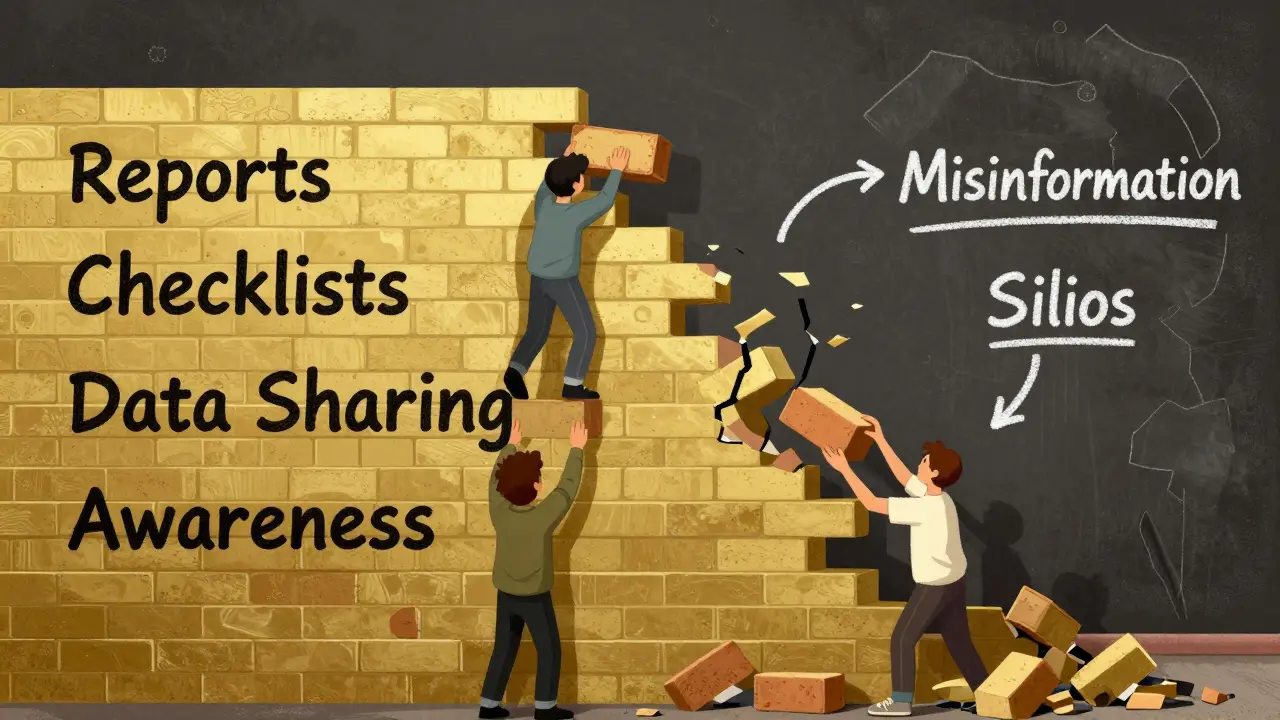
- Push for integration. Too many systems don’t talk to each other. Hospital incident reports, national databases, and pharmacy logs often exist in silos. Advocate for better data sharing - it’s the only way to see the full picture.
One nurse in the UK summed it up: “We have Yellow Card, hospital reports, national systems - but no one connects them.” That’s the problem. And that’s where you can help.
What’s Coming Next
The future of medication safety is smarter - but not easier. By 2027, Medi-Span and other clinical tools will use machine learning to predict risks before they happen. WHO’s new 2025 guideline on controlled medicines (opioids, benzodiazepines, ketamine) will roll out in Q4, balancing access with safety.But the biggest challenge? Human behavior. People still ignore side effects. Clinicians still don’t report. Misinformation spreads faster than facts. Technology won’t fix that - people will.
So stay informed. Report what you see. Push for better systems. And remember: every report you file is a brick in a global wall of safety.
How do I report a side effect if I’m not a healthcare professional?
Anyone can report. In the UK, use the Yellow Card app or website. In the U.S., go to the FDA’s MedWatch portal. In Australia, contact the Therapeutic Goods Administration (TGA). Most countries have free, simple systems - no medical license needed. Just describe the medicine, the reaction, and when it happened.
Why are so few side effects reported?
Many people think side effects are normal or too minor to report. Others don’t know how. Some clinicians feel it’s too time-consuming. But studies show that even small, seemingly harmless reactions - like dizziness after a new blood pressure pill - can signal bigger risks. Reporting helps regulators spot patterns before harm spreads.
Is the WHO’s new guideline on controlled medicines relevant to me?
Yes - if you or someone you know takes opioids, benzodiazepines, or ketamine. The 2025 guideline isn’t about banning these drugs. It’s about making sure they’re prescribed safely, especially in places where access is limited. It pushes for better training, clearer labeling, and monitoring systems to prevent both misuse and under-treatment.
What’s the difference between WHO, UMC, and ISMP?
WHO sets global policy and coordinates countries. UMC runs the global database and runs #MedSafetyWeek. ISMP is a nonprofit that creates practical tools for pharmacists and hospitals - like checklists and best practices. You need all three: policy, data, and action.
Can social media help or hurt medication safety?
It does both. Campaigns like #MedSafetyWeek use social media to spread awareness. But false claims about vaccines or drug dangers spread faster. Always check reports against official sources like WHO, FDA, or your national health agency before sharing. If it sounds too scary or too good to be true, it probably is.


Adarsh Uttral
29 January, 2026 . 17:29 PM
man i just learned about the yellow card app last week after my aunt had that weird dizziness thing after her new blood pressure med. thought it was just old age but turns out it was a known side effect. filed it in 2 mins. felt kinda cool being part of the system now.
April Allen
30 January, 2026 . 19:37 PM
What’s fundamentally missing from most public discourse on pharmacovigilance is the epistemic asymmetry between high-income and low-income reporting ecosystems. The WHO’s 350:5 disparity isn’t just a data gap-it’s a structural injustice encoded in infrastructure. Until we fund decentralized, mobile-first reporting mechanisms in LMICs-not just translate FDA templates-we’re optimizing for surveillance, not safety. The UMC’s global database is brilliant, but it’s a mirror reflecting only the loudest voices.
Meanwhile, AI-driven risk prediction tools like Medi-Span’s new ML module risk reinforcing confirmation bias if trained solely on Western datasets. We need federated learning models that incorporate regional pharmacokinetic variance, not just aggregate global averages. Otherwise, we’re automating blind spots.
And let’s not romanticize patient reporting. Many non-clinicians lack the vocabulary to distinguish between an idiosyncratic reaction and a known adverse event. We need plain-language decision trees, not just apps. ISMP’s checklists are a start, but they assume literacy, access, and trust-luxuries not universally available.
Real progress means decoupling safety from capitalism. If pharma paid for adverse event reporting infrastructure instead of marketing, we’d have a system that works.
Sheila Garfield
1 February, 2026 . 10:18 AM
Just wanted to say I used the Yellow Card app last month after my mum had that odd rash after her statin. Didn’t think much of it, but the app walked me through it step by step-super simple. I’ve actually started telling my friends about it at the pub. Small things, right? But if more of us did this, it’d add up. Also, I saw that #MedSafetyWeek poster at my local pharmacy-cute design. Hope they put up more next year.
Niamh Trihy
1 February, 2026 . 11:41 AM
One thing people overlook is how much the burden of reporting falls on patients, especially those managing chronic conditions. If you’re already juggling 5 meds, doctor visits, and insurance paperwork, adding a 90-second report feels like another chore. We need automated reporting hooks built into e-prescribing systems-not just apps you have to remember to open. Pharmacies could auto-populate reports from dispensing records with patient opt-in. That’s real efficiency.
And while we’re at it, why does the FDA still require a 14-page form for serious events? It’s 2025. We have APIs. Let’s connect hospital EMRs directly to the FAERS database with patient consent. Stop making safety a manual labor project.
Blair Kelly
3 February, 2026 . 11:25 AM
Let’s be real-this whole ‘report side effects’ campaign is a PR stunt by Big Pharma and the FDA to make people feel like they’re helping while the real problems go unaddressed. You think one more Yellow Card report is going to stop a drug that’s killing people? The system is rigged. The same companies that make the drugs also fund the safety boards. The WHO? They take money from pharma too. Meanwhile, doctors get paid bonuses for prescribing certain meds. This isn’t about safety-it’s about liability laundering. Stop pretending your 2-minute app submission makes a difference. It doesn’t. Only lawsuits do.
Rohit Kumar
4 February, 2026 . 05:40 AM
In India, we don’t have apps or easy reporting systems. Most people don’t even know what ‘pharmacovigilance’ means. I’ve seen people stop taking life-saving meds because they read a Facebook post about ‘toxic side effects’-no sources, just fear. Meanwhile, real reactions go unreported because the nearest health center is 50km away and the staff don’t have time. We need low-tech solutions: SMS-based reporting, community health worker training, local radio announcements in regional languages. Technology won’t fix this unless it’s designed for the ground, not the boardroom. WHO’s 2030 goal? Noble. But until they fund local NGOs-not just tech vendors-it’s just another PowerPoint slide.
Lily Steele
4 February, 2026 . 05:54 AM
Just wanted to say thank you for this post. I’m a mom of a kid with epilepsy and this stuff is terrifying. I’ve been using the Yellow Card app since last year and even shared the ISMP checklist with my neurologist’s office. They ended up adopting it. Small wins, you know? It’s easy to feel powerless but this actually made me feel like I’m doing something real. Keep sharing stuff like this.
Carolyn Whitehead
5 February, 2026 . 07:25 AM
Love this. I’ve been using the WHO alerts for a year now and honestly they’re the only thing I trust. No ads, no clickbait, just straight facts. I print them out and leave them on the kitchen table so my dad sees them. He’s 78 and takes like 7 pills a day. He says he feels safer knowing what’s out there. Honestly? This is the kind of info we all need more of.