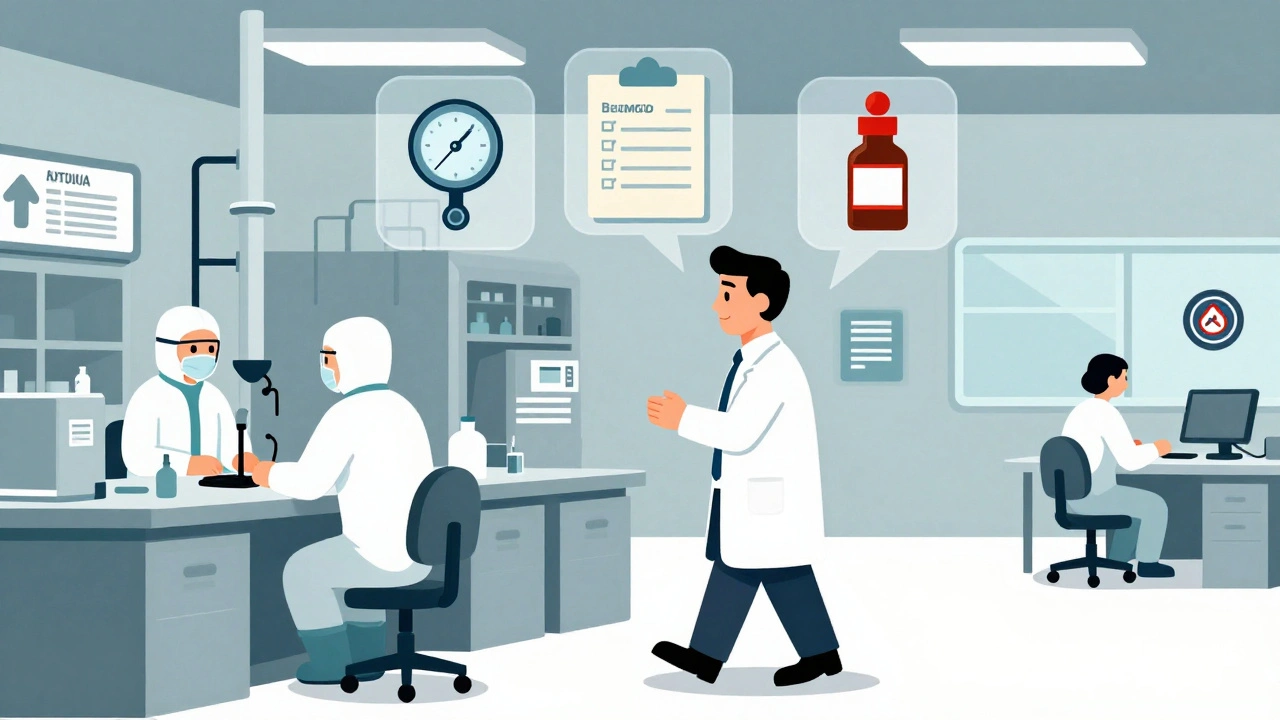
When the FDA shows up at your generic drug manufacturing facility, it’s not a surprise visit-it’s a routine check. But that doesn’t mean you can wing it. The agency doesn’t just look at paperwork. They watch how you operate, how you respond, and whether your culture of quality is real or just painted on the wall. If you’re preparing for an inspection, here’s what you’re really up against-and how to get through it without a warning letter.
Why the FDA Comes Knocking
The FDA doesn’t pick facilities at random. They use a risk-based model that weighs everything: past inspection results, product type, complaint history, even tips from whistleblowers. If you make high-risk drugs-like injectables or those with narrow therapeutic windows-you’re more likely to get visited. Facilities with a clean record? They might go years between inspections. Those with a history of issues? Expect more frequent checks. There are four types of inspections, but if you’re making generics for the U.S. market, you’ll most likely face one of two: routine surveillance or Pre-Approval Inspection (PAI). PAIs happen before your drug gets approved. The FDA wants to confirm what’s in your application actually matches what’s happening on the floor. If your process validation documents say you use a 20-minute mixing cycle, but the operators say it’s 15, that’s a red flag.The Six-System Inspection Framework
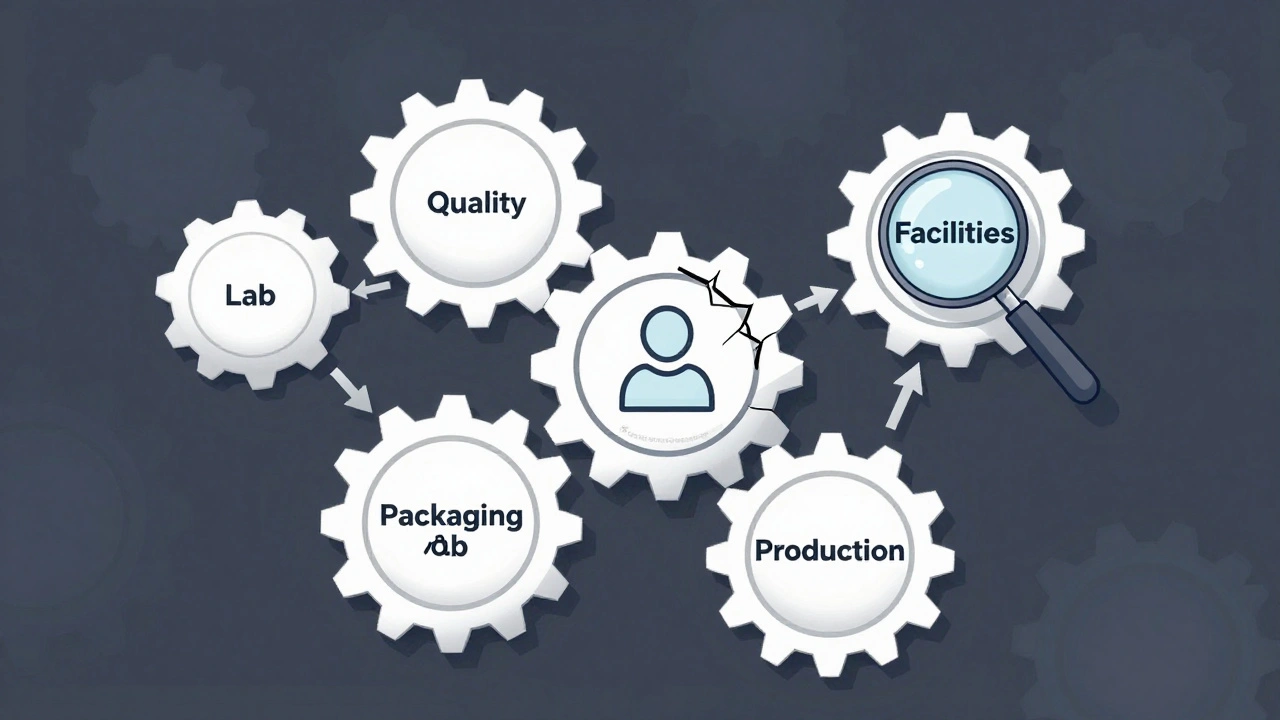
Every FDA inspector walks in with the same checklist: the six systems. They don’t check all six every time, but they always check Quality. Then they pick two or three more to dig into. Here’s what each one means in plain terms:- Quality System: This is the backbone. Do you have a quality unit that’s truly independent? Are they empowered to stop production if something’s off? 21 CFR 211.22(a) is the rule here-and it’s the most cited violation. If your quality team reports to production, you’re already in trouble.
- Facilities & Equipment: Is your cleanroom properly maintained? Are your equipment logs up to date? Do you have a plan for cleaning and calibrating machines? If your pH meter hasn’t been calibrated since 2022, you’re not just behind-you’re non-compliant.
- Materials: Every raw material has to be tested before it touches your product. Supplier qualifications matter. If you’re buying active pharmaceutical ingredients (APIs) from a vendor without a proper audit trail, that’s a problem.
- Production: Are your processes validated? Can you prove you can consistently make the same product batch after batch? If you’re relying on operator memory instead of documented procedures, you’re gambling with patient safety.
- Packaging & Labeling: One wrong label on a bottle of metformin could send a diabetic to the ER. The FDA checks lot numbers, expiration dates, and whether your labeling matches your approved application. Even a misplaced decimal point can trigger a recall.
- Laboratory Control: Your lab isn’t just a room with machines. It’s where data integrity is tested. Are your HPLC results backed by raw data? Are your stability samples stored exactly as your protocol says? If your lab techs are backdating results, the FDA will find out.
What They Look For During the Tour
You can’t fake a clean facility. Inspectors walk through every area-production, warehousing, labs, even the break room. They’re looking for signs of a ‘state of control.’ That means:- Clear signage on clean zones
- Proper gowning procedures
- No visible dust or debris
- Equipment in good repair
- Records easily accessible
The FDA 483: What Happens When They Find Something
If they spot issues, they’ll hand you Form FDA 483. It’s not a citation. It’s a list of observations. You have 15 business days to respond. But here’s the catch: your response isn’t just an apology. It’s your chance to prove you understand the problem and have a real plan to fix it. A weak response says: “We’ll train staff.” A strong one says: “We identified that the mixing timer wasn’t calibrated. We’ve recalibrated all timers, updated SOP-017, trained 12 operators, and added a weekly verification checklist. Root cause: lack of preventive maintenance schedule. Corrective action: implemented quarterly calibration audits.” If the FDA thinks your response is vague or unconvincing, they may issue a warning letter. That’s when things get serious. You’ll need to schedule a post-warning letter meeting (PWLM), which the FDA finalized guidance for in June 2025. This isn’t a chat-it’s a formal review of your corrective actions.PreCheck: The New Way to Avoid Surprises
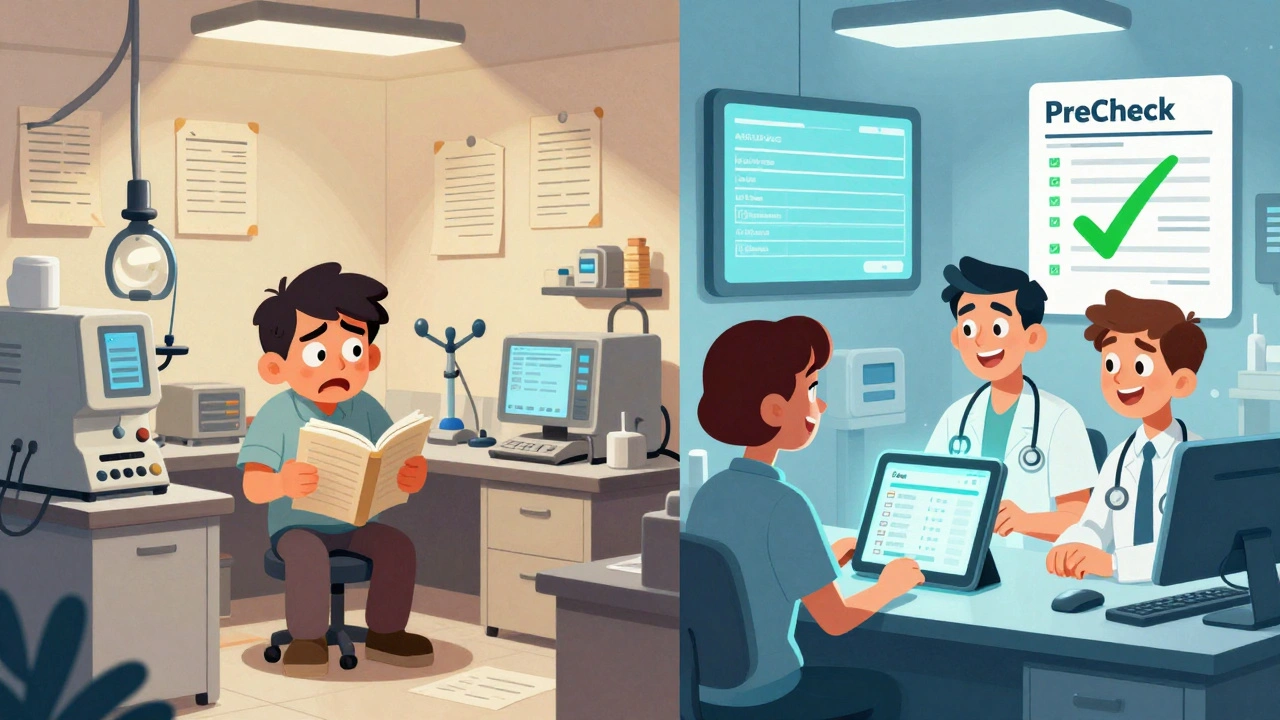
If you’re building a new facility or upgrading an old one, don’t wait for the inspection. The FDA’s PreCheck program, launched in 2024, lets you get feedback before you start production. You submit a Type V Drug Master File (DMF) with your facility layout, quality system design, and process validation plans. FDA experts review it and give you feedback-before you spend millions on equipment. This isn’t a shortcut. It’s a safety net. Companies using PreCheck report fewer 483s and faster approvals. It’s especially useful for firms new to U.S. markets or those expanding into complex products like inhalers or biosimilars.Preparing Like a Pro
You can’t prepare for an FDA inspection the week before. It’s not a test you cram for. It’s a culture you build.- Train everyone. Not just QA. Operators, maintenance, shipping-they all need to know what’s expected.
- Run mock inspections. Bring in an outside auditor. Let them ask tough questions. Record the answers. Fix the gaps.
- Keep your documentation clean. If you can’t find a batch record in 30 seconds, you’re not ready.
- Design your facility for inspection. Make sure tour routes are clear. No clutter. No hidden corners.
- Build a quality culture. If your team feels safe reporting errors without fear, you’re already ahead of 80% of facilities.
What Happens After the Inspection
The final report is called the Establishment Inspection Report (EIR). It’s not public, but it lives in the FDA’s database forever. If your EIR says “acceptable,” you’re good. If it says “unacceptable,” you’re on the radar. Even if you pass, the FDA might come back. Risk-based inspections mean your score isn’t permanent. One bad batch, one complaint, and you could be next. The best companies don’t wait for inspections. They audit themselves monthly. They update SOPs quarterly. They train new hires on day one. They treat every day like inspection day.Final Reality Check
More than 90% of generic drug inspections result in acceptable findings. That’s not luck. It’s discipline. The companies that fail aren’t usually the ones with bad equipment. They’re the ones with sloppy processes, ignored SOPs, or a quality team that’s too afraid to speak up. If you’re ready to be one of the 90%, start today. Not tomorrow. Not after the next audit. Now.Are FDA inspections always announced?
No. Routine inspections can be unannounced, especially for facilities with past compliance issues or those producing high-risk products. Pre-Approval Inspections (PAIs) are usually scheduled, but the FDA reserves the right to show up without notice if they have reason to suspect non-compliance.
How long does an FDA inspection last?
Most inspections last 3 to 7 days, depending on the facility size and complexity. Small facilities with straightforward processes might be done in 2 days. Large, multi-product sites with complex validation requirements can take two weeks or more.
What’s the most common violation on an FDA 483?
The most frequent violation is failure to maintain an effective quality unit, specifically under 21 CFR 211.22(a). This includes situations where the quality team lacks authority, is underfunded, or reports to production instead of being independent. Other top violations include inadequate process validation, poor data integrity, and missing or incomplete batch records.
Can you appeal an FDA 483 observation?
You can’t formally appeal the observations themselves, but you can respond with evidence that challenges their interpretation. If you believe an observation is inaccurate or misapplied, your 15-day response is your chance to provide data, logs, or expert analysis to correct the record. The FDA considers your response before deciding whether to issue a warning letter.
How does the FDA decide which facilities to inspect next?
The FDA uses a multi-criteria decision analysis model that considers risk factors like: past inspection history, product risk level (e.g., injectables vs. tablets), complaint volume, supplier performance, geographic location, and tips from insiders. Facilities with recent violations or those producing high-risk drugs are prioritized.
What’s the difference between a warning letter and a 483?
A Form FDA 483 is a list of observations made during an inspection-it’s not a legal action. A warning letter is a formal notice that the FDA considers your violations serious enough to require immediate correction. Warning letters are public, can trigger import alerts, and may lead to product seizures or injunctions if unresolved.
Do I need a U.S. agent for an FDA inspection?
Yes, if your facility is outside the U.S. The FDA requires foreign manufacturers to designate a U.S. agent who acts as a point of contact for regulatory communications. This person doesn’t need to be on-site but must be reachable during inspection hours and able to coordinate access and documentation.
What’s the role of data integrity in FDA inspections today?
Data integrity is now the #1 focus. Inspectors check for backdating, deletion of raw data, lack of audit trails, and unapproved overrides. If your HPLC system doesn’t have user-level access controls or if paper records are used to supplement electronic data without proper controls, you’re at high risk. The FDA trains inspectors to spot these patterns-don’t assume they won’t find them.
Next Steps for Manufacturers
If you’re not yet ready for an inspection, start here:- Review your last 12 months of deviation and change control logs. Are they complete? Are root causes properly addressed?
- Conduct a mock inspection with an external auditor. Record the session and debrief with your team.
- Update your SOPs. If any were written before 2022, they likely need revision for data integrity and risk-based thinking.
- Join the FDA’s PreCheck program if you’re building or expanding. It’s free and reduces long-term risk.
- Train your quality team to be fearless. Their job isn’t to please auditors-it’s to protect patients.


Chad Kennedy
3 December, 2025 . 21:44 PM
This whole thing is just corporate buzzword bingo... "culture of quality"? Please. I’ve seen facilities where the QA guy is the guy who also cleans the toilets. They don’t care. They just want to get the batch out before lunch.
And don’t even get me started on "PreCheck"-that’s just a fancy way of saying "pay us more money to tell you what you already know."
Siddharth Notani
4 December, 2025 . 08:21 AM
Respected colleagues, the FDA’s six-system framework is a robust foundation for GMP compliance. In my experience in Indian API manufacturing, the Quality System (21 CFR 211.22(a)) remains the most critical pillar. A truly independent quality unit, empowered to halt production, is non-negotiable.
Additionally, data integrity-particularly in HPLC systems-is now the primary focus of inspectors. I recommend implementing electronic audit trails with role-based access control. This is not optional. 📊✅
Cyndy Gregoria
6 December, 2025 . 08:20 AM
You got this. Seriously. I’ve walked into plants that looked like a hurricane hit a spreadsheet-and still walked out with zero 483s because their team owned their processes.
Stop thinking of inspections as a threat. Think of them as feedback. Your team needs to know they’re not just making pills-they’re saving lives. Train them like it matters. Because it does.
And if your SOPs are older than 2022? Burn them. Rewrite them. Today.
Akash Sharma
8 December, 2025 . 03:17 AM
Thank you for this comprehensive breakdown. I’m particularly intrigued by the emphasis on the Quality System as the backbone. In my facility, we recently restructured our QA unit to report directly to the CEO rather than to production-this single change has already led to a 40% increase in proactive deviation reporting. However, I’m curious about the practical implementation of the PreCheck program for small-scale manufacturers with limited resources. Does the FDA provide any templates or guidance documents for Type V DMF submissions? Also, how do you balance the cost of implementing full electronic batch records versus maintaining paper systems in regions with unreliable internet infrastructure? I’ve seen facilities where the power goes out three times a day, and yet they still maintain impeccable records. How do they manage it? I’d love to hear real-world examples from others who’ve navigated these challenges.
Palanivelu Sivanathan
9 December, 2025 . 16:05 PM
Okay… so the FDA’s just… watching us? Like… a god? A judge? A cosmic quality police officer??
And we’re supposed to bow down to some guy in a lab coat with a clipboard who doesn’t even know what a vial is? I mean, come on.
They don’t care about patients-they care about paperwork. If your lab tech writes "25°C" instead of "25.0°C"-BAM-warning letter. But if the same lab tech accidentally kills someone with a contaminated batch? Ohhhhh… that’s just "human error."
WE’RE NOT ROBOTS. WE’RE HUMANS. And we’re tired of being treated like we’re in a Kafka novel written by a bored compliance officer.
Can we just… make medicine without being interrogated like criminals every 18 months? 🤔😭
Joanne Rencher
9 December, 2025 . 18:37 PM
Ugh. Another corporate PR piece disguised as "helpful advice."
"Build a quality culture?" Yeah, right. Tell that to the guy who got fired last month for reporting a broken autoclave.
Real talk: the FDA doesn’t care about your culture. They care about liability. And your "fearless QA team"? They’re just the first ones to get laid off when profits dip.
Stop pretending this is about patients. It’s about avoiding lawsuits. And if you’re not a multinational with a legal team bigger than your production floor-you’re just playing Russian roulette with a 483.
Cristy Magdalena
10 December, 2025 . 09:10 AM
I read this entire post. Every word. And I’m still not convinced that any of this actually improves patient outcomes. You’re obsessed with compliance, with audit trails, with calibration logs-but where’s the human element?
What about the operator who’s been working 12-hour shifts for six days straight? What about the QA technician who’s never been paid overtime? What about the fact that your "independent quality unit" is staffed by two people who both report to the same manager who’s under pressure to cut costs?
You’re treating symptoms. You’re not treating the disease.
And yes-I’m aware that my tone is overly emotional. But this isn’t a technical manual. It’s a human system. And humans are not SOPs.
Adrianna Alfano
10 December, 2025 . 21:39 PM
Wait-I just realized something. We’re all talking about inspections like they’re some kind of scary monster… but what if they’re not? What if the FDA’s just trying to keep people from dying because someone didn’t check a thermometer?
I work in a small facility in rural Ohio. We had a batch of insulin that got sent out with a misprinted label because someone thought "5 units" was "50 units." No one died. But we almost did.
So yeah, maybe the paperwork is annoying. Maybe the inspectors are rigid. But I’d rather have a 483 than a funeral.
Also-I think "PreCheck" is genius. I submitted ours last week. Fingers crossed.
ps: I accidentally typed "calibarate" instead of "calibrate" in my SOP last month. I fixed it. But I’m still embarrassed.