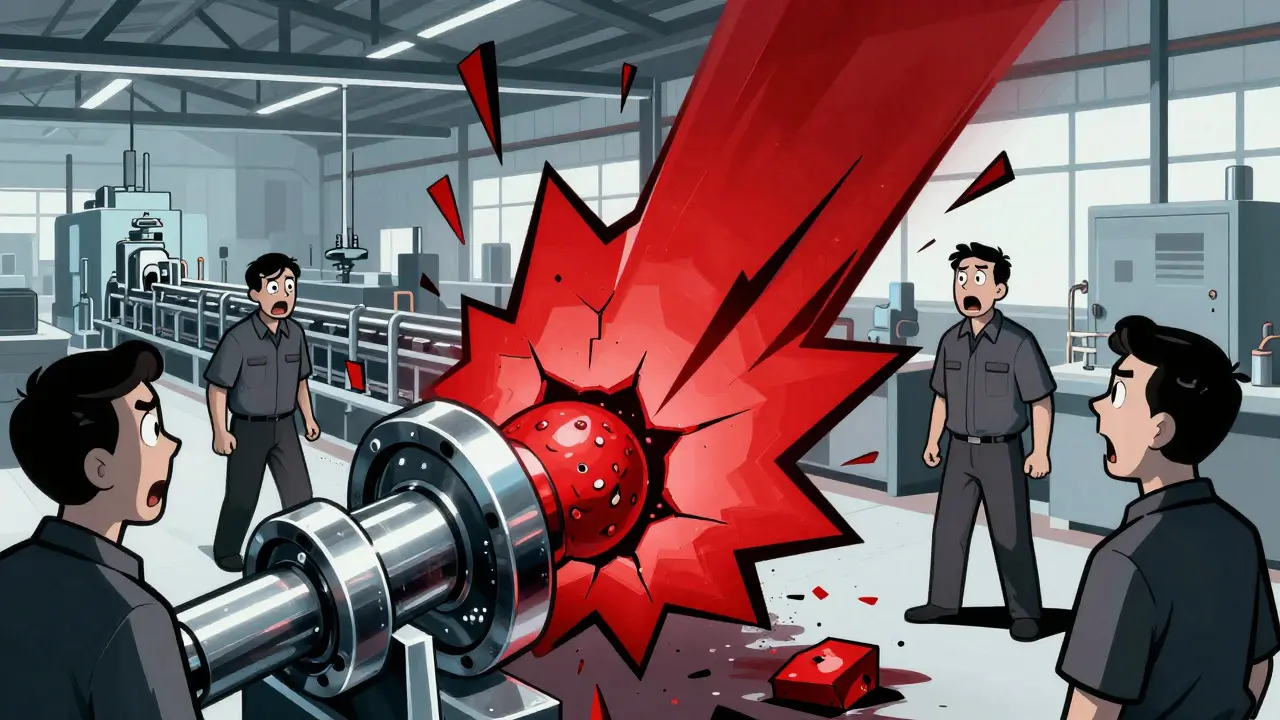
Imagine spending millions on raw materials and labor, only to have a single microscopic defect scrap the entire batch. For manufacturers in 2026, this isn't just a hypothetical nightmare; it is a daily reality for many. The fear of quality failure has shifted from a back-office compliance checkbox to a front-line survival strategy. You might wonder why the anxiety around quality assurance has spiked so dramatically. It comes down to a perfect storm of rising costs, complex supply chains, and a desperate shortage of skilled workers.
The stakes have never been higher. According to the ZEISS U.S. Manufacturing Insights Report 2025, which surveyed over 1,100 professionals across 49 states, 93% of manufacturers now cite quality as extremely important to their operations. Among executives and directors, that number jumps to 95%. This isn't just about avoiding bad press anymore; it is about staying profitable in an environment where margins are razor-thin and rework costs are eating away at your bottom line.
The Hidden Costs of Quality Failures
Let’s talk money. When you think about manufacturing risks, you probably picture machine breakdowns or delayed shipments. But the silent killer is often the cost of rework. In 2025, 38% of manufacturers identified the cost of rework and iterations as a leading challenge. Think about what happens when a part doesn’t fit. You stop the line. You inspect the inventory. You scrap or fix the parts. Then you restart. Every minute of downtime is money lost, and every scrapped unit is material wasted.
Consider the data from Deloitte’s 2026 Manufacturing Industry Outlook. Manufacturers who implement integrated quality assurance systems see 22% lower rework costs compared to those with fragmented approaches. That is a massive difference. If your annual revenue is $10 million, a 22% reduction in waste could mean hundreds of thousands of dollars back in your pocket. Yet, many companies still treat quality inspection as a separate, siloed process rather than an integrated part of production.
The problem is compounded by rising material costs. With 44% of manufacturers citing material prices as their top concern, there is no room for error. You cannot afford to buy expensive steel or rare earth metals and then throw them in the trash because a sensor missed a deviation. Precision metrology solutions are no longer a luxury; they are mission-critical tools for maintaining margins.
The Skills Gap and the Human Element
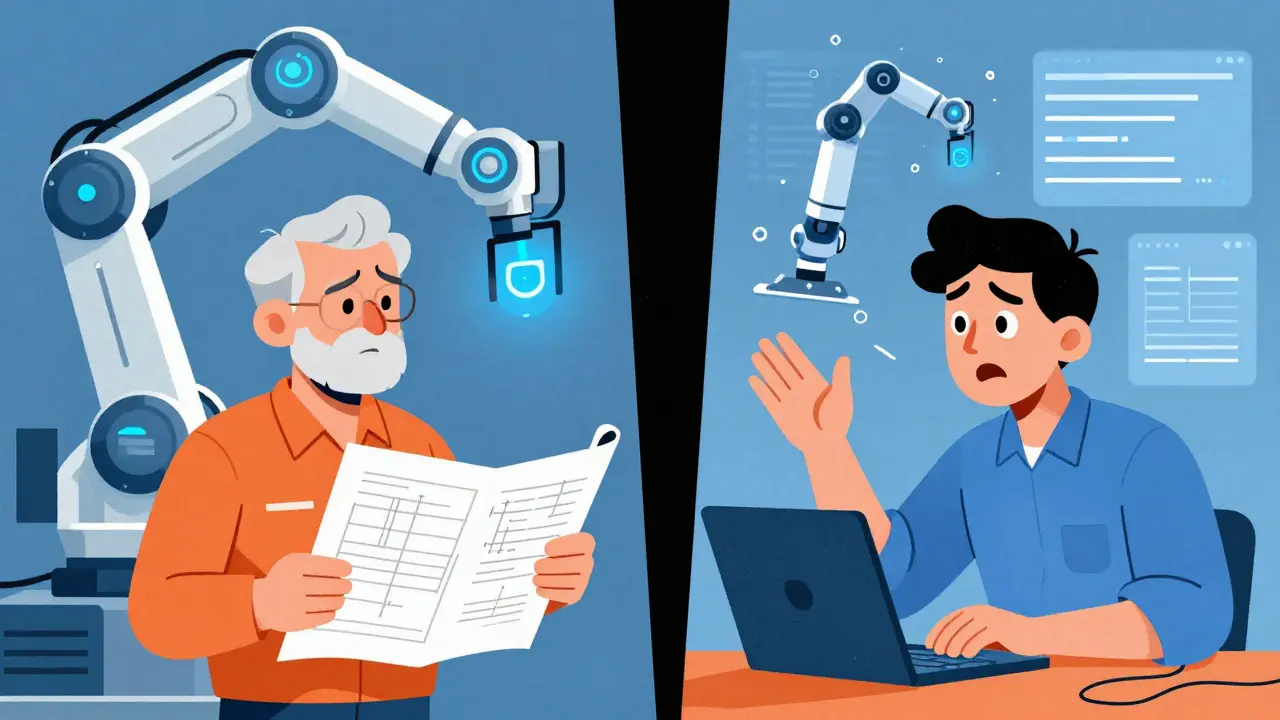
Technology can solve many problems, but it requires people to run it. Here lies one of the biggest fears in modern manufacturing: the lack of skilled personnel. Nearly half (47%) of surveyed professionals point to a shortage of skilled workers as a major headwind. This isn't just about finding anyone; it is about finding people who understand both traditional quality methods and new digital tools.
A LinkedIn survey of 312 manufacturing professionals in June 2025 revealed that 63% reported difficulty finding staff trained on these hybrid skills. Imagine hiring a brilliant engineer who knows how to read a blueprint but has no idea how to interpret data from an AI-enhanced inspection system. You end up with expensive technology sitting idle or being used incorrectly.
This skills gap creates a bottleneck. Traditional inspection processes are time-consuming, consuming 47% of manufacturers' time according to the ZEISS report. Without skilled workers to streamline these processes or operate advanced automation, production slows down. The result? Delayed deliveries and frustrated customers. As one production manager noted in a Reddit thread, "We're expected to maintain aerospace-grade precision while moving at consumer electronics speed. It's impossible without proper technology investment and training."”
| Approach | Rework Cost Impact | Time-to-Market | Labor Requirement |
|---|---|---|---|
| Integrated QA Systems | 22% Lower | 18% Faster | Lower (Automated) |
| Fragmented/Manual QA | Baseline (Higher) | Baseline (Slower) | High (Manual Inspection) |
| Predictive Analytics Enabled | 27% Fewer Deviations | Significantly Faster | Moderate (Data Literacy Needed) |
Technology as a Double-Edged Sword
You’ve likely heard about the buzzwords: AI, IoT, Digital Twins, Cyber-Physical Systems. These technologies promise to revolutionize quality assurance. And they do, if implemented correctly. However, there is a significant risk of "technology adoption without integration." Reader Precision reports that many manufacturers implement automation and robotics without connecting them to their broader data ecosystem. This creates data silos where information gets trapped in one department and never reaches the decision-makers who need it.
For example, an electronics manufacturer invested $2.3 million in automated inspection systems. Sounds impressive, right? But they failed to train their staff properly. The result? Error rates jumped by 40% during the first year. The technology was sound, but the human element was missing. This is a classic case of buying a solution without addressing the root cause of operational inefficiency.
On the flip side, successful implementations look very different. A medical device manufacturer used precise metrology solutions to optimize material usage, reducing rework costs by $1.2 million annually. The key here was integration. They didn't just buy a new microscope; they connected it to their Quality Management System (QMS) and trained their team to act on the real-time data it provided.
The trend is clear: cloud-based QMS solutions are taking over. Gartner’s Q2 2025 market analysis shows that 68% of new enterprise deployments are cloud-based, up from 52% in 2023. Why? Because flexibility matters. Cloud systems allow for real-time monitoring across geographically dispersed operations, which is crucial for global supply chains. They also offer better scalability and easier updates, ensuring you’re always using the latest algorithms for defect detection.

Supply Chain Volatility and Quality
Your quality control doesn’t start on your factory floor; it starts with your suppliers. In 2025, supply chain volatility remains a top concern. Trade uncertainties and tariffs have increased costs and created unpredictability. When your supplier sends you inconsistent materials, your best-in-class inspection equipment can only do so much. You’re fighting a losing battle from the moment the shipment arrives.
Industry leaders are changing how they view supplier relationships. Instead of treating suppliers as external vendors, they treat them like extensions of their own operation. They share forecasts, communicate openly, and plan ahead. According to case studies from Reader Precision, manufacturers who adopt this collaborative approach achieve 31% greater supply chain resilience. This means fewer surprises, better material consistency, and ultimately, higher product quality.
However, not everyone is ready for this level of transparency. Many manufacturers still operate in silos, guarding their data and demanding perfection without offering support. This adversarial relationship leads to finger-pointing when defects occur, rather than collaborative problem-solving. To reduce fear and uncertainty, you need to build trust with your supply chain partners.
Looking Ahead: Predictive Quality and Future Risks
The future of quality assurance is predictive, not reactive. Instead of catching defects after they happen, advanced systems forecast potential deviations before they occur. Early adopters of predictive quality analytics report 27% fewer quality deviations reaching end products. By 2027, Forrester Research projects that 89% of leading manufacturers will have integrated AI-driven quality analytics into their production systems.
But there is a catch. Manufacturers who delay adoption face steeper penalties. Analyst Maria Chen of Forrester warns that laggards could experience 23% higher defect rates by 2027 compared to early adopters. The gap between those who embrace technology and those who cling to manual processes is widening. This "quality solution gap" affects 58% of manufacturers who recognize the strategic importance of quality but lack the resources to implement comprehensive solutions.
Sustainability pressures are also reshaping quality standards. Lean manufacturing operations are no longer just about efficiency; they are about long-term viability. Reducing waste through better quality control directly supports sustainability goals. As regulations tighten and consumers demand greener products, your quality assurance practices will be scrutinized under a new lens.
Why is quality assurance more critical in 2026 than in previous years?
In 2026, quality assurance is critical due to rising material costs, supply chain volatility, and intense competition. With 44% of manufacturers citing material costs as a top concern, even small defects lead to significant financial losses. Additionally, the shift towards electric vehicles and complex electronics demands higher precision, making traditional inspection methods insufficient.
What are the biggest challenges manufacturers face regarding quality control?
The top challenges include a severe shortage of skilled personnel (cited by 47% of manufacturers), time-consuming inspection processes, and the high cost of rework. Integrating new technologies like AI and cloud-based QMS with legacy systems also presents significant hurdles, often requiring extensive training and change management.
How does predictive analytics improve manufacturing quality?
Predictive analytics uses historical data and AI algorithms to forecast potential defects before they occur. This proactive approach allows manufacturers to adjust processes in real-time, reducing quality deviations by up to 27% and minimizing waste. It shifts quality control from a reactive checkpoint to a continuous improvement cycle.
Is investing in cloud-based Quality Management Systems (QMS) worth it?
Yes, especially for companies with multiple locations or complex supply chains. Cloud-based QMS offers greater flexibility, real-time data access, and easier scalability. In 2025, 68% of new enterprise deployments were cloud-based, indicating a strong industry shift towards these solutions for better collaboration and faster decision-making.
How can manufacturers address the skilled labor shortage in quality assurance?
Manufacturers must invest in cross-training programs that combine traditional quality methods with digital literacy. Hiring managers increasingly prioritize data analytics skills, with salaries for QA professionals possessing AI/ML skills rising 22% above traditional roles. Partnering with technical schools and offering internal upskilling opportunities are effective strategies to bridge this gap.






Jake Kitzmiller
26 June, 2026 . 04:09 AM
Hey folks, I've been working in manufacturing QA for about ten years now and this article hits the nail on the head regarding the skills gap. It's not just about buying fancy new metrology tools; it's about having people who actually know how to interpret the data those tools spit out. We spent a fortune on an automated inspection system last year, but without proper training, our error rates initially went up because the team didn't trust the AI alerts.
We had to pivot hard on internal upskilling. Now we have technicians who understand both the mechanical side of the line and the digital dashboard. If you're struggling with that hybrid skill set, start small. Pick one station, train two super-users, and let them mentor the rest. It takes time, but the ROI on reduced rework is undeniable.
Sumit gupta
27 June, 2026 . 21:30 PM
Interesting read. In India, we are seeing similar trends where traditional craftsmanship meets Industry 4.0. The challenge is often cultural resistance rather than technical inability. Older workers feel threatened by automation, so change management is key. We found that involving senior staff in the selection process of new tech helped bridge that trust gap significantly.
Annemarie Kautz
28 June, 2026 . 05:53 AM
ugh another article telling us what we already know... quality matters. duh. why do these reports always sound like they were written by robots? nobody reads all this fluff about 'perfect storms' and 'razor-thin margins'. just give us the solution or shut up. also i hate when they use words like 'metrology' like its some big secret code instead of just measuring stuff properly :/
Dale Simpson
28 June, 2026 . 16:13 PM
You guys are totally missing the bigger picture here! This is such a huge opportunity for growth if we look at it right. Yes, costs are up, but imagine the efficiency gains from predictive analytics. Its not scary, its exciting! We need to embrace the change and stop complaining about the learning curve. My team switched to cloud-based QMS last month and honestly, the real-time visibility is a game changer. Lets keep pushing forward and support each other through this transition!
alexander barrera
28 June, 2026 . 18:13 PM
The problem isn't technology or even skills, it's that domestic manufacturing has been gutted by cheap imports and lazy regulations. We expect American factories to compete with sweatshops while paying fair wages? Impossible. 🇺🇸 We need tariffs, strict import controls, and a return to American-first policies. Until then, no amount of AI will save our jobs. Stop blaming the workers for failing in a rigged system designed to fail them. #AmericaFirst
Charlotte Stuart
30 June, 2026 . 16:23 PM
It is quite amusing to see laypeople discussing complex supply chain dynamics as if they understand the nuances of global logistics. The article mentions 'collaborative supplier relationships,' which sounds nice in theory but is practically unenforceable without stringent contractual obligations and legal frameworks. Most suppliers simply lack the infrastructure to provide the level of transparency required for true integration. It is naive to assume goodwill alone can solve systemic inefficiencies.
Hema Khimasia
2 July, 2026 . 00:28 AM
The epistemological shift from reactive to predictive quality control represents a fundamental change in how we perceive error within industrial systems. When we view defects not as failures but as data points in a stochastic process, the role of the human inspector transforms from gatekeeper to analyst. This requires a high degree of cognitive flexibility and statistical literacy among the workforce, which is currently lacking in many legacy organizations.
krystal Live
2 July, 2026 . 06:20 AM
I love this energy! Let's get after it everyone!! Quality assurance doesnt have to be boring or stressful. Think of it as protecting your craft and your customers. Every time you catch a defect early, you are saving money and keeping someone safe. Keep communicating with your teams and celebrate the small wins. You got this!!! 💪✨
Tucker Brown
4 July, 2026 . 00:27 AM
They want you to believe it's about 'quality' but it's really about surveillance. These IoT sensors and AI systems are collecting massive amounts of data on worker behavior. Who owns that data? Not you. The corporations use it to optimize labor until you burn out. Then they replace you with a robot. Don't fall for the 'efficiency' narrative. It's control disguised as improvement.
Alyssa Smith
5 July, 2026 . 19:38 PM
This resonates so much with what I'm seeing in my community. We have local manufacturers trying to adapt to these new standards but they lack the resources for big tech upgrades. It would be great to see more shared resource models or cooperative training programs between smaller shops. Collaboration could really help level the playing field for everyone involved.
Frank Polster
6 July, 2026 . 22:39 PM
Oh sure, let's just throw millions at 'cloud-based solutions' and hope the magic fairy fixes our broken processes. Because nothing says 'quality' like relying on a server farm halfway across the world that might go down during a storm. Good luck with that. Maybe if we stopped outsourcing everything to consultants who don't touch a wrench, we'd actually solve something.
ankit agarwal
7 July, 2026 . 18:19 PM
The paradigm shift towards Industry 4.0 necessitates a holistic approach to human capital development. Merely implementing digital twins without addressing the underlying organizational inertia is futile. We must foster a culture of continuous learning where data literacy is as fundamental as mechanical aptitude. The synergy between human intuition and algorithmic precision is where true value lies. Let us accelerate this transformation with vigor and strategic foresight.
Stephanie Cree
9 July, 2026 . 17:13 PM
It is absolutely scandalous that companies prioritize profit over ethical labor practices and environmental sustainability! 😡 You cannot claim to care about 'quality' while exploiting workers and ignoring carbon footprints. True quality includes moral integrity. Companies that do not adopt transparent, sustainable, and fair practices should be boycotted immediately. We demand accountability! ✊💔