Medication Side Effect Risk Checker
Check Your Symptoms
This tool helps identify potentially dangerous medication side effects. It is not a medical diagnosis. Always consult your healthcare provider for medical advice.
Risk Assessment Result
Next Steps:
When you take a new medication, it’s normal to worry about what might go wrong. Most people experience mild side effects-maybe a dry mouth, a little dizziness, or an upset stomach. But some reactions aren’t just uncomfortable. They can kill you. And they often start quietly, long before you realize something’s seriously wrong.
The truth is, medication side effects are one of the top reasons people end up in emergency rooms. In the U.S. alone, over 1.3 million emergency visits each year are caused by unexpected drug reactions. Many of these could have been stopped if someone had recognized the early signs. You don’t need to be a doctor to spot the red flags. You just need to know what to look for-and when to act.
What Makes a Side Effect Dangerous?
Not all side effects are created equal. Some are annoying. Others are deadly. The FDA defines a serious side effect as one that causes death, hospitalization, permanent damage, or a life-threatening condition. That means if a drug makes you feel sick, that’s one thing. But if it makes your throat swell shut, or your heart start racing out of control, that’s an emergency.
Here’s the scary part: dangerous reactions don’t always happen right away. Some show up minutes after you take the pill. Others creep in over days or weeks. That’s why it’s not enough to just read the pamphlet that comes with your prescription. You need to pay attention to your body-especially in the first few days after starting a new medication.
The Top 7 Life-Threatening Warning Signs
If you’re taking any prescription drug, keep an eye out for these seven symptoms. They’re not normal. They’re not "just side effects." They’re your body screaming for help.
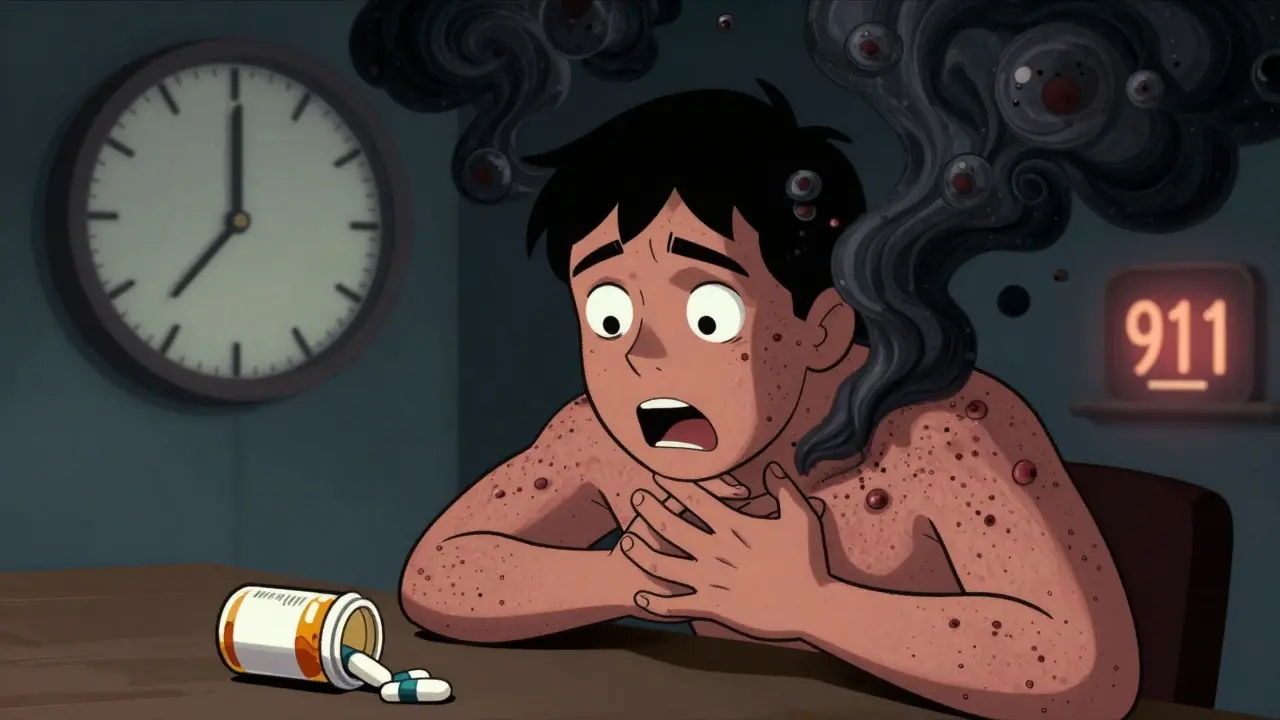
- Difficulty breathing or tightness in your throat-This is the #1 sign of anaphylaxis, a severe allergic reaction. It can happen within minutes. If you feel like you can’t get air in, or your tongue feels swollen, call 911 immediately. No waiting. No calling your doctor first.
- Hives, rash, or skin peeling-A mild rash might be nothing. But if it spreads fast, turns purple, or starts blistering, it could be DRESS syndrome (Drug Rash with Eosinophilia and Systemic Symptoms). This can destroy your liver or kidneys if ignored.
- Chest pain or irregular heartbeat-If your heart feels like it’s pounding, fluttering, or skipping beats, especially if you’re not exercising, get checked. Some medications, especially those for diabetes or high blood pressure, can trigger dangerous arrhythmias. A heart rate over 120 beats per minute at rest is a red flag.
- Severe vomiting, blood in stool, or black tarry stools-This isn’t just "stomach flu." It could mean internal bleeding from a drug like aspirin, ibuprofen, or even newer weight-loss drugs like semaglutide. Blood in your poop or vomit? Go to the ER. Now.
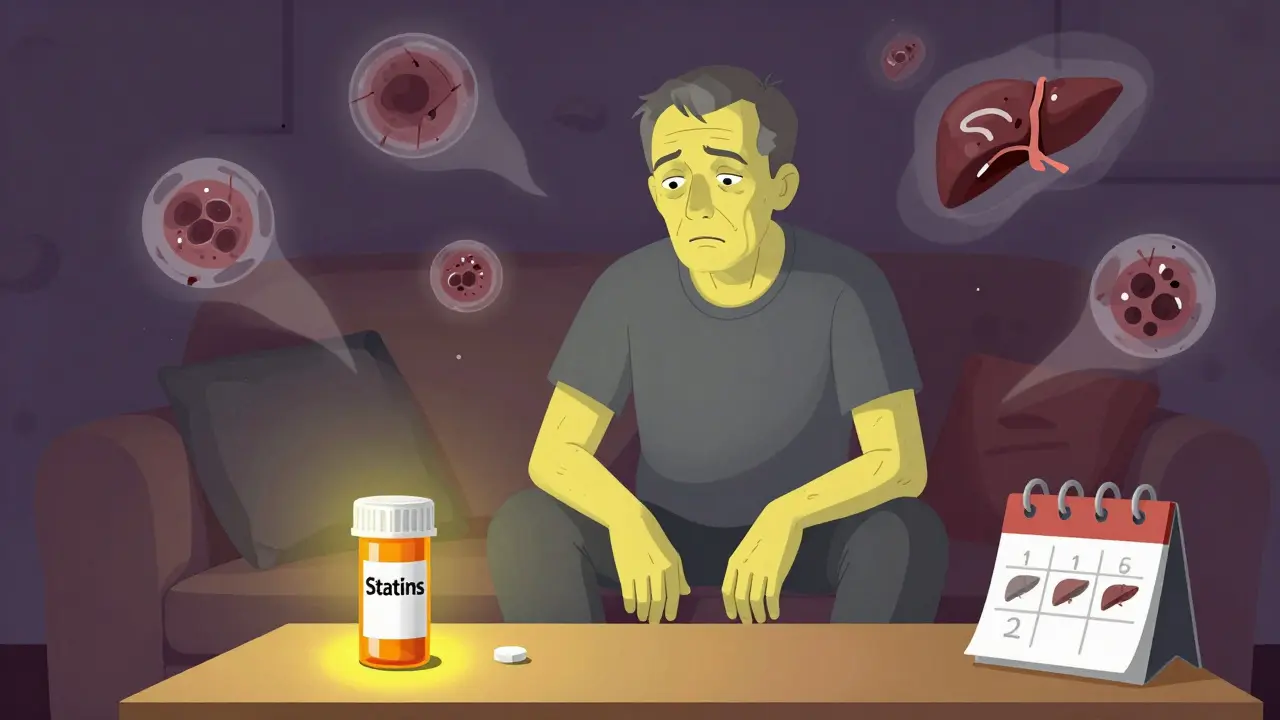
- Yellowing of skin or eyes (jaundice)-This means your liver is struggling. Medications like acetaminophen, statins, or antibiotics can damage the liver. If you notice this along with dark urine or extreme fatigue, you could be on the edge of liver failure.
- Unusual bleeding or bruising-If you’re bleeding from your gums for no reason, getting bruises without bumping into anything, or your period becomes abnormally heavy, it could mean your blood isn’t clotting right. This is common with blood thinners or certain antibiotics.
- Extreme drowsiness, confusion, or trouble waking up-Opioids, benzodiazepines, and sleep aids can slow your breathing without you realizing it. If you’re sleeping more than usual, can’t stay awake during the day, or feel disoriented, this could be central nervous system depression. It can lead to coma or death.
Why Timing Matters More Than You Think
Here’s the thing most people miss: dangerous reactions don’t wait. They escalate fast. A mild rash that shows up 12 hours after taking a pill might be harmless. But if it turns into full-body hives and swelling within two hours? That’s anaphylaxis. You don’t have time to schedule a doctor’s appointment.
According to the Mayo Clinic, symptoms of serious allergic reactions often appear within an hour. Other reactions-like liver damage or kidney failure-can take days. But they don’t start with pain. They start with subtle changes: a little less urine, a sudden weight gain, feeling more tired than usual. These are easy to ignore. Don’t.
Think of it like a fire alarm. You don’t wait for the whole house to burn down before calling the fire department. You act when the alarm goes off-even if you’re not sure it’s real. Same with your body.
Who’s at Highest Risk?
You might think only older people or those on lots of meds are at risk. But the truth is, anyone can have a dangerous reaction. That said, some groups are more vulnerable:
- People over 65-Your body processes drugs slower. The American Geriatrics Society says seniors experience side effects 2.7 times more often than younger adults.
- Those taking five or more medications-Polypharmacy increases your risk of dangerous interactions by 300%. Even common OTC drugs like antacids or sleep aids can clash with prescriptions.
- People with kidney or liver disease-These organs filter drugs. If they’re already weak, even normal doses can become toxic.
- Those with genetic sensitivities-New genetic testing can now predict who’s likely to have bad reactions to drugs like carbamazepine or codeine. If you’ve had unexplained side effects before, ask your doctor about testing.
What to Do If You Notice These Signs
Here’s the step-by-step plan-no guesswork.
- If you have trouble breathing, swelling, or loss of consciousness-Call 911. Use an epinephrine auto-injector (EpiPen) if you have one. Do not drive yourself. Wait for paramedics.
- If you have chest pain, irregular heartbeat, or sudden dizziness-Go to the nearest emergency room. Don’t wait to see your regular doctor. Heart issues can kill in minutes.
- If you have jaundice, blood in stool, or severe vomiting-Call your doctor within 24 hours. If symptoms worsen, go to the ER.
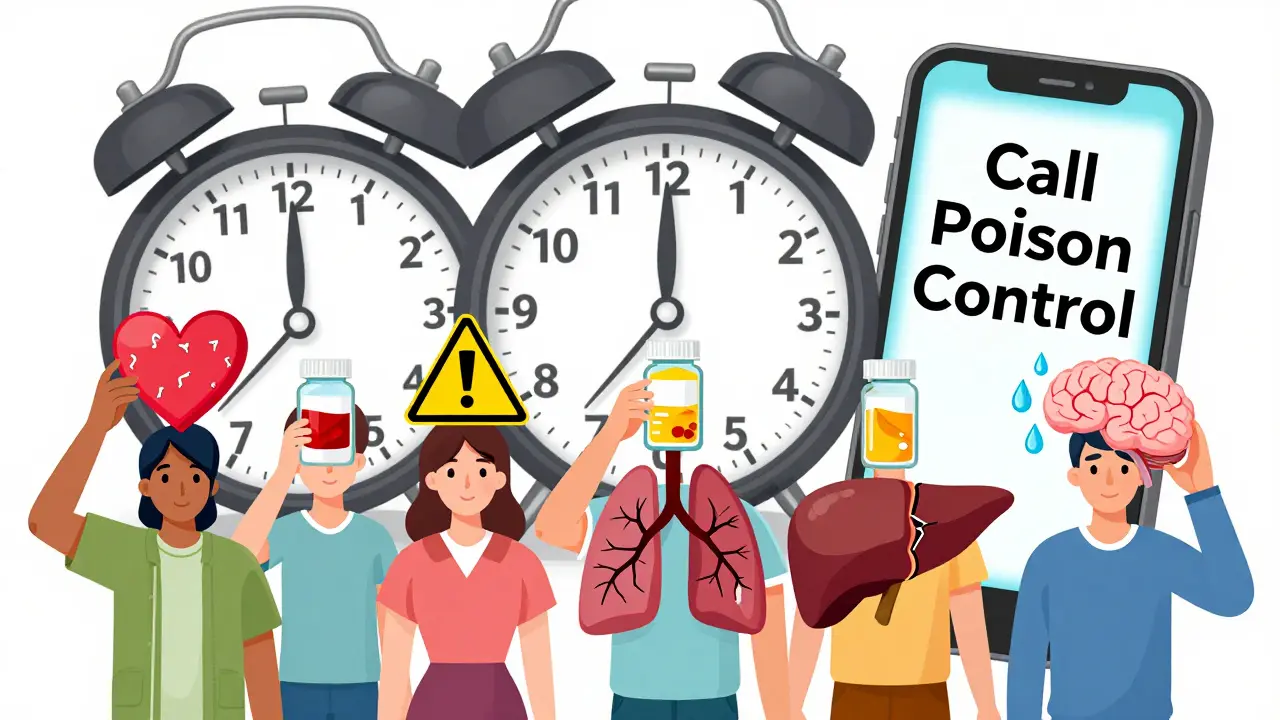
- If you’re unsure-Call Poison Control (1-800-222-1222 in the U.S.). They’re trained to help you decide if it’s an emergency.
And here’s the most important rule: Never stop taking a prescribed medication on your own. Stopping suddenly can be just as dangerous as the side effect. Beta-blockers, antidepressants, and seizure meds can cause seizures, heart attacks, or severe withdrawal if discontinued abruptly. Always talk to your doctor first.
How to Protect Yourself Before You Even Take the Pill
Prevention is better than emergency care. Here’s how to reduce your risk before you start a new drug:
- Use the Brown Bag Method-Every six months, bring all your medications-pills, vitamins, supplements, even OTC drugs-to your doctor or pharmacist. They can spot dangerous interactions you didn’t know about.
- Ask about genetic testing-If you’re being prescribed a high-risk drug (like carbamazepine, warfarin, or certain antidepressants), ask if pharmacogenomic testing is available. It’s not routine yet, but it’s growing fast. Early data shows it cuts serious side effects by nearly half.
- Know your drug’s "black box" warning-The FDA puts these on the most dangerous drugs. They’re bolded in the prescribing info. If your drug has one, ask your doctor what signs to watch for.
- Check for look-alike drugs-Insulin and heparin are commonly confused. So are Zyrtec and Zantac. Always double-check the name and dosage before you take anything.
What’s Changing in 2026?
The system is getting smarter. By 2026, new smart pill bottles will track when you take your medicine and send alerts if you miss a dose or take too much. Wearables like Apple Watches are being programmed to detect irregular heart rhythms caused by drugs. AI tools at hospitals are now predicting which patients are most likely to have bad reactions based on their age, weight, genetics, and other meds.
But technology doesn’t replace vigilance. The best tool you have is still your own awareness. Pay attention. Trust your gut. If something feels off, it probably is.
Can a medication side effect happen weeks after starting a drug?
Yes. While some reactions happen right away-like allergic responses within minutes-others develop slowly. Liver damage, kidney problems, and conditions like DRESS syndrome can take days or even weeks to show up. That’s why it’s important to keep monitoring your body even after the first few days of taking a new medication.
Are over-the-counter drugs safer than prescriptions?
No. Many people assume OTC drugs are harmless, but that’s not true. Ibuprofen, acetaminophen, and even antacids can cause serious side effects like internal bleeding, liver failure, or kidney damage, especially if taken long-term or with other medications. In fact, OTC drugs account for over 20% of all medication-related emergency room visits.
What should I do if I think I’m having a side effect but I’m not sure?
If you’re unsure, call Poison Control (1-800-222-1222 in the U.S.) or contact your pharmacist. They can help you determine if it’s something serious or just a mild reaction. Don’t wait until you’re in crisis. A quick call could save your life.
Can I stop taking my medication if I have side effects?
Only if your doctor tells you to. Stopping certain medications suddenly-like blood pressure drugs, antidepressants, or seizure meds-can cause life-threatening withdrawal symptoms, including seizures or heart attacks. Always talk to your provider before making any changes.
How common are fatal drug reactions?
About 128,000 deaths per year in the U.S. are linked to adverse drug reactions, according to the FDA. That’s more than car accidents or opioid overdoses. Most of these are preventable with better awareness and faster action.

Aisling Maguire
1 March, 2026 . 08:07 AM
Just started a new blood pressure med last week and noticed my hands were tingling-thought it was stress. Then I read this and panicked enough to call my pharmacist. Turns out it’s a known side effect of the ACE inhibitor I’m on. They switched me out and I’m fine now. Seriously, pay attention to tiny weird stuff. Your body’s trying to talk.
Also, the Brown Bag Method? Game changer. Took my whole medicine cabinet to the pharmacy last month and found three interactions I had no clue about. Feels like a superhero move.
Brandie Bradshaw
2 March, 2026 . 13:02 PM
There is no such thing as a "mild" side effect. The language of "mild" is a pharmaceutical industry construct designed to normalize risk. A dry mouth is not a side effect-it is the first whisper of systemic dysregulation. The body does not whisper; it screams. And we have trained ourselves to deafen ourselves.
The FDA’s definition of "serious" is inadequate. It should include any deviation from baseline homeostasis. We are not measuring symptoms-we are measuring profit margins. This article is a step forward, but it still plays by broken rules.
Sophia Rafiq
3 March, 2026 . 20:17 PM
Been on statins for 5 years. One day I just felt... off. Not tired. Not sore. Just like my brain was underwater. Went to my doc, got my liver enzymes checked. Bilirubin was elevated. They pulled me off. No drama. No hospital. Just awareness.
Don't wait for hives. Don't wait for chest pain. If you feel like your body's not yours anymore, stop. Call. Ask. It's not overreacting. It's self-preservation.
Martin Halpin
5 March, 2026 . 15:53 PM
Oh wow, this is just another fear-mongering piece from the medical-industrial complex. I mean, come on. Every time someone gets a new script, we’re supposed to think they’re one pill away from dying? I’ve been on antidepressants for 12 years. I’ve taken 37 different meds. I’ve had migraines, weight gain, weird dreams, and one time I thought my left toe was singing opera. None of it was life-threatening.
And let’s talk about the 1.3 million ER visits-how many of those were people who didn’t read the pamphlet? Or worse, googled their symptoms and convinced themselves they had DRESS syndrome? I swear, half the people in this country think a sneeze is a sign of anaphylaxis.
Also, the black box warning? That’s just the FDA’s way of saying "we’re not liable." It’s not a death sentence. It’s a footnote.
And the genetic testing? Please. I’m Irish. My ancestors survived famine, plague, and British rule. We don’t need a DNA scan to know we’re built tough.
Ajay Krishna
6 March, 2026 . 05:39 AM
Thank you for this. As someone who helps elderly parents navigate their meds, this is gold.
I’ve seen my uncle take 8 prescriptions, 4 supplements, and 3 OTC painkillers. No one ever sat down with him and asked what he was taking. Then he got jaundiced. Turned out the statin and the turmeric were cooking his liver.
My advice? Always bring a list. Always ask the pharmacist. And if you’re helping someone else? Don’t assume they know what they’re on. Write it down. Read it back to them. Make it a ritual. It’s not about fear. It’s about care.
Noah Cline
7 March, 2026 . 22:22 PM
Most of these "red flags" are just normal human biology being pathologized. Your body is not a machine. It’s an ecosystem. If you feel weird after a new med, it’s probably your gut microbiome adjusting. Or your cortisol spiking. Or your circadian rhythm being disrupted by the timing of your dose.
Stop treating every sensation like a crime scene. The ER is not a wellness check. You’re not a patient-you’re a human being with a nervous system.
Also, the 128,000 deaths? Most of those are from polypharmacy in nursing homes. Not from people like you and me taking one thing for one thing. This is fear porn dressed as public health.
Full Scale Webmaster
8 March, 2026 . 22:16 PM
MY MOM DIED BECAUSE OF THIS. SHE TOOK A NEW ANTIBIOTIC FOR A SINUS INFECTION. SHE GOT A RASH. SHE THOUGHT IT WAS JUST ALLERGIC TO SOAP. SHE DIDN’T TELL ANYONE. THREE DAYS LATER SHE WAS IN A COMA. LIVER FAILURE. NOBODY TOLD HER TO WATCH FOR THIS. SHE WAS 62. SHE HAD 3 MEDS. SHE WASN’T EVEN "HIGH RISK."
I’VE BEEN DOING THIS FOR 7 YEARS NOW. I RUN A SUPPORT GROUP. I HAVE 1,200 MEMBERS. WE SHARE OUR SIDE EFFECTS. WE TRACK THEM. WE CALL PHARMACISTS. WE DON’T WAIT. WE DON’T HOPE. WE ACT.
THIS ARTICLE IS A START. BUT IT’S NOT ENOUGH. WE NEED A NATIONAL DATABASE. WE NEED A MOBILE APP. WE NEED A HOTLINE THAT CALLS YOU BACK. WE NEED TO STOP TREATING THIS LIKE A PERSONAL RESPONSIBILITY.
MY MOM IS GONE. DON’T LET YOURS BE TOO.
Lisa Fremder
9 March, 2026 . 11:33 AM
Look, I don’t care about your "DRESS syndrome" or your "black box warnings." I’ve been on 12 different meds in 10 years. I’ve had side effects. I’ve had rashes. I’ve had heart palpitations. I’ve called 911 twice. I’m still here.
Stop scaring people. America is already too scared of medicine. We’re not in some dystopian drug lab. We’re in a country where you can buy insulin at Walmart for $25.
Take your pills. Know your body. Don’t be a hypochondriac. And stop letting corporations make you paranoid so they can sell you more tests.
Also, genetic testing? That’s just another way to charge you $500 for a result that says "you’re fine."
Justin Ransburg
10 March, 2026 . 06:53 AM
This is an exceptionally well-researched and thoughtfully presented guide. The structure-moving from recognition to action to prevention-is pedagogically sound and clinically relevant.
I commend the author for integrating epidemiological data with practical, actionable steps. The emphasis on timing, context, and individual variability demonstrates a sophisticated understanding of pharmacovigilance.
As a healthcare professional, I routinely recommend this type of resource to patients. The inclusion of Poison Control as a first-line resource is particularly prudent. This should be required reading for all new prescribers and patients alike.
Sumit Mohan Saxena
11 March, 2026 . 21:41 PM
It is imperative to recognize that adverse drug reactions constitute a significant burden on public health infrastructure, particularly in resource-constrained settings. While the United States maintains robust pharmacovigilance systems, many low- and middle-income countries lack the capacity for real-time monitoring of drug-induced hepatotoxicity or hematological abnormalities.
Furthermore, the assumption that OTC medications are inherently safe is a dangerous fallacy. Acetaminophen-induced acute liver failure is the leading cause of acute liver failure in India, primarily due to unregulated polypharmacy and lack of patient education.
It is therefore not merely a matter of individual vigilance, but a systemic imperative to integrate pharmacogenomic screening, pharmacist-led medication reviews, and community-based awareness campaigns into primary care delivery models globally.
Ben Estella
12 March, 2026 . 20:19 PM
Let’s be real-this whole thing is a scam. The government and Big Pharma want you scared so you’ll keep going to the doctor, getting tested, buying more pills.
I took a new blood thinner and got a little bruise. I Googled it. Next thing I know, I’m reading about internal bleeding and liver failure. I called my doctor. He laughed. Said it was normal. I didn’t panic. I didn’t go to the ER. I just kept taking it.
Why? Because I trust my body. And I trust my doctor. Not some internet article written by a guy who got mad because his cousin had a bad reaction.
Stop selling fear. Start selling trust.
Jimmy Quilty
14 March, 2026 . 12:49 PM
Okay so I read this and now I’m 100% sure my thyroid med is secretly controlled by the CIA. I mean, why else would they make it so hard to know what’s normal? Why do they hide the "black box" warnings? Why does the FDA even exist if they’re not telling us the REAL truth?
I’ve been taking levothyroxine for 8 years. I’ve had weird dreams. I’ve had night sweats. I’ve had this tingling in my left ear. I didn’t say anything. But now I think it’s a mind-control frequency. They’re using the meds to sync our brainwaves to satellite signals. I read on a forum that 70% of people on thyroid meds report "unexplained déjà vu."
Also, I think the "Brown Bag Method" is just a cover for them to collect our DNA. I’m not bringing anything in. I’m done. I’m switching to essential oils. And I’m moving to Canada. They don’t have this stuff there. Right? Right?